

How Watching Birds Can Help Protect Them
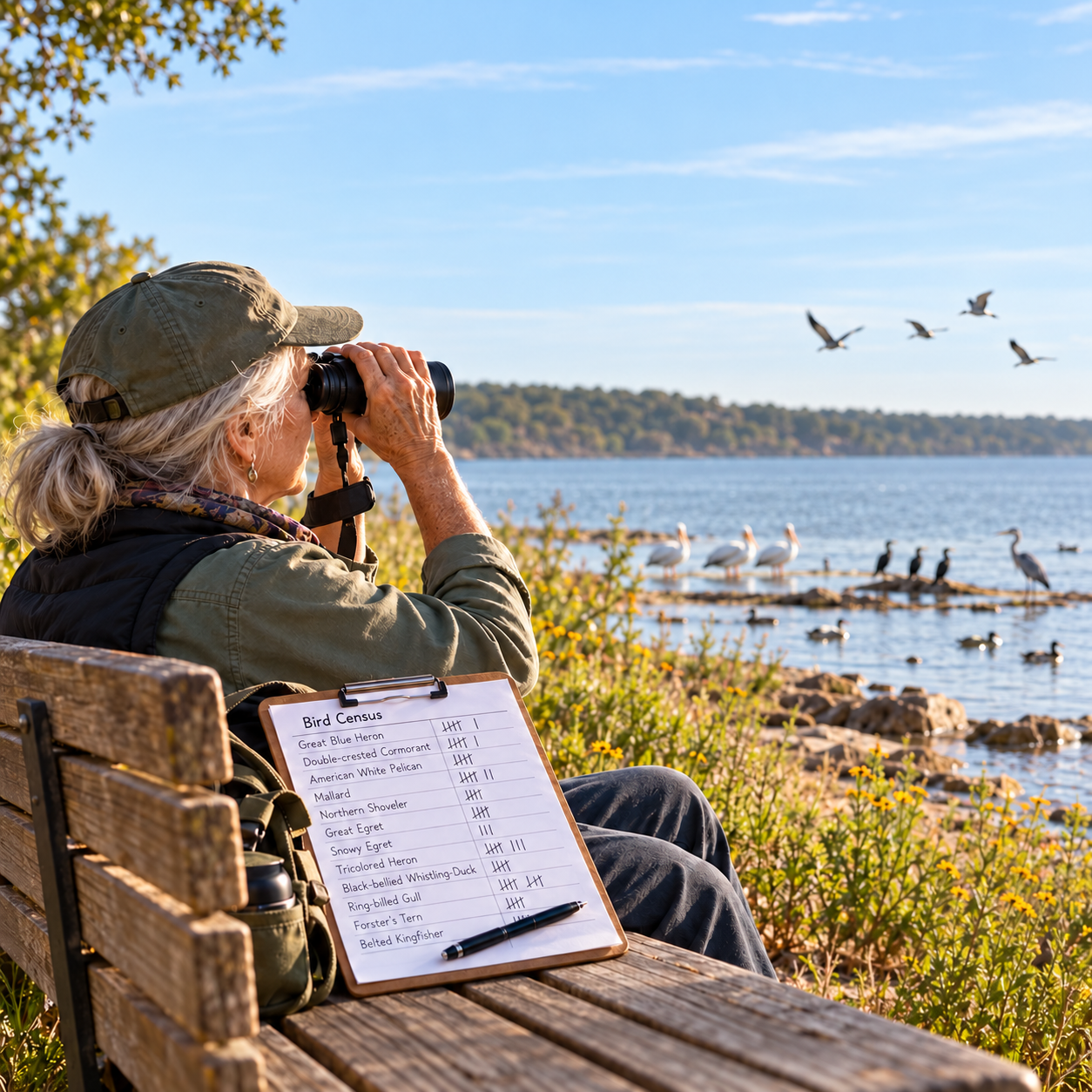
A quiet morning is not a small thing
A bird appears at the edge of the yard. You stop. You notice its shape, the way it moves through the branches, the call it gives before it disappears. For a moment, the world gets bigger: there is a life here with its own needs, its own route through the seasons, its own place in a habitat that may reach far beyond your fence.
That moment can look passive from the outside. A person stands still with binoculars. A person sits on a porch and watches a feeder. A person takes a slow walk, listening. But birding is not merely looking. It is learning to pay attention to lives that are not organized around us. And attention can change what we notice, what we value, and what we are willing to protect.
Watching birds by itself does not repair a damaged wetland or stop a window collision. Enjoyment is not a substitute for action. But birding can be a powerful beginning. It helps us recognize what is at stake, collect information that would otherwise go unseen, and make better choices in our homes and communities. The binoculars are not the finish line. They are one way in.
Birding has become one of the most important ways I have contributed to my community - locally and globally, and one of the most important parts of my own life. Its opportunities have been too many to count: leading field trips, founding nonprofit bird clubs, conducting in breeding bird surveys, becoming a falconer, rehabilitating wildlife, and more. Through these experiences, I have come to understand my place in the natural world, and how even small actions can matter to the future of a species or an ecosystem. It is why I feel so passionately about birding. Most birders I know understand that feeling.
The more you notice, the more you can recognize change
Birders learn places as well as species. We begin to know which trees hold warblers in spring, when the first swallows usually arrive, which pond draws shorebirds after rain, and what a familiar patch sounds like before dawn. We notice when something is different: a missing chorus, a stretch of shoreline gone quiet, a new hazard on a route birds have used for years.
One visit cannot tell us what is happening to a population. Birds move, weather shifts, and a quiet morning may simply be a quiet morning. Conservation needs care with evidence. But repeated, well-described observations can help build a clearer picture. The first step is to keep a record: date, location, time, duration, distance, habitat, and what you actually saw or heard. Those details help make an observation useful beyond the moment.
That is the logic behind community science projects such as eBird and Project FeederWatch. Birders contribute observations using shared methods; researchers and conservationists can then study patterns across many people, places, and years. Cornell Lab of Ornithology reports that eBird data have been used in conservation planning, habitat management, species protection, and policy decisions. A single checklist is one small contribution. Together, careful checklists can help reveal where birds are, when they are present, and how those patterns change.
Accuracy matters more than a long list. If you are unsure about an identification, say so or leave the bird off. If you did not survey the whole area, do not imply that you did. A short, complete checklist from a focused five-minute watch can be more useful than an impressive list with no clear effort behind it. Your observations do not need to be rare to matter. Common birds are part of the story, too.
Birding makes threats visible at eye level
Big conservation problems can feel distant: habitat loss, climate change, pollution, unsafe buildings. Birding gives them a local address. It can turn an abstract threat into a place, a season, and a bird you have actually seen.
A window strike is one example. Glass reflects trees and sky or appears invisible, so birds may fly toward what looks like open space. When you find a stunned bird or feathers under a window, the building becomes part of the habitat story. Cornell Lab of Ornithology describes practical ways to reduce collisions, including applying external patterns or other evidence-based deterrents to problem windows. That is a direct response you can take at home, at a school, or in a workplace.
Migration makes nighttime lighting another visible issue. Bright artificial lights can attract or disorient migrating birds, increasing risks around buildings. Turning off unnecessary exterior and interior lights during migration is a simple step; encouraging a business, apartment building, or city to join a Lights Out effort can extend that step beyond one household. You do not have to wait for a spectacular migration night to care. The birds moving unseen above a familiar street are part of the same landscape you watch by day.
Cats, pesticides, habitat fragmentation, and poorly planned development can also become harder to dismiss once you understand how birds use a place. A brushy edge may be shelter. A dead tree may be nesting space and a source of food. A patch of native flowers may support insects that feed nestlings. Birding teaches us to ask not only, “What species is that?” but also, “What does this bird need here, and what might make this place less safe?”
Your yard can become part of the answer
Conservation is not only something that happens in distant reserves. A backyard, patio, schoolyard, or community garden can provide useful habitat when it offers the resources birds need and reduces avoidable hazards.
Start with what birds are telling you. Which species visit? Where do they feed? Do they use shrubs for cover, drink from a bath, or hunt insects among leaves? Then look at the space from a bird’s point of view. Is there water that is shallow and clean? Is there shelter close enough to offer a quick escape? Are there native plants that provide seeds, berries, nectar, insects, and places to nest? Are windows reflecting vegetation? Is outdoor lighting left on all night?
Native plants are especially valuable because they support local food webs. Many birds, particularly when raising young, depend on insects and caterpillars. Native trees and shrubs host insects that nonnative ornamentals may not support as well. The details vary by region, so choose plants suited to your local conditions rather than buying a generic “bird-friendly” label. In Central Texas, for example, the best choices will differ from those in the Northeast or Pacific Northwest. Local native plant societies, extension services, and regional Audubon resources can help you choose.
You do not need to transform a whole yard at once. Add one native shrub. Let a small section of leaves remain under a tree. Keep a birdbath clean and shallow. Treat a problem window. Reduce unnecessary night lighting. A collection of small, thoughtful changes can make a property more useful to wildlife. Just as important, these steps can influence neighbors, schools, and homeowner associations when they see what a bird-friendly space can look like.
The next step may be collective
Some of the most important decisions for birds happen beyond our property lines: what gets built, which wetlands are protected, how parks are managed, whether public lighting is changed, and how much room remains for native habitat. Birders can bring useful knowledge to those conversations because we have spent time learning a place.
That knowledge becomes stronger when it is shared responsibly. Report a significant observation through the appropriate platform. Join a local bird count or habitat restoration day. Volunteer with a bird organization, nature center, or rehabilitation group if the work fits your skills. Attend a public meeting when a local park, development, or waterway is on the agenda. Ask decision-makers clear questions: What habitat will remain? How will windows be made safer? What lighting standards will apply? How will the project affect nesting and migration?
You do not have to be an expert witness or a professional scientist to participate. You do need to be honest about what you know, careful about sensitive locations, and willing to listen to people who have different expertise. Birds benefit when naturalists, residents, researchers, planners, and advocates work from better information together.
And sometimes the useful action is telling the story. A neighbor may not care about an abstract decline statistic, but they may remember the first hummingbird at a feeder or the flock of Cedar Waxwings moving through a berrying tree. Sharing what you have seen can give someone else a reason to notice. That is not a replacement for policy or habitat protection. It is one way public care grows.
Make birding active in your own way
Active birding does not mean rushing, hiking miles, traveling to every rarity, or turning every outing into a conservation assignment. You can watch from a window, sit on a shaded bench, take a short walk, or spend five minutes beside a feeder. Access and energy vary; your pace is allowed to vary, too.
The change is in the quality of attention. Look closely. Listen. Learn what is normal for the place. Record what you observe when it can help. Ask what the birds depend on. Choose one practical response and follow through. Then keep enjoying the birds. Delight is not frivolous; it is often the reason people stay engaged long enough to help.
Birding can be joyful, funny, surprising, and full of small triumphs: the warbler that finally shows itself, the hawk that appears over the parking lot, the sparrow that has been in the garden all along. It can also make us uncomfortable when we see what threatens the lives we admire. We do not need to choose between wonder and urgency. Wonder can give urgency a face.
So the next time you stop to watch a bird, do not dismiss the moment as passive. You are practicing attention. You are learning a place. You may be gathering information, noticing a hazard, or discovering a reason to speak up. The bird does not need us to admire it from a distance alone. It needs safe places to live, food through the seasons, and people willing to make room for its needs.
Watching is where many of us begin. What we do with what we notice is how birding becomes part of protection.
Respect is part of protection
There is another way watching birds helps: it can teach us when to give them room. Good birding is not about getting the closest photograph or forcing a view. It means avoiding disturbance, staying on trails where appropriate, keeping a respectful distance from nests and roosts, and following local guidance around sensitive species. It also means being thoughtful before sharing a precise location for a vulnerable bird. The desire to see a rare visitor is understandable; so is the need to protect it from crowds or pressure.
These habits matter because birds are not scenery arranged for our enjoyment. We are visitors in their world, even when the bird is in our own yard. A responsible birder learns to recognize when to step back, lower the volume, or leave a place as it was found. That restraint is active care. It lets us enjoy birds while reducing the chance that our attention becomes another stressor.
Skill Builders
1. Keep one focused checklist this week. Record the time, duration, location, and species you can confidently identify. Complete it even if you see only a few birds.
2. Choose one window where you have seen birds approach or strike. Research an evidence-based external deterrent and make a plan to treat it.
3. Look at one corner of your yard or balcony from a bird’s point of view. Identify one improvement for food, water, shelter, or safety that fits your space and region.
4. Find one local bird count, habitat group, or public conservation issue. Take one small step to learn how to participate. 5. Download Ebird.org app and upload one list from one birdwatching session this week. If you enjoy using it (ebird can also help you find new places to go birding) make a commitment to adding one list each week so you contribute to the greater knowledge about birds and their status.
A final invitation
Birding does not ask every person to do everything. It asks us to pay attention, keep learning, and let care become visible in the choices we make. Watch the birds. Learn their needs. Share what you know. Make one place safer. Stand with the people working to protect habitat. Then go back outside and keep noticing. That is how a quiet hobby can become a living connection to conservation.
