

Learning to See Like a Birder
How Field Marks Turn “Just a Bird” Into a Species
Birding for Beginners -Part 3
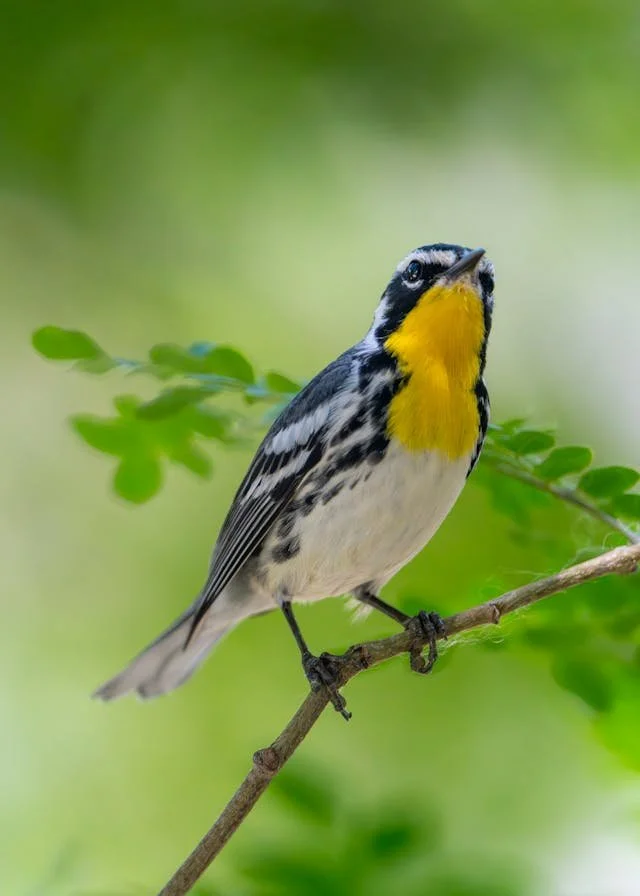
One of the most common frustrations new birders share is this simple thought:
“I see birds… but I don’t know what I’m looking at.”
If that sounds familiar, you’re not doing anything wrong. In fact, you’re exactly where every experienced birder once started.
Bird identification isn’t about memorizing hundreds of species or owning the biggest binoculars on the market. It’s about learning how to see—and more specifically, learning how to notice field marks: the visual clues birds give us if we slow down long enough to look.
Now here’s the thing. You can certainly enjoy birds and be passionate about them without knowing their common name (House Finch) or their Latin name (Haemorhous mexicanus). Most birders, however, choose to identify the birds they see and test their ability to recognize a species and recall it whenever they see it. It’s just part of the fun - and the challenge.
This post is about developing that skill. Not perfectly. Not all at once. But gradually, confidently, and with a sense of curiosity instead of pressure.
If Part 1 of this Beginning Birding series was about getting equipped and stepping outside, this post is about what happens after you raise your binoculars.
What Are Field Marks (and Why They Matter)?
Field marks are the visible characteristics that help identify a bird species. They include things like:
Overall size and shape
Color patterns and contrast
Bill shape and length
Wing bars, eye rings, or stripes
Tail shape and length
Posture and behavior
But here’s the key thing beginners often miss:
👉 You are not meant to notice all of these at once.
Trying to identify a bird by every detail is like trying to recognize a person by memorizing their eyelashes. It’s exhausting—and unnecessary.
Instead, birders learn to stack clues, starting with the most obvious ones and adding detail only when it’s helpful.
That’s where GISS comes in.
GISS: General Impression, Size, and Shape
One of the most powerful—and beginner-friendly—tools in birding is GISS, which stands for General Impression, Size, and Shape.
Before color.
Before field guides.
Before Latin names.
Ask yourself three simple questions:
What’s the overall impression of this bird?
Chunky or sleek? Upright or horizontal? Calm or twitchy?How big is it—compared to something familiar?
Sparrow-sized? Robin-sized? Goose-sized?What stands out about its shape?
Long neck? Short tail? Thick bill? Rounded wings?
Your brain is already excellent at this kind of pattern recognition. GISS simply gives you permission to trust that instinct.
That’s why, even before you can name a species, you often feel when something is different:
“That’s a duck… but not like the others.”
“That bird is moving differently.”
“That one seems heavier, longer, sleeker.”
Those impressions matter.
They are the foundation of identification.
Soon you won’t consciously ask yourself the GISS questions. You will have already answered them in your head when you first see the bird. Every early winter, I patiently wait for the Chipping Sparrows to return to my backyard feeder. Without fail, I will glance out at the feeders and a tiny silhouette will perch on the feeder - it’s my first Chipper of the season before I even see a field mark.
Where the Field Guide Fits in (Without Overwhelming You)
Once you’ve formed a general impression using GISS, this is where a field guide becomes useful—not as a test you’re expected to pass, but as a way to narrow possibilities.
A field guide works best when you arrive with a short list of observations already in mind:
Rough size (sparrow, robin, duck)
Overall shape (long-necked, chunky, sleek)
Habitat (water, trees, open ground)
Instead of flipping randomly through pages, you’re now asking the guide a focused question:
“What birds this size and shape are found here?”
That simple shift—from searching to confirming—makes field guides far less intimidating.
Using the Sketch: Breaking a Bird Into Parts

Instead of seeing a blur of feathers, the sketch invites you to notice individual zones:
Head
Eye area
Bill
Chest
Wings
Tail
Legs and posture
This is how experienced birders actually see birds—not as a single object, but as a collection of shapes and patterns - field marks - working together to make an individual of a particular species.
A helpful mental trick is to imagine you’re describing the bird to someone who can’t see it:
Is the head round or angular?
Does the bill look delicate or heavy?
Are the wings plain or patterned?
Does the tail flick, fan, or stay still?
You don’t need the answers right away. You’re training your eyes to ask better questions.
Why Ducks Are the Perfect Place to Start
If songbirds feel overwhelming—and they often do—ducks are your best friend. Identification is a process of elimination. The more clues (field marks) you have, the quicker you eliminate the species it can’t be.
Here’s why ducks make ideal “training birds” for learning field marks:
1. They Sit Still (Mostly)
Ducks float. They paddle. They loaf. They don’t vanish into foliage the second you lift your binoculars. They sometimes dive but even that’s a clue - not all ducks dive so it help you determine a diving duck from a dabbler.
That gives you time—and time is everything when you’re learning to observe.
Ducks will get spooked at times but that’s another lesson - how fast and how close to approach ducks before they get unsettled. And what are their signs that you’re approaching that invisible line where they no longer feel safe. All birds have those “tells” and it’s good to learn them. You’re all about watching birds not stressing them.
2. They Are Large and Visible
Most ducks are bigger than songbirds and are often found in open water:
Ponds
Lakes
Rivers
Wetlands
You’re not fighting shadows, branches, or constant motion. And where there’s one duck, you often have lots giving you time and infinite angles.
3. Males and Females Teach Contrast
Many duck species show dramatic differences between males and females. This helps beginners learn:
Pattern recognition
Color placement
Shape consistency across sexes
Even when colors change, shape and posture often remain the same—a perfect lesson in GISS.
4. Ducks Reward Careful Looking
Two ducks may look “brown” at first glance. Look again and you’ll start noticing:
Different head shapes
Distinct bill colors
Subtle markings on flanks or wings or a bright, colorful, contrasting wing patch
This is field-mark learning at its best: calm, repeatable, confidence-building.
5. Using a Field Guide with Ducks
Ducks are also where many birders first learn how to use a field guide effectively.
When you’re watching ducks on a pond, you can:
Observe without pressure
Hold a paperback guide in your lap
Compare illustrations while the birds are still in view
This is one of the few situations where you don’t need a perfect memory. You can look back and forth—bird to page, page to bird—and let the differences reveal themselves.
Over time, you’ll notice how field guides group similar species together, helping you learn not just what a bird is, but why it isn’t something else.
The Binocular-Raising Exercise Revisited (From Part 1)
In Part 1, we introduced the binocular-raising exercise: spotting a bird with your naked eye first, then raising your binoculars without moving your head or losing the bird.
Now we add one more layer.
The Updated Exercise: Look First, Then Zoom
Spot the bird without binoculars
Notice:Size
Shape
Posture
Movement
Say one thing out loud (preferably)
Example:“Medium-sized, long neck, floating low.”
“Small, upright, quick movements.”
Raise your binoculars smoothly
Keep both eyes open until the bird is centered.Confirm or adjust your first impression
Binoculars are not for finding the bird—they’re for confirming details.
This reinforces an essential birding habit:
👉 Identification starts before the binoculars touch your face.
Learning Tool #1: The Three-Field-Mark Rule
When you’re starting out, limit yourself—on purpose.
Instead of trying to notice everything, choose just three field marks per bird. What’s the first thing you notice?
They can be any combination of:
Size
Shape
Bill type
Color contrast
Behavior
Habitat
For example:
“Medium-sized duck, rounded head, blue bill.”
“Small bird, thin bill, constant tail flicking.”
“Tall wader, long legs, slow deliberate movement.”
Why this works:
It reduces overwhelm (don’t get caught trying to see everything in the first instant
It builds confidence
It trains selective attention
You’ll be surprised how often three good observations are enough to narrow a bird down to a short list—or even a confident ID.
Learning Tool #2: The Side-by-Side Comparison Exercise
This is one of the fastest ways to sharpen field-mark awareness.
Next time you’re at a pond, park, or feeder where multiple birds of the same general type are present:
Pick two birds that look similar
Ignore color at first
Compare:
Head shape
Body length
Posture
Bill size
Ask yourself:
Which one looks longer?
Which one feels heavier?
Which one sits higher in the water?
This exercise teaches one of the most important birding truths:
👉 Identification is often comparative, not absolute.
You don’t need to know what the bird is right away. You just need to notice how it’s different from the bird next to it.
Learning Tool #3: The One-Page Field Guide Exercise
Choose one bird you’ve observed—ideally a duck or feeder bird—and open your field guide to the most likely section.
Instead of reading every description, do just this:
Look at the illustrations only
Eliminate birds that are clearly the wrong size or shape
Circle or note two possible matches
That’s it.
You’re not trying to be “right.” You’re training your eye to connect what you saw in the field with how birds are presented in a guide.
This exercise builds confidence quickly and reinforces that field guides are tools for learning, not tests to pass.
Behavior Is a Field Mark Too
New birders often think field marks are strictly visual. But behavior is one of the most reliable clues you’ll ever learn to use.
Notice things like:
Does the bird hop or walk?
Does it feed on the ground, in trees, or in water?
Is it alone or social?
Does it pump its tail, bob its head, or freeze in place?
These patterns repeat themselves species after species. Over time, behavior becomes as recognizable as color.
Sometimes you’ll identify a bird by how it moves before you ever clearly see it.
Progress You Can’t Measure (But Will Feel)
Here’s the part no one tells beginners:
You will improve before you realize you’re improving.
One day you’ll casually think:
“That’s not the usual duck.”
“That bird is shaped differently.”
“I’ve seen that behavior before.”
“Wait, I’ve heard that song before.”
Those moments are the real milestones.
Not checklists.
Not life lists.
Not perfect IDs.
Just the quiet shift from looking to seeing.
Be Patient With Your Eyes
Your eyes are learning a new language.
At first, everything sounds like noise. Over time, patterns emerge. Shapes repeat. Differences stand out. What once felt overwhelming becomes familiar.
You don’t need to rush this.
Birding rewards patience—not just with birds, but with yourself.
Coming Up Next in the Beginning Birding Series
In the next part of this series, we’ll build on these visual skills by exploring:
Identifying birds by sound
Using habitat as an ID tool
Knowing when not to over-analyze
For now, your job is simple:
Go somewhere with birds
Raise your binoculars with intention
Notice three things
Let curiosity lead
You’re not just learning bird names.
You’re learning how to pay attention.
And that skill carries far beyond birding.
