

Planning Birding Trips: From Local Adventures to America’s Top Hotspots
Your January Birder’s Reset, Part III
For birders, January is the month of possibility—the great reset when our year lists start fresh and every species seen on January 1st feels like a prize (see my January post for that joy-filled perspective). And if you followed the companion article on why birders keep lists, you already know that those lists often become the framework for planning future birding adventures.
That makes January the perfect time to think bigger:
Where do you want birding to take you this year?
Whether you're planning a simple Saturday morning outing to a county park you’ve never visited or dreaming of traveling to one of North America’s legendary migration hotspots, a thoughtful planning process can elevate your birding, sharpen your skills, and deepen your relationship with the natural world.
This post will walk you through how to plan both local micro-trips and bucket-list birding getaways—including when to go, why timing matters so much in birding, and how to use tools like local checklists and eBird to prepare. We'll also talk about weather considerations, gear checkups, and what January can teach us about designing a satisfying birding year.
Why January Is the Perfect Month to Plan Your Birding Adventures
January sits at a crossroads: the North American birding year is brand new, migration is still quiet, holiday travel has settled down, and many of us are hungry for both structure and inspiration.
It’s the ideal moment to ask:
What birds do I want to see this year?
Where might I go to find them?
How can I build birding trips into my life in a way that’s manageable and thrilling?
Even if you’re a dedicated yard birder or someone who squeezes birding into short windows between commitments, planning doesn’t have to mean exotic travel. It can be as simple as choosing two or three parks within an hour of home that you’ve never explored. Many birders discover that they’ve overlooked incredible habitats close to home simply because they never carved out the time to explore them.
But for those who dream about High Island, Magee Marsh, or the hummingbird storms of Southeast Arizona—planning becomes essential. These locations shine only at certain times of the year, and timing is everything.
Start Local: Planning Short Birding Trips With Big Payoffs
Before we dive into the national hotspots, let’s talk local strategy.
Some of the best birding breakthroughs happen when you give yourself time to explore unfamiliar nearby habitats. January planning can include:
1. Build a “local wishlist”
Think of places within 30–90 minutes that you’ve always meant to visit:
A riparian corridor you’ve never walked
A lake or reservoir with reported winter waterfowl
A nature preserve managed for grassland birds
A city park that becomes a migration magnet in spring
Search phrases like “[your county] bird checklist” or “birding hotspots near me” to find locations birders recommend.
2. Use eBird to preview what’s possible
If you’re not already using eBird regularly, now is the time.
Look up hotspots near you and check:
Bar charts to see seasonal patterns
Recent checklists to see species currently present
High-count data to learn which habitats are most productive
Studying the local patterns helps you understand what “action” looks like where you live.
3. Plan 3–5 “micro-adventures” for your calendar
Choose a handful of new places and schedule them now.
Even a one-hour walk at a new location can net new year birds or even life birds—and reconnect you to the joy of curiosity.
American Birding Hotspots: Where to Go and When to Go
Some birding destinations are so extraordinary that visiting them at the right time of year becomes the highlight of a birder’s life list. These trips aren’t complicated, but timing makes all the difference.
Below are five of North America’s best-known birding locations—and the timeframes when each becomes unforgettable.
1. High Island, Texas — April
Best for: Spring migration, fallout conditions, warblers at eye level
Every birder should experience High Island in April at least once. We go every year and always marvel at the experience. Pick the right couples of days and you’ll immediately notice you can’t figure out where to look - there are so many birds to see. Pleasant walks along the trails through the dense coastal hammock provides opportunities to see and hear an amazing variety of warblers, vireos, tanagers, thrushes and more. The trails also cover the boggy meadows that are preferred by buntings and flycatchers and water birds. It can be overwhelming so don’t stress if lots of birds go unidentified - focus on enjoying the experience and the color.
This small community on the Upper Texas Coast becomes a world-renowned migration trap, especially during the right weather patterns.
Why April Matters
Warblers, vireos, tanagers, grosbeaks, flycatchers, orioles—nearly every Eastern migrant funnels across the Gulf of Mexico and often lands exhausted on the first available trees. High Island’s sanctuaries (Boy Scout Woods, Smith Oaks) offer a front-row seat to this spectacle.
A strong south wind means “good birding” but the birds tend to take advantage of the tailwind and move through quickly.
A north wind after storms? That’s when you can see a fallout—hundreds of migrants dropping into the woods in a single moment.
Planning Tips
Book lodging early; April fills up fast.
The sanctuaries have a small fee (day passes and annual pass) to support restoration projects
Study photos of spring plumages before you go—migration happens quickly.
Bring lightweight layers; mornings can be cool and afternoons very warm.
Prepare for humidity and mosquito activity.
High Island rewards those who come prepared and flexible—conditions change rapidly.
2. Sax-Zim Bog, Minnesota — February
Best for: Boreal specialties, owls, winter finches, “Northern” magic
Sax-Zim Bog in February is unlike anywhere else in the country. It is cold—deeply, honestly cold—but birders flock there for species that rarely venture farther south. One of the most unique birding trips we’ve taken.
Why February Is Prime Time
The Bog’s winter specialties include:
Great Gray Owl
Northern Hawk Owl
Snowy Owl
Boreal Chickadee
Canada Jay
Black-backed and American Three-toed Woodpeckers
Pine Grosbeak and Evening Grosbeak
These birds are far easier to find before March, when food patterns shift and some species disperse.
Planning Tips
Dress for extreme cold: hand warmers, insulated boots, wind-proof layers.
Plan your driving routes ahead of time; many sightings are roadside.
Study owl silhouettes and behavior before your trip. Know which owls to expect.
Visit the Sax-Zim Bog Visitor Center for updates from on-site naturalists.
This is one of the few US birding trips where gear preparation is absolutely non-negotiable.
3. Southeast Arizona — March or August
Best for: Hummingbirds, Mexican specialty species, riparian and canyon birding
Southeast Arizona offers two spectacular birding seasons, each with its own charm.
March: The Early Songbird & Specialty Season
Expect:
Elegant Trogon
Arizona Woodpecker
Painted Redstart
Bridled Titmouse
Western migrants - tanagers, flycatchers, buntings, warblers and more
Early-arriving hummingbirds (Anna’s, Costa’s, Broad-billed and others)
A wonderful temperature range for hiking and canyon exploring
August: The Hummingbird Explosion
Many birders don’t believe it until they experience it:
August is one of the best hummingbird months in North America.
Monsoon moisture brings:
Lucifer Hummingbird
Rivoli’s Hummingbird
Blue-throated Mountain-Gem
Broad-tailed, Calliope, and Rufous
Huge hummingbird concentrations at feeders throughout the Sky Islands
Planning Tips
Research which canyons and elevations hold your target birds.
Even in March, mornings can be chilly—but afternoons get warm fast.
In August, be prepared for monsoon thunderstorms.
Study the checklists for Madera Canyon, Ramsey Canyon, Miller Canyon, Patagonia Lake, and the San Pedro House.
4. The Biggest Week in American Birding — Magee Marsh, Ohio (May)
Best for: Warbler migration at its peak, the easiest place to see many species
Magee Marsh in early to mid May is legendary for a reason: to experience the migrating songbirds in all their glory - often at eye level - as they make their way to Canada.
Why the First Half of May Is Ideal
Cool lake winds slow migration, concentrating birds along the Lake Erie shoreline so they can rest and feed until the next phase of their trip - across Lake Erie to Canada. Species like:
Blackburnian Warbler
Scarlet Tanager
Prothonotary Warbler
Cape May Warbler
Kirtland’s Warbler
Golden-winged and Blue-winged Warbler (some years)
American Woodcock
Dozens more
Because the Biggest Week festival is so well attended, birders also benefit from expert-led walks and real-time information on sightings.
Planning Tips
Arrive early in the day; parking fills up fast.
Bring lightweight rain gear—spring showers are common.
Study warbler songs; many birds are easier to find by ear.
Consider visiting nearby Ottawa National Wildlife Refuge and Maumee Bay State Park.
Magee Marsh is a top contender for the best “first-time big birding trip” for beginners. It can be overwhelming though so be patient with yourself.
5. Colorado Rockies — June
Best for: Ptarmigan, rosy-finches, mountain specialties, high-elevation breeding birds. Mt Evans, west of Denver, and Rocky Mountain National Park (west of Boulder) are two prime locations but there are others as well.
June in the Colorado Rockies offers high-altitude magic. Snow is melting, alpine meadows bloom, and mountain birds are in full breeding display.
Species You Might See
White-tailed Ptarmigan
Brown-capped Rosy-Finch
Pine Grosbeak (in certain areas)
Mountain Bluebird
Clark’s Nutcracker
Williamson’s Sapsucker
Hammond’s and Dusky Flycatchers
Broad-tailed Hummingbird
Black Swift (along high cliff faces)
Higher elevations become birdable only once snow recedes, making June the sweet spot before summer crowds build.
Planning Tips
Bring layers—mountain mornings and afternoons can sit 30 degrees apart.
Hydrate heavily; altitude affects most visitors. Be careful not to over-exert if you’re new to mountain country.
Research altitude-specific hotspots through eBird’s “Explore Regions” tool.
Pack binocular wipes—condensation is common in alpine conditions.
How to Use eBird and Local Checklists to Prepare for Any Trip
1. Use eBird Hotspot Bar Charts
These charts show the likelihood of a species being present in a given month. Studying them prevents disappointment and sets realistic expectations. These charts help you choose the best time for your trip and gives you a study aide by telling you which birds to study and focus on.
2. Search “Checklist for [Location] Birds”
Many state parks, refuges, national wildlife areas, and birding groups publish seasonal checklists. These can become powerful study tools for:
Locating target species
Noting what months/seasons a bird to likely to be seen and how common the species are
Learning habitat preferences
Noting early/late arrival windows
Identifying unusual birds that show up regularly
3. Build a Target List
Before any trip—local or cross-country—create a list of species you hope to see. Not necessarily to chase (though chasers love lists!) but to help you train your eye and ear.
4. Read Recent Sightings
Recent eBird checklists reveal:
Where birds are concentrated
Which trails are currently productive (sometimes)
Whether species are early or late this year
What time of day birders are having success
All of this helps you plan smarter and avoid wasting valuable hours.
Weather Planning for Birding Trips
Weather determines not only your comfort but also bird behavior. Consider:
1. Temperature Swings
Birding often involves early mornings, when conditions are dramatically cooler than afternoon peaks and prime times for birds to be feeding.
2. Precipitation & Storm Patterns
In migration hotspots like High Island or Magee Marsh, storms can trigger fallouts or push birds to ground level. Birds won’t fly into a head wind if they can help it so they’ll often stay put and feed during strong winds out of the northwest.
In mountain areas, afternoon storms are almost predictable—plan early outings. Lightning is always a threat if the skies begin to cloud up.
In desert regions like Southeast Arizona, monsoon season means flash floods and lightning risk. Never bird dry arroyos.
3. Wind
Wind determines:
Wave action on lakes (important for waterfowl visibility)
Songbird movement
Whether migrants stay high in treetops or settle lower
Where shorebirds congregate
4. Seasonal Predictability
Some places—like Sax-Zim Bog—are entirely predictable in season but require gear and layering to stay safe and comfortable.
January Gear Check: Upgrade, Replace, or Repair
January trip planning is the right moment to evaluate the tools that support your birding year. Consider checking:
1. Binoculars
Ask yourself:
Are they sharp and bright enough?
Do you struggle to find birds quickly?
Are they too heavy for long field sessions?
This is an ideal time to consider new models or accessories.
2. Field Guides
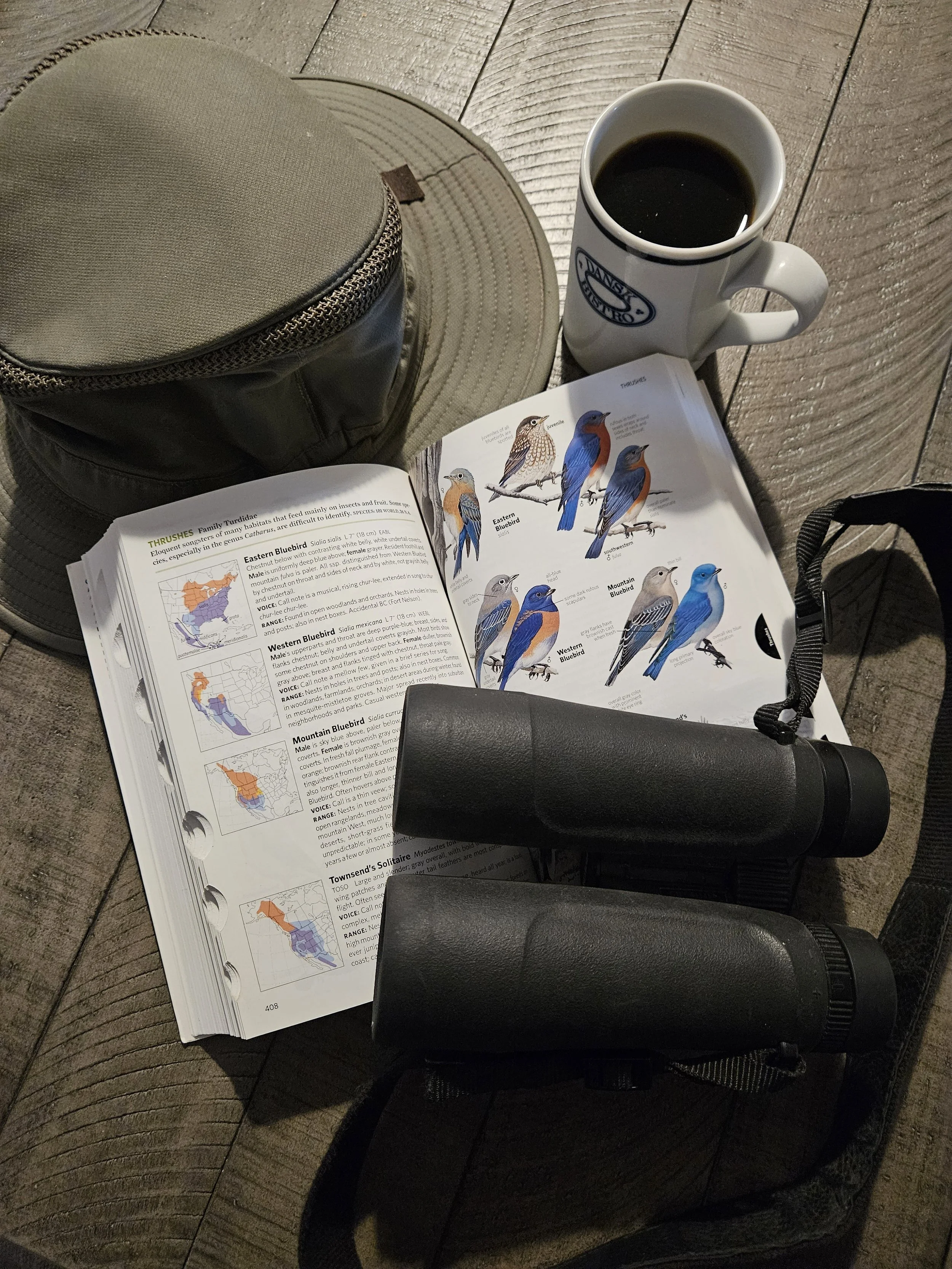
Whether you prefer paper or digital, make sure you have what you need for the trip’s region. Remember: a paper guide shines when you have no cell service or when you want to compare species side-by-side—something many apps don’t do well.
3. Outdoor Clothing
Check:
Waterproofing
Breathability
Layering pieces
Footwear traction
Sun protection
Insulation for extreme cold destinations
4. Birding Apps
Update or download:
eBird
Merlin
iNaturalist
A weather app with radar
Offline maps
5. Travel Gear
Consider:
A comfortable daypack
A lens cloth
Extra power bank
Notebook for field journaling
Reusable water bottle
Snacks (birding is hungry work!)
Rain poncho
First aid kit
Sunscreen
Designing Your Birding Year: A January Mindset
Birding isn’t just about chasing checkmarks—it’s about noticing, connecting, and learning, themes that echo through all of January’s special posts. Planning trips allows you to:
Seek new habitats
Meet other birders
Train your sensing skills
Develop your listing practice
Take part in citizen science (coming in a future post)
Set goals that enrich your birding life
The joy is not only in the destinations but also in the anticipation and reflection—both essential parts of the January mindset.
Putting It All Together: A Simple January Trip-Planning Framework
Here’s a quick method you can adopt every January (or use right now):
Step 1: Choose your focus
New lifers?
New habitats?
Skill-building?
Community birding events?
Step 2: Pick 3–5 regional/local trips
These give your year structure and confidence. Some areas like High Island in April or Magee Marsh in May may be crowded and accommodations may be hard to find if you don’t plan ahead.
Step 3: Choose 1 big aspirational trip
High Island, Southeast Arizona, Magee Marsh, the Rockies, or Sax-Zim Bog—your choice.
Step 4: Research timing
Use checklists, eBird bar charts, and weather patterns.
Step 5: Prepare gear
Nothing ruins a great trip like malfunctioning binoculars or inadequate layers.
Step 6: Set gentle expectations
Birding is always a blend of predictability and surprise. Let the wonder remain. Remember these amazing, beautiful creatures have flown hundreds (likely thousands) of miles with the sole purpose of keeping their species alive - respect their accomplishment by never disturbing, harassing or interfering with their migration in any way.
Final Thoughts
Birding trips—big or small—shape our memories, deepen our appreciation for wildlife, and help us grow as observers of nature. Whether you're exploring your own county or flying to Arizona for a hummingbird spectacle, planning helps you align your hopes with the natural rhythms of the birds themselves.
That’s what the January reset is all about: stepping into a new year with intention, curiosity, and a sense of adventure.
This post is part of our January Birder’s Reset series. If you haven’t already, start with January Is a Birder’s Favorite Month and Why Birders Keep Lists. Up next: Setting Birding Goals and How Birders Contribute to Citizen Science.
