

Using Everyday Language
You don’t have to be a Scientist to talk “bird”
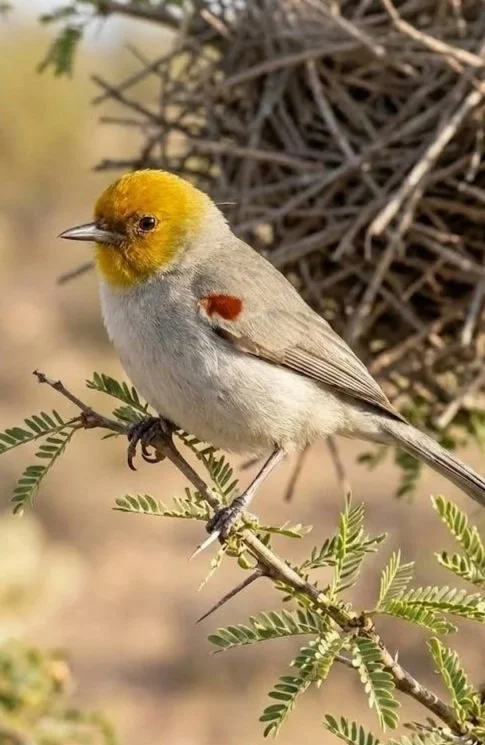
One of the biggest misconceptions new birders have is that they need to learn a whole new vocabulary before they can describe birds correctly. That’s simply not true. In fact, using everyday language is often one of the fastest and most effective ways to describe what you’re seeing.
Birding isn’t a biology exam. It’s a treasure hunt.
When you spot a bird, your goal is to capture the important clues before the bird flies away. The easiest way to do that is to say what you see in simple, natural language.
You might say something like:
“Small gray bird about the size of a sparrow with a rusty patch on its shoulder.”
Or maybe:
“Black bird with a bright yellow bill and a thin white eyebrow.”
Now we all know birds don’t have “shoulders” and their “eyebrows” are simply rows of feathers above their eyes but it certainly is easier to communicate than “did you catch that thin white supercilium on that bird that flew by?”
Those descriptions in “human terms” are perfectly useful. In fact, many experienced birders talk this way all the time when sharing quick field observations.
Scientific terminology certainly exists, and over time you’ll naturally learn some of it. But unless you plan to write scientific papers or lecture at a university, you don’t need it to start identifying birds. What matters most is noticing details and describing them clearly.
For example, from a scientific standpoint, what we often think of as a bird’s legs are technically the bird’s toes. And that strange joint halfway up the leg that looks like a backward knee? That’s actually the bird’s ankle.
Interesting? Yes.
Necessary for birding? Not really.
If you say, “The bird had long legs,” every birder listening to you knows exactly what you mean.
The same thing happens with feather locations. A field guide might refer to scapulars or coverts (feathers that cover other feathers), but in the moment it’s perfectly reasonable to say something like:
“There’s a bright red patch on the shoulder.”
That simple description can instantly narrow down possibilities.
Using everyday language also helps you slow down and observe more carefully. Try saying the details out loud as you watch the bird:
“Small bird, olive back, yellow chest, thin pointed bill.”
Hearing the words reinforces what you’re seeing, and those details stick in your memory longer.
Over time, as you spend more hours watching birds and flipping through your field guide, you’ll naturally pick up some of the formal terminology. But don’t let unfamiliar words slow you down.
Birding is about noticing.
It’s about describing.
And sometimes the best birding language is simply the language you already use every day.
