

Focus on Field Marks
Successful birding relies upon noticing - first on what’s different, then movement and relative size, and finally on the details of field marks.
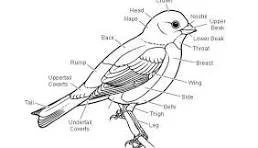
One of the most exciting moments in birding is when the puzzle pieces start to come together. You spot a bird, your brain begins sorting clues, and suddenly—you know what you’re looking at. A big part of that process comes from learning to focus on field marks.
But before jumping straight to the tiny details, start with something simpler: relative size. Is the bird sparrow-sized? Robin-sized? Crow-sized? This quick comparison immediately eliminates dozens of possibilities. If you’d like to practice this skill more, be sure to check out our post on Relative Size—it’s one of the most powerful shortcuts in bird identification.
Once you’ve roughly placed the bird into a size category, begin noticing and naming field marks.
Field marks are the distinctive visual clues that help separate one species from another—things like wing bars, eye stripes, patches of color, bill shape, or streaking on the chest.
Here’s a helpful trick that many birders use, especially when they’re learning:
Say the field marks out loud.
Yes, really.
Speaking the details forces your brain to slow down and notice more carefully. When you say something aloud, you engage both sight and sound in your memory. It’s like giving your brain a double set of notes to work from.
You might say something like:
“Bright blue bird about the size of a large sparrow with rusty-cinnamon wing bars.”
Or perhaps:
“Small bird, strong black and white stripes on the head, unstreaked gray chest, yellowish bill, white wing bars.”
Notice what’s happening there. You’re not just staring at the bird—you’re describing it like a field guide would.
That process trains your mind to recognize patterns. Over time, those spoken clues start triggering recognition much faster. Eventually you’ll glance at a bird and instantly think, “Black-capped Chickadee!” or “White-crowned Sparrow!”
Another bonus of this habit is that it prepares you for birding with others. Experienced birders often call out field marks quickly:
“Small warbler, yellow throat, broken eye ring!”
If you’re already used to thinking this way, those quick descriptions suddenly make perfect sense.
Birding is a bit like detective work. The more clues you gather—size, shape, color, behavior—the clearer the answer becomes.
So next time you raise your binoculars, try narrating what you see.
You might feel a little silly the first time you do it.
But before long, you’ll discover something wonderful:
You’re not just looking at birds anymore.
You’re reading them. 🐦
Check out our Beginning Birding Series - especially Beginning Birding Part 2 for more insights on awareness and field marks for better birding
