

5 Easiest Birds to ID in Summer
Eastern North America Edition
Summer birding can feel oddly frustrating sometimes. The woods are quieter. Leaves hide birds that were easy to see in spring. Many birds stop singing once territories are established and nesting is underway. And yet… summer may actually be one of the best times for beginning birders to sharpen their identification skills.
Why?
Because a handful of birds practically beg to be identified.
These are species with bold colors, unmistakable behaviors, obvious habitats, or personalities so strong that even beginners quickly start recognizing them. They become “anchor species” — birds you can confidently identify while learning the rest of the birding puzzle.
For this first regional version focusing on the eastern third of North America, I’d recommend these five species:
Northern Cardinal
Red-winged Blackbird
Baltimore Oriole
Indigo Bunting
Eastern Bluebird
And honestly? These five together teach beginning birders nearly everything important about bird identification:
color patterns
habitat clues
body shape
behavior
voice
seasonal timing
even male vs. female plumage differences
So let’s head outside and meet some birds that make summer birding feel a little easier.
1. Northern Cardinal
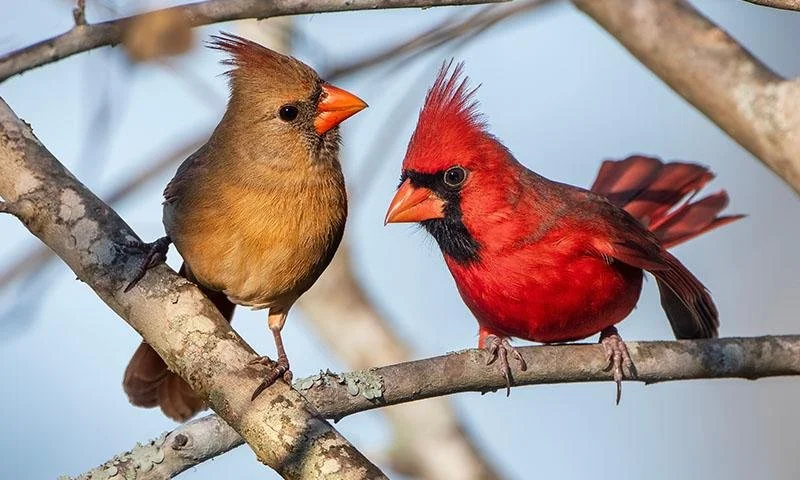
The Bird Almost Everyone Learns First
The Northern Cardinal may be the perfect beginner bird.
Bright red males look almost unreal against green summer vegetation. Add the pointed crest, thick orange bill, and black face mask and there simply is not much else that looks remotely similar in the East. But they can quickly “disappear” once they hop into the shadows.
Even the female — often overlooked by beginners — is surprisingly easy once you know what to watch for:
warm tan or buffy body
reddish highlights in wings and tail
thick orange-red bill
crest shape
One of the best things about cardinals is that they remain visible even during quieter summer months. While some birds become secretive during nesting season, cardinals still visit feeders regularly and often sing throughout summer mornings. They are common and widespread almost everywhere throughout the eastern half of the U.S.
Their song is also wonderfully distinctive:
“cheer-cheer-cheer” or “birdy-birdy-birdy.”
And unlike many songbirds, both males and females sing.
That surprises many beginning birders.
Why Cardinals Are Great Teachers
Cardinals help beginners learn:
sexual dimorphism (male and female differences)
how bill shape indicates diet
how birds use dense shrubs for nesting cover
how sound helps identify hidden birds
They are also forgiving birds for new binocular users. Cardinals tend to sit still longer than many hyperactive warblers or vireos.
Honestly, if a beginner spends one summer truly studying cardinals, they already start developing real birding instincts.
2. Red-winged Blackbird
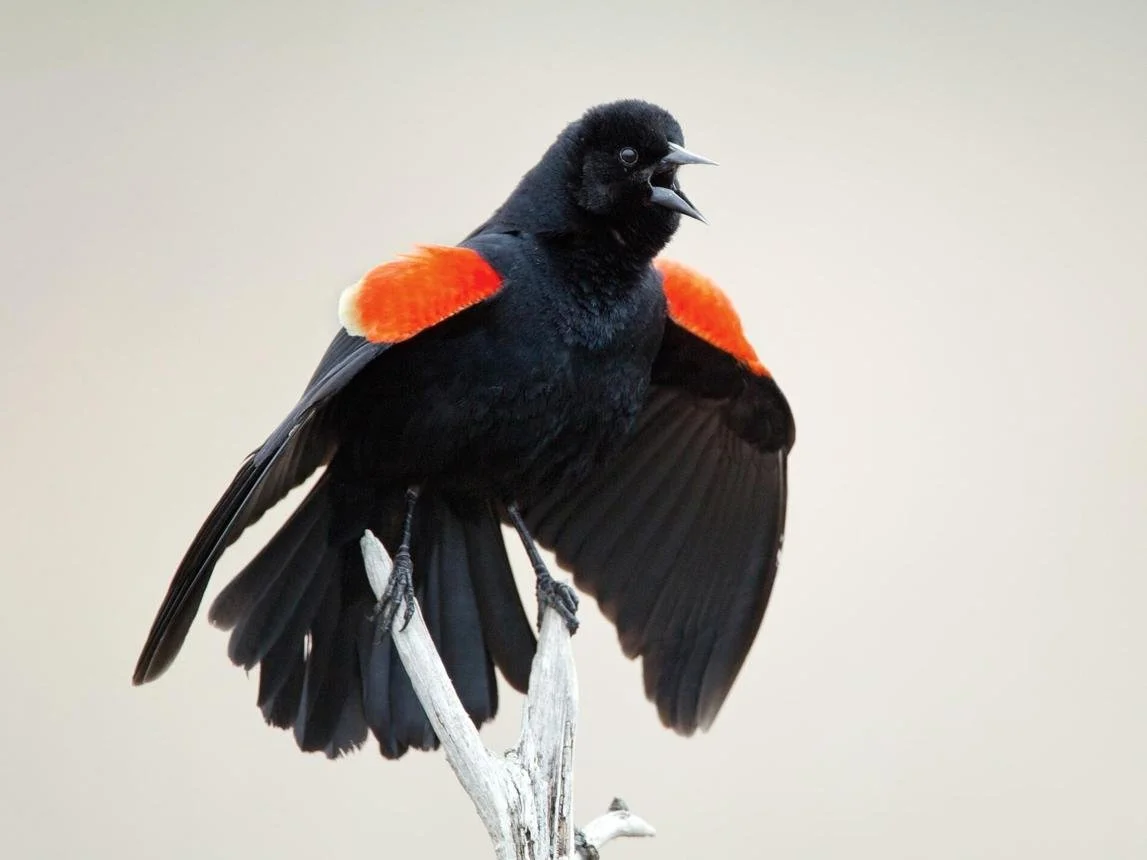
The Marsh Bully Everyone Notices
If you visit almost any marsh, pond edge, roadside wetland, or drainage ditch in eastern North America during summer, you will probably hear the Red-winged Blackbird before you see it.
“Conk-la-REEEEE!”
Once you learn that sound, you never forget it.
The male is glossy black with blazing red-and-yellow shoulder patches called epaulets. When displaying, he flares those patches dramatically while clinging to cattails like a tiny feathered dictator defending his kingdom.
Few birds are easier to identify.
Females are a different story at first glance. They are heavily streaked brown and often mistaken for sparrows. But the habitat gives them away:
marsh vegetation
reeds
cattails
wet grassy edges
They also have a stronger, thicker blackbird shape than most sparrows.
Why They Matter for Birding Skills
Red-winged Blackbirds teach beginners one of the biggest birding lessons:
Habitat matters.
You stop asking:
“What bird is this?”
And start asking:
“What bird SHOULD be here?”
That shift changes everything.
You also quickly learn behavior clues:
males perch high and conspicuously
females stay lower and hidden
aggressive territorial displays
flocking behavior later in summer
And yes… they occasionally dive-bomb humans.
Welcome to birding.
3. Baltimore Oriole
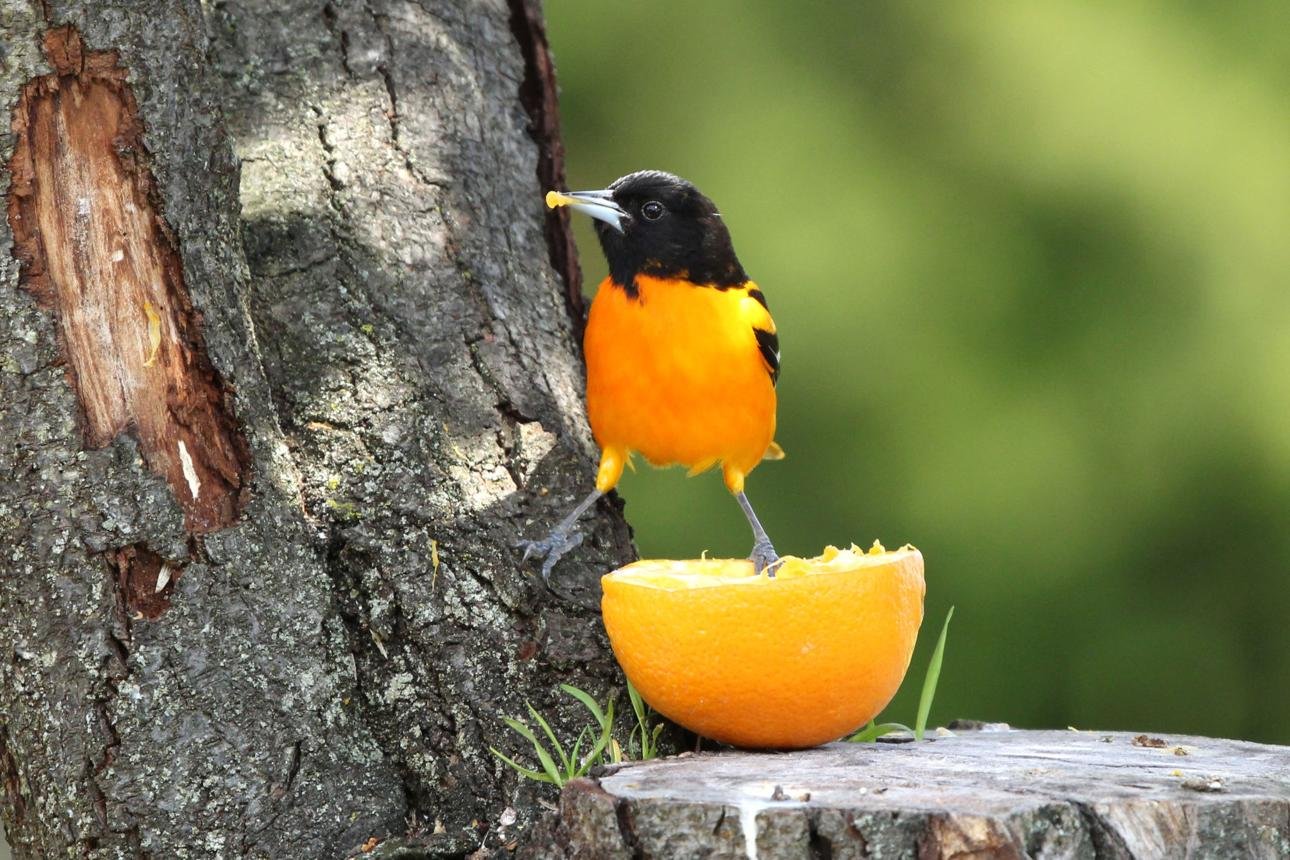
Summer’s Flying Flame
The Baltimore Oriole is one of those birds that makes people stop mid-sentence.
Black and brilliant orange.
Sharp patterns.
Clear contrasts.
Almost tropical-looking.
For beginners, orioles are wonderful because they combine:
bold color
distinctive body shape
obvious feeding habits
memorable voice
They also love some very beginner-friendly feeding tricks:
orange halves
grape jelly
nectar feeders
That means people often get prolonged views from patios or decks instead of trying to chase birds through deep woods.
Males are spectacularly easy to identify.
Females and immature birds are softer yellow-orange with grayish backs, but they still show:
long pointed bill
sleek body
energetic movements
preference for tree canopies
Orioles Teach Observation
Orioles help beginners notice:
feeding behavior
seasonal movement
canopy birding
hanging woven nests
And those nests are unbelievable.
If you’ve never seen one, they look like woven hanging socks suspended from tree branches.
Many beginners discover orioles not because they “went birding,” but because they accidentally attracted one to the backyard.
That’s one of the magical things about summer birding.
Sometimes the birds come to you.
4. Indigo Bunting
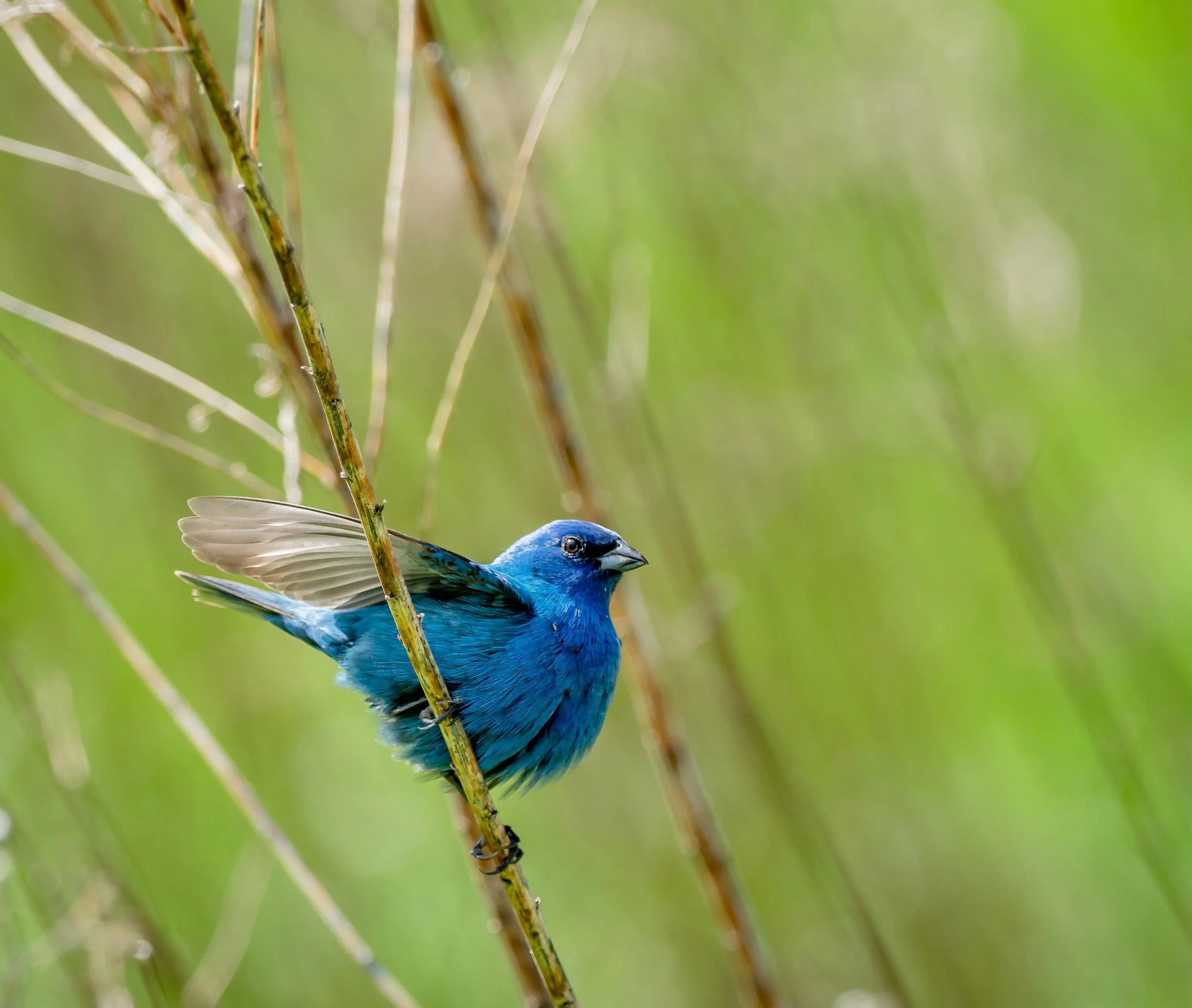
The Bird That Looks Electrically Blue
The Indigo Bunting almost doesn’t look real in good sunlight.
The male glows with deep electric blue plumage that shifts and changes depending on lighting angle. In shadow he may appear nearly black. In sunlight he can look neon.
And unlike many small songbirds, Indigo Buntings often perch out in the open:
fence posts
roadside wires
shrub tops
field edges
The males (especially in spring) declare a territory by perching at the highest point in a tree and singing their song thousands of times a day. Once summer arrives the vocal enthusiasm dies down some but in the summer sunshine that indigo blue explodes.
That makes them surprisingly easy to study.
Females are warm brown (reminiscent of a white-tailed deer tan) and admittedly more challenging, but they still share:
small finch-like shape
conical seed-eating bill
open-country habitat preferences
Why Indigo Buntings Help Beginners
These birds teach one of birding’s biggest lessons:
Lighting changes everything.
Bird colors are not static. Sun angle matters enormously.
They also help beginners learn:
edge habitat birding
song-perch behavior
seasonal timing
migration patterns
And their song feels wonderfully summery:
bright, hurried phrases delivered over and over from exposed perches.
For many eastern birders, hearing an Indigo Bunting singing from a country roadside is one of the true sounds of June.
5. Eastern Bluebird
The Bird That Makes Everyone Smile
The Eastern Bluebird may be the bird most responsible for turning casual observers into lifelong bird lovers.
They are approachable birds.
Not overly shy.
Not terribly fast-moving.
Comfortable around people.
And they love semi-open habitats:
parks
pastures
golf courses
orchards
rural yards
bluebird trails
Males combine rich blue upperparts with rusty-orange chests. Females are softer gray-blue but still elegant and distinctive.
Bluebirds also have wonderfully gentle behavior compared to some more aggressive feeder birds.
You often see them:
perched quietly on posts
dropping to the ground for insects
carrying food to nest boxes
gathering in family groups later in summer
Bluebirds Teach Big Birding Lessons
Eastern Bluebirds help beginners learn:
cavity nesting
insect-hunting behavior
family-group dynamics
conservation success stories
And that last part matters.
Bluebirds are cavity-nesters using abandoned woodpeckers holes or natural cavities in tree trunks and branches.
Bluebirds declined significantly decades ago due to human intervention (primarily clearing out dead trees and trees with broken limbs and competition from invasive species like House Sparrows and European Starlings. Nest box programs helped them rebound dramatically.
That means every bluebird can become a doorway into understanding conservation.
Not bad for a bird that mostly just looks cheerful.
Why Summer Is Actually GREAT for Beginning Birders
A lot of birders get discouraged in summer.
Spring migration feels explosive:
warblers everywhere
constant singing
new arrivals daily
Then summer arrives and suddenly things feel quieter.
But summer birding has hidden advantages:
birds stay in predictable territories
family groups become visible
fledglings appear
behaviors become easier to study
you can slow down
And slowing down is important.
Spring migration sometimes becomes “spot it and move on” birding.
Summer invites observation.
Instead of chasing rarity after rarity, you can truly study:
posture
feeding
song
molt
parenting behavior
habitat preferences
That is how real birding skills develop.
The five birds above are wonderful because they reward patient observation without overwhelming beginners.
They are visible.
Memorable.
Distinctive.
And perhaps most importantly — they build confidence.
A Final Thought
Learn the Common Birds Deeply
Beginning birders sometimes worry too much about finding rare species.
But excellent birders usually know common birds extraordinarily well.
They notice tiny differences because they first learned the basics deeply:
shape
movement
habitat
posture
behavior
sound
That journey often starts with birds exactly like these:
cardinals
blackbirds
orioles
buntings
bluebirds
So this summer, instead of worrying about identifying every confusing little brown bird hidden in dense leaves, spend time truly studying the obvious species. We’ll tackle LBJs (little brown jobs) soon enough.
Watch how they move.
Listen to how they sound.
Notice where they perch.
Learn how males and females differ.
Observe how they react to weather, predators, and each other.
Birding gets easier when your brain builds strong “anchor birds.”
And these five species may be some of the very best anchors eastern birders could ask for.
Continue your skill improvement with this post “BE A BETTER BIRDER”.
