

5 Easiest Birds to ID in Summer - Great Plains Region
A Quick Guide:
Beginning birders in the Midwest and Great Plains have some wonderful advantages in summer. Birds are often visible out in the open, many species are brightly colored, and several common birds practically announce themselves before you even raise your binoculars.
One of the fastest ways to grow as a birder is to start with birds that are easy to recognize. Confidence matters. The more success you have identifying common birds, the faster your brain begins noticing field marks, behavior, shape, movement, and habitat.
In the eastern installment of this series, we focused on birds like Northern Cardinals and Baltimore Orioles — species with strong colors and recognizable habits. The Great Plains and Midwest have their own “birding teachers.” These are birds that help new birders learn quickly because they are bold, vocal, visible, or simply unforgettable once you’ve seen them well.
Today we’ll focus on five excellent summer birds for beginning birders across the Midwest and Great Plains:
Western Meadowlark
Scissor-tailed Flycatcher
Red-winged Blackbird
Eastern Kingbird
American Goldfinch
These birds occur across much of the central United States during summer, especially in grasslands, farm country, wetlands, parks, and backyard habitats.
Let’s meet your next five birding teachers.
1. Western Meadowlark
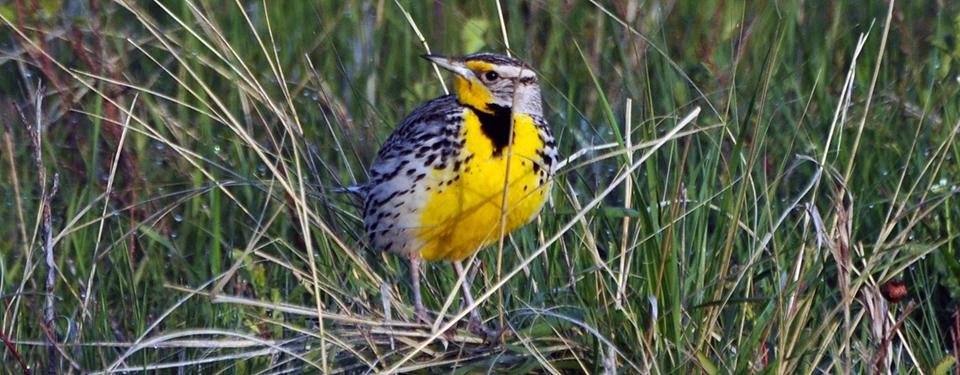
The Singing Prairie Bird
If there is one bird that sounds like the Great Plains in summer, it may be the Western Meadowlark.
Many beginning birders first notice the song before they ever see the bird. The Western Meadowlark delivers a rich, flute-like series of whistles that somehow feels bigger than the open prairie itself.
Then you finally spot one perched on a fence post.
And suddenly the identification becomes easy.
Why It’s Easy to Identify
The Western Meadowlark has several bold field marks:
Bright yellow chest and belly
Large black “V” on the chest
Chunky body shape
Short tail
Often perched upright on posts or shrubs
The yellow underparts almost glow in morning sunlight. Once you notice that black chest “bib,” you’ll begin recognizing meadowlarks surprisingly quickly.
Habitat
Look for them in:
Grasslands
Hay fields
Ranch country
Prairie preserves
Roadsides with open fields nearby
Western Meadowlarks like open country. If the landscape feels wide and grassy, you are in good meadowlark territory.
Beginner Birding Tip
Don’t just identify the bird — identify the behavior.
Meadowlarks often sing from elevated perches like fence posts, wire fences, or lone shrubs. That upright “prairie sentinel” posture becomes part of the identification process.
Birding improves dramatically when you combine:
color,
shape,
habitat,
and behavior.
2. Scissor-tailed Flycatcher
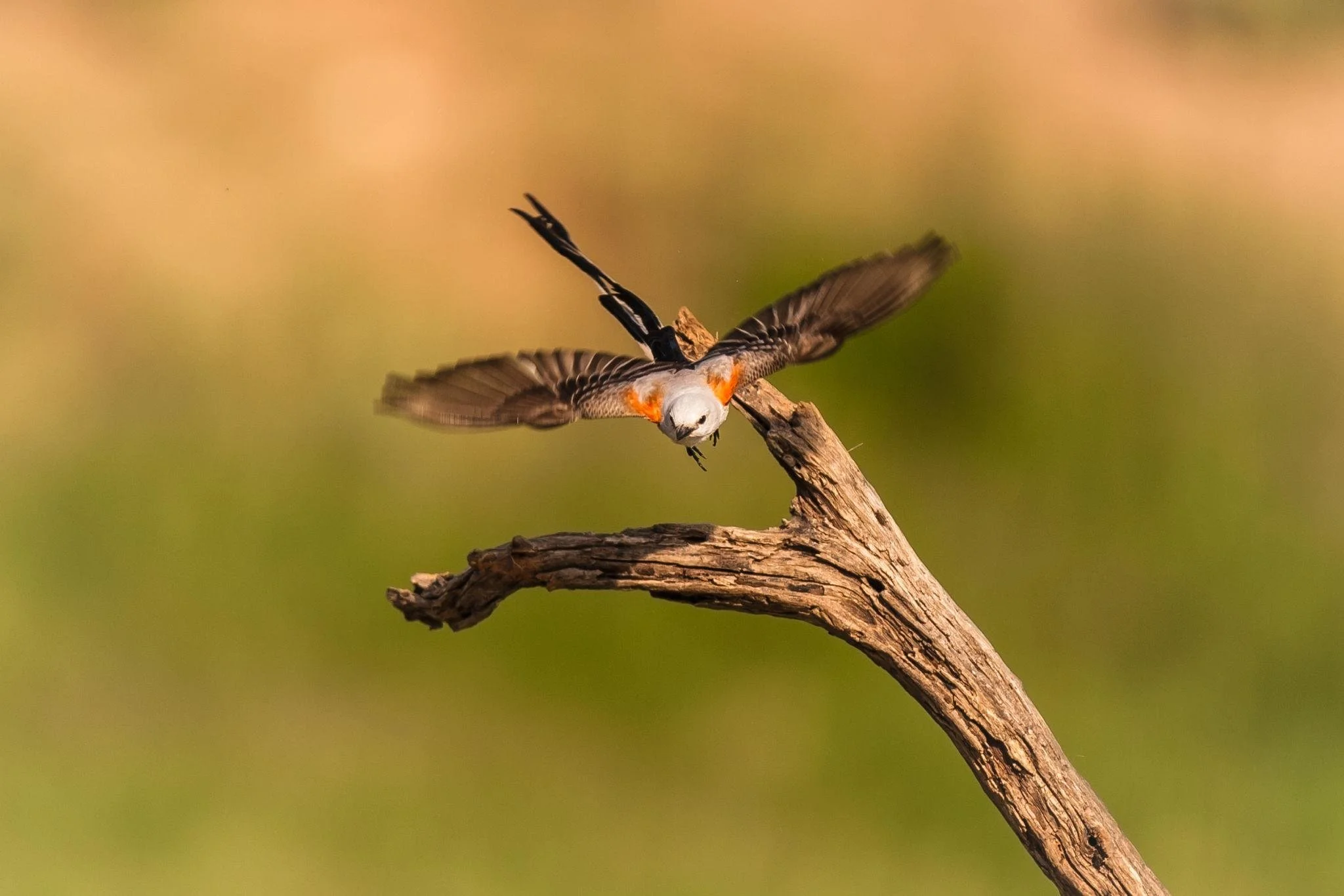
The Bird That Looks Too Fancy to Be Real
The Scissor-tailed Flycatcher almost looks like someone designed a bird specifically to help beginners.
That tail alone is unforgettable.
In summer, these birds are common across portions of Oklahoma, Kansas, Texas, and nearby Great Plains regions. Once you’ve seen one, you usually remember it forever.
Why It’s Easy to Identify
Key field marks include:
Extremely long forked tail
Pale gray body
Black wings
Salmon-pink sides under the wings
Graceful flight style
The tail can appear ridiculously long, especially on males.
Many beginning birders first notice them sitting on utility wires or roadside fences. Others notice the dramatic aerial flight as the bird twists and turns after flying insects.
Habitat
Scissor-tailed Flycatchers favor:
Open country
Ranch land
Farm edges
Roadsides
Small towns with scattered trees
They like open visibility where they can launch after insects.
Beginner Birding Tip
Watch how flycatchers hunt.
The bird perches…
flies out…
grabs an insect…
then returns to the perch.
That “perch-and-sally” behavior is classic flycatcher behavior and helps you identify many species later on.
The Scissor-tailed Flycatcher becomes an excellent introduction to bird behavior as an identification tool.
3. Red-winged Blackbird
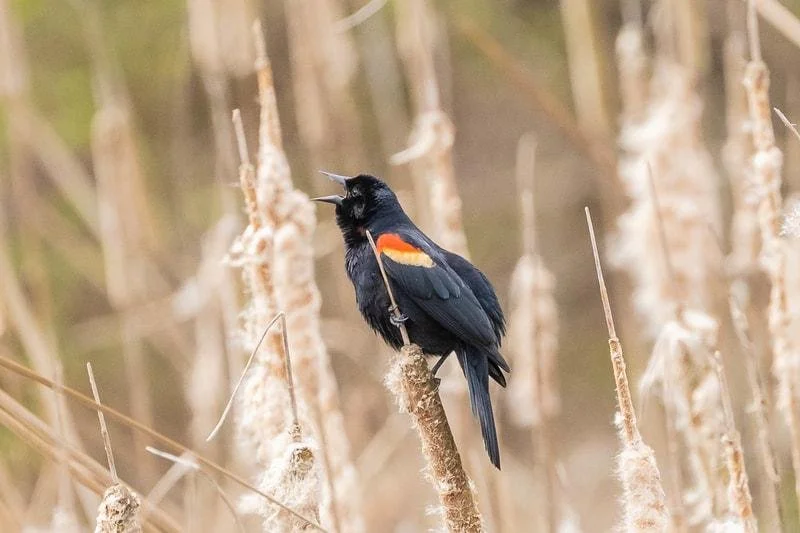
The Marsh Bird Everybody Notices
Few summer birds are more widespread or easier to notice than the Red-winged Blackbird.
Even non-birders often recognize them.
The males are glossy black with brilliant red-and-yellow shoulder patches called epaulets. They perch on cattails and loudly announce ownership of the marsh.
Honestly, they can sound a little dramatic.
Why It’s Easy to Identify
Look for:
Jet black body (male)
Bright red shoulder patches
Pointed bill
Loud scratchy song
Wetland habitat
The song often sounds like:
“Conk-la-REEEEE!”
Once you connect that sound to the bird, identification becomes much easier.
Don’t Forget the Females
Female Red-winged Blackbirds look completely different.
They are:
heavily streaked brown,
sparrow-like,
with a pale eyebrow stripe.
Beginning birders are often shocked to learn the male and female belong to the same species.
That’s actually an important learning moment in birding:
many birds show strong differences between males and females.
Habitat
Look near:
Marshes
Wetlands
Farm ponds
Roadside ditches
Retention ponds
Even small wet areas can attract Red-winged Blackbirds.
Beginner Birding Tip
Use sound aggressively while birding.
Birding is not just visual. Experienced birders often identify birds by sound before they ever see them.
The Red-winged Blackbird is one of the best “starter birds” for learning bird songs.
4. Eastern Kingbird
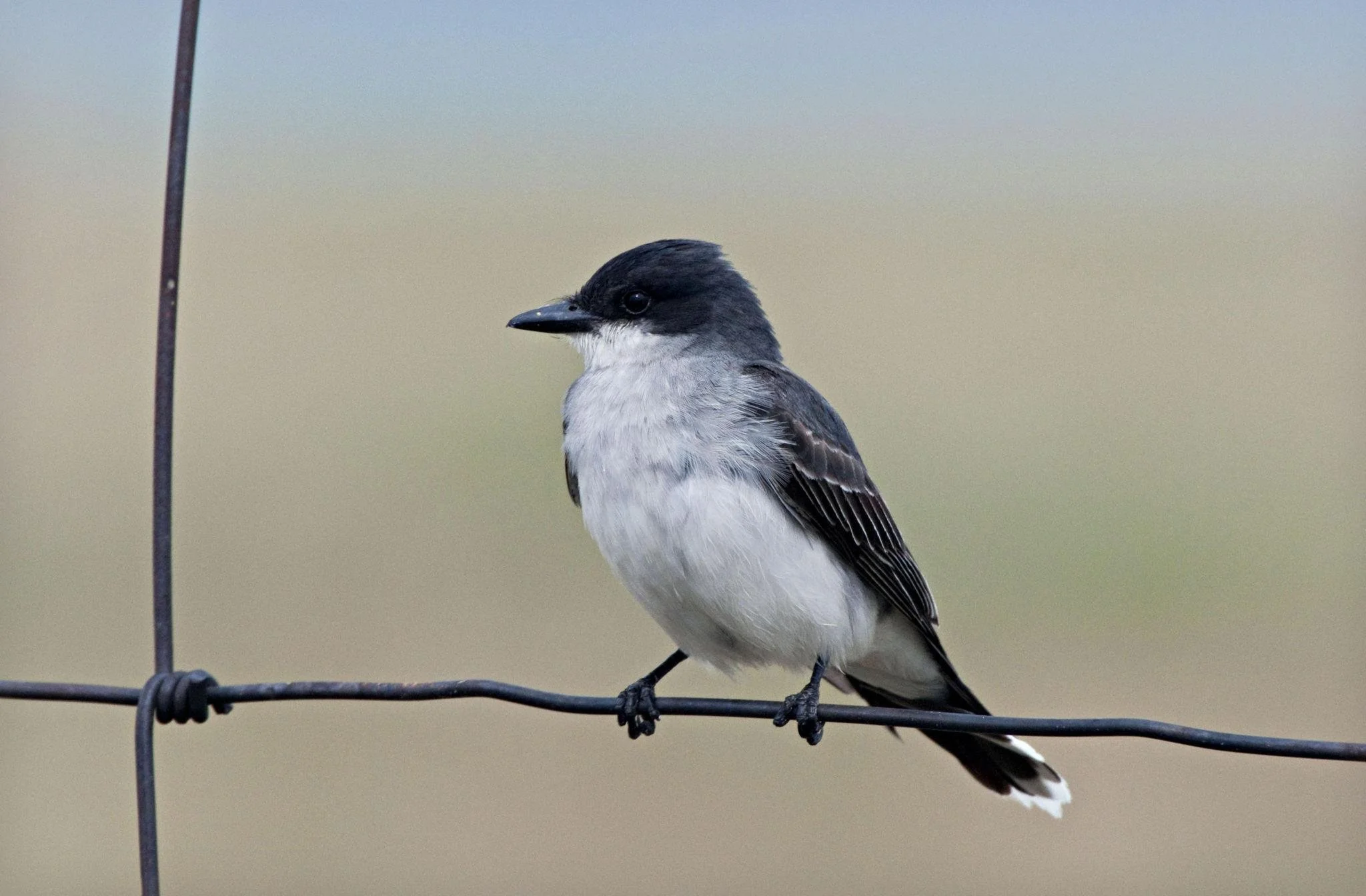
The Fearless Fence-Line Bird
The Eastern Kingbird may not have flashy colors, but it has personality.
Lots of personality.
Kingbirds are famously aggressive toward larger birds. They will chase crows, hawks, vultures — almost anything that enters their territory.
Seeing a small bird harass a hawk is something beginning birders tend to remember.
Why It’s Easy to Identify
Eastern Kingbirds are clean-looking birds with:
Dark charcoal head
White throat and chest
Black back
Sharp white tail tip
Upright posture
The bold black-and-white contrast makes them easier to identify than many smaller gray songbirds.
Habitat
Look in:
Pastures
Fence rows
Rural roadsides
Open woodland edges
Parks with scattered trees
They frequently sit on exposed perches waiting for insects.
Beginner Birding Tip
Notice silhouettes.
Even before colors become obvious, birders often recognize shape and posture.
Eastern Kingbirds have:
large heads,
upright posture,
straight posture on wires or branches,
and quick aerial sallies.
Learning silhouettes helps tremendously once birds move farther away.
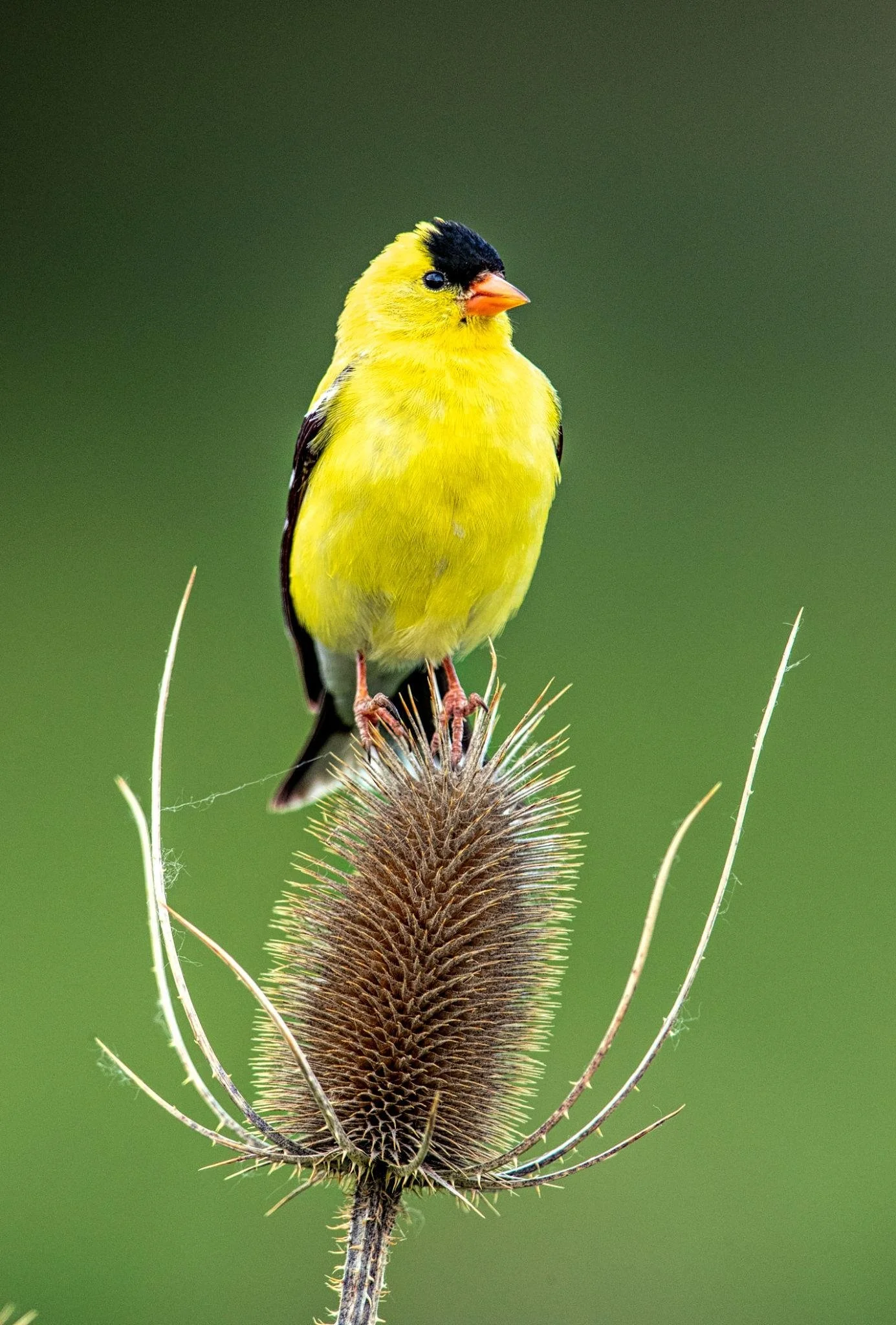
5. American Goldfinch
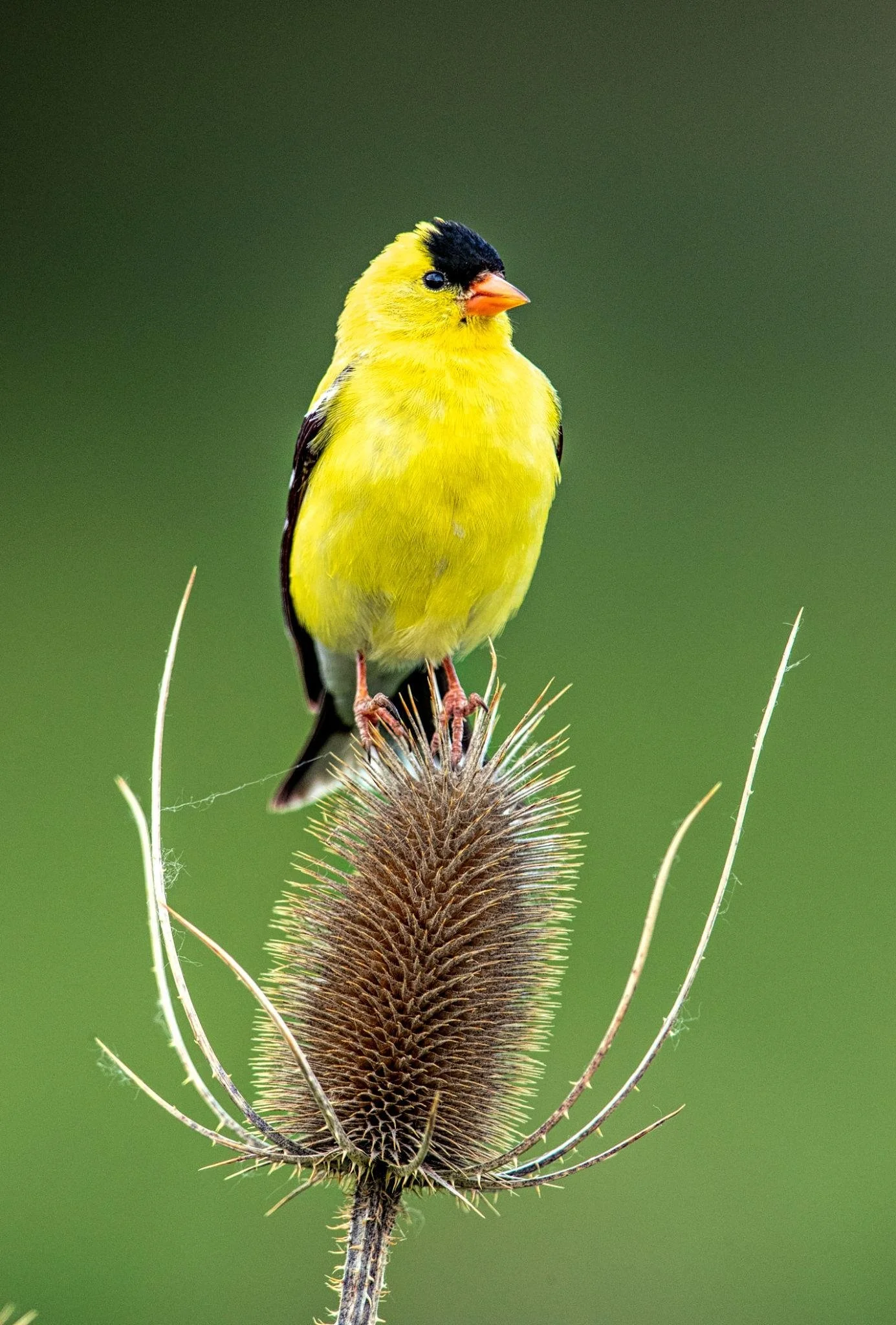
The Flying Piece of Sunshine
The American Goldfinch is one of the happiest-looking birds in North America.
In summer, males become brilliantly yellow with black wings and a black cap. They bounce through fields and backyard feeders like tiny flying lanterns.
Why It’s Easy to Identify
Field marks include:
Bright lemon-yellow body (males)
Black wings with white markings
Small finch bill
Bouncy flight pattern
Musical call notes
Their flight is wonderfully distinctive:
up-down…
up-down…
up-down…
Almost rollercoaster-like.
Habitat
Look for goldfinches around:
Backyard feeders
Sunflower patches
Weedy fields
Prairie flowers
Thistle patches
Nyjer feeders often attract them quickly.
Beginner Birding Tip
Pay attention to movement style.
Every species moves differently.
Goldfinches have:
buoyant flight,
acrobatic feeding habits,
and soft musical calls.
Movement can become just as important as plumage.
Why These Birds Matter for Beginning Birders
These five species teach important birding lessons:
Bird Skill It Teaches
Western Meadowlark Song + habitat
Scissor-tailed Flycatcher Shape + behavior
Red-winged Blackbird Sound + male/female differences
Eastern Kingbird Silhouette + posture
American Goldfinch Movement + color
This is exactly how birding skills grow.
Not from memorizing hundreds of species overnight.
But from learning:
one shape,
one behavior,
one song,
one habitat,
at a time.
Birding becomes easier when your brain starts recognizing patterns. Use those patterns to solve bird identity mysteries. Head shape + bill structure + color/field marks + habitat + geographic region + song + behavior = 1 unique species of bird.
And summer is actually a wonderful season to practice.
Yes, birds may become quieter after nesting begins. Some species disappear into thicker vegetation. Midday birding can feel slower. Weather may even work against you.
But summer also gives birders something valuable:
time.
You can slow down.
Watch behavior.
Study field marks.
Practice listening.
That’s how real birding skills develop.
Final Thoughts
The Great Plains and Midwest may not always receive the same birding attention as migration hotspots or coastal regions, but summer birding here can be deeply rewarding.
Prairie songs at sunrise.
Goldfinches glowing over wildflowers.
Scissor-tailed Flycatchers dancing over country roads.
Meadowlarks singing from old fence posts.
These are unforgettable birding experiences.
And if you are just getting started, these five birds can help build the confidence that turns casual interest into lifelong birding.
Sometimes the best way to become a better birder is surprisingly simple:
Learn the common birds extremely well first.
Everything else grows from there.
