

5 Easiest Birds to ID in Summer: West of the Rockies Edition
Summer is a wonderful time to learn bird Identification
Yes, spring migration gets all the attention. Rare warblers, colorful migrants, and the excitement of finding something unexpected can be thrilling. But for beginning birders, summer offers something migration often does not: consistency.
Birds are settled into territories. They are feeding young, defending nesting areas, and carrying out predictable daily routines. That means you can observe them repeatedly and build confidence with each encounter.
One of the best ways to improve your birding skills is to focus on a handful of common species and really get to know them. Learn their shape, behavior, habitat preferences, and key field marks. Once those species become familiar, identifying other birds becomes much easier.
In our Eastern U.S. edition, we focused on species like Northern Cardinal and Eastern Bluebird. In our Great Plains edition, we explored birds that dominate prairies, grasslands, and agricultural landscapes.
This time we're heading west of the Rocky Mountains, from the Pacific Coast to the deserts, mountains, and open spaces of the West.
These five birds are common, distinctive, and relatively easy for beginning birders to identify during the summer months.
Let's meet them.
1. California Scrub-Jay
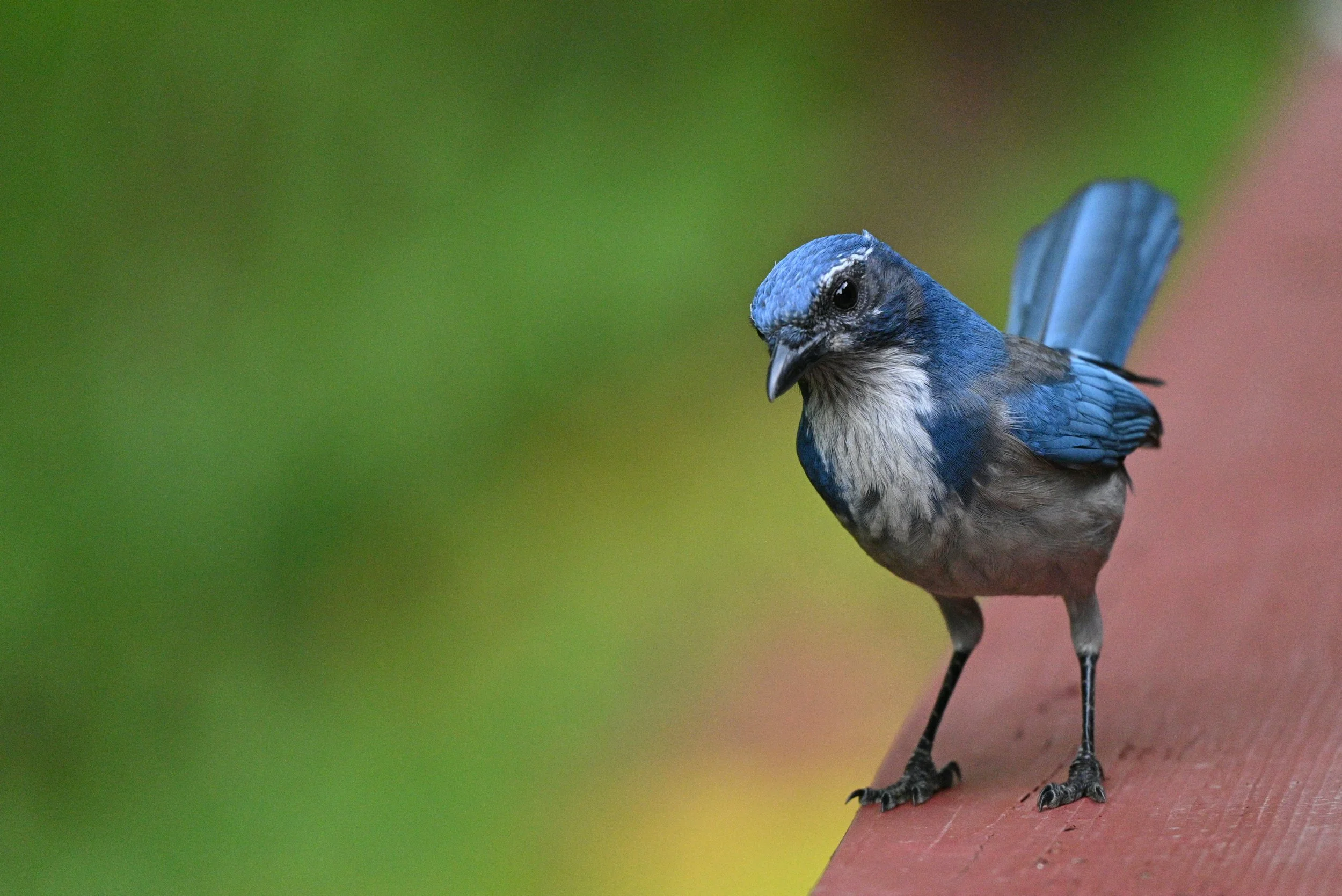
If you live anywhere along much of the West Coast, chances are you've already met this bird.
The California Scrub-Jay is bold, intelligent, noisy, and impossible to ignore.
Unlike many smaller songbirds that hide in foliage, scrub-jays often perch in the open, hopping along fences, rooftops, and backyard feeders with confidence.
And if you’re birding in the interior western states, you’ll encounter the CSJ’s close cousin - the Woodhouse Scrub-Jay.
Key Field Marks
Bright blue head, wings, and tail
Grayish-white belly
Distinct blue necklace across the chest
Long tail
Sturdy black bill
The combination of blue upperparts and gray underparts makes this bird surprisingly easy to identify.
Behavior Clues
Scrub-jays seem to have opinions about everything.
They loudly announce predators, chase other birds, and often investigate anything unusual in their territory. They are also famous for caching acorns and other food items for later use.
When you hear harsh "shack-shack-shack" calls coming from a tree, a scrub-jay is often involved.
Habitat
Suburban neighborhoods
Oak woodlands
Parks
Chaparral
Backyard feeding stations
Beginner Tip
Pay attention to the bird's attitude.
Many birds are blue, but few carry themselves quite like a scrub-jay. Their confidence and curiosity quickly become recognizable.
2. Black-headed Grosbeak
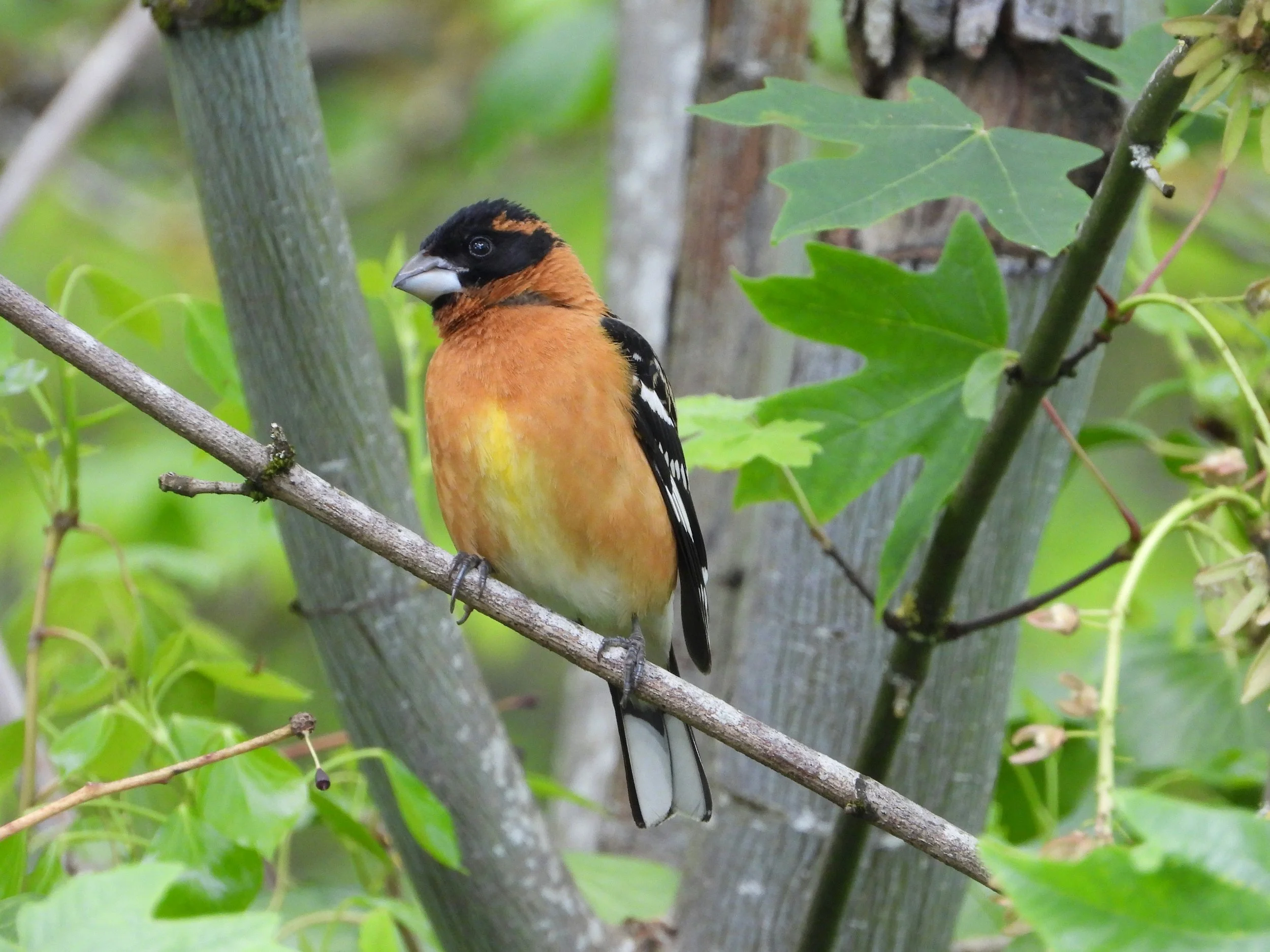
Many beginning birders initially think they've discovered a strange robin.
Then they take a closer look.
The Black-headed Grosbeak is one of the most beautiful summer songbirds in the western United States.
Key Field Marks
Male:
Black head
Rich cinnamon-orange breast
White wing patches
Thick pale bill
Female:
Brown and streaked
Large pale eyebrow
Heavy seed-cracking bill
Behavior Clues
Grosbeaks spend much of their time feeding quietly among branches.
They frequently visit sunflower feeders and can often be observed singing from exposed perches.
Their song sounds surprisingly similar to an American Robin, although many birders describe it as a richer, more musical version.
Habitat
Open woodlands
Streamside forests
Parks
Residential areas with mature trees
Beginner Tip
Look at the bill.
The oversized triangular bill immediately places this bird in the grosbeak family. Once you learn that shape, you'll begin noticing it instantly.
3. Golden Eagle
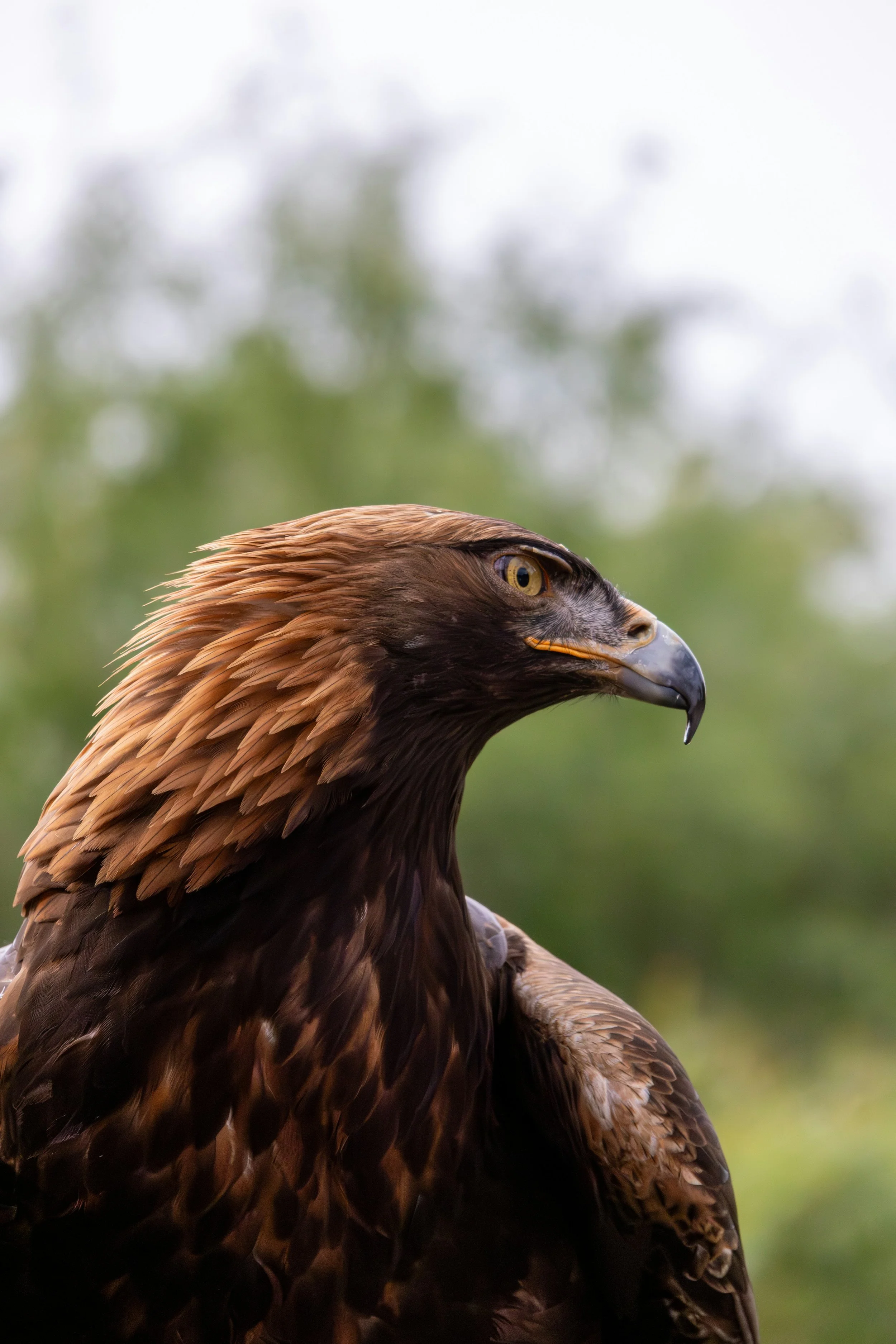
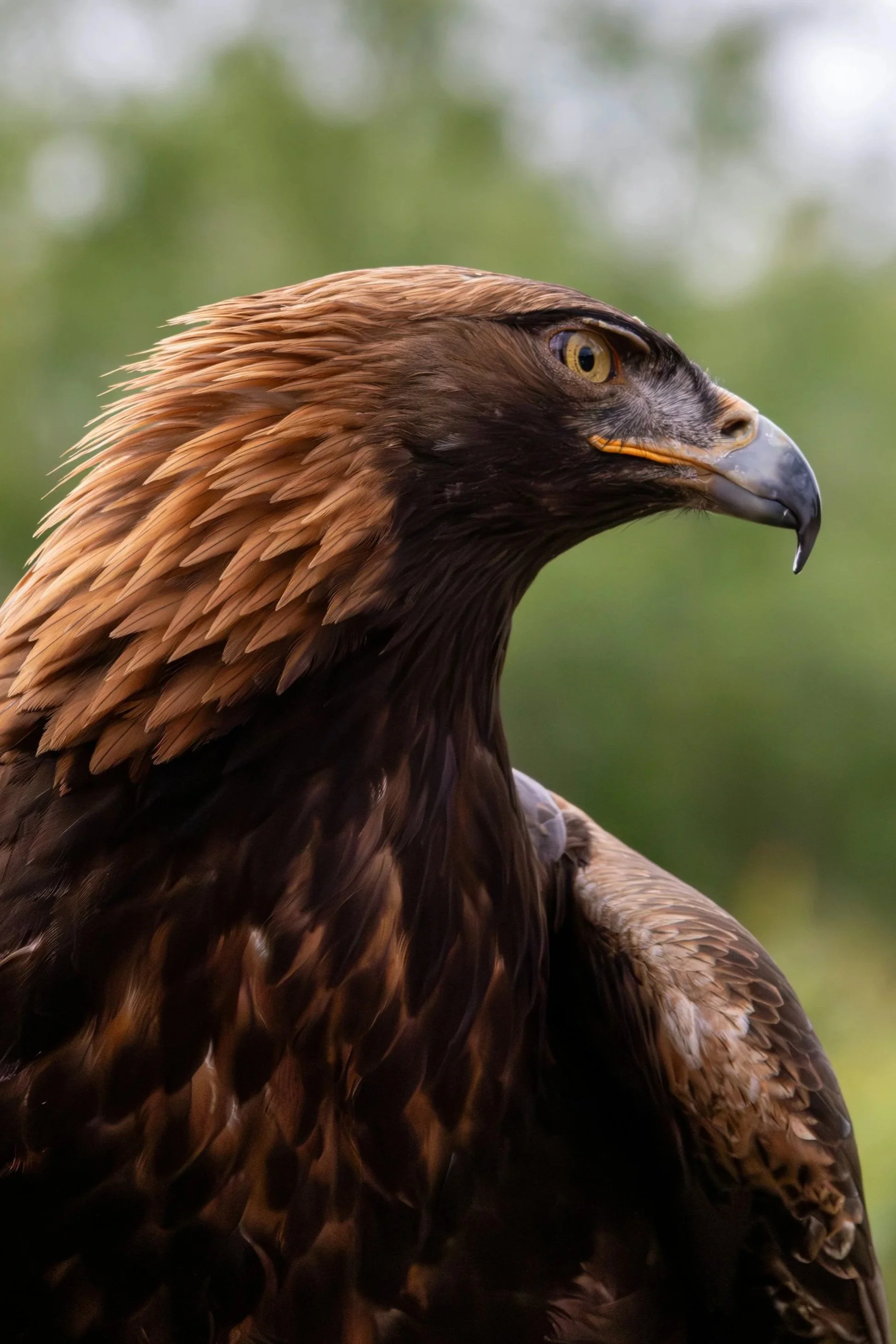
Every beginning birder dreams of seeing a large bird of prey soaring overhead.
In much of the West, that bird may be a Golden Eagle.
The Golden Eagle remains one of North America's most impressive birds. Despite its size, many newcomers overlook it because they assume every large raptor is a Bald Eagle or a Turkey Vulture.
Learning the differences is easier than you might think.
Key Field Marks
Huge wingspan
Dark brown body
Golden-colored feathers on the back of the head and neck
Long tail
Broad wings held slightly raised in a shallow V when soaring
Adults lack the bright white head and tail of a Bald Eagle.
Behavior Clues
Golden Eagles often soar for long periods without flapping.
They use rising air currents to cruise above ridges, grasslands, and mountain slopes while searching for prey.
Unlike many hawks that remain near forests, Golden Eagles often favor open country.
Habitat
Mountains
Sagebrush country
Grasslands
Desert regions
Open canyons
Beginner Tip
When you see a huge raptor far from major lakes or rivers, take a close look.
If it's uniformly dark with a golden glow on the neck, you may be watching one of North America's most magnificent birds.
Why They're Great Learning Birds
Golden Eagles teach beginners an important lesson:
Size matters.
Learning relative size is one of the fastest ways to improve identification skills. A Golden Eagle simply looks enormous compared to most hawks.
Don’t assume.
Notice as many field marks as you can so you can correctly discern the ID. AND enjoy the moment, Golden Eagles are a magnificent bird to experience and enjoy.
4. Acorn Woodpecker
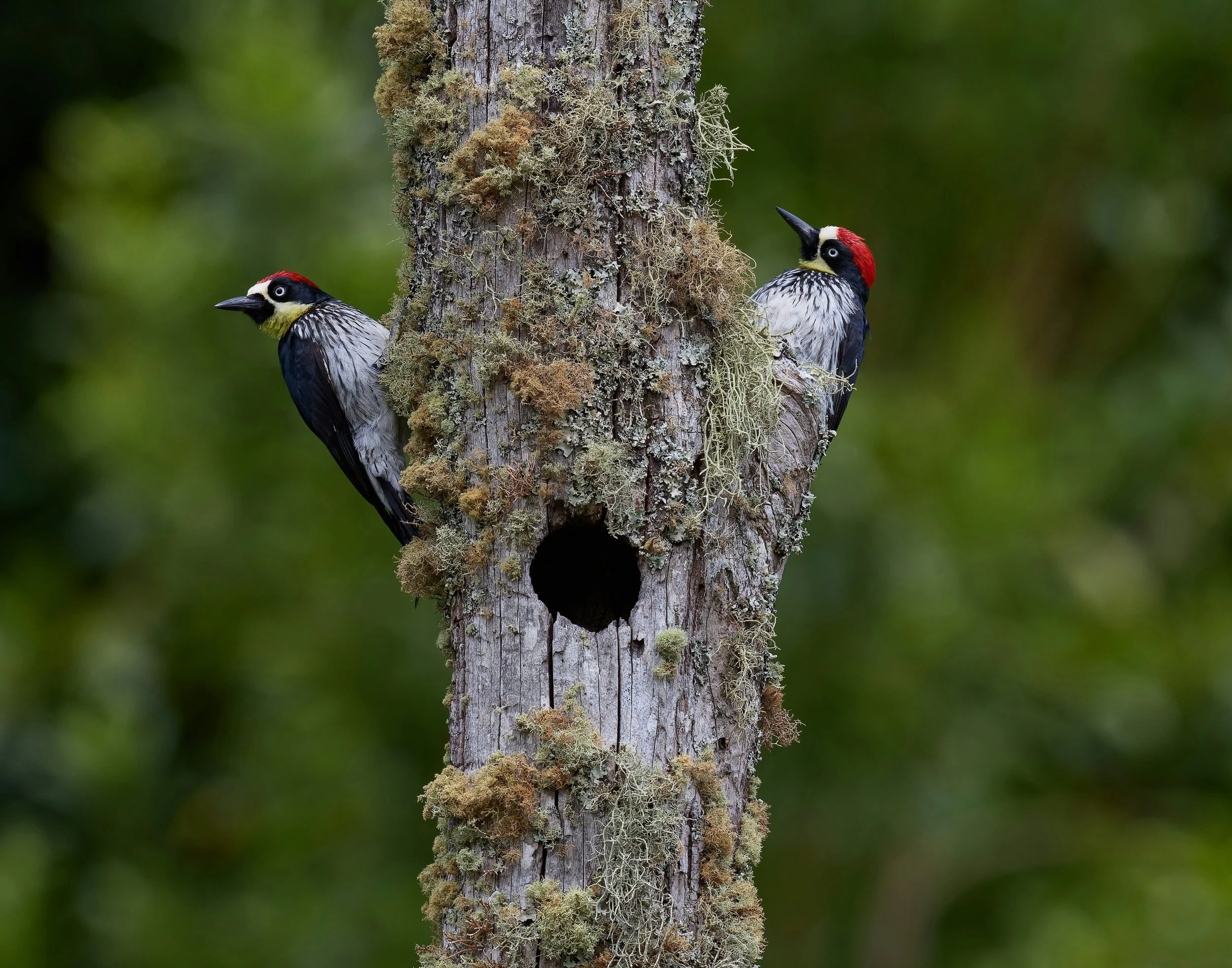
If birds had comedians, the Acorn Woodpecker might win the award.
Everything about this species is memorable.
From its clown-like face to its unusual social behavior, this bird is difficult to forget once you've seen one.
Key Field Marks
Black back
White face
Red crown
Bright white eyes
Sharp black-and-white pattern
The facial pattern alone makes identification straightforward.
Behavior Clues
Acorn Woodpeckers live in family groups and are famous for storing thousands of acorns in specially created "granary trees."
These birds drill holes in bark, utility poles, and dead trees, then pack acorns into the holes for future use.
You may hear loud calls and discover several birds moving together through an area.
Habitat
Oak woodlands
Foothills
Suburban parks with mature oaks
Beginner Tip
If you see a woodpecker with a clown-like face and a loud personality, you're probably looking at an Acorn Woodpecker.
Their social nature often makes them easier to observe than many other woodpeckers.
5. American White Pelican

Sometimes the easiest bird to identify is the one nobody expects.
Every summer I hear the same question from curious neighbors and beginning birders:
"What are those huge white birds circling way up in the sky?"
Most people guess gulls. Some suggest geese.
When I tell them they're American White Pelicans, they often don't believe me.
After all, aren't pelicans supposed to be sitting on the beach?
Not necessarily.
Throughout much of the West, American White Pelicans spend the summer on inland lakes, reservoirs, marshes, and rivers. They can travel long distances between feeding and resting areas and are often seen soaring high overhead.
Key Field Marks
Enormous size
Bright white body
Black flight feathers visible in flight
Long orange bill
Broad wings
At nearly a 9-foot wingspan, they are among the largest birds many beginning birders will ever encounter.
Behavior Clues
White Pelicans often soar in groups using rising warm air currents.
From a distance, they may appear as large white birds circling effortlessly against a blue sky.
Watching a flock of pelicans climb higher and higher on a thermal is one of the most beautiful sights in birding.
I've often described them as looking like graceful ballerinas dancing in unison.
Each bird seems perfectly synchronized with the others as the flock circles upward without a single wingbeat.
Once you've seen it, you'll never forget it.
Habitat
Inland lakes
Reservoirs
Marshes
Rivers
Wetlands
Beginner Tip
Don't automatically assume every pelican belongs on the coast.
Many of the American White Pelicans you'll encounter in summer are hundreds of miles from the ocean.
Why They're Great Learning Birds
White Pelicans teach a lesson every birder eventually learns:
Expect surprises.
Birds don't always follow our assumptions.
The next time you see a flock of giant white birds circling high overhead, take a closer look.
You may be watching one of the most elegant spectacles summer birding has to offer.
A Pattern You'll Notice
Did you notice something about these five birds?
They're all easy to identify for different reasons.
BirdWhat Makes It Easy
California Scrub-Jay: Bright blue color and bold behavior
Black-headed Grosbeak: Distinctive bill and rich colors
Golden Eagle: Massive size and soaring flight
Acorn Woodpecker: Unique face pattern
American White Pelican: Often seen in large flocks and large size when soaring
Beginning birders often think bird identification is about memorizing hundreds of species.
It isn't.
It's about learning to notice the feature that matters most.
When you can identify a bird because of its size, shape, behavior, habitat, or one standout field mark, the process becomes much less overwhelming.
Build Confidence Through Repetition
One of the most valuable things you can do this summer is revisit the same locations repeatedly.
Visit your neighborhood park.
Walk the same trail.
Watch the same feeder.
Observe the same birds over and over.
Birding skill isn't built by seeing the most birds. It's built by noticing more each time you see them.
Eventually you'll stop saying:
"What bird is that?"
And start asking:
"Why is that bird behaving differently today?"
That's when birding gets really interesting.
Continue the Summer Bird ID Series
If you're following along with our "Easiest Birds to ID in Summer" series, be sure to check out the other regional editions:
Eastern U.S. Edition
Learn species such as:
Northern Cardinal
Eastern Bluebird
Baltimore Oriole
American Goldfinch
Red-winged Blackbird
Great Plains & Midwest Edition
Featuring birds such as:
Western Meadowlark
Eastern Kingbird
American Kestrel
Barn Swallow
Upland Sandpiper
Southwest Edition
Explore some of the West's most distinctive birds, including:
Greater Roadrunner
Gambel's Quail
Curve-billed Thrasher
Cactus Wren
Vermilion Flycatcher
From desert washes and cactus-studded landscapes to open ranch country, these species introduce beginning birders to some of North America's most unique habitats and unforgettable birds.
Together, these regional guides cover many of the most recognizable summer birds in North America and provide an excellent foundation for beginning birders.
The more familiar species you learn, the easier every future identification becomes.
And that's exactly how birding confidence grows—one familiar bird at a time.
Happy birding!
