

5 Easiest Birds to ID in Summer - Southwest Region
Hot weather - hot birds
If you've ever looked across a Southwestern landscape and thought, "Well, this doesn't look anything like the East," you're absolutely right.
The Southwest has its own personality. The scenery is different. The weather is different. The plants are different. And, thankfully for beginning birders, many of the birds are different too.
That makes bird identification surprisingly fun.
One of the biggest challenges for new birders is feeling overwhelmed by the sheer number of species that might be possible. In our earlier posts, we focused on five easy birds to identify in the Eastern United States and five beginner-friendly species of the Great Plains and Midwest. The goal wasn't to memorize hundreds of birds—it was to build confidence by learning a handful of common species extremely well.
We're continuing that approach today.
The Southwest is famous for spectacular birds. Brilliant colors, long tails, unique shapes, and bold behaviors make many species easier to identify than you might expect. While every region has its tricky birds, these five are among the easiest summer birds for beginning birders to learn throughout much of Arizona, New Mexico, western Texas, southern Nevada, and parts of southern California.
Let's meet some birds that practically introduce themselves.
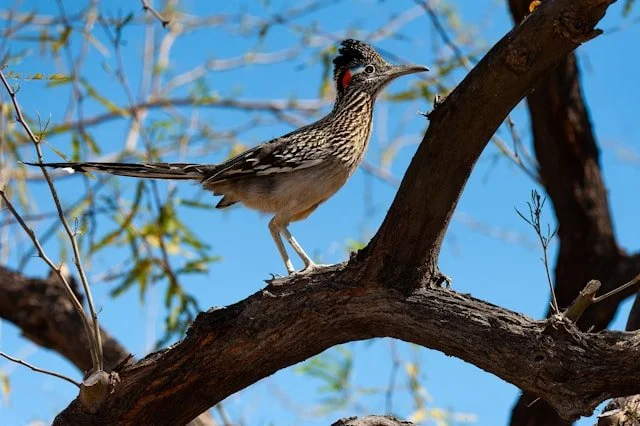
1. Greater Roadrunner
"Beep-beep!"
Even people who have never been birding recognize a roadrunner.
That alone makes it one of the easiest birds to identify in the Southwest.
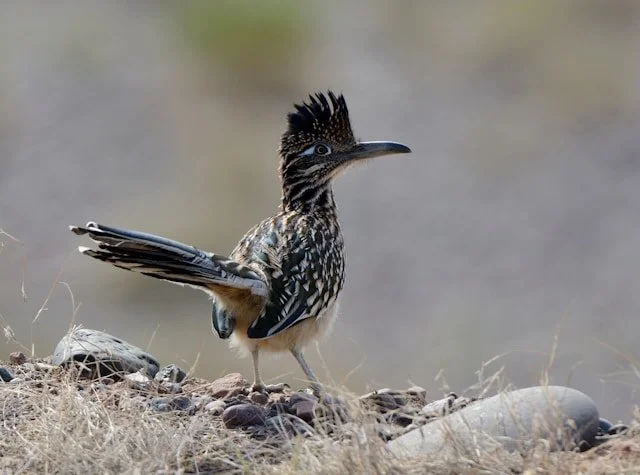
Roadrunners don't look like anything else in North America. They're large (think skinny chicken), long-legged birds with extremely long tails, streaked brown plumage, and a distinctive crest that can be raised or lowered depending on their mood.
Most people expect them to run—and that's exactly what they do.
Roadrunners spend much of their day on the ground hunting insects, lizards, snakes, small rodents, and almost anything else they can catch. Instead of flying, they often sprint across roads, trails, and desert washes.
Why It's Easy to Identify
Long tail nearly as long as the body
Runs instead of hopping
Distinctive crest
Found mostly on the ground
No other Southwestern bird really looks similar
Habitat
Look for roadrunners in:
Desert scrub
Open cactus country
Ranchlands
Desert neighborhoods
Arroyos and washes
Beginner Tip
If you see a large bird running through the desert with its tail held almost parallel to the ground, you've probably identified your first roadrunner.
No field guide required.
2. Vermilion Flycatcher
If the roadrunner is the Southwest's comedian, the Vermilion Flycatcher is its showstopper.
Few North American birds possess such a brilliant color.
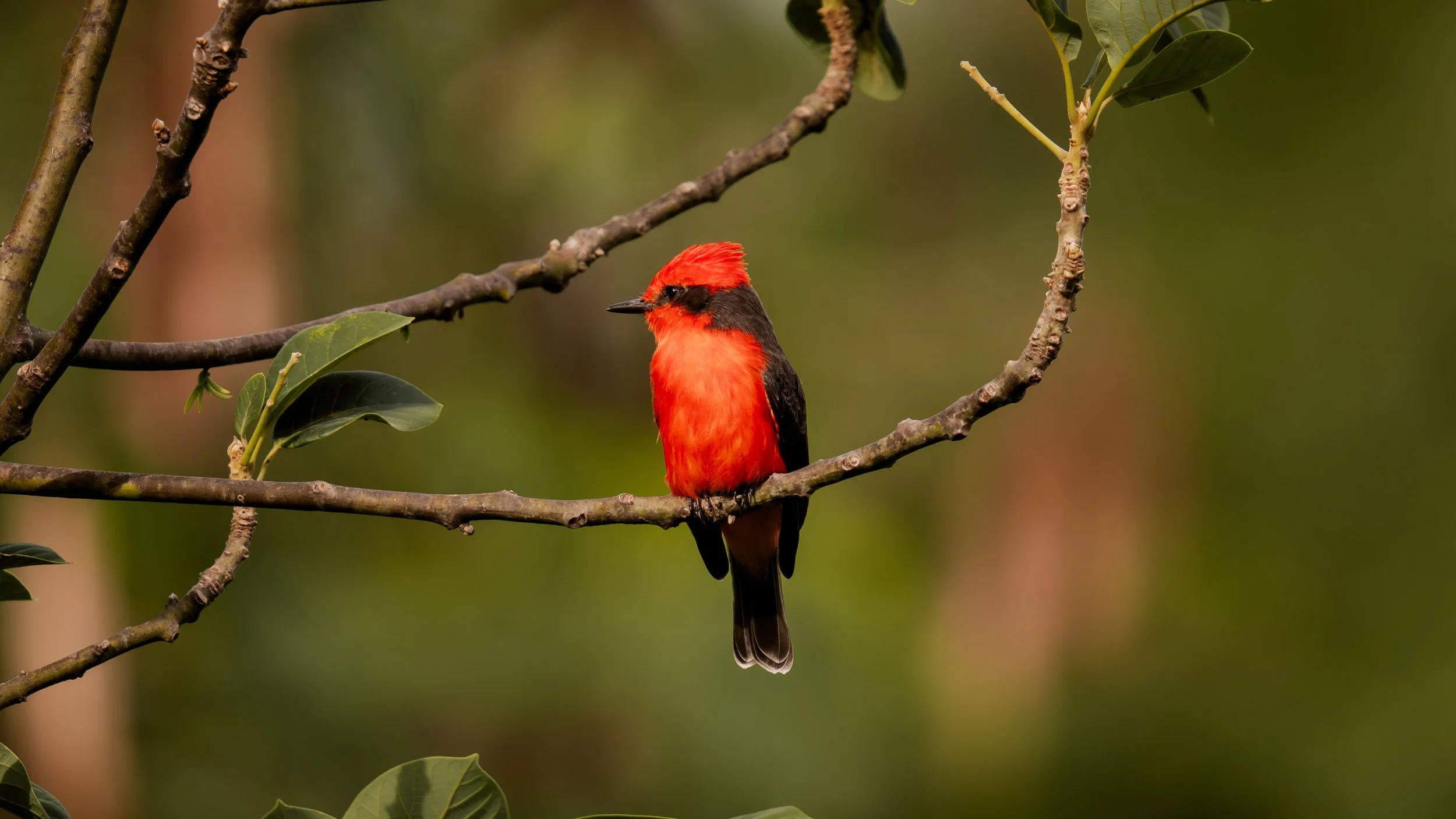
Adult males look almost unreal. Their bodies glow with vivid scarlet-red plumage contrasted by dark brown wings and backs. When sunlight hits them, they seem illuminated from within.
Females are attractive as well, though considerably subtler, with peachy underparts and grayish-brown upperparts.
Why It's Easy to Identify
Brilliant red coloration on males
Frequently perches in the open
Repeatedly flies out and returns to the same perch
Small size but highly visible
Habitat
Look for Vermilion Flycatchers near:
Desert streams
Parks
Golf courses
Irrigated fields
Riparian corridors
Behavior Clue
Flycatchers use a hunting strategy called "sallying."
They sit on an exposed perch, fly out to catch insects, then return to the same perch.
Watch one for a few minutes and you'll see this behavior repeated over and over.
Beginner Tip
When a bird is this red, identification becomes pretty simple.
Most beginning birders remember their first Vermilion Flycatcher sighting for years.
3. Gambel's Quail
If you're birding anywhere in Arizona or New Mexico, Gambel's Quail often become neighborhood celebrities.
They're social, entertaining, and highly visible.
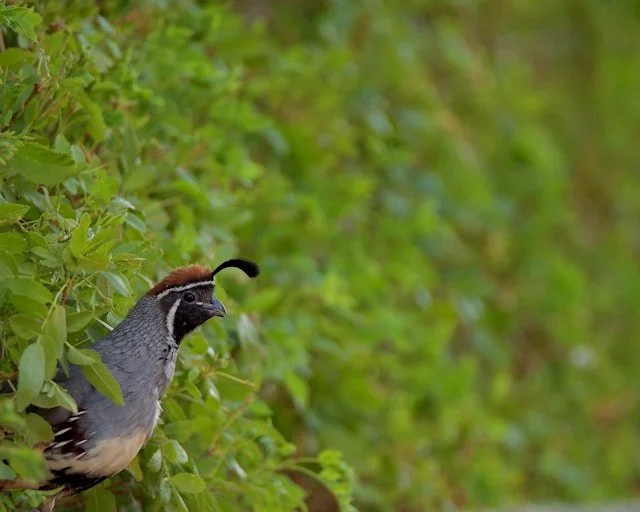
These chunky ground birds travel in family groups called coveys and often appear suddenly from under shrubs before scurrying away with surprising speed.
Their most distinctive feature is the forward-drooping plume on top of the head.
Many people describe it as looking like a comma.
Once you notice that plume, you'll never mistake a Gambel's Quail for anything else.
Why It's Easy to Identify
Comma-shaped head plume
Rounded body
Runs across open ground
Often seen in groups
Distinctive black face and chest pattern on males
Habitat
Look around:
Desert neighborhoods
Parks
Mesquite thickets
Cactus scrub
Desert washes
Fun Fact
Young quail chicks are tiny balls of energy. Entire families often cross roads together in single file, creating one of the most charming sights in Southwestern birding.
Beginner Tip
When learning birds, pay attention to shape.
Gambel's Quail have a silhouette unlike any other bird in the region.
3.Curve-billed Thrasher
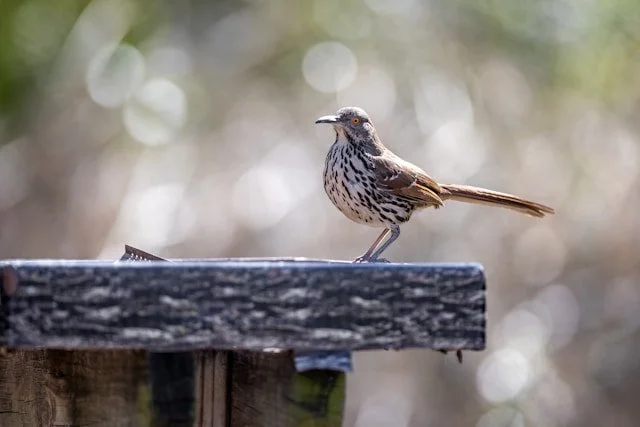
This bird checks all the boxes for the series:
Common throughout much of the Southwest
Frequently seen in neighborhoods and parks
Distinctive shape and behavior
Strong regional character
Easy for beginners to recognize after seeing one or two
Why It's Easy to Identify
The Curve-billed Thrasher is a medium-sized desert bird with a long tail, spotted breast, and a noticeably curved bill. Its bright orange-yellow eye often catches attention immediately.
Unlike many birds that stay hidden, Curve-billed Thrashers spend a lot of time foraging in open areas and often perch conspicuously atop shrubs, fences, and cacti.
Habitat
Look for them in:
Desert scrub
Suburban neighborhoods
Parks
Cactus gardens
Desert washes
Behavior Clue
They frequently run across the ground searching for insects, seeds, and fruit. Their posture often appears upright and alert, with the tail slightly cocked downward.
Beginner Tip
Pay attention to that curved bill and glowing yellow-orange eye. Once you've noticed those two features together, identifying a Curve-billed Thrasher becomes remarkably easy.
5. Cactus Wren
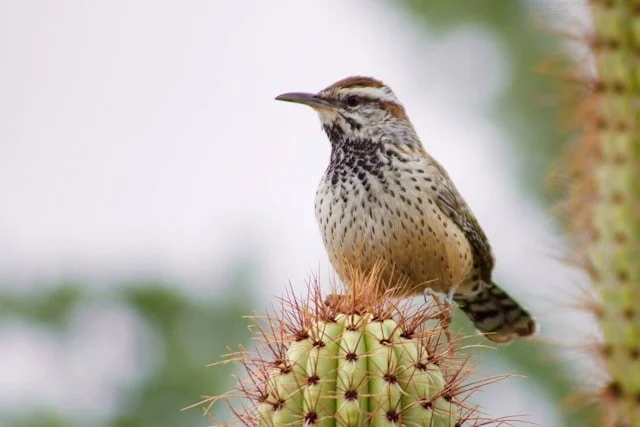
Every region deserves a mascot bird, and the Cactus Wren makes a strong case for the Southwest.
Large for a wren, energetic, noisy, and unmistakably Southwestern, this species seems perfectly adapted for desert living.
Unlike many wrens that prefer dense forests or hidden thickets, Cactus Wrens often perch in plain sight atop cholla or saguaro cacti.
That alone helps beginners enormously.
Why It's Easy to Identify
Large size for a wren
Bold white eyebrow stripe
Heavy streaking on underparts
Loud, harsh calls
Frequently visible atop cacti
Habitat
Search in:
Sonoran Desert
Cactus scrub
Desert parks
Residential areas with native landscaping
Nesting Behavior
Cactus Wrens build football-shaped nests with side entrances.
These nests are often visible in cactus branches throughout the year.
Beginner Tip
Most wrens are small, secretive, and difficult to observe.
The Cactus Wren is practically the opposite.
It's often one of the first desert birds beginners learn.
What Makes These Birds So Easy?
You may have noticed a pattern.
The easiest birds to identify usually have one or more of the following characteristics:
Unique Shape
Roadrunners and quail stand out immediately because their silhouettes are distinctive.
Bold Color
Vermilion Flycatchers practically glow.
Obvious Behavior
Roadrunners run.
Quail travel in family groups.
Strong Habitat Associations
When you see a bird sitting atop a cactus in the Sonoran Desert, habitat itself becomes an identification clue.
One of the biggest mistakes beginning birders make is focusing only on color.
Experienced birders often identify birds using shape, behavior, habitat, movement, and posture before ever noticing plumage details.
Learning these five species helps build that broader approach.
A Few Southwest Birding Tips for Beginners
Start Early
Summer temperatures in the Southwest can become extreme.
Bird activity often peaks during the first few hours after sunrise.
You'll see more birds and enjoy more comfortable conditions. Make sure you are prepared for hot weather birding by checking these SUMMER BIRDING PRODUCTS to make your experience the most enjoyable.
Watch Water Sources
Water is life in the desert.
Bird baths, ponds, streams, and irrigation systems can attract surprising numbers of birds.
Learn the Common Birds First
You don't need to identify every bird you encounter.
In fact, trying to do so often creates frustration.
Focus first on the species you see repeatedly.
Confidence grows much faster that way.
Keep Notes
One of the best habits any birder can develop is recording observations.
Even if you can't identify a bird immediately, write down:
Size
Shape
Color
Habitat
Behavior
Calls
Many "mystery birds" become identifiable later when you revisit your notes.
I call these "near misses," and they're often some of the best learning opportunities in birding.
Birding Is Supposed to Be Fun
One reason we created this "Easiest Birds to ID" series is because many beginning birders believe they need to memorize hundreds of species before they can call themselves birders.
That's simply not true.
Birding isn't a test.
It's a relationship with nature.
The person who knows five birds well and enjoys every outing is often having a better experience than someone frantically flipping through a field guide trying to identify everything that moves.
Learn a few species.
Enjoy them.
Watch their behavior.
Notice seasonal changes.
Allow your knowledge to grow naturally.
The rest will come.
Final Thoughts
The Southwest offers some of North America's most memorable birding experiences. From sprinting Greater Roadrunners and brilliant Vermilion Flycatchers to energetic Curve-billed Thrashers and charismatic Gambel's Quail and raucous Cactus Wrens, these birds provide excellent starting points for new birders.
If you're following along with our regional series, be sure to read our earlier posts:
Together, these guides demonstrate an important truth: bird identification becomes much easier when you focus on common species, distinctive behaviors, and recognizable patterns rather than trying to learn everything at once.
Start with five birds.
Then five more.
Before long, you'll be amazed how many familiar feathered neighbors you recognize every time you step outside.
