

10 Backyard Bird Sanctuary Mistakes & How to Fix Them
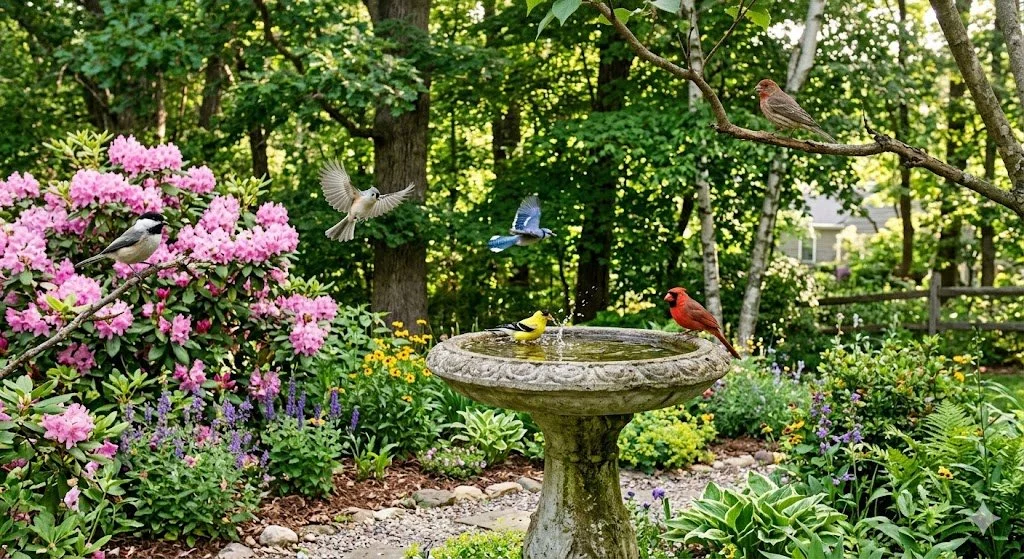
Creating a backyard bird sanctuary sounds simple. Put up a feeder, add a bird bath, plant flowers, and wait for birds.
Sometimes that works—for a while.
But a true sanctuary is more than a collection of bird-friendly objects. It is a working habitat. Birds need dependable food, clean water, shelter, and safe places to raise young—all arranged to help them avoid predators, bad weather, collisions, and other hazards.
Most sanctuary mistakes are not caused by carelessness. They happen because someone is trying to help but is looking at the yard from a human point of view. We notice the pretty feeder or tidy flower bed. Birds notice escape cover, insect life, water depth, and whether there is somewhere safe to disappear.
Mistake 1: Believing Feeders Create a Complete Sanctuary
A feeder can be a wonderful part of a bird-friendly yard. It brings birds close enough to watch and provides supplemental food during difficult weather.
But a feeder is only a feeding station. By itself, it is not habitat.
Birds also need water, protective cover, natural foods, nesting places, and room to move safely between them. A chickadee may take a sunflower seed from your feeder, but it still depends heavily on insects—especially when feeding nestlings. A robin ignores the feeder entirely while searching your soil, shrubs, and leaf litter for worms, insects, and fruit.
Keep the feeder, but build around it. Add shallow water and a native shrub. Allow flowers to form seed heads and include plants that support caterpillars. Think of the feeder as one useful room in a much larger house.
Mistake 2: Choosing Plants for Appearance Alone
A beautifully landscaped yard is not automatically a bird-friendly yard. Some popular ornamental plants offer little food for native insects or birds. Others escape cultivation and spread into natural areas. A plant can be colorful, hardy, and easy to find at the garden center while contributing very little to the local food web.
Native plants are usually the strongest foundation because they have long relationships with local insects, birds, soils, and weather. A native oak, shrub, grass, or flowering perennial may support far more life than an ornamental chosen only for its flowers or shape.
You do not have to remove every nonnative plant. Begin with invasives, especially those spreading beyond their intended space, and add regionally appropriate natives as other plants fail or new areas become available.
Choose plants that do more than one job. A good shrub might offer flowers for pollinators, nesting cover, autumn fruit, and winter shelter. The goal is to create useful habitat throughout the year, not simply collect “native” labels.
Mistake 3: Creating a Yard with Only One Layer
Many yards have a canopy of mature trees and a lawn underneath—and almost nothing in between. Others have flower beds but no shrubs, or a row of shrubs with no ground-level cover.
Birds divide habitat vertically. Woodpeckers and nuthatches use trunks and large branches. Warblers and vireos search among leaves. Cardinals, towhees, and thrashers often favor dense shrubs and lower growth. Sparrows and robins feed on or near the ground.
When a yard is missing layers, it is missing places to feed, rest, hide, and nest.
Try to create a gradual structure: tall trees where space allows, smaller understory trees, shrubs of different heights, flowers and grasses, and a ground layer of leaf litter or low plants. These layers do not have to cover the whole property. Even one generous planting island can provide more useful habitat than scattered individual plants surrounded by lawn.
Mistake 4: Keeping the Landscape Too Neat
Our idea of a well-kept yard often conflicts with a bird’s idea of a safe and productive one.
Fallen leaves shelter insects and other small creatures. Flower stalks hold seeds. Dense shrubs provide hiding places. A dead branch may offer a hunting perch, and a standing dead tree—when it can safely remain—may contain cavities used by woodpeckers, chickadees, nuthatches, owls, and other wildlife.
Leave leaves beneath trees and shrubs where they can decompose naturally. Allow some seed heads to remain through winter. Create a small brush pile in a quiet corner if local rules and fire conditions allow. Have dead trees evaluated and retain safe portions when practical.
Mistake 5: Using Pesticides in the Place Meant to Protect Birds
One of the most damaging contradictions in a backyard sanctuary is inviting birds while removing the insects they need to survive.
Most backyard birds depend on insects to some degree. Even species that eat seeds or fruit as adults often feed soft-bodied insects and caterpillars to their young. A yard with almost no insect life may offer less food than its green appearance suggests.
Broad-spectrum insecticides can kill beneficial insects along with the intended pests. Herbicides can remove host plants and reduce the variety of seeds and insects available. Rodenticides can move through the food chain when an owl, hawk, or other predator eats a poisoned rodent.
Aim for management rather than total elimination. Identify the problem before treating it. Hand-remove small infestations, tolerate some leaf damage, use physical barriers, and choose the least harmful targeted response when action is necessary.
Chewed leaves are not always a sign that a garden is failing. In a sanctuary, they may be evidence that the food web is working.
Mistake 6: Offering Water That Is Too Deep, Dirty, or Exposed
Water is one of the best ways to attract a wider variety of birds, including many that do not visit feeders. Yet a decorative bird bath is not always a usable bird bath.
Deep, steep-sided basins can be intimidating and difficult for small birds to navigate. Slippery glazed surfaces provide poor footing. Water that sits unchanged can collect debris and become unpleasant or unhealthy. A bath placed in dense cover may give a cat an easy ambush point, while one in a completely exposed location can leave wet birds feeling vulnerable.
Choose a shallow basin with a textured surface and a gentle slope. If the bath is too deep, add flat stones that create secure footing and shallower areas. Replace the water frequently and scrub the basin regularly. Follow current local health guidance if a disease outbreak affects wild birds in your area.
Place the bath where birds can watch for danger, with protective cover reachable by a short flight but not close enough to conceal a stalking predator. Moving water can attract attention, but it does not replace cleaning.
Mistake 7: Ignoring Predators and Other Placement Hazards
Predators are part of nature, and native hawks should not be treated as villains for hunting. But domestic cats are an added, preventable pressure in backyard habitat.
A bell is not enough protection for birds. Keeping cats indoors, using a secure outdoor enclosure, or supervising outdoor time protects birds and generally protects cats from traffic, disease, and other hazards too.
Also look at the sanctuary from ground level. Are feeders or baths beside a shrub where a cat can wait unseen? Could a predator climb easily to a nest box? Watch where startled birds fly, too. Reflective windows near busy feeders or baths can become deadly traps; effective exterior window treatments make the glass visible to birds.
Use appropriate baffles on nest-box poles and feeder systems. Avoid placing nest boxes on trees or fences that offer easy climbing access. Dense escape cover is valuable, but water and feeding areas need enough visibility to prevent surprise attacks. Good sanctuary design balances cover with clear sightlines.
Mistake 8: Treating a Birdhouse as Outdoor Decoration
Birdhouses are often chosen by color, charm, or the size of the front porch. Birds care about different details.
Different cavity-nesting species need different entrance-hole sizes, floor dimensions, mounting heights, and habitat. A decorative house may have an entrance that admits predators or larger competitors. It may lack drainage and ventilation or be impossible to open for cleaning. A perch beneath the hole is usually unnecessary and may help a predator gain access.
Use a properly designed box for a species likely to live in your habitat. Mount it securely, add a predator guard when appropriate, monitor without excessive disturbance, and clean it at the proper time.
Most important, be realistic. A bluebird box in a small, heavily wooded yard is unlikely to attract bluebirds simply because you would enjoy having them. Match the box to the birds and the habitat—not the other way around.
Mistake 9: Forgetting That a Sanctuary Changes with the Seasons
A yard that is helpful in May may offer very little in January—or during the hottest weeks of August.
Birds’ needs change through nesting, migration, molt, winter weather, drought, and heat. Flowers fade, insects emerge and disappear, fruit ripens, and natural water sources freeze or dry up. Migrants may use your yard for only a few days, but during that time safe cover and food can be especially valuable.
Plan for a sequence rather than one peak season. Grow plants that bloom and fruit at different times. Leave some seeds and leaf litter through winter. Provide evergreens or dense shrubs for cold-weather shelter where appropriate. Keep water available during heat and freezing weather when it can be maintained safely. Adjust feeding and cleaning routines as weather and bird activity change.
A successful sanctuary is not a finished project. It is something you observe and refine.
Mistake 10: Copying a Sanctuary Plan from the Wrong Region
The basic needs—food, water, shelter, and places to raise young—remain the same everywhere. The way you provide them should change with your region.
In arid parts of the West and Southwest, trying to reproduce a lush eastern yard can waste water and create a landscape poorly suited to local birds. Prioritize drought-tolerant native plants, shaded water, and dense desert shrubs or small trees that offer cover without demanding constant irrigation. Keep water features simple enough to clean frequently in hot weather.
In the humid Southeast and Gulf Coast, moisture and heat can speed the growth of mold and bacteria. Seed may spoil quickly, and poorly drained planting areas can remain soggy. Smaller quantities of fresh seed, frequent feeder and bath cleaning, good air circulation, and plants suited to wet or humid conditions can prevent many problems.
In northern regions, a design focused only on summer flowers may leave birds exposed in winter. Evergreens, dense shrubs, persistent fruit, standing seed heads, and wind protection become especially useful. Heated water can help, but it must be safely installed and regularly maintained.
In fire-prone areas, a brush pile or dense vegetation beside the house may be inappropriate no matter how useful it could be elsewhere. Follow local defensible-space guidance and place habitat features where they do not increase risk to people or property.
Regional advice should go even closer to home. Conditions can change within the same state because of elevation, rainfall, soil, coastline, or urban development. Local native-plant societies, Audubon chapters, extension offices, and conservation organizations can help you choose practices that fit your particular place and then map your ideas on graph paper.
FAQ:
What does every backyard bird sanctuary need?
Every bird sanctuary needs four basic habitat elements: food, water, shelter, and places where birds can safely raise their young. Feeders can supplement natural food, but plants, insects, clean water, protective cover, and safe nesting habitat make the yard far more useful.
Is a bird feeder enough to create a bird sanctuary?
No. A feeder provides one food source, but birds also need water, natural foods, escape cover, nesting places, and protection from common hazards. Treat the feeder as one part of a larger habitat plan.
Should a bird-friendly yard be messy?
It does not have to look neglected. Leaving some leaves, seed heads, dense shrubs, and safe dead wood gives birds food and shelter. Paths, borders, and clearly defined planting areas can keep the landscape looking intentional.
What is the easiest backyard bird sanctuary mistake to fix?
Begin with the greatest missing need. That might mean cleaning and shallowing the bird bath, protecting a dangerous window, adding one native shrub, or reducing pesticide use. One well-chosen improvement can make the yard noticeably safer.
Build a Sanctuary by Thinking Like a Bird
The best backyard bird sanctuary is not necessarily the largest or most expensive. It provides useful resources without creating hidden hazards. Walk through your yard from a bird’s perspective. Is cover nearby? Is the water shallow and clean? Are natural foods available? Could reflective glass turn the sky into a trap?
You do not have to correct every mistake this weekend. Begin with the greatest missing need. Add a shrub. Clean and relocate the bird bath. Protect a window. Leave a few seed heads standing. Replace one invasive plant with a native that can feed birds for years. Then notice which birds appear, where they pause, and which areas they avoid.
A sanctuary is not created by buying more things. It is created by paying attention—and by allowing your backyard to become a little more alive with every season.
Ready to Get Started?
A Backyard Bird Sanctuary Checklist can help you stay focused
