

Bird Baths and Water Features
The Heart of a Backyard Bird Sanctuary
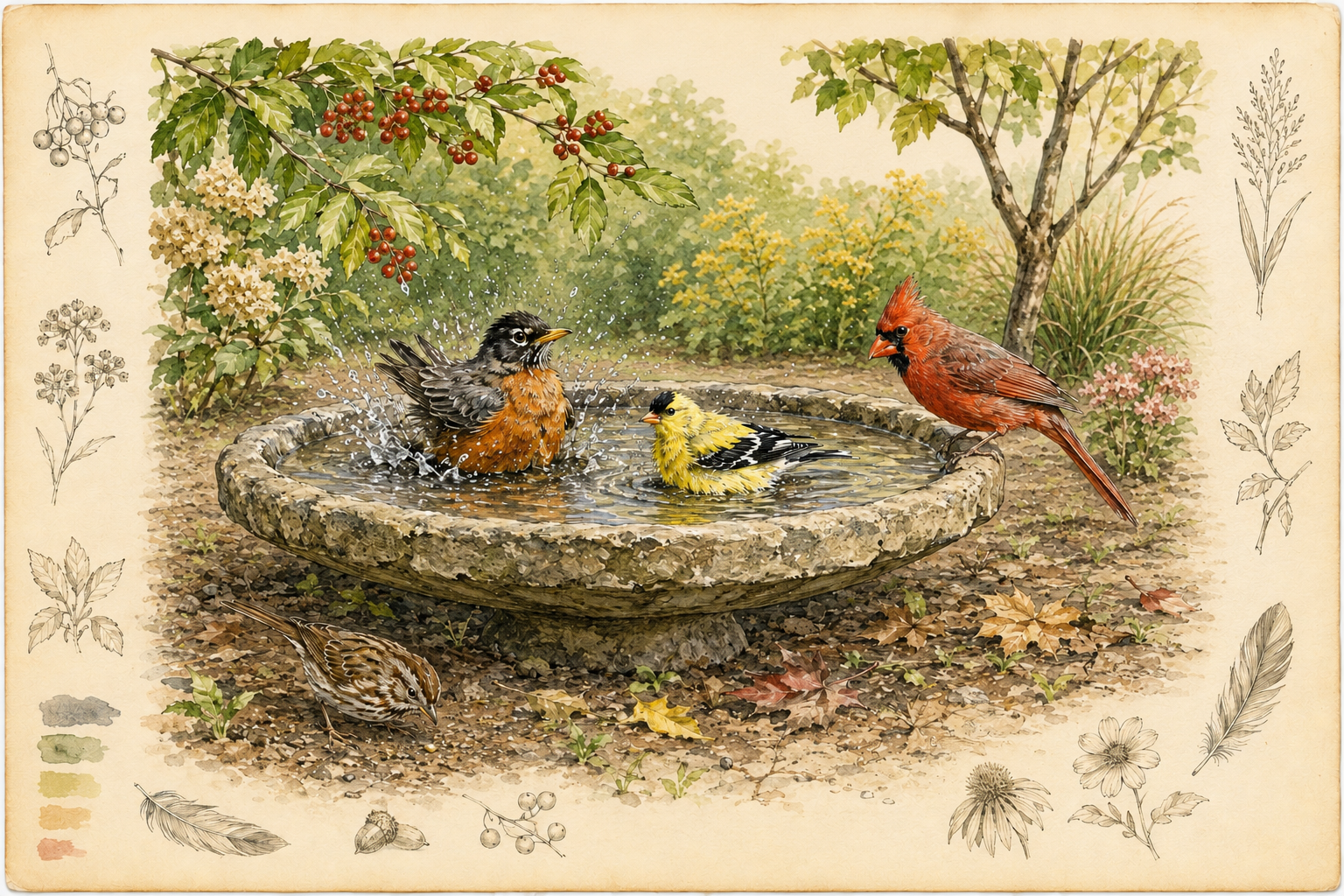
The best water source is not necessarily the prettiest one. It is the one birds can find, trust and use safely—every day of the year.
A feeder may be the first thing we picture when we imagine a bird-friendly backyard, but water often changes the yard in a more interesting way. Seed attracts seed-eaters. A shallow, dependable bath can welcome robins, thrushes, warblers, vireos and other birds that may never pause at a tube feeder. Add the glint and soft sound of moving water, and your sanctuary begins to feel less like a feeding station and more like habitat.
Birds need water for two simple reasons: drinking and bathing. Yet bathing is not merely a bit of backyard entertainment. Clean, well-arranged feathers help birds stay insulated, fly efficiently and maintain the structure of their plumage. In summer, bathing can also help birds cool down. During migration, drought and winter freezes, a reliable patch of open water may be one of the most useful things in the landscape.
The good news is that you do not need a pond, a waterfall or an expensive stone fountain. In fact, a humble plant saucer with the right depth and placement may serve birds better than a dramatic basin designed mainly to impress people.
Begin with the Kind of Water Birds Actually Use
Think like a robin approaching the edge of a puddle. The water is shallow. The bottom is visible. The footing is secure. The bird can step in gradually instead of dropping into a steep-sided bowl. Cornell Lab guidance recommends water no more than about one inch deep at the edge and two inches at the deepest point. For many small songbirds, even shallower water is comfortable.
That makes depth more important than the price, material or ornamentation of the bath. Deep decorative bowls can be made safer by adding a broad, flat rock that creates a shallow shelf. A rough surface is easier for small feet to grip than slick glazed ceramic or smooth metal. A gently sloping basin accommodates birds of different sizes and gives each visitor a place to stand before committing to a full splash.
THE EASY DEPTH RULE Aim for roughly 1 inch at the edge and no more than 2 inches at the deepest point. If the bowl is deeper, use flat stones to create secure, shallow landing places.
Placement: Safe, Visible and Easy to Maintain
The perfect location balances several needs that can seem contradictory. Birds want an open view so they can notice cats or other predators. They also want an escape route—a branch or shrub where they can retreat and preen after bathing. Place the bath in a visible area with open ground immediately around it, then provide protective cover several feet away. About six to ten feet from a shrub or low tree is a useful starting point. Avoid tucking the bath directly beneath dense foliage where a cat can hide within pouncing distance.
If free-roaming cats visit your yard, use a pedestal or otherwise raise the bath two or three feet above the ground. Ground-level water can look wonderfully natural and is often appealing to birds, but safety comes first. A pedestal does not eliminate risk, so continue to keep the surrounding area open and remove anything that provides a concealed launch point. Keep your cats indoors or in a “catio” enclosure.
Shade is valuable during hot weather because it slows evaporation and keeps the water cooler. It may also slow algae growth. But shade is not a substitute for cleaning, and a deeply shaded, damp corner can remain dirty longer. Choose a place you naturally pass with a watering can or hose. If refilling the bath requires a special trip across the property, it will eventually be neglected.
Remember the windows, too. Any place that gathers birds can increase collision risk. A practical rule is to place the bath within three feet of a window, where a startled bird cannot build much speed, or more than thirty feet away, where it has room to recognize and avoid the glass. Treat nearby windows with effective exterior markers or screens rather than relying on a single hawk silhouette.
Finally, put at least one bath where you can see it. A sanctuary should work for birds, but it should also invite you to slow down and notice them. A bath visible from the kitchen table, porch or favorite chair will be maintained more consistently—and enjoyed far more often.
Why Moving Water Makes Such a Difference
Still water works. Moving water advertises. A drip, ripple or sparkle catches the eye, while the quiet sound of splashing can carry through leaves and shrubs. That signal may be especially helpful to migrants moving through an unfamiliar neighborhood. Warblers and vireos that ignore your seed feeders may investigate a dripper, bubbler or mister.
Movement does not have to mean a large fountain. A solar bubbler can create surface ripples, although it will stop in shade and may need frequent cleaning. A small recirculating pump can be more dependable if you have safe outdoor electricity. Misters are particularly attractive to some small birds, but they should be positioned so overspray reaches vegetation or drains into soil rather than creating a muddy, stagnant patch.
Keep every design shallow and accessible. A beautiful fountain with vertical sides and a deep reservoir is still not a good bird bath unless it includes a safe bathing shelf. Cover pump intakes so feathers and small animals cannot be pulled against them, protect electrical connections for outdoor use and check the water level daily—especially in heat, when evaporation can expose and damage a pump.
Looking for an easy way to add water? Visit the Rather Be Birding Essentials Amazon Store to compare shallow bird baths, solar bubblers, drippers, cleaning brushes and winter-safe bird bath heaters. Choose the simplest setup you can refill and clean consistently.
Clean Water Is Part of the Habitat
A dirty bath is not simply unattractive. Droppings, feathers, algae and organic debris can accumulate wherever birds gather. Warm standing water also becomes uninviting quickly. Freshness is the real maintenance goal: dump and replace the water every day or two during hot weather, after heavy use, or whenever it looks cloudy or soiled. Frequent refilling also interrupts mosquitoes before they can complete their aquatic development.
Give the basin a firm scrub at least weekly with a dedicated stiff brush. Pay attention to the waterline, textured surfaces and the undersides of stones. Do the work outdoors, wear gloves if the bath is heavily soiled and wash your hands afterward. Keep the bird-bath brush separate from kitchen and pet-care tools.
For periodic disinfection—or after visible contamination—first remove all debris, then use a solution of one part household bleach to nine parts water. Let it remain in contact for about ten minutes, rinse the basin extremely well and allow it to air-dry before refilling. Never mix bleach with other cleaners. A routine scrub and fresh water may be all that is needed most weeks, but the bath should receive more frequent attention during disease events, hot weather or heavy use.
If sick or dead birds appear in your yard, pause feeding and bathing activity, clean the equipment and contact your state wildlife agency or a licensed wildlife rehabilitator for local guidance. A sanctuary is an invitation, and with that invitation comes the responsibility to reduce crowding and disease risk.
Water Through the Seasons
In summer, shade and frequent refilling matter most. Keep the water shallow enough that even a small bird can bathe without struggling, and watch how quickly the basin warms or evaporates. During dry spells, add a second bath if one location becomes crowded. Separating water sources can reduce competition and help timid birds find an opening.
Autumn and spring migration are excellent times to turn on a dripper or bubbler. Your regular backyard birds already know the bath is there; moving water can help passing birds discover it. Continue cleaning even when the weather cools, because leaves and windblown debris can fill a basin surprisingly quickly.
Winter water can be especially valuable when natural sources freeze. Use a heater or heated bath specifically designed for outdoor bird-bath use, follow the manufacturer's directions and connect it to a properly protected outlet. Never add salt, antifreeze, glycerin or other chemicals to keep water open. They can harm birds and contaminate feathers. In very cold climates, rotate sturdy shallow pans or add warm water as needed rather than risking a cracked concrete or ceramic basin.
A Simple DIY Drip Bath
This project is inexpensive, adjustable and easy to test before you invest in a permanent water feature. You need a wide, shallow basin—such as a sturdy plant saucer—a few flat stones, a clean plastic jug with a cap, strong cord or wire, and a pin or very small nail.
Step 1: Build a safe basin
Set the saucer on level ground, a low stable stand or a securely supported pedestal. Add flat stones so birds have rough, shallow footing. Fill the basin and confirm that the water is about one inch deep around the edges and no more than two inches in the deepest section.
Step 2: Make the dripper
Create one tiny hole near the bottom of the jug. Fill it with clean water, tighten the cap and suspend it securely above one edge of the basin. Loosening the cap slightly allows air into the jug and starts the drip; tightening it slows or stops the flow. Adjust until you hear an occasional, gentle plink rather than a steady stream.
Step 3: Observe and refine
Watch where the drops land. They should create ripples without splashing the basin dry. Make sure the jug cannot swing into the bath or fall in wind. Empty and clean both the basin and jug regularly. If birds seem hesitant, lower the water level, add a wider flat stone or move the setup a little farther from hiding cover.
RBB FIELD NOTE: Before buying a larger fountain, try moving a simple bath, changing its depth or adding a slow drip. Small adjustments often matter more to birds than expensive equipment.
Build a Water Station, Not Just a Decoration
The best backyard water feature fits into the larger sanctuary. It sits near layered habitat but not inside a predator's hiding place. It offers shallow water, solid footing and a quick route to cover. It is close enough to the house to refill and clean, yet positioned with windows in mind. It works in the hottest weeks and, with safe winter planning, the coldest ones too.
You can certainly create a beautiful focal point. Surround the area with native plants, use stone that echoes your landscape or tuck the basin into a garden view from the porch. Just remember that the birds experience it at ground level. They notice depth, visibility, escape routes, cleanliness and sound long before they notice whether the fountain matches the patio.
Start simply. Put out one shallow basin, add a flat rock and keep the water fresh. Then watch. The first visitor may be a robin that bathes as if no one is looking, a chickadee that takes one cautious sip, or a migrating warbler you have never seen in your yard before. Water has a way of revealing how many birds were already moving through the neighborhood - and how little it sometimes takes to make them stay for a while.
Water is only part of the picture. Visit our complete Backyard Bird Sanctuary Guide to bring food, water, shelter and nesting space together in one thoughtful plan.
