

Best Berry-Producing Plants for Birds by Region
The Living Pantry Every Bird Sanctuary Needs
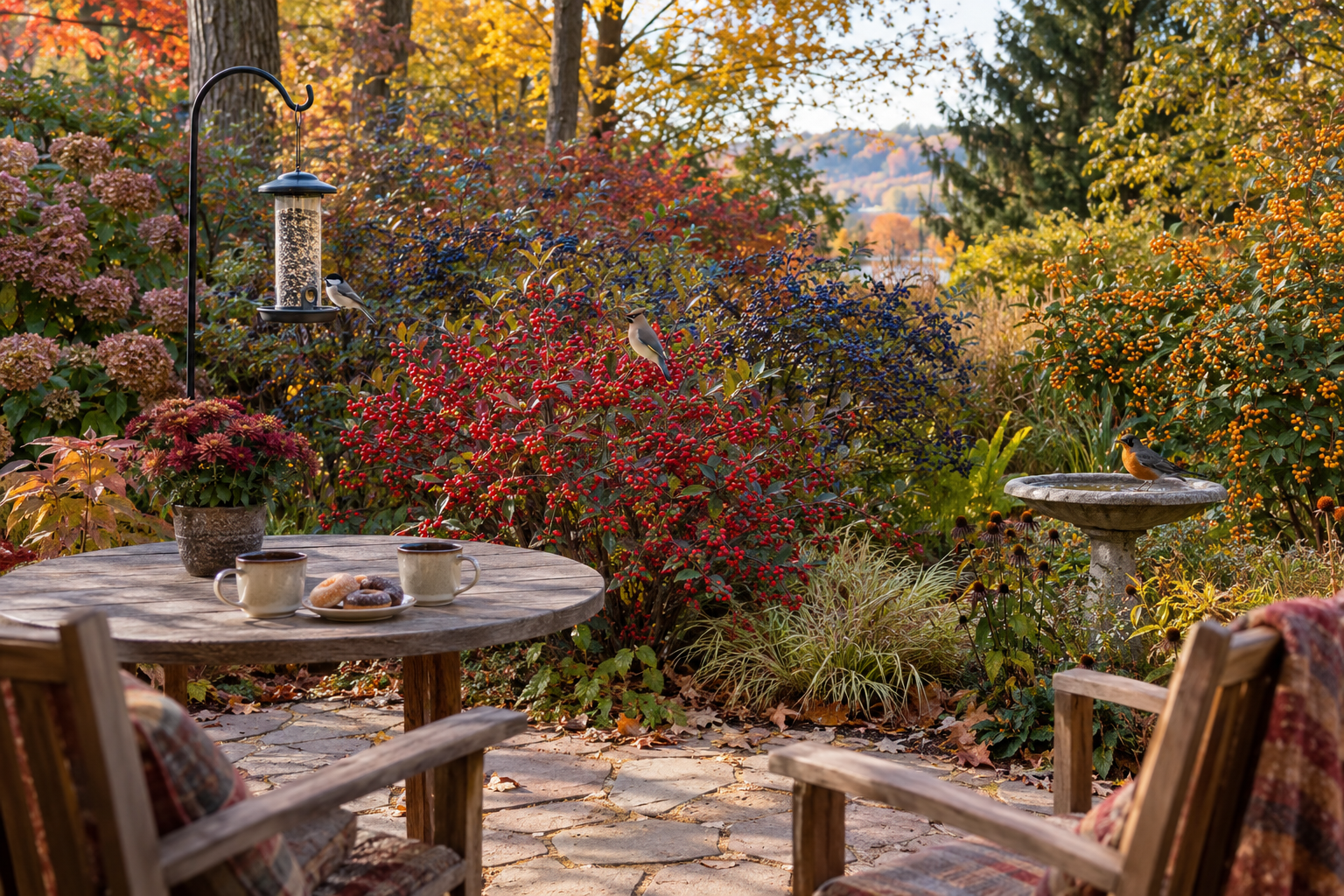
A backyard bird sanctuary should offer more than a place to hang feeders. Feeders can bring birds close enough for wonderful views, but the strongest sanctuaries work more like natural habitats. They provide several kinds of food, safe places to rest, cover from weather and predators, and dependable resources through the seasons. Berry-producing trees, shrubs and vines can help provide all of these at once.
For birds, berries are not simply a colorful autumn treat. They may be quick fuel during migration, an emergency food source during a winter cold snap or part of the varied diet adults need while raising young. Some birds, like thrushes, warblers and waxwings, rely primarily on fruit for nourishment. For a gardener, berry-producing plants add flowers, foliage, structure and seasonal color. For the sanctuary as a whole, they help turn an attractive yard into a living landscape—one that continues to feed and shelter wildlife even when every feeder is empty.
Why Berries Matter to Birds
Fruit is an efficient package of energy. Many berries contain sugars and fats that birds can digest quickly, making them especially valuable when birds must travel long distances or maintain body heat in cold weather. A migrating thrush or warbler may pause in a fruiting shrub, feed rapidly and continue its journey with renewed energy. In winter, robins, bluebirds, waxwings and other fruit-eating birds may travel in flocks as they search for the next heavily laden tree or shrub.
Different plants ripen at different times, so a well-planned sanctuary can offer a succession of fruit rather than one brief abundance. Serviceberries may feed birds in late spring or early summer. Elderberries, blackberries and some dogwoods contribute during summer. Dogwoods, viburnums and native grapes become important during fall migration. Hollies, junipers, hawthorns and crabapples can hold fruit into winter. The exact timing varies with region, weather and species, but the principle is the same: plant for a sequence of food.
Berry-producing plants also support birds before the berries appear. Their spring flowers attract bees, butterflies and other insects. Those insects, along with the caterpillars supported by many native plants, become essential food for nesting birds and their young. Even birds we think of as seed or fruit eaters often feed insects to their nestlings because growing chicks need protein. A native fruiting shrub can therefore contribute food in several forms across much of the year.
Native Plants Do More Than Produce Fruit
Birds may eat the fruit of many ornamental plants, but locally native plants usually do more ecological work. They have long relationships with the insects, birds, soils and weather patterns of their home regions. Native leaves may support local caterpillars; native flowers match the needs and timing of local pollinators; and native fruits often ripen when resident or migrating birds are ready to use them.
That does not mean every plant labeled “native” is appropriate for every yard. North America contains many different ecological regions. A shrub native to coastal Maine may struggle in central Texas, while a desert-adapted plant may be unsuitable for a wet yard in the Southeast. Choose plants native to your region—and, when possible, to your local ecoregion—rather than treating “North American native” as a universal recommendation.
Local native-plant societies, university extension offices, botanical gardens and conservation organizations can help you narrow the list. They can also alert you to plants that have become invasive locally. This is especially important with fruiting plants because birds can carry seeds beyond your property. Some widely sold ornamentals, including certain nonnative honeysuckles, privets, burning bush and barberries, have escaped cultivation in parts of North America and displaced more valuable habitat. A plant being sold at a garden center does not guarantee that it is a responsible sanctuary choice. Avoid non-natives, in the long run may become invasive and not become a food source for local birds.
Berries Provide Shelter as Well as Food
A bird feeding in the open is vulnerable. Dense fruiting shrubs let birds move between food and cover without crossing a large expanse of lawn. Thorny or tightly branched plants may offer especially useful refuge from cats, hawks and harsh weather. Larger shrubs can also provide nesting sites, while low, spreading berry plants protect ground-feeding birds and create hiding places near the soil.
Think of each plant as part of a layered habitat. A fruiting ground layer might include native strawberries, low blackberries or other regionally appropriate plants. Shrubs such as beautyberry, elderberry, chokeberry or viburnum fill the middle layer. Small fruiting trees—including serviceberry, dogwood and native plum—connect that shrub layer to the canopy. Vines such as native grape can add fruit and cover when carefully placed on a sturdy support.
You do not need all of these in a small yard. One well-chosen shrub near a bird bath may be more helpful than several poorly placed plants. The goal is to create connected pockets of food and safety rather than isolated decorations.
Tip: The best berry garden for birds does not rely on one spectacular shrub. It combines locally native plants that fruit at different times, grow at different heights and provide safe cover close to the food.
Regional Berry-Producing Plants to Consider
The plants below are starting points, not universal prescriptions. Species ranges, soil needs and moisture tolerances vary. Verify that a plant is native and well behaved where you live before buying it.
Northeast and Great Lakes
Serviceberries (Amelanchier species) are outstanding small trees or large shrubs, offering spring flowers, early fruit and beautiful fall color. Gray and red-osier dogwoods provide fruit and useful thicket structure. Winterberry holly produces bright fruit that can persist into winter; because hollies generally have separate male and female plants, a compatible male is needed nearby for females to fruit.
Northern bayberry, black chokeberry, native viburnums, elderberries and native blueberries can also be excellent choices where soil and moisture suit them. Eastern red cedar—actually a juniper—offers berry-like cones, dense cover and winter shelter, although it needs room.
Southeast and Gulf Coast
American beautyberry is a regional favorite, with vivid purple fruit and a loose, natural form. Yaupon holly is adaptable in much of the Southeast and produces dependable winter fruit on female plants when a male pollinator is available. Possumhaw holly, American holly, wax myrtle, elderberry and several native viburnums can extend the fruiting season and build valuable shelter.
Native dogwoods, blueberries, sparkleberry and serviceberries fit particular sites, while red mulberry can attract an impressive variety of birds if there is space. Because the Southeast ranges from mountain coves to sandy coastal plains, match each plant to local drainage, soil acidity, heat and storm exposure.
Great Plains and Midwest
American plum and chokecherry can form wildlife-rich thickets, although their spreading habits should be planned for rather than discovered later. Serviceberries, elderberries, native dogwoods, hawthorns and viburnums offer choices for a range of yard sizes and moisture conditions. Aronia, or chokeberry, tolerates many conditions and provides flowers, fruit and strong autumn color.
In drier parts of the Plains, western snowberry, buffaloberry and regionally native junipers may be better choices than moisture-loving eastern shrubs. Hackberry is a valuable tree where space permits, providing small fruits as well as habitat for insects.
Central Texas and the South-Central Region
Central Texas gardeners need plants that can handle heat, irregular rain and often alkaline or rocky soils. American beautyberry performs well in suitable shade or part shade and provides both cover and late-season fruit. Possumhaw holly can create a striking winter display, while yaupon holly is tough, evergreen and useful for screening. Both require attention to male and female plants if fruit is the goal. New plantings need lots of help while they’re getting established in this unpredictable area of hot springtime and months without rain.
Roughleaf dogwood is valuable where it has space to form a thicket. Rusty blackhaw viburnum, elbowbush, Mexican plum, Carolina buckthorn and netleaf hackberry may suit different Central Texas sites. Agarita produces spring flowers and red fruit while giving small birds protective cover.
In this region, the right microclimate matters enormously. A plant suited to the thin, dry soil west of Austin may not be the best choice for heavy Blackland Prairie clay to the east. Local ecotype plants from reputable native nurseries usually give the best chance of success. Small, local nurseries are a godsend of valuable information.
Southwest and Desert Regions
Water-smart choices are essential in arid sanctuaries. Desert hackberry is a superb example: its small orange fruit attracts birds, while its tangled, thorny form provides protected shelter. Wolfberry, native sumacs, squawbush, agarita in its native range, native junipers and manzanitas can offer fruit or berry-like cones with modest supplemental water once established.
In higher elevations or cooler parts of the Southwest, serviceberry and chokecherry may fit appropriate sites. Avoid importing a lush eastern planting scheme that requires constant irrigation. A sanctuary built from desert-adapted plants will be healthier, more sustainable and more recognizable to local wildlife.
Pacific Northwest
The Pacific Northwest offers an exceptional range of fruiting native plants. Red-flowering currant provides early flowers followed by fruit, while evergreen and red huckleberries fit woodland conditions. Salmonberry, thimbleberry and trailing blackberry are useful where their growth habits can be accommodated.
Pacific serviceberry, red-osier dogwood, snowberry, cascara, Pacific crabapple and native hawthorns broaden the menu. Salal is especially useful as evergreen cover. In the drier interior Northwest, favor drought-tolerant local species rather than coastal woodland plants.
California and the Interior West
California coffeeberry, toyon and lemonade berry are valuable evergreen shrubs in the parts of California where they are native and climate-appropriate. Manzanitas offer flowers, fruit and beautiful structure, but species vary greatly in size and soil preference. California wild grape can provide fruit and dense cover when allowed adequate space.
Elsewhere in the interior West, serviceberries, chokecherries, native currants, snowberries, buffaloberries, elderberries and junipers may be appropriate. Elevation, winter cold, summer drought and fire-wise landscaping requirements should guide the final selection. Keep dense vegetation appropriately separated from structures in wildfire-prone areas.
“Before You Buy” Tip: A plant described as “native to North America” may not be native to your region. Confirm its local range, mature size, soil and water needs, and whether it requires a separate male pollinator. Check your state’s invasive-plant list before buying a fruiting ornamental. Consider purchasing from a local nursery rather than a big box plant department. Local nurseries often have better knowledge of local conditions.
How to Plan a Better Berry Patch
Begin by observing the site. Note the sun, drainage, hottest areas and places where birds already enter the yard. Check the mature width and height of every plant; a modest nursery shrub may eventually overwhelm a small bed.
Plant several compatible individuals when pollination requires it. Hollies commonly need a male plant of the same species—or a compatible selection with overlapping bloom time—to pollinate female plants. Some blueberries and other fruiting shrubs yield better crops with more than one compatible variety. Ask the nursery for precise pollination guidance instead of assuming one plant will fruit.
Group plants in natural-looking thickets when space allows. A cluster provides more shelter than a single exposed shrub. Combine evergreen cover with deciduous fruiting plants so birds have protection after leaves fall.
Avoid pesticides whenever possible. Insects are part of the food web you are trying to rebuild, and chemical residues can undermine the sanctuary’s purpose. Mulch thoughtfully, allow some leaf litter beneath shrubs and give new plants regular water while their roots establish. Even drought-tolerant natives are not instantly drought-proof.
Finally, resist the urge to harvest or prune away every berry-laden branch. Wildlife gardening asks us to share the crop and accept a little seasonal untidiness. Prune at a time that does not remove next season’s flowers or disturb active nests, and leave some fallen fruit and leaves where appropriate.
A Sanctuary That Feeds Birds Naturally
Adding berry-producing plants is one of the most rewarding ways to strengthen a backyard bird sanctuary. The change may begin with a single serviceberry, beautyberry, holly or desert hackberry chosen for the right region and site. Over time, that plant can feed migrating birds, shelter a nervous sparrow, host the insects needed by nestlings and bring new seasonal rhythms into view from your window.
Feeders will still have a place. They make birdwatching accessible and can provide reliable supplemental food. But a sanctuary becomes richer when the landscape itself participates. Planting a varied selection of locally native fruiting plants creates a pantry birds can recognize, a refuge they can use and a habitat that grows more valuable with every passing season.
Start with one suitable plant. Put it where birds can feed and retreat safely. Then add another that fruits at a different time of year. Little by little, your yard can become more than a place birds visit. It can become part of the habitat they depend on.
Creating a Bird Sanctuary is a meaningful process for you and your backyard birds will be most grateful. Read more about it.
