

The Biggest Week at Magee Marsh: North America’s Migration Spectacle
and How to Do It Right
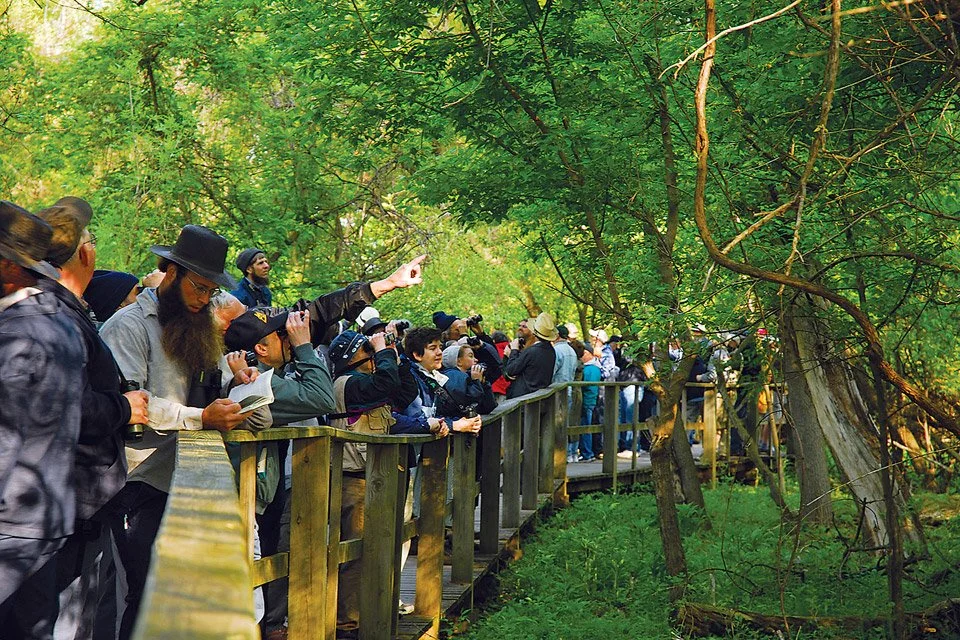
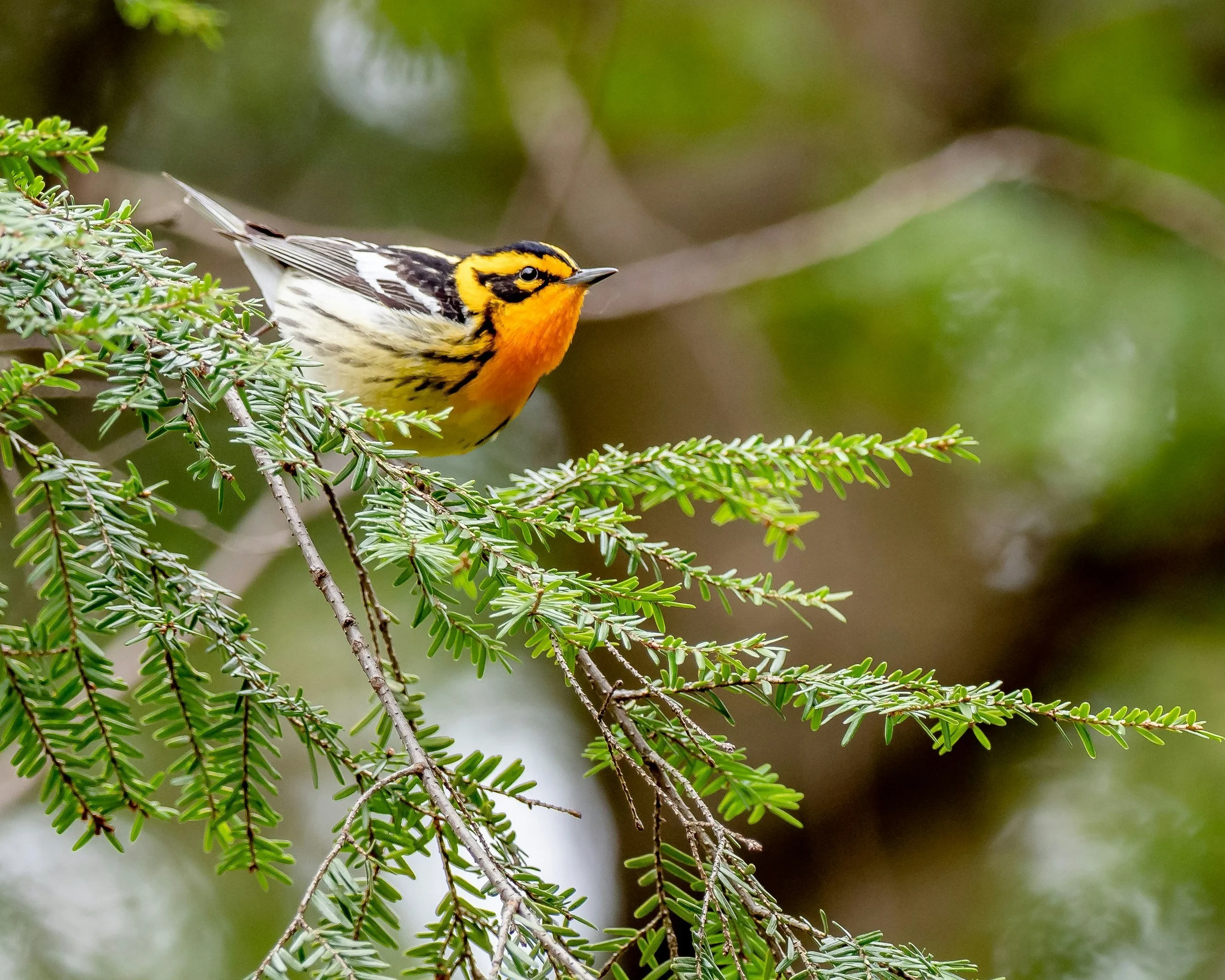
If you’ve ever dreamed of standing on a boardwalk while warblers rain from the canopy—chestnut flanks flashing, Magnolias buzzing, Blackburnians glowing like embers—welcome to northwest Ohio in May.
The “Biggest Week in American Birding” is built around peak spring migration along the south shore of Lake Erie, with Magee Marsh Wildlife Area as the headline act. The festival runs May 8–17, 2026 (with registration dates posted in advance), and it’s hosted by the Black Swamp Bird Observatory.
But even if you never sign up for a single guided event, this area can deliver one of the most intense birding experiences on the continent—especially during the heart of May, when the marsh woods can feel like a living field guide.
Here’s how to plan it, survive the crowds, “cram” effectively, and enjoy the magic without melting down.
Why Magee Marsh is “hot” in May
Magee Marsh sits right on the Lake Erie shoreline. And for migrating songbirds, that matters.
After a long night of flying, many migrants hit the lakeshore and do what tired travelers do: stop, refuel, and hide in the nearest cover while they prepare for that long flight across Lake Erie. If winds or weather are unfavorable, birds can “stack up” and linger—creating those legendary mornings when the trees seem to move.
Locals often describe it simply: the right habitat in the right place at exactly the right time.
And that time, traditionally, is mid-May. The Magee Marsh planning site notes that the spring warbler peak is generally around May 14, with many visitors finding prime activity roughly May 10–18.
The festival: what “Biggest Week” actually is
The Biggest Week in American Birding is a 10-day celebration of migration across northwest Ohio, timed to coincide with peak songbird movement.
Think of it as a choose-your-own-adventure:
guided bird walks and field trips
workshops and presentations
special events (some with limited capacity)
vendor areas and community energy that feels like a reunion of people who speak fluent “pishing”
For 2026, the main dates are May 8–17.
Pro tip: if you’re hoping for the most popular guided outings, pay attention to registration timing—those details are posted by the festival and can influence what you can book.
Logistics: how to get there, where to stay, and how early to book
Where is it, exactly?
Magee Marsh Wildlife Area is near Oak Harbor, Ohio, on the Lake Erie shore. The Black Swamp Bird Observatory’s visitor center is located right at the entrance area, which becomes a hub during the season.
Closest airports (easy options)
Most birders fly into one of these and then rent a car:
Detroit (DTW) – often the most flight options
Cleveland (CLE) – a straightforward drive
Toledo Express (TOL) – smaller, but close
Once you’re on the ground, driving is the name of the game in this region. Birding sites are spread out, and you’ll want the flexibility.
Lodging: book earlier than your birding friends think is necessary
If you remember one line from this post, let it be this: reserve lodging early. During Biggest Week, northwest Ohio gets busy—like “every hotel within a reasonable radius suddenly has binoculars on every nightstand” busy.
Look at:
Oak Harbor (closest)
Port Clinton (great base, lots of food options)
Fremont (more inventory)
even Toledo (farther, but doable if you’re late to book)
If you want to be near dawn birding without a long commute, book months out.
Handling the crowds (without losing your joy)
Yes, Magee can be crowded—especially on the boardwalk during prime hours. And yes, you can still have an amazing trip.
A few crowd-smart strategies:
1) Bird early… then bird elsewhere
Dawn to mid-morning can be electric. But when the boardwalk gets packed, pivot:
explore surrounding wildlife areas and parks
bird roadsides and edges (migration loves edges)
take a midday break and come back late afternoon
2) Weekdays are your friend
If your schedule allows it, aim for Tuesday–Thursday for a calmer boardwalk experience.
3) Don’t get stuck at “the clog”
Magee Marsh’s own tips mention that the west entrance area can bottleneck because it’s a prime viewing zone and where many folks start. If you hit a wall of people, don’t fight it—flow around it, keep moving, and let the birds come to you.
4) Boardwalk etiquette = better birding for everyone
This is where the “zen birder” earns their feathers:
Keep your voice low (others are listening for call notes)
If you stop, don’t block the whole path
Share the “front row” when a bird is close
Be kind to new birders—Magee is where many people fall in love with warblers for the first time and Magee can be overwhelming in a life-changing way.
What weather to expect (and what to pack)
May in this area can feel like multiple seasons in one day: cool mornings, warmer afternoons, wind off the lake, and periodic rain and tremendous humidity.
Climate averages for nearby Oak Harbor show May average highs around 72°F and lows around 50°F, with roughly 4 inches of precipitation.
Pack like a seasoned traveler who’s been emotionally hurt by spring forecasts:
layers (base layer + mid + light shell)
rain jacket (not just a poncho)
waterproof shoes (boardwalk + muddy edges)
a warm hat for morning + sun hat for afternoon
water + snacks (crowds + lines = hunger)
Also: bring something to sit on or a compact camp stool if you plan to stake out an area for a while—your back will thank you.
“Cramming” for Biggest Week: how to prepare so you see more birds
I love cramming for birding trips because it’s the one kind of studying that feels like play. Here’s the method that works:
Step 1: Build a “likely birds” list
Use eBird hotspots for Magee Marsh and surrounding areas and pull:
most reported species in May
warblers, vireos, thrushes, flycatchers, tanagers, orioles
a short list of “dream birds” you’d be thrilled to see
Keep it realistic. Your goal is not to memorize the entire Eastern field guide. Your goal is to be ready when a birder whispers, “Bay-breasted… right above the rail,” and your brain doesn’t blue-screen.
Step 2: Learn warblers by groups, not one-by-one
Instead of trying to “learn 35 warblers,” learn categories:
yellow warblers (yellow + streaking patterns)
black-and-white patterns (Black-and-white Warbler, Blackpoll, etc.)
face patterns (strong superciliums/eye lines)
wing bars vs no wing bars
habitat tendencies (ground-ish vs canopy-ish)
This makes your decision tree faster in the field.
Extra Credit: Study the Kirtland’s Warbler - an exceptionally rare species that can migrate through the area on its way to Michigan breeding grounds. We saw several one magical May.
Step 3: Practice call notes (yes, even a little)
Magee is visually famous, but you’ll still hear chips and see leaf movement. Spend a few evenings with:
Merlin Sound ID (as a learning tool, not as a crutch)
short YouTube playlists of common warbler songs/call notes
a mini quiz approach: “hear it → guess it → check it”
You don’t need perfection. You need familiarity.
Step 4: Tune your binocular “muscle memory”
The birds will be close, fast, and all over the place. Practice at home:
raise binoculars smoothly to target
focus quickly
reacquire after movement
This is a real performance advantage at Magee.
A simple “day plan” that works
Here’s a rhythm that keeps the week fun:
Day 1 (arrival):
Visit BSBO visitor center area, get your bearings, short evening birding.
Day 2 (prime boardwalk day):
Arrive early, bird Magee hard until mid-morning, then break and explore surrounding sites.
Day 3 (festival/field trip day):
Do one guided outing, then free-bird in the afternoon.
Day 4 (flex day):
Return to the boardwalk if conditions are right—especially after a night of favorable migration weather.
This “mix” keeps you from burning out and gives you multiple shots at a peak fallout day.
Final note: the real secret of Biggest Week
Yes, go for the birds. Absolutely.
But also go for the feeling.
Magee Marsh in May is one of those rare places where nature and community overlap—where strangers share scopes, where someone points out your first Wilson’s Warbler, where you laugh at the phrase “just one more pass down the boardwalk” because you know it’s a lie and you’re going to do three more.
Go prepared. Go patient. Go early.
And leave a little space for wonder—because this place is built for it.
Read the Beginning Birding Series to brush up on skills and try to go birding locally as much as possible before your Erie visit to polish those field skills. And don’t forget to make sure your birding gear is in tip-top condition.
