

Birding Hotspots: Why Some Places Explode with Birds
And How to Experience Them
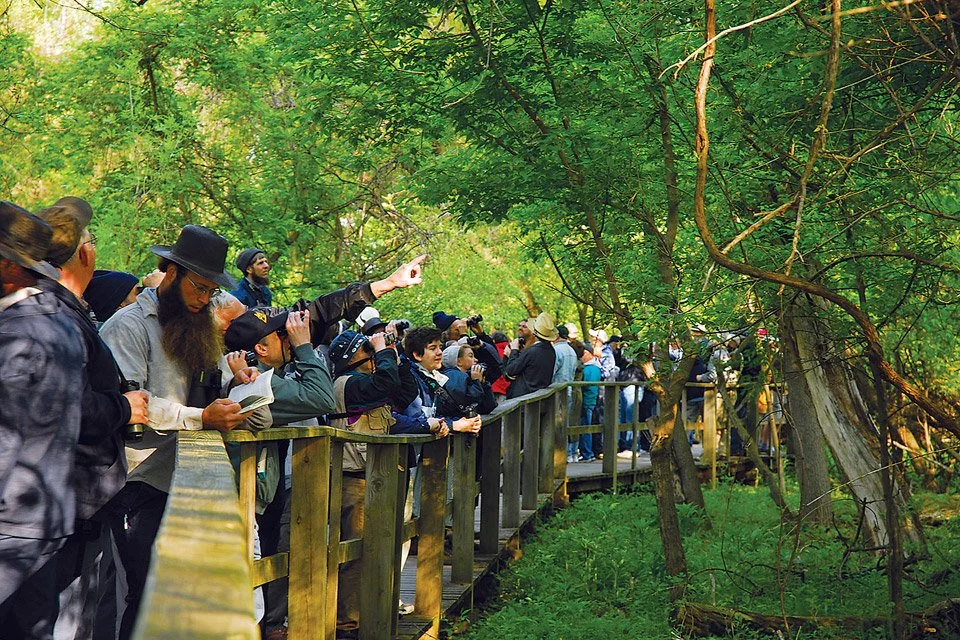
If you’ve ever stood in one place and watched birds pour past you like a living river — warblers popping out of every tree, raptors kettling overhead, shorebirds crowding a mudflat — you already know the feeling.
Some places are just hot.
Birding hotspots aren’t random. They exist because geography, weather, habitat, and migration all collide in ways that concentrate birds into unforgettable numbers. These are the places where life lists grow quickly, skills sharpen fast, and birders come home with stories they can’t stop telling.
This post kicks off our Birding Hotspots cluster — a series dedicated to some of the most legendary birding destinations in North America and how to make the most of them. We’ll dive deeper into specific locations in upcoming posts, but here we’ll answer the big questions:
What makes a birding hotspot a hotspot?
Why do birds funnel into certain places?
When is the best time to visit?
And why planning a hotspot trip can transform you as a birder?
Let’s take a look at what’s really happening behind the binoculars.
What Exactly Is a Birding Hotspot?
A birding hotspot is a location where birds occur in higher diversity, higher density, or greater reliability than surrounding areas. These places often deliver:
Large numbers of birds in a short time
Rare or range-edge species
High visibility and prolonged viewing opportunities
Seasonal spectacles tied to migration
Hotspots aren’t always pristine wilderness. Some are city parks, narrow peninsulas, agricultural edges, or wind-swept shorelines. What matters is not beauty — it’s function.
Birds go where survival is easiest.
The Big Forces That Create Birding Hotspots
1. Migration Highways in the Sky
Most North American birds don’t migrate randomly. They follow broad, invisible routes shaped by geography, wind patterns, food availability, and evolutionary memory.
These routes funnel birds into predictable places year after year.
Spring migration concentrates birds racing north to breeding grounds
Fall migration gathers birds moving south, often more slowly and with young birds mixed in
Hotspots often sit directly beneath these aerial highways — especially where birds are forced lower to rest and refuel.
Birders may experience one species where sexes migrate separately but within a week or two of the other gender. Some species migrate in great mixed flocks. And for some, during fall migration, juveniles of a species will migrate before or after the adults have moved south. These are survival strategies - and evolutionary memory - that may spread the food source and foul weather risks over several weeks instead of a few days in order to maximize the species’ probability of survival.
2. Geographic Funneling: When Birds Have No Choice
Some landscapes force birds into narrow corridors:
Coastlines
Peninsulas
Mountain ranges
Large bodies of water
Birds tend to avoid long crossings over open water or inhospitable terrain. When land pinches, birds stack up. There are passerines (a.k.a. songbirds and even hummingbirds) that do fly straight across the Gulf, for example, and may arrive on the Texas coast absolutely exhausted from their journey of several hundred miles
This is why places like narrow lake edges, barrier islands, and coastal headlands can feel electric during migration. Birds arrive tired, hungry, and visible — often right at eye level.
3. Habitat Diversity in a Small Area
One of the most powerful ingredients of a hotspot is habitat stacking.
When multiple habitat types exist close together — wetlands, grasslands, forest edges, desert scrub, riparian corridors — birds with very different needs can all occur within walking distance.
This means:
Waterbirds, songbirds, raptors, and shorebirds in the same morning
High species counts without long drives
Constant turnover as birds move between habitats
Hotspots don’t just attract birds — they hold them.
4. Northern Limits, Southern Borders, and Overlap Zones
Some locations sit at the edges of species’ ranges. These “border zones” can deliver incredible variety.
Northern species lingering farther south in winter
Tropical species pushing northward
Eastern and western species overlapping
This overlap creates exciting checklists and the chance to see birds you won’t encounter at home — even if you’re an experienced birder.
5. Weather: The Invisible Hand
Weather can supercharge a hotspot overnight.
Cold fronts, storms, headwinds, and fog can all cause birds to drop out of the sky in massive numbers — an event birders call a fallout.
On fallout days:
Birds appear in places they usually pass over
Exhausted migrants linger longer
Even common species feel extraordinary
Many legendary hotspot days are remembered because the weather lined up just right.
Timing Is Everything: When Hotspots Shine
Hotspots are rarely “on” all the time. Knowing when to go matters as much as knowing where.
Spring Migration (March–May)
Brightly colored birds in breeding plumage
Urgent movement north
Song at peak intensity
Short but explosive windows
Fall Migration (August–October)
Higher overall numbers
Young birds mixed with adults
Raptors moving in large, visible groups
Longer migration season with more flexibility
Winter Hotspots
Concentrations of waterfowl and raptors
Northern species pushed south
Reliable viewing with less turnover
Understanding seasonality helps you align expectations — and avoid disappointment.
Why Every Birder Should Experience a Hotspot
You Learn Faster
Hotspots compress learning. When you see dozens of species in a day, patterns start to emerge:
Differences in shape and movement
Habitat preferences
Flight styles and behaviors
Your brain makes connections quickly because repetition is immediate.
You Build Confidence
Seeing birds well — and often — builds confidence fast. Field marks become clearer. Calls become familiar. You stop doubting yourself and start trusting your instincts.
Many birders describe hotspot trips as turning points in their birding journey.
You Feel the Bigger Story
At a hotspot, migration becomes real. You’re not just seeing birds — you’re witnessing one of the largest biological movements on Earth.
It’s humbling. And addictive.
A Preview of the Hotspots We’ll Explore
In upcoming posts, we’ll go deep into some of North America’s most iconic birding destinations:
In upcoming posts, we’ll go deep into some of North America’s most iconic birding destinations — places where geography and migration collide in unforgettable ways:
Sax-Zim Bog (Minnesota) – A winter wonderland of boreal species
Southeast Arizona – Where desert basins and sky islands create staggering diversity
Texas Coastline – Barrier islands, coastal wetlands, and migration funnels packed with birds
Magee Marsh & The Biggest Week in Birding (Ohio) – Spring warbler migration at eye level
Cape May, New Jersey – One of the best places in North America to witness fall raptor migration
Each of these locations tells a different migration story — and rewards a different kind of birder.
The Key to Hotspot Success: Preparation
Hotspot birding isn’t about luck. It’s about preparation.
Knowing:
What species to expect
Which habitats to focus on
How weather influences movement
When to arrive and when to wait
…turns a good trip into an unforgettable one.
We’ll wrap up this cluster with a dedicated post on preparing for a hotspot adventure — from gear and clothing to mindset and daily strategy. Watch for these posts over the next couple weeks. And until then read the Check Your Gear post to get a head start.
Final Thought: Go Where the Birds Are
Birding hotspots remind us of something important:
Birds are still out there in astonishing numbers — if you know where to look.
These places connect us to migration, geography, weather, and time itself. They sharpen our skills, expand our lists, and deepen our appreciation for the lives unfolding above our heads every day.
If you’ve ever wanted to level up your birding — this is where it starts.
