

The Great Backyard Bird Count
How to Join a Global Birding Event This February 13-16th and Have Some Fun while you make a Contribution.
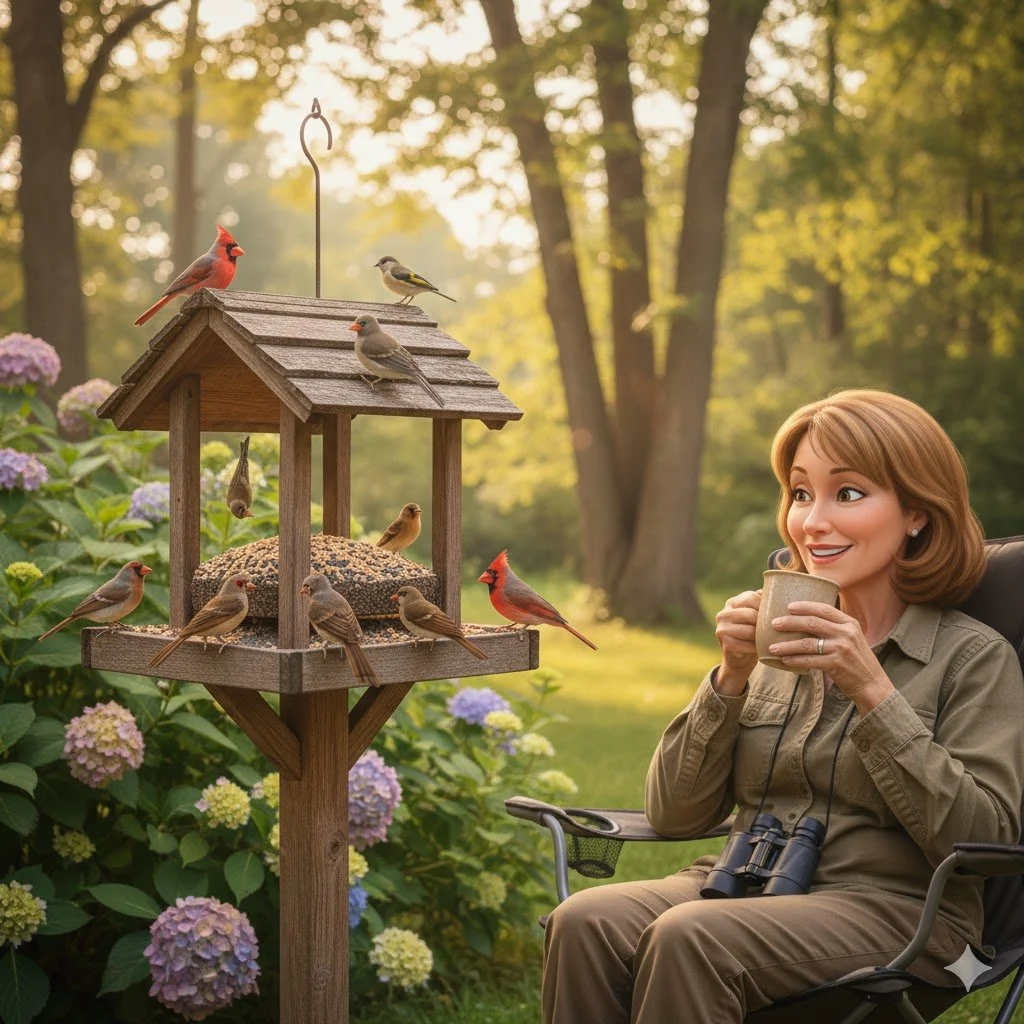
Every February, something pretty remarkable happens. Birders, backyard watchers, families, classrooms, and curious first-timers around the world all pause—just for a few minutes—to notice the birds around them.
They count them.
They record them.
And together, they create one of the largest wildlife surveys on Earth.
It’s called the Great Backyard Bird Count (GBBC), and if you’ve ever wondered whether your backyard sightings really matter, this is your invitation to find out just how important they are.
What Is the Great Backyard Bird Count?
The Great Backyard Bird Count is an annual global birding event held every February and coordinated by Cornell Lab of Ornithology, National Audubon Society, and Birds Canada.
For four days, anyone—anywhere in the world—can participate by observing birds and submitting what they see. No experience required. No special equipment needed. You don’t even need a backyard.
Just birds… and a willingness to notice them.
The data collected during GBBC helps scientists:
Track bird population trends
Monitor changes in distribution and migration
Identify species in decline
Understand how birds are responding to climate and habitat changes
And here’s the best part: every checklist counts, whether it includes 40 species or just one.
When Is the Great Backyard Bird Count?
The GBBC takes place over four days in mid-February each year. In 2026, the dates are February 13-16. You can participate on one day or all four, for as little as 15 minutes at a time.
This timing is intentional. February sits right at the crossroads between winter and spring migration, making it a valuable snapshot of where birds are—and how they’re doing.
Who Can Participate?
Short answer: everyone.
Backyard birders
Beginning birders
Experienced birders
Families with kids
Teachers and classrooms
People watching birds through a window
Walkers, hikers, travelers
If you can see or hear a bird, you can participate.
You don’t need to know every species. You don’t need fancy binoculars. You don’t need to be “good” at birding.
You just need curiosity.
How to Participate in the Great Backyard Bird Count
Getting started is surprisingly simple.
Step 1: Choose Your Location
You can count birds:
In your backyard
At a local park
On a nature trail
At a wildlife refuge
From a balcony or window
While traveling
You don’t need to go somewhere special. Familiar places are incredibly valuable because they show how bird populations change year to year.
Step 2: Watch for at Least 15 Minutes
Spend at least 15 minutes observing birds. You can:
Sit quietly and watch
Walk slowly
Observe feeder activity
Listen for bird sounds
If you want to watch longer, that’s great too—just record your start and end times.
Step 3: Record the Birds You See and Hear
Count the highest number of individuals of each species you see at one time during your session.
Not sure what a bird is? That’s okay.
Use a field guide
Use a birding app
Or submit your best guess
Unidentified birds still provide useful information.
Step 4: Submit Your Checklist
You can submit your sightings using:
eBird (great for birders who already use it)
Merlin Bird ID
The GBBC website
Once submitted, your observations become part of a global database used by scientists around the world.
Tips for First-Time Participants
If this is your first Great Backyard Bird Count, here are a few simple tips to make it enjoyable and stress-free:
Focus on common birds.
Chickadees, sparrows, cardinals, jays, finches, doves—all of them matter.
Watch behavior, not just color.
Notice size, shape, movement, and feeding habits. These clues are often more helpful than plumage alone.
Use feeders strategically.
Fresh seed and clean feeders can increase activity—but even without feeders, birds will show up.
Don’t worry about perfection.
This is about participation, not expertise.
Why the Backyard Matters More Than You Think
It’s easy to assume that “real” birding happens somewhere else—migration hotspots, wildlife refuges, remote landscapes.
But backyard data is some of the most powerful data collected during the GBBC.
Why?
Backyards are consistent year after year
They reflect human-dominated landscapes
They reveal how birds adapt (or struggle) near people
They help identify long-term trends
Your everyday birds tell an important story.
Turning the GBBC Into a Personal Birding Ritual
Many birders treat the Great Backyard Bird Count as more than a one-time event—it’s a moment of reflection.
What birds are here this year?
Which ones are missing?
Which ones surprised you?
How does your list compare to last year?
It’s a perfect companion to January goal-setting and listing, grounding your birding year in awareness and intention.
How You Can Help Birds Beyond the Count
Participating in the GBBC is a powerful start—but it often inspires birders to do more.
Consider:
Keeping feeders clean and stocked responsibly
Adding native plants to your yard
Providing fresh water
Volunteering with local bird or conservation groups
Continuing to submit observations throughout the year
Birding isn’t just about seeing birds—it’s about showing up for them.
Why This Count Matters—Now More Than Ever
Bird populations face ongoing challenges: habitat loss, climate change, window strikes, pesticide use.
The Great Backyard Bird Count gives birds a voice—through you.
For just a few minutes, you become part of something much bigger than a checklist. You become a witness, a data point, and a steward of the natural world.
So this February, step outside. Or sit by the window. Or take a slow walk.
Count the birds.
Notice the details.
And know that what you see truly matters.
Consider also reading the post Birding that Matters for more on the true effects that birding can have.
