

Buying Binoculars for Beginning Birders
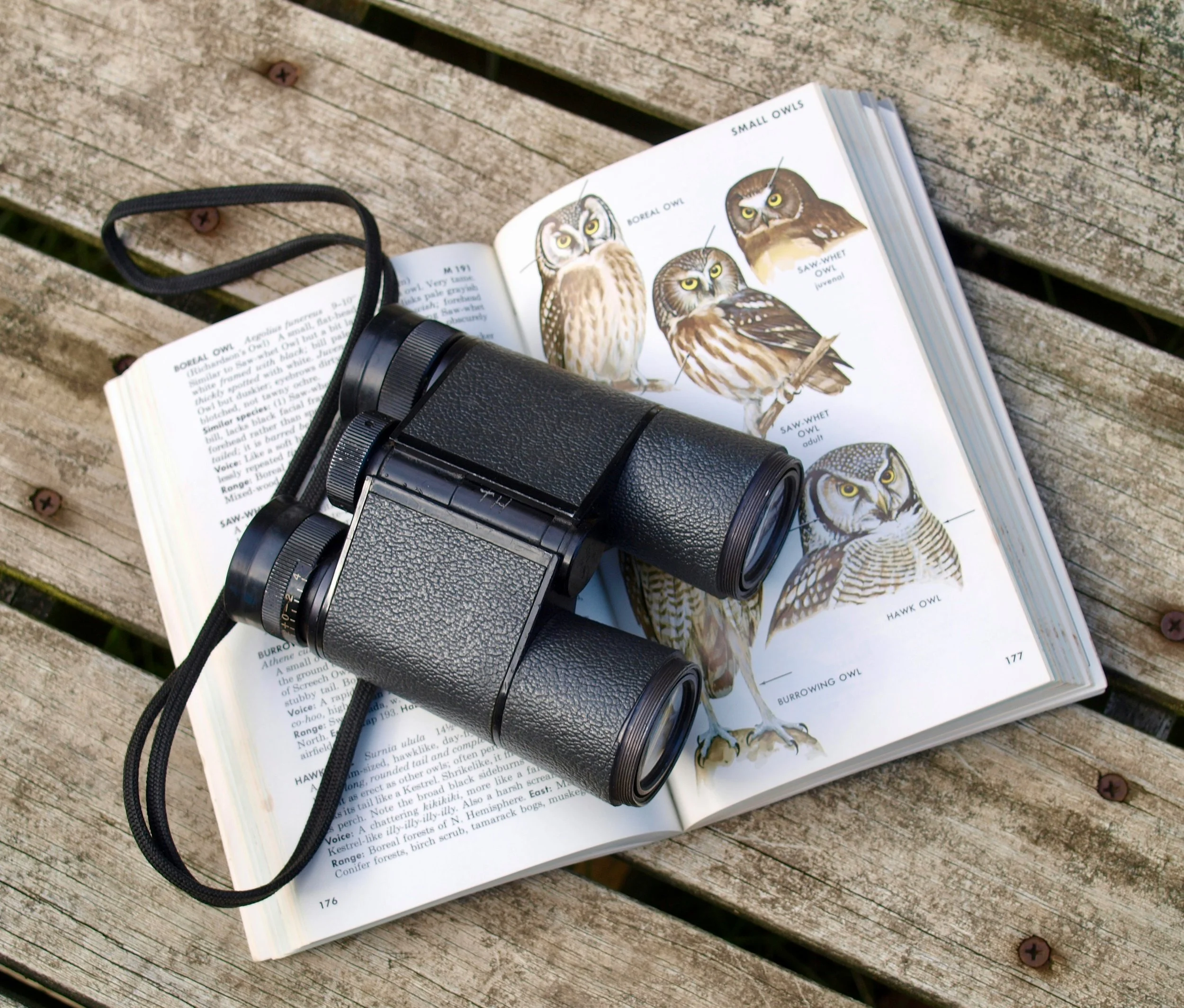
How to Choose the Perfect First Pair
For many new birders, buying your first pair of binoculars is the moment the hobby truly begins. Suddenly those distant specks resolve into sparrows, warblers, hawks, and herons. Plumage patterns pop. Behaviors become visible. And the birds that were once “little brown somethings” become identifiable wonders.
“I remember my “first” binoculars - hand-me-down from my Grandpa. I was in heaven. A few years later I replaced that pair with state-of-the-art (but reasonably priced) binoculars. The color! The detail! I was blown away by the amazing images the binoculars provided and my addiction to experiencing these beautiful creatures was fully engaged by the simple step of buying good (but reasonably priced) binoculars. ”
But choosing binoculars can feel overwhelming — especially when every model promises crystal-clear optics, wide fields of view, and professional-grade performance. Add in price tags that range from $40 to $3,000, and you have a recipe for decision fatigue.
This guide is written specifically for beginning birders who want the best value without over-investing in gear they may outgrow. We’ll cover magnification, field of view, focusing, waterproofing, weight, prism design, durability, and even a few helpful accessories to consider.
By the end, you’ll know exactly what features matter (and which are optional) so you can buy binoculars that match your skill level, your budget, and your birding goals.
Why Buying Binoculars Is Different for Beginning Birders
Experienced birders can quickly justify high-end models because they spend years — often decades — relying on their binoculars for both casual birding and serious field study. But beginners are in a different stage entirely.
Beginners may outgrow their first binoculars.
Birding is a skill that develops with practice. As your identification abilities grow, you may want:
Higher optical clarity
Wider field of view
Better color fidelity
Improved low-light performance
More rugged, waterproof construction
A first pair of binoculars is like a beginner guitar — it only needs to be good enough to get you playing, noticing, and learning.
And yes — “you generally get what you pay for” is true.
Binoculars are an area where price correlates closely with performance. High-quality glass, precision-ground lenses, durable coatings, waterproofing, and mechanical reliability all cost money. That said, a beginning birder does not need a $1,200 pair of optics to enjoy birds.
There is a sweet spot where quality and affordability meet — typically in the $80–$250 range — perfect for most beginners.
Understanding the Numbers: What 8×42 (or 10×42) Really Means
Most birding binoculars fall into two common specifications:
8×42
10×42
But you’ll also see 10×50, 8×32, 7×35, and many more combinations. Here’s what the numbers mean — and which are best for beginners.
Magnification (the first number: 8× or 10×)
This tells you how many times closer the subject appears.
8× magnification means the bird looks eight times closer.
10× magnification means ten times closer.
For birding, these differences matter.
Why most beginners should choose 8×:
Easier to hold steady
Wider field of view
Brighter image, especially in low light
Faster to find small, active birds
More forgiving for glasses-wearers
Higher magnification seems like the better choice, but it also amplifies hand shake, narrows your field of view, and can feel less comfortable to use for long periods.
When 10× might be worth considering:
Birding in wide-open spaces (wetlands, lakes, grasslands)
Watching raptors soaring at great distances
You have a steady hand
But for most beginners, 8×42 is the gold standard.
Objective Lens Diameter (the second number: 42, 32, 50)
This number refers to the size of the front lenses.
Larger lenses (42mm, 50mm) gather more light
Smaller lenses (25mm, 32mm) are lighter but dimmer
Why 42mm is ideal for new birders:
Bright images at dawn and dusk
Works well under tree canopy
Balanced weight vs. performance
Compact binoculars (25mm or 28mm) may look appealing, but beginners often struggle with:
Dimming in low light
Narrower fields of view
Reduced color clarity
Tiny exit pupils (harder to align with your eyes)
Focusing mechanism may be harder to adjust quickly
Unless you absolutely require ultra-lightweight binoculars, stick with 42mm.
Field of View: One of the Most Important Factors for Beginners
If magnification helps you see the bird, field of view (FOV) helps you find it.
Field of view describes how wide an area you can see through the binoculars, typically measured in:
Feet at 1,000 yards, or
Degrees of view
Higher magnification always reduces FOV — which is why 8× binoculars have an advantage for beginners.
A wider FOV makes birding easier because:
Small birds are easier to locate in brush or trees
Fast-moving birds stay in frame
Beginners spend less time “searching”
It reduces fatigue and frustration
Look for binoculars with a FOV of at least:
380 ft @ 1,000 yards for 8× models
320 ft @ 1,000 yards for 10× models
If the field of view is extremely narrow, even good optics can feel frustrating to use.

These Bushnells are a solid choice for Beginning Birders.
Weight: Heavier Isn’t Better
A pair of binoculars may feel manageable in your hand, but after an hour of birding, weight becomes a real consideration.
Most 8×42 binoculars weigh:
20–28 ounces
Heavier binoculars can cause:
Neck strain
Arm fatigue
Difficulty holding steady
Look for models that balance:
Light weight
Solid build quality
Comfortable, rubberized armor
If you plan long hikes, consider 8×32 binoculars, which often weigh 15–20 ounces and still deliver excellent performance.
Waterproofing and Weather Resistance
Beginning birders often underestimate how often binoculars are exposed to:
Light rain
Dew
Mist from ponds or lakes
Accidental splashes
Humid weather
At minimum, choose binoculars with:
Waterproof (WP) or water-resistant rating
Nitrogen- or argon-purged to prevent internal fogging
Rubber armor coating
Waterproofing isn’t just about weather — it also ensures long-term durability and protects your investment.
Porro vs. Roof Prism: What’s the Difference?
The prism system inside binoculars determines shape, handling, and sometimes price.
Porro Prism Binoculars
You can recognize these by their zig-zag shape, where the eyepiece and objective lens are offset.
Pros:
Often brighter and sharper at lower prices
Excellent depth perception
Good value for beginners
Cons:
Bulkier
Generally less waterproof
More prone to misalignment if dropped
Porros can be a great budget choice — but they’re less popular today because of their size.
Roof Prism Binoculars
These have the sleek, straight-barrel design seen in most modern birding binoculars.
Pros:
Compact and lightweight
More durable
Easier to waterproof
Widely available
Cons:
Higher manufacturing costs
Cheap roof prisms perform much worse than cheap porro prisms
For beginning birders, roof prisms are usually the right choice, but high-quality porros still offer great value if weight isn't your top concern.
How Long Do Binoculars Last? A Lot Longer Than You Think
A quality pair of binoculars can last:
10–20 years for mid-range models
30+ years for high-end glass
Many optical companies offer lifetime warranties on mechanical or optical defects, making binoculars one of the most durable tools you can buy.
This longevity is another reason beginners shouldn’t feel pressure to over-invest. You can always upgrade later — and keep your first pair as:
A backup
A gift for a friend
A spare set for guests
A glove-compartment emergency pair
Most birders eventually own multiple binoculars anyway, each for different styles of birding.
Focusing Systems: What Beginners Should Look For
Every birder eventually develops preferences for speed, precision, and knob tension. But beginners should prioritize:
1. Smooth central focus wheel
You should be able to move from close focus (6–8 feet) to far distance (infinity) quickly and easily.
2. Easy diopter adjustment
This helps you tune the binoculars to your individual eyes. Beginners often overlook it, but it makes a huge difference in clarity.
3. Close-focus capability
Look for 6–8 feet minimum — essential for watching butterflies, warblers, hummingbirds, and feeders.
The Beginner’s Sweet Spot: Best Specifications Overall
To simplify everything above, most new birders should choose:
Binoculars with:
Wide field of view
Waterproof construction
Roof prism design
Weight under 25 ounces
Close focus under 8 feet
Price between $80–$300
This combination provides brightness, comfort, stability, and adaptability — everything a beginner needs to build skills and “grow into” the hobby.
Here’s just a couple examples of what’s available:
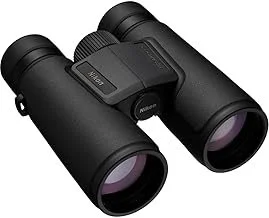
Nikon Monarch 8×42 Binoculars
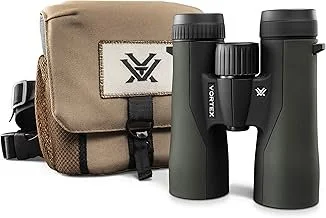
Vortex 10×42 Binoculars
How to Try Out Binoculars Before You Buy
If you can visit a birding store or outdoor retailer, bring your current glasses, look across the store, and try:
Reading a sign at a distance
Focusing from near to far
Tracking a moving bird or leaf in the wind
Checking comfort in your hands
Making sure the eyecups and eye relief are comfortable
If buying online, read reviews that specifically mention:
Beginner usability
Field of view
Low-light performance
Ergonomics
Warranty quality
And don’t be afraid to return binoculars that don’t feel right — what works for one birder may not suit another.
What About Kids or Teen Beginners?
For younger birders:
Choose 8×32 or 7×35 for lighter weight
Prioritize durability and waterproofing
Look for simple, smooth focus wheels
Magnification higher than 8× is rarely helpful for kids.
Avoid These Common Mistakes When Buying Your First Pair
New birders often get stuck on specs that matter less than expected:
❌ Choosing higher magnification thinking it’s “better”
More zoom sounds appealing, but it makes steady viewing harder.
❌ Buying ultra-cheap roof prisms
Under $50, porro prisms often outperform roof prisms by a large margin.
❌ Over-investing too soon
A $900 pair is wonderful — but a beginner may not know how to fully use or appreciate those features yet.
❌ Ignoring the field of view
It’s one of the most important features for finding birds quickly.
❌ Prioritizing compact size over performance
Pocket binoculars are great supplements, not primary birding tools.
A Final Word: The Best Binoculars Are the Ones You Will Use
At the end of the day, binoculars are simply a tool that opens up the natural world. Whether you spend $80 or $800, what matters most is that you:
Get outside
Practice using them
Learn to notice details
Enjoy your time in nature
Beginning birders often worry about choosing the “perfect” pair, but the best binoculars for your first year are the ones that feel comfortable, help you find birds more easily, and encourage your growing curiosity.
You can always upgrade later — and when you do, your first binoculars will still serve a purpose, whether on a road trip, a backup in your daypack, or handed to a friend who wants to join you in the field.
Birding is a lifetime hobby. Your binoculars will be with you for years, through migrations, early mornings, warm spring days, and quiet winter forests. Start with a good beginner-friendly pair, learn to use them well, and the world of birds will reveal itself in ways you’ve never seen before.
