

The Grosbeak Family in North America
Meet some colorful cousins in the Songbird World
For many birders—new and experienced alike—few backyard visitors inspire as much excitement as the grosbeaks. Their striking colors, chunky seed-cracking bills, and gentle, almost bashful presence add a sense of wonder to any feeder setup. While they belong to different genera and have diverse life histories, North America’s grosbeaks are linked by their general “grosbeak-ness”—robust bills, melodic songs, forest or brush-loving habits, and a fondness for seeds, fruits, and insects.
In this guide, we’ll explore the most common and beloved members of the North American grosbeak clan: Rose-breasted Grosbeak, Black-headed Grosbeak, Blue Grosbeak and the iconic Northern Cardinal—a grosbeak relative whose huge conical bill earns it a place in many “grosbeak family” discussions.
We’ll look at their characteristics, behavior, distribution, (Western Hemisphere) migration, nesting habits, diet, and how birders can support healthy populations year-round.
The family Cardinalidae is a diverse group of birds that now includes beautiful tanagers, grosbeaks, buntings and allies like the Cardinal and Dickcissel. The Pine Grosbeak and Evening Grosbeak are more closely related to finches and won’t be covered in this post.
What Makes a Grosbeak a Grosbeak?
While not all “grosbeaks” are closely related genetically, they share a surprising number of general traits that make them feel like a “family” in the birding world:
General Characteristics
Large, powerful bills built for cracking tough seeds, prying open fruits, and crushing beetles.
Rounded, stocky bodies with medium tails and a gentle silhouette.
Bold plumage—males often sport strong contrasts of red, orange, yellow, black, and white.
Musical songs, especially in the Rose-breasted and Black-headed Grosbeaks, which sound like a more leisurely robin.
Habitat diversity, ranging from deep northern forests to desert scrub and riparian woodlands.
Diet flexibility, shifting between insects in breeding season and seeds/fruits during migration and winter.
These similarities make them easy to recognize, even across great distances and across species lines.
Meet the Grosbeaks of North America
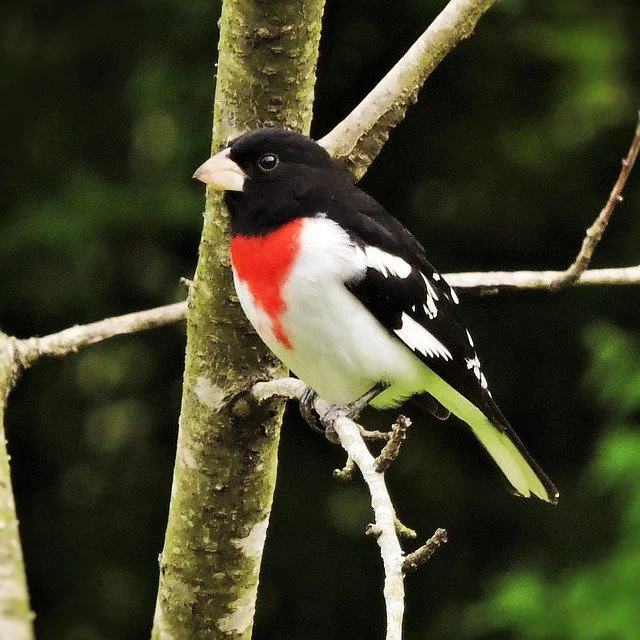
1. Rose-breasted Grosbeak
Range: Eastern and central North America
Migration: Long-distance migrant to Central and South America
Habitat: Deciduous forests, woodlands, forest edges, parks, and well-planted backyards
Nesting: 5–25 feet high in shrubs or trees, often in dense foliage
Diet: Insects, seeds, berries, flower buds, and occasionally fruit
The Rose-breasted Grosbeak is a fan favorite for its dramatic contrast—males wear a jet-black hood, bright white belly, and a heart-shaped patch of dazzling rose red. Females and immatures resemble oversized, streaky sparrows with a thick pink bill and bold white eyebrow.
During spring and early summer, their brilliant, sweet, rolling song drifts through eastern woodlands like a slowed-down version of the American Robin. They migrate long distances, crossing the Gulf of Mexico and wintering as far south as Peru.
At feeders, they favor black oil sunflower, safflower, and fruiting shrubs nearby. Birders often notice that Rose-breasted Grosbeaks appear suddenly in early May—especially during spring storms—and may stay several days before continuing north.
2. Black-headed Grosbeak
Range: Western United States and southwestern Canada
Migration: Medium-distance migrant to Mexico and Central America
Habitat: Riparian woodlands, pine-oak forests, stream corridors, suburban yards
Nesting: Cup nests built 10–20 feet off the ground in shrubs or trees
Diet: Insects (including toxic monarch butterflies), seeds, berries, and fruit
The Black-headed Grosbeak is considered the western counterpart to the Rose-breasted. Males feature a black head, rich orange-cinnamon breast, and bold wing bars. Females are brown with streaking and buffy eyebrow lines.
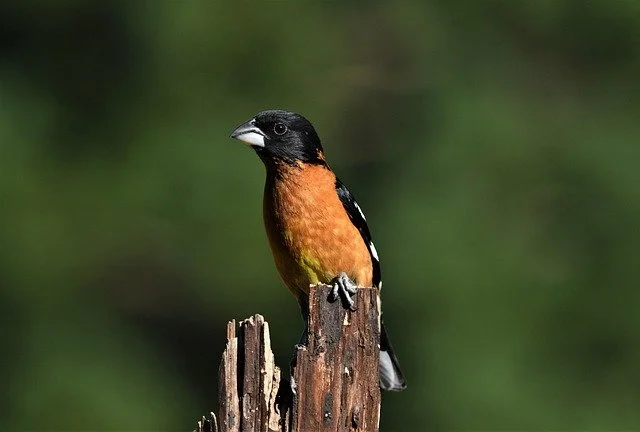
Their song-rich, rolling, and slightly more hesitant than the Rose-breasted—fills canyons and river corridors from California to Colorado. One fascinating behavior: Black-headed Grosbeaks are one of the few birds able to safely eat toxic monarch butterflies thanks to their unique tolerance for milkweed toxins.
They visit feeders eagerly, especially for sunflower seed, fruit, safflower, and nut mixes. They are shy compared to some songbirds, often waiting before cautiously approaching feeders.
3. Blue Grosbeak
Range: Southern and central United States, into Mexico
Migration: Migrant to Mexico and Central America in fall; some populations remain partially resident in the south
Habitat: Brushy fields, hedgerows, powerline corridors, scrublands
Nesting: Low shrubs or small trees, often in tangles of vines
Diet: Insects (grasshoppers, beetles), seeds, grains, and berries
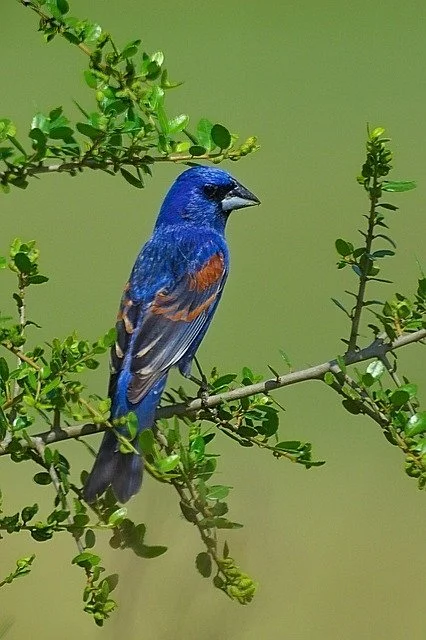
The Blue Grosbeak is a small but powerful species with deep, all-over blue plumage in males and warm cinnamon wing bars. Females are buffy brown with hints of blue on the wings and tail.
Their rolling warble of buzzy and sweet notes is a classic sound of summer in the South and lower Midwest. These birds thrive in edge habitats and areas of disturbance—fencerows, shrubby fields, and even overgrown roadsides.
Insects form the bulk of their diet during warm months, making them excellent natural pest controllers. During migration and winter, they shift toward seeds and grains.
They may visit feeders stocked with white millet, sunflower chips, and mixed seed, but are more commonly seen foraging low in fields or singing from wires.
4. The Northern Cardinal – A Grosbeak Cousin
Another cousin in the diverse family Cardinalidae, the Northern Cardinal has a similar bill structure and diet.
Range: Eastern and southern U.S., Mexico; expanding northward
Habitat: Woodlands, suburban yards, thickets
Diet: Seeds, fruits, insects
Migration: Mostly resident with minor seasonal wanderings
Nesting: Low shrubs and dense vegetation
Cardinals share the grosbeak traits of a heavy bill, seed-focused diet, territorial song, and preference for shrubby habitats. Their success in human-modified landscapes makes this species more successful than others in the family and it has expanded its historical distribution throughout the eastern half of the continent.
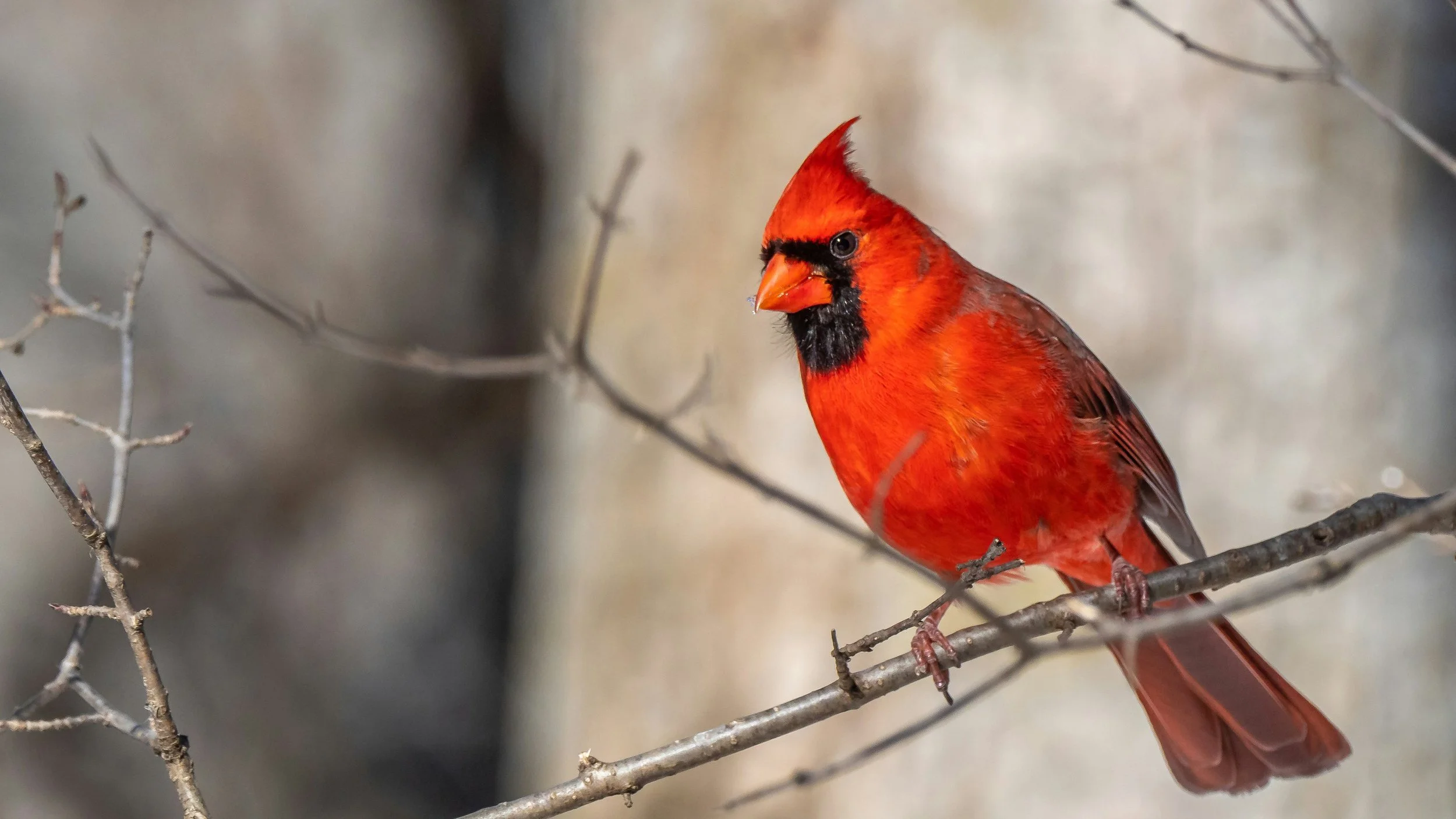
Male cardinals’ brilliant red plumage and clear whistles make them one of the most beloved backyard birds in North America. Females, with their warm buff-orange tones, are equally beautiful but more subtle.
5. Pyrrhuloxia
Range: Desert Southwest of the U.S. and northern Mexico
Migration: Non-migratory
Habitat: Desert scrub, mesquite thickets, cactus stands, arroyos, and riparian brush
Nesting: Low shrubs and thorny desert vegetation
Diet: Seeds, berries, fruits, insects during breeding season
Though not a true grosbeak, the Pyrrhuloxia fits naturally among these “big-billed cousins” of North America. Found across the arid Southwest, this desert specialist shares the heavy bill, robust body shape, and rich melodic song that grosbeak fans love. In many ways, the Pyrrhuloxia feels like a desert-adapted version of the Northern Cardinal—complete with an expressive crest and an unmistakably thick bill—but its looks and habits are tailored beautifully to hot, dry, thorny landscapes.
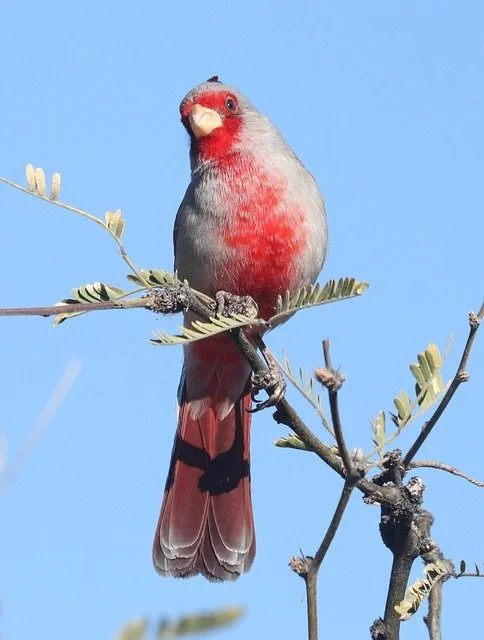
Males are striking in their own understated way: soft gray plumage brushed with red on the face, crest, wings, and tail, plus the signature yellow, parrot-like bill that distinguishes them from cardinals. Females wear warm gray-brown tones with subtle red accents, blending into desert brush with remarkable ease.
Distribution & Habitat
The Pyrrhuloxia is a resident bird of the deep Southwest, with a range that stretches across:
Southern Arizona
Southern New Mexico
West and South Texas
and continues into northern Mexico.
They thrive in desert scrub, mesquite groves, thorn forests, cactus patches, and dry wash systems—places where seeds and fruits remain available even in lean seasons.
Migration Patterns of Grosbeaks
Long-Distance Migrants
Rose-breasted Grosbeak
Black-headed Grosbeak
Blue Grosbeak
These birds travel to Central or South America, often crossing open water and requiring protected forests in multiple countries.
Short-Distance or Minimal Migrants
Northern Cardinal
Pyrrhuloxia
Cardinals have expanded their territory northward as they have become accustomed to human habitation and garden landscaping.
Rather than migrating long distances, Pyrrhuloxias stay year-round in their desert and semi-arid regions, shifting slightly within their home territories when food or water sources change.
Nesting Habits of Grosbeaks
Most grosbeaks share several nesting tendencies:
General Nesting Characteristics
Cup-shaped nests made from twigs, grasses, and rootlets
Modest clutch sizes of 2–5 eggs
Both parents participate in feeding young (except cardinals, where the male often feeds the female during incubation)
Preference for denser foliage, providing concealment from predators
Rose-breasted and Black-headed Grosbeaks often nest in saplings or outer branches of medium trees. Blue Grosbeaks favor shrubby tangles.
Behavior and Personality
Despite their bold looks, many grosbeaks are soft-spoken and surprisingly gentle and shy.
Shared Behaviors
Slow, deliberate feeding style compared to finches or sparrows
Whistling, melodic songs
Heavy but graceful flight with slower wingbeats
Males that sing persistently during breeding season
Gentle presence at feeders, sometimes waiting their turn
What Grosbeaks Eat
Their bills reveal much about their preferences:
Grosbeak Diet Overview
Seeds: sunflower, safflower, conifer seeds, millet, pine seeds
Insects: beetles, caterpillars, grasshoppers, spiders
Fruits & berries: dogwood, serviceberry, elderberry, mulberry, wild cherry
Flower buds & tree buds
At feeders, they especially love:
Black oil sunflower (their favorite)
Safflower
Sunflower chips
Fruit, especially cherries and berries
Suet with fruit or insects (for Rose-breasted and Black-headed)
Conservation Status and the Role of Birders
While some grosbeaks—like the Blue Grosbeak and Northern Cardinal—are stable or even expanding in range, others are declining:
Rose-breasted Grosbeaks experience habitat pressure in both North and South America.
Black-headed Grosbeaks face threats from development of riparian corridors.
Climate change also shifts migration timing and food availability, stressing these birds in subtle but significant ways.
How Birders Can Help Keep Grosbeak Populations Healthy
Good news: backyard birders can make a meaningful difference.
1. Plant Native Trees and Shrubs
Grosbeaks depend on:
Serviceberry
Dogwood
Elderberry
Oak
Maple
Mulberry
Mountain ash
Native plants supply insects, berries, buds, and nesting cover.
2. Offer High-Quality Food
Black oil sunflower
Safflower
Fruit
Suet (especially insect or fruit blends)
Avoid cheap seed mixes with fillers like milo, wheat, or dusty cracked corn.
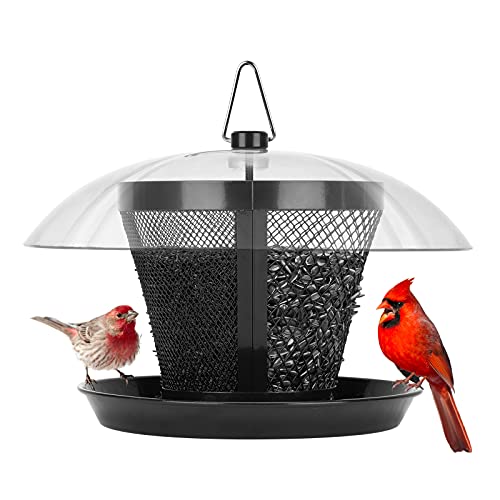
Feeders should be be platform feeders that provide enough area for these medium-sized songbirds to perch on. Grosbeaks cannot typically eat from a tube feeder successfully. Consider a feeder like the black-oil sunflower feeder shown below.
Clean feeders regularly to prevent disease, especially during warm months.
3. Create a Bird-Safe Habitat
Install UV-reflective window decals to reduce collisions.
Keep cats indoors.
Maintain clean feeding areas to reduce rodent attraction.
Provide clean water in a heated birdbath in winter.
4. Support Conservation
Consider donating to or volunteering with:
American Bird Conservancy
Audubon
Local land trusts
Nature preserves protecting riparian or boreal habitats
5. Protect Migration Stopovers
Birds migrating thousands of miles rely on “rest stops” with food and shelter. Planting natives, reducing chemical use, and keeping habitat patches connected helps enormously.
6. Participate in Citizen Science
Grosbeaks benefit when birders submit sightings to:
eBird
GBBC
Project FeederWatch
Christmas Bird Count
iNaturalist
These data sets inform conservation strategies across the continent.
Final Thoughts
North America’s grosbeaks are a colorful and fascinating group of songbirds woven into the rhythm of seasons. Their migrations connect hemispheres, their songs brighten forests and backyards alike, and their presence offers a glimpse into the resilience and beauty of our natural world.
As birders, we play a special role in creating safe habitats, offering quality food, and supporting the landscapes these birds depend on. With a bit of care—and a few sunflower seeds—we can help ensure the grosbeaks’ sweet songs continue to echo across woodlands, mountains, and neighborhoods for generations to come.
