

North American Birds That Use Nest Boxes
And How You Can Help Them Thrive
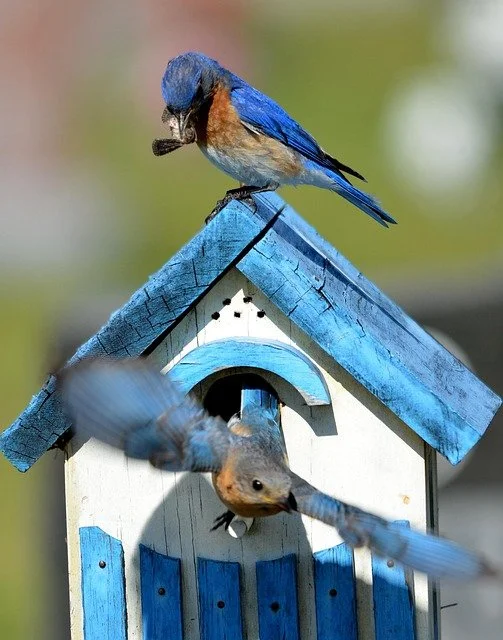
There’s something deeply hopeful about a bird choosing your yard — or your field, fence line, or quiet corner of woods — as the place to raise its family. A small wooden box, a hollowed gourd, or a weathered tree cavity might not look like much to us, but to a bird it can mean everything: shelter from storms, safety from predators, and a protected space where fragile eggs can become the next generation of wings.
Across North America, an entire community of birds depends on these hidden homes. From tiny chickadees and titmice carrying moss into thumb-sized cavities… to brilliant bluebirds scanning open fields from fence posts… to chatty purple martins nesting in clustered gourds… and even to screech-owls, kestrels, and wood ducks seeking safe hollows high above the ground — these species all share one simple need: a secure cavity to nest in. They don’t weave elaborate nests in shrubs or trees. They rely on holes that nature once provided in abundance. If they can’t find a suitable site each spring, they must skip the breeding season altogether and the world will have to make due with fewer birds.
But here’s the part that makes this story personal: many of those natural cavities have quietly disappeared. Dead trees get removed. Old forests are thinned. Open land is developed. And without places to nest, even healthy bird populations can struggle to survive. The good news is that this is one conservation challenge where everyday people can make an immediate, visible difference. A thoughtfully placed nest box or gourd can quite literally become a nursery. A safe snag left standing can house generations of birds. With just a little intention, your backyard or property can become part of the solution — a small refuge in a much bigger landscape.
When most people picture birds building a home, they imagine twigs woven into a delicate cup nest tucked safely into a shrub or the crook of a limb. But in reality, dozens of North American birds never build an exposed nest at all. Instead, they rely on cavities — natural holes in trees created through decay, storms, woodpecker excavation, or lightning strikes.
These “cavity-nesters” include some of our most beloved backyard and open-country species: all three Bluebird species, as well as all of our chickadee and titmouse species, Tree and Violet-Green swallows, and even several raptors such as American Kestrels and all of our owls (some of our owl species will use nests built by other birds, ledges and even abandoned buildings for their nest sites). Yet cavity-nesters face increasing pressure as our human landscapes expand, dead trees are removed, and open spaces disappear.
The good news? Backyard birders, landowners, and nature-loving communities can directly help cavity-nesting birds by providing properly designed nest boxes, leaving standing dead trees when safe, and protecting undeveloped parcels of land.
In this guide, we’ll explore:
Why cavity-nesters need our help
The specific species in North America that rely on nest boxes
How habitat loss affects these birds
How carefully designed nest boxes (with correct hole size, interior dimensions, and mounting height) can make a measurable difference
Additional conservation efforts, including the importance of dead trees
(Purple Martins deserve their own spotlight and will be covered in a separate post soon.)
Let’s dive in.
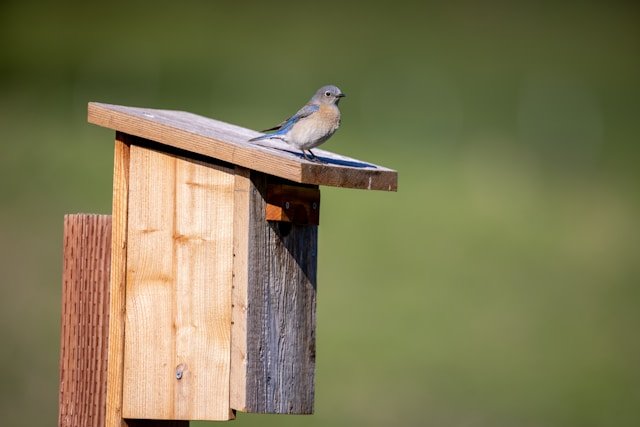
Why Cavity-Nesting Birds Need Human Support
Cavity-nesters rely on secure, enclosed spaces to protect their eggs and nestlings from predators, weather, and competition. Historically, these spaces were abundant. Aging forests produced natural cavities, woodpeckers created fresh holes, and storms regularly opened pockets in snags.
But in modern landscapes, these natural resources are rapidly disappearing:
1. Dead Trees Are Removed for Aesthetics or Safety
While understandable in public areas or near homes, removing every dead tree — including small, non-hazardous snags — creates major housing shortages for birds. A single dead tree might support:
multiple cavity-nesters
overwintering insects (essential food)
fungi and beneficial microhabitats
2. Land Development Reduces Habitat Diversity
Suburban expansion, agricultural conversion, and recreational construction often eliminate the mix of older trees and open foraging spaces many cavity-nesters depend on.
For example:
Bluebirds require cavities plus nearby open land for insect hunting.
Kestrels need cavities near fields, meadows, or grasslands.
Owls rely on mature woodlands and scattered snags.
3. Competition from Invasive Species
European Starlings and House Sparrows aggressively take over cavities and nest boxes. They often outcompete — or even kill — native birds attempting to nest.
4. Climate and Environmental Pressures
Wildfires, drought, storms, and changes in insect populations all indirectly affect cavity-nesting birds. When natural cavities are lost quickly, species already facing declining populations suffer first.
Nest boxes cannot replace entire ecosystems, but they do provide vital housing and reproductive stability for species that need every advantage they can get. Properly installed boxes have led to major conservation success stories — the recovery of the Eastern Bluebird being one of the best examples.
Meet the North American Birds That Use Nest Boxes
Below are some of the most common — and most grateful — cavity-nesting birds who readily use nest boxes when natural options are limited.
1. Bluebirds
Why They Need Cavities
Bluebirds depend entirely on cavities for nesting. They do not excavate their own holes, and they rarely adapt their nest placement to shrubs or ground conditions. Historically, woodpeckers and natural tree decay provided abundant cavities.
Threats
During the 20th century, agricultural expansion and dead-tree removal caused catastrophic nesting shortages. House Sparrows and European Starlings (both introduced species) finishing the job, occupying nearly every available cavity.
How Nest Boxes Help
The bluebird conservation movement — powered by simple wooden nest boxes — completely reversed population declines. Today, backyard nest boxes are responsible for millions of successful bluebird fledglings each year.
Key Notes:
Correct entrance hole size is essential to exclude starlings.
Boxes need proper ventilation, drainage, and predator guards.
Place boxes in open habitat, not woods.
Read more about Bluebirds here!
2. Chickadees
Chickadees are tiny, energetic cavity nesters that will excavate soft or decaying wood, or use holes abandoned by small woodpeckers and others but they cannot create cavities in healthy trees. That means snags (standing dead trees) are essential to their survival.
Why They Use Nest Boxes
Chickadees readily accept nest boxes when natural cavities are scarce. They prefer wooded or semi-wooded habitats, edges, and quiet suburban yards.
Nesting Behavior
Often line the nest with soft materials like moss and fur.
Produce large broods and fiercely defend their territory.
Need small entrance holes to exclude predators and competitors.
Providing appropriate nest boxes dramatically improves chickadee nesting success in suburban areas with limited dead wood.
3. Titmice
These charming and curious woodland songbirds are dependent on cavities and are among the earliest birds to pair up and begin scouting nest sites each year.
Habitat Requirements
Mature deciduous forest
Mixed oak woodlands
Suburban areas with plenty of canopy cover
Nest Box Notes
Titmice are quick to use nest boxes, especially in regions where old trees are scarce. They also require small entrance holes and appreciate boxes placed under partial cover rather than in wide-open spaces.
4. Swallows (Tree Swallows & Violet-green Swallows)
Not all swallows use cavities, but Tree Swallows and Violet-green Swallows are well-known nest box adopters — particularly in western and northern regions.
Why They Need Help
Tree Swallows rely heavily on natural cavities in wetlands or open fields, habitats that have been drained or developed across much of North America.
Violet-green Swallows face declining habitat in parts of the western U.S. where dead trees are routinely removed.
Benefits of Providing Boxes
Swallows offer insect control, consuming thousands of flies and mosquitoes per day.
They readily adopt boxes placed near water bodies, open fields, and meadows.
Nest boxes must be placed high enough and spaced to reduce territorial disputes.
Swallow trail systems (rows of boxes) have become powerful conservation tools.
5. Owls (Eastern & Western Screech-Owls in particular)
These small owls are extremely adaptable, but they depend on large natural cavities created by woodpeckers or tree decay. As old trees disappear, so do owl territories and, as a result, rodent populations can increase.
Why Screech-Owls Need Boxes
Screech-Owls nest in:
old orchards
mature woodlands
riparian corridors
wooded suburban areas
But these environments are increasingly fragmented.
A well-designed owl box can:
support breeding in suburban yards
increase success in orchards
provide winter roosting habitat
help reconnect fragmented forest corridors
Placement Needs
Owl boxes require:
larger interior space
a higher mounting height
predator guards
careful placement away from heavy foot traffic
Many birders are surprised to find that Screech-Owls may use the same box year-round — nesting in spring and roosting during winter.
6. American Kestrels
The American Kestrel — North America’s smallest falcon — has experienced long-term population declines in many regions. One of the biggest reasons: the loss of nesting cavities in old trees and utility poles.
Why Kestrels Are Struggling
Kestrels need:
cavities in dead or dying trees
open hunting grounds (prairies, meadows, farmland)
scattered perches for hunting from
As grasslands are converted to development and dead trees are removed, kestrels lose their nesting opportunities.
Nest Boxes as Conservation
Kestrel nest boxes are one of the most effective conservation tools available. Research trails across the U.S. have shown:
increased nesting success
stable or rising local populations
improved fledgling survival
These boxes are larger, typically mounted on tall poles or trees bordering open land.
7. Other Cavity-Nesters That Use Nest Boxes
While the species above are the most commonly discussed, many others will use nest boxes, depending on regional habitat, box design, and availability of natural cavities. These include:
Nuthatches (Red-breasted, White-breasted, Pygmy)
Highly dependent on mature forests or older suburban yards with snags.
Wood Ducks
One of the earliest conservation success stories using nest boxes.
(These require very large boxes with predator guards and placement near or in water.)
Prothonotary Warblers
A brilliant yellow warbler that nests in cavities over water in the Southeast.
Great-crested and Ash-throated Flycatchers
Forest-edge birds that often use old woodpecker holes or nest boxes.
Wrens (House, Bewick’s, Carolina)
Wrens are adaptable and readily use nest boxes, although House Wrens can become aggressive and territorial.
Golden-fronted and Acorn Woodpeckers
Occasionally use nest boxes in regions where natural deadwood is scarce — though many woodpeckers excavate their own cavities when substrate allows.
How to Help Cavity-Nesting Birds: Your Conservation Checklist
You can dramatically increase the survival and breeding success of cavity-nesting birds by adopting a combination of habitat protection and thoughtful nest box placement.
1. Leave Dead Trees Standing Whenever Safe
Dead trees (snags) are crucial. They provide:
cavities for nesting
feeding sites (insects)
roosting spots
hunting perches for birds like kestrels and owls
If the tree poses no direct risk to structures or people, consider leaving it in place. You may be providing a home to multiple bird species each season
2. Protect Open Spaces and Allow Some Areas to Remain Undeveloped
Even small parcels of undeveloped land can serve as:
corridors for wildlife
hunting territory for kestrels and owls
foraging grounds for bluebirds and swallows
staging areas for migrating birds
Land trusts, conservation easements, and local habitat projects play a major role in supporting cavity-nesters.
3. Supply Nest Boxes of the Correct Dimensions
This is where backyard birders can make a huge difference.
But one size does NOT fit all.
Entrance hole diameter, cavity depth, box volume, mounting height, and habitat placement vary widely by species.
Common mistakes include:
using a hole size that invites starlings
mounting boxes too low (predator access)
using boxes with poor ventilation
buying decorative boxes that aren’t functional
placing boxes too close together (causes territorial conflict)
4. Install Predator Guards
Raccoons, snakes, cats, and even squirrels can raid nests.
Predator guards include:
baffles
stovepipe guards
entrance hole extenders
metal hole reinforcement rings
For bluebirds and chickadees, proper predator guards may increase fledgling survival by up to 70%.
5. Monitor and Maintain Boxes
Nest boxes require:
annual clean-out
occasional repairs
monitoring for invasive species
removal of House Sparrow nests when present
Wooden boxes typically last several seasons and can be rebuilt easily.
How Your Backyard or Property Can Become a Cavity-Nesting Refuge
You don’t need acreage or a forest to help cavity-nesters.
Even small actions add up:
Add one bluebird box to an open backyard.
Place a chickadee or titmouse box at the edge of a wooded area.
Install a screech-owl box in a quiet, semi-wooded yard.
Talk to neighbors about leaving non-hazardous snags in place.
Work with local landowners or parks to maintain natural cavities.
Support conservation nonprofits working to protect open land.
Every box installed, every snag left standing, and every protected acre helps restore habitat that birds have lost.
Looking Ahead: Purple Martins Deserve Their Own Spotlight
Purple Martins — legendary among cavity-nesters — are so specialized and culturally connected to human-supplied housing that they require their own deep dive. Their colonial housing structures, unique migration patterns, and fledgling-staging behavior are fascinating topics.
👉 Watch for the dedicated Purple Martin guide soon, along with housing recommendations and placement diagrams.
Conclusion: Your Backyard Can Change the Future of Cavity-Nest Birds
Cavity-nesting birds face a housing crisis across North America — but we have the tools to help. By protecting natural cavities, leaving dead trees when safe, supporting undeveloped land, and installing properly designed nest boxes, we become active partners in restoring species whose nesting options are rapidly disappearing.
Whether you’re placing a single box in a suburban yard or building a full trail of boxes on your property, every effort matters. Birds like bluebirds, chickadees, kestrels, swallows, titmice, owls, and others will reward you with successful broods, fascinating behaviors, and the satisfaction of knowing you made a difference.
If you don’t want to build your own nest box, consider some of the choices available on Amazon! [As an Amazon Affiliate, I earn from qualifying purchases, at no charge to you]

