

The Benefits and Pitfalls of Chasing Rare Birds
A balanced look at the excitement of a rarity, the cost of the pursuit, and the value of the birds already around us.
A rare bird alert can change the entire shape of a day. One minute you are drinking coffee and considering a familiar walk close to home. The next, you are calculating driving time, checking weather, charging your phone, and wondering whether the bird will still be there when you arrive.
That surge of possibility is part of birding's appeal. A bird far outside its expected range may offer a once-in-a-lifetime encounter. The chase can lead us to a new habitat, introduce us to other birders, and sharpen skills we might never test in our own backyard. It can also drain a bank account, strain a body, waste a day or week, disturb a tired, bewildered bird, and turn a joyful pastime into a contest.
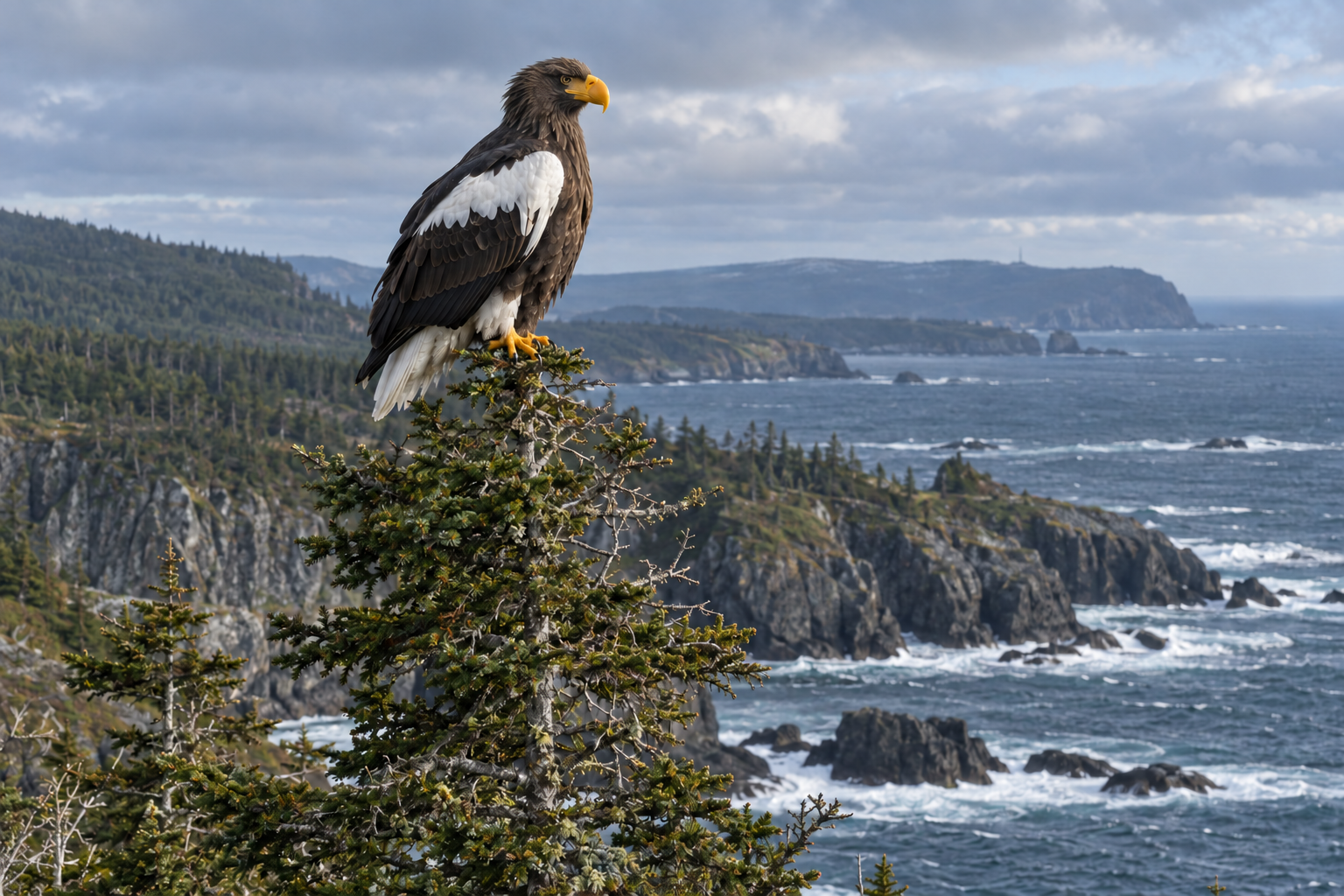
I understand both sides. I believe deeply in learning the resident birds around us, yet I am planning a trip to Newfoundland to try for a Steller's Sea-Eagle. Some birds are simply too magnificent not to try for when the opportunity is reasonable. The important question is not whether birders should chase rare birds. It is how to decide when a chase is worth making and how to keep the pursuit from narrowing the rest of our birding life.
Why Rare Birds Pull Us
Birders are collectors of experiences, even when we never think of ourselves that way. A life list records places, seasons, people, effort, and luck as much as it records species. When we remember a rare bird, we often remember the whole day: the predawn drive, the cold wind, the strangers who waved us toward the right trail, and the instant a distant shape finally became recognizable.
Rarity also creates urgency. A chickadee in the backyard may be there tomorrow. A vagrant that appeared after a storm may leave before sunset. The possibility of missing it can make the decision feel more important than it really is. We begin to think, if I do not go now, I may never have another chance.
Sometimes that is true. Range, migration, weather, and chance occasionally place an extraordinary bird within reach. The chance to see it may never come again. The rarity is not imaginary, and neither is the joy. Problems begin when urgency makes every rare bird feel equally necessary.
The Pleasure of the Chase
A well-chosen rare bird chase can be wonderful. It gives a trip a sense of purpose and turns preparation into part of the adventure. Birders study field marks, compare similar species, learn the habitat, and pay close attention to behavior. Even if the target is unmistakable, the anticipation encourages deeper study.
A chase can also create instant community. At a rarity, people share directions, offer scope views, describe the bird's last movement, and celebrate together when it reappears. Beginners see how experienced birders search. Experienced birders compare notes and help others get on the bird. A crowd can become a temporary team.
Rare birds also take us beyond our routines. We may discover a refuge, shoreline, grassland, or town we would never have visited otherwise. The target bird opens the door, but the entire place can become part of our memory. A thoughtful chase often produces far more than one check mark.
When the Life List Takes Over
Competition is not automatically bad. A growing list can motivate us to travel, learn, and spend more time outdoors. Friendly rivalry can be fun. The trouble comes when the list becomes the only measure that counts. The thrill of the chase is hard-wired in humans.
The idea that the birder with the biggest life list wins encourages comparison without acknowledging that birders do not begin with equal resources. One person may have the money and flexibility to fly across the country on short notice. Another may be caring for a spouse, managing chronic pain, working full time, or birding without a car. List totals reflect opportunity as well as skill.
A competitive mindset can also change how we behave in the field. The bird becomes something to acquire. We rush, crowd, push past others, or remain too long because leaving without the sighting feels like failure. We may stop asking whether the bird is stressed or whether nearby residents deserve privacy. We may even resent the people who saw it five minutes before we arrived.
Most important, the chase can make common birds seem unimportant. When that happens, birding loses much of its richness.
The Birds We Miss Close to Home
A birder can drive three hours for a rarity and pass hundreds of birds along the way. Some will be species that live near us year-round, yet we may know surprisingly little about them. We recognize the cardinal, mockingbird, crow, or chickadee, then move on because we have already counted it.
Resident birds offer something a rare visitor cannot: continuity. We can watch a pair claim a territory, follow nesting behavior, notice changes in song, recognize seasonal flocking, and learn how individuals use a familiar patch of habitat. Repeated observation teaches behavior in a way that a brief look at a rarity rarely can.
Common birds also train the eye and ear. When you know the usual shape on a fence, the usual call from a thicket, and the usual flight across a field, you notice what does not fit. That knowledge often helps you find the unusual bird in the first place.
There is an emotional cost to overlooking the familiar, too. If a bird must be rare before it can delight us, most birding days will feel second-rate. A Carolina Wren singing from the porch, a Red-tailed Hawk circling above traffic, or Cedar Waxwings descending on a berry tree can be the heart of a good day. None needs to be a lifer to deserve our full attention.
What a Rare Bird Chase Really Costs
Before leaving, count the full cost rather than the price of gasoline or airfare alone. A chase may require lodging, meals, parking, ferries, rental cars, guides, entrance fees, and equipment suited to unfamiliar weather. A last-minute trip usually costs more, and a second attempt after a miss can double the expense.
Time matters just as much. How many hours or days will the chase consume? What responsibilities will be postponed? Will a rushed trip leave you too tired for work, family, or the birding you had already planned? A four-hour drive for a cooperative bird is one decision. A multi-day trip based on a single report is another.
Physical cost deserves an honest assessment. The bird may be described as visible from a road, but current conditions could require a long walk, uneven terrain, deep sand, mud, heat, cold, wind, or hours of standing. The viewing area may have no shade, benches, or accessible restrooms. A birder with mobility, balance, breathing, or stamina concerns needs more than a map pin. Ask someone who has been there recently what the route and wait are actually like.
The goal is not to talk yourself out of going. It is to prevent excitement from making promises your body, schedule, or budget will have to pay for later.
Estimate the Chance of Success
No rare bird chase comes with a guarantee. Reports can be delayed. A bird that stayed for weeks may leave the morning you arrive. A bird may still be present but hidden, distant, or visible only for a few seconds. Weather can change its behavior. Crowds can make viewing harder. Access can close without warning.
Begin with the pattern of reports, not the excitement of the most recent photograph. Has the bird been seen by several independent observers? Is it returning to the same location or moving over a large area? Has it been seen at a predictable time of day or tide? Did yesterday's observers search for ten minutes or six hours? Are reports becoming less frequent? A bird seen daily from one overlook offers different odds than a flyover reported once.
Then ask a useful question: If I miss the target, will the trip still be worthwhile? A destination with good habitat, other desired species, beautiful scenery, or time with people you enjoy gives the trip value even if the star never appears. When the entire experience depends on one bird showing itself, disappointment has much more room to take over.
Do the Homework Before You Go
A successful chase usually begins before the car leaves the driveway. Read recent reports closely and note their dates, times, locations, viewing distances, and effort. Is the bird being seen in the same specific spot or ranging over a wide area? Check maps and satellite images. Learn where parking is permitted, when gates open, whether reservations or fees are required, and whether the location is on public or private land. Confirm the latest access information rather than relying on an old checklist.
Study the target bird. Know the field marks that matter at the distance you are likely to have. Review its shape, flight, voice, behavior, and possible look-alikes. Nothing is worse than finding the target bird but not being sure of your identification. Save directions and reference material offline in case reception is poor. Pack for the wait, not only the walk: water, food, layers, sun protection, medication, and a portable seat can matter as much as optics.
Look into the etiquette of the site. Stay out of closed areas and private property. Do not block roads or driveways. Keep noise low, no playback, give the bird room to feed and rest, and follow local guidance about photographs or location sharing. If a bird is drawing a crowd near a nest, roost, or sensitive property, the best decision may be to step back or skip the chase.
It also helps to set limits in advance. Decide how much you are willing to spend, how long you will search, and what conditions would cause you to turn around. Clear limits are easier to follow before sunk cost and adrenaline enter the picture.
How to Find Out About Rare Bird Sightings
A rare-bird chase usually begins with an email, social-media post or message from another birder. The difficult part is not finding some information—it is knowing which sources are current, reliable and detailed enough to justify a trip.
The best approach is to build a small network of alert sources before a special bird appears.
Start With eBird Alerts
eBird is one of the most useful places to monitor unusual bird reports. After signing into eBird, go to Explore and look for Alerts under “Species You Need.” You can subscribe to several types of email alerts:
Rare Bird Alerts report species considered unusual for a particular county, state, province or country.
Needs Alerts report birds you have not yet recorded in that region.
ABA Rarities Alerts cover major ABA Code 3, 4 and 5 rarities reported in the United States and Canada.
Alerts can be delivered daily or hourly. For a bird you are seriously considering chasing, hourly alerts may be worth the extra email. Combining a regional Rare Bird Alert with a Needs Alert provides a broader picture of what is being seen.
Do not assume every eBird alert has already been verified. To distribute information quickly, eBird may include observations that have not yet been reviewed by a local editor. Accepted sightings are marked CONFIRMED; otherwise, the observation may still be unconfirmed.
Before leaving home, open the checklist and look for:
Photographs or recordings
Detailed identification notes
The precise date and time
Reports from multiple experienced observers
Additional sightings later that day
Notes about where the bird was perched, feeding or moving
Parking, trail, boat or property-access information
One report tells you that someone may have found the bird. Several recent, well-documented reports tell you that a chase may have a reasonable chance of succeeding.
Join the ABA Rare Bird Alert on Facebook
The ABA Rare Bird Alert Facebook group shares rare and notable reports from throughout the ABA Area and is maintained by the American Birding Association. It is particularly helpful for major rarities that attract attention beyond their immediate region.
Facebook is also where much of the detailed local conversation takes place. Most states, many provinces and numerous birding hotspots have their own birding or rare-bird groups. Some are devoted entirely to sightings; others combine identification questions, photographs, trip reports and local birding news.
Try searching Facebook for combinations such as:
[State name] rare bird alert
[State name] bird sightings
[Province name] birding
[County name] birders
[Hotspot name] birding
[Local Audubon chapter]
[Bird club name] sightings
Join likely groups before you need them. Read the group rules, learn which members regularly provide dependable reports and notice whether the group permits location details for sensitive birds.
Local groups often provide information that a basic alert cannot: whether the bird was seen that morning, which side of the road to watch, where visitors may park, whether a scope is necessary and whether access conditions have changed.
Look for State and Regional Email Groups
Email groups and listservs may sound old-fashioned, but many active birding communities still depend on them. In some regions, an email list is faster and more detailed than public social media.
The American Birding Association’s Birding News resources compile regional listservs, rare-bird alerts and other regularly updated birding sources. That makes the ABA website a good starting point when researching an unfamiliar destination.
You may also find lists operated by:
State ornithological societies
Provincial birding organizations
Local Audubon chapters
Independent bird clubs
Wildlife refuges and “friends of” organizations
Regional Groups.io communities
Bird observatories and migration stations
If an email group offers both individual messages and a daily digest, choose individual messages when monitoring a bird that may move at any time. A digest arriving that evening could be several hours too late.
Can Instagram Help?
Instagram can help—but I would use it as a secondary source, not as your main rare-bird alert system.
Instagram is especially useful for discovering active local birders, guides, photographers, bird clubs and conservation organizations. Follow trusted accounts in the area you plan to visit and turn on notifications for their posts, Stories or Reels. Instagram allows users to enable content notifications for individual accounts they follow.
To investigate a destination, search Instagram for:
The name of the bird
The state or province plus “birding”
The name of a refuge, park or hotspot
Location tags for the area
Local birding organizations and tour operators
Regional bird photographers who post current sightings
For the Newfoundland trip, for example, you might search for Steller’s Sea-Eagle, Newfoundland birding, the community or harbor nearest the sighting and the names of local boat operators.
Instagram has limitations. A beautiful photograph may have been taken days or weeks before it was posted. The caption may omit the location, and the platform’s feed does not guarantee that you will see posts in chronological order. Always compare the posting date with the actual sighting date, and confirm the report through eBird or a local birding group before changing travel plans.
If a local birder has been posting regular updates, a polite private message may be appropriate. Ask whether the bird is still being seen and whether there are access considerations—not for a secret location that should remain private.
Build a Simple Rare-Bird Information Stack
For a bird worth traveling to see, I would monitor four sources:
An hourly eBird Rare Bird Alert for the county, state or province
The ABA Rare Bird Alert and one active regional Facebook group
A local email list, bird club or ornithological society
A few trusted local Instagram accounts with notifications enabled
Then, immediately before leaving, check the most recent confirmed report. Look at how many observers found the bird, how long it remained visible, whether it follows a recognizable daily pattern and whether access is still permitted.
Remember That Some Locations Should Not Be Shared
Not every rare bird’s exact location belongs on social media. Nesting birds, owls, endangered species and birds using private property may be especially vulnerable to disturbance. eBird restricts public location details for designated sensitive species so observations can still contribute to science without directing crowds to the birds.
Follow the wishes of landowners and local birders. Never cross a boundary, block a road or pressure someone to reveal a protected location. A rare bird is not an invitation to suspend ordinary courtesy—or good birding ethics.
Knowing where to look for reports does not remove the uncertainty from a rare-bird chase. It does, however, help you replace impulse with better information. And when the trip involves considerable time, money or physical effort, good information may be almost as valuable as a good pair of binoculars.
A Practical Rare Bird Decision Check
Before committing, answer these questions honestly:
How recent and consistent are the reports?
How much travel time and recovery time will the trip require?
What is the complete cost, including a possible second attempt?
What walking, standing, weather, and accessibility demands should I expect?
How likely is the bird to remain and be visible?
Will the trip still be rewarding if I miss the target?
Can I pursue the bird without disturbing it, residents, or other birders?
What local birds, habitats, or seasonal events can I include?
No single answer decides the trip. Together, they reveal whether you are choosing a meaningful adventure or reacting to fear of missing out.
Why I Would Make the Newfoundland Trip
All of this caution does not erase wonder. I am planning a trip to Newfoundland to try for a Steller's Sea-Eagle because some birds occupy a different category in the imagination. With my background as a falconer, the chance of seeing one of the biggest and most dramatic of the sea-eagles is just too tempting. They are birds we have read about, studied in field guides, and assumed we would need extraordinary luck or distant travel to see. When a reasonable opportunity appears, going can make sense even when success is uncertain. And since I have never birded the Canadian eastern shore or New England, I may well have the good fortune to see other birds I’ve never observed before.
The key word is try. Planning the trip does not create a contract with the bird. It may move. Weather may interfere. The search may take longer than expected, and I may not see it at all. Good preparation can improve the odds, but it cannot control a wild animal.
That uncertainty is part of what makes the experience honest. The eagle would not be a prize waiting for me to collect. It would be a wild bird living its own life, and I would be fortunate to share its space for a little while.
I would also plan the trip so Newfoundland matters beyond the eagle. The habitat, resident birds, seabirds, weather, and people should be part of the journey. If the eagle appears, the sighting could become one of those rare moments a birder remembers forever. If it does not, the trip should still contain enough curiosity and beauty to stand on its own. Afterall, my favorite bird is the one I’m looking at.
Keep the Chase in Its Proper Place
Rare birding works best when it adds to our attention rather than replacing it. Chase a bird because the species, the place, or the adventure matters to you, not because a list tells you that you are falling behind. Celebrate the sighting, but do not let a miss spoil everything around it.
Build room for both kinds of birding. Make the occasional ambitious trip, then spend time in a familiar patch. Study the rarity, then study the resident sparrows you tend to dismiss. Keep a life list if it motivates you, but consider keeping notes about behavior, seasonal changes, and memorable moments as well. Those records may tell a fuller story of your life as a birder.
There is no championship trophy at the end of a life list. The real reward is a lifetime of paying attention. Sometimes that attention will carry us across an ocean or to the edge of a cold Newfoundland shore in hope of one magnificent eagle. Sometimes it will keep us beside our own window while a familiar bird does something we have never noticed before.
Both experiences belong in a rich birding life. The rare bird may give us a story we tell for years. The common birds teach us how to see.
