

Small Backyard Water Features Birds Will Love
Beautiful, practical ideas beyond the traditional bird bath
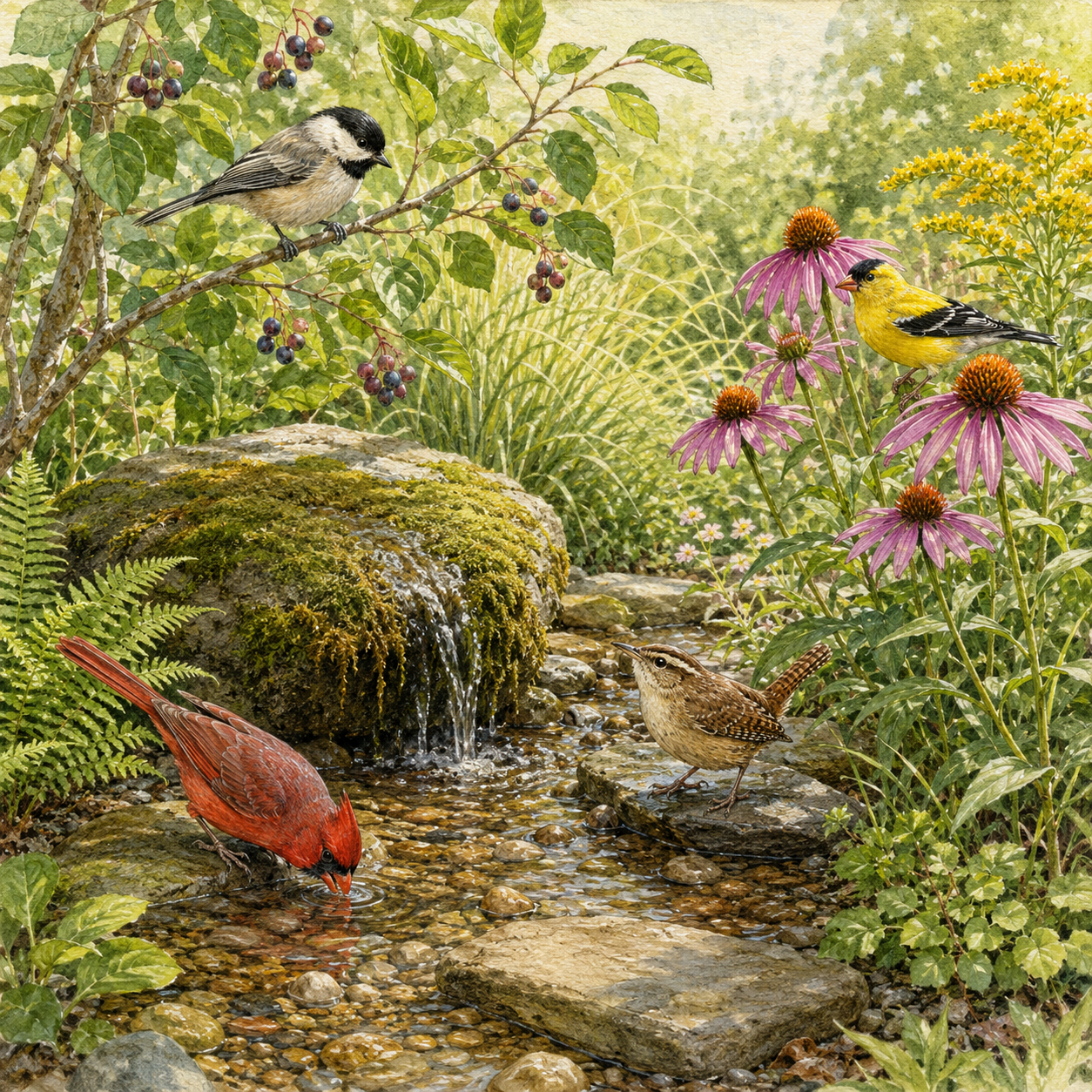
A small water feature does more than decorate a garden. It adds movement, sound, sparkle and one of the four essentials every backyard sanctuary needs: dependable water.
There is something about the sound of water in a garden. Even a soft trickle can make a patio feel cooler, soften the noise of the neighborhood and draw your attention toward a quiet corner you might otherwise overlook. Birds notice it too.
A traditional bird bath is useful, but it is not the only way to provide water. A bubbling urn tucked among native grasses, a tiny stream disappearing beneath river stones or a container water garden beside the deck can become part of the landscape rather than an object placed on top of it. The best small water features serve two audiences at once: the birds that need a safe place to drink, bathe and investigate, and the people who want a sanctuary that looks intentional and inviting.
You do not need a large pond, a professional landscaper or an elaborate plumbing system. In many backyards, the most successful feature is small enough to build in an afternoon and simple enough to maintain in a few minutes each week.
“Planning more than a water feature? Start with the four essentials every backyard bird sanctuary needs.”
Why Moving Water Belongs in a Bird Sanctuary
Birds need clean water for drinking and for keeping their feathers in good condition. Cornell’s Bird Academy notes that most songbirds prefer water no deeper than their legs and are especially interested in moving water. That movement matters because it creates flashes of reflected light and a sound that birds may notice while flying through the neighborhood.
Think of a quiet basin as a sign beside the road. A trickle, bubble or splash is more like a little bell. It announces that water is here.
A water feature can also reach beyond the birds that regularly visit feeders. Some species that are not especially interested in sunflower seed or suet may still stop for water. During migration, a clean and visible source can be useful to birds moving through unfamiliar yards. In hot, dry weather, it may become one of the busiest places in the garden.
The benefits spread through the rest of the sanctuary too. Damp stones and wet leaves can offer moisture to insects. A thoughtfully designed container pond may support dragonflies or other small wildlife. Native plants placed around—not inside every inch of—the feature provide shelter, natural food and a safe place to wait before approaching the water. The result feels less like a product display and more like habitat.
A Water Feature Is Also for You
The human benefits should not be treated as an afterthought. A sanctuary works best when you enjoy spending time in it. The gentle sound of a small fountain can mask traffic or air-conditioning units. Reflected light brings motion to a shaded garden bed. A water feature also gives you a natural viewing destination: a place to aim a chair, a kitchen window or a camera.
That matters because the more time you spend watching your yard, the more you notice. You begin to see which birds approach boldly and which wait in cover. You notice a chickadee testing the wet edge, a cardinal drinking after sunset or a warbler pausing during migration. A well-placed water feature can turn an ordinary ten-minute cup of coffee into a birding outing.
Five Small Features That Fit Naturally into a Backyard
1. A bubbling urn or glazed pot
A tall ceramic pot with water bubbling gently from the top can look polished without feeling formal. The reservoir may be inside the pot or hidden beneath a bed of stone. Water rises through tubing, spills over the rim and returns to the reservoir. Birds may drink from a shallow lip, a wet stone or a small landing shelf added beside the flow.
This style works especially well near a patio, along a path or at the edge of a planted bed. Choose an earthy glaze or a muted color that repeats something already in your garden. The feature becomes a focal point, but the surrounding plants keep it connected to the sanctuary.
2. A pondless rock bubbler
In a pondless feature, the water reservoir is concealed below a layer of sturdy grating and smooth stones. A pump sends water up through one larger rock or a short cluster of stones, and the water disappears back into the gravel. There is no open, deep pool, which makes this option appealing in a small yard or in a household with children or pets.
The secret is to give birds a textured, gently sloping place to stand. A broad flat stone with a shallow depression can hold just enough water for drinking without turning the project into a conventional bird bath.
3. A miniature stream or rill
A rill is simply a narrow channel of moving water. It may run only three or four feet before slipping under a small bridge or disappearing into stones. The channel can be lined with pond liner and edged with local-looking rock, sedges and low native flowers.
Keep the flow gentle and include one or two shallow shelves. Birds are far more likely to use a quiet edge than a steep chute. A slight bend makes the feature look more natural and helps it fit into an existing garden bed.
4. A container water garden
A watertight stock tank, galvanized tub or large frost-safe planter can hold a miniature water garden. The National Wildlife Federation describes container water gardens as small aboveground ponds that can serve birds and other wildlife. If the sides are high, keep the water near the rim and add a firmly anchored branch, stone ledge or escape ramp so small visitors can approach and leave safely.
Use a few regionally appropriate aquatic or marginal plants, but resist the urge to fill every inch. Open water helps birds see the surface and gives you access for cleaning. Never release purchased plants or animals into natural waterways, and check local guidance before choosing aquatic species because some common water-garden plants are invasive.
5. A mister or leaf-drip corner
Some birds enjoy moving through wet foliage more than stepping into open water. A fine mister directed toward the leaves of a dense shrub can create a cool, sparkling corner during hot weather. A drip line aimed at a flat stone can produce the same sound with less spray.
Use a timer and run it only long enough to wet the foliage and attract attention. Place the mist where overspray will benefit plants rather than pavement. In drought-prone communities, follow current local watering rules and choose the most water-conscious setup you can.
Before You Build: Make It Safe, Clean and Easy
A beautiful water feature is only successful if you can care for it. Before buying a pot or moving the first rock, answer a few practical questions.
Can birds land safely? Provide a rough stone, branch or shallow shelf. Slick vertical sides may look elegant but offer poor footing and can trap small animals. Any open container should have an easy route out.
Can birds see danger coming? Place the feature near enough to shrubs or small trees that birds can retreat quickly, but do not bury it inside dense groundcover where a cat can hide. Keep the immediate approach open and give birds a clear view.
Can you reach every part? Pumps collect leaves, algae and grit. Containers need scrubbing. If maintenance requires kneeling behind thorny shrubs or dismantling half the feature, it will not stay inviting for long.
Where will overflow go? Direct splashes and rain overflow into a planted bed, gravel area or other place that can absorb the water without creating mud against a foundation or standing puddles near a walkway.
How will you manage mosquitoes? Circulating water is less attractive to mosquitoes than stagnant water, but movement alone is not permission to ignore maintenance. The CDC recommends emptying and scrubbing water-holding containers weekly; permanent features that cannot be emptied should be actively managed according to local mosquito-control guidance. Remove leaf buildup, keep the pump flowing and do not allow forgotten pockets of still water to form around the feature.
Is the power source safe? Use only a pump and cord rated for outdoor water-feature use, follow the manufacturer’s directions and plug the unit into a properly installed GFCI-protected outdoor receptacle. If the outlet or wiring needs modification, call a qualified electrician.
Finally, skip algaecides, bleach, scented cleaners and decorative additives while the feature is available to wildlife. Plain water, a stiff brush and regular maintenance are the safest foundation. If a feature needs a chemical treatment, block wildlife access and follow the label before returning it to service.
Three Low-Cost DIY Water Features
DIY 1: The Bubbling Patio Pot
This is the best project for your Amazon store connection because the small recirculating pump is the one specialized item most readers will need.
You will need a watertight ceramic or resin pot, a small outdoor-rated submersible recirculating pump, clear vinyl tubing that fits the pump, several clean stones or an inverted plastic nursery pot to support the tubing, and one broad textured stone for a landing place.
Set the pot on a level surface near a GFCI-protected outlet. Place the pump at the bottom, attach the tubing and use the support material to hold the tube upright. Arrange stones around it without blocking the pump intake. Fill the pot, trim the tubing so the water bubbles just above the stones, and adjust the flow to a soft burble rather than a forceful jet.
Create a bird-friendly edge by positioning the broad stone so part of it stays wet and part remains dry. If the container is deep, add a secure branch or sloped stone that reaches the rim. Check the water level often in hot weather; a submersible pump should never be allowed to run dry unless the manufacturer specifically says it can.
RBB Essentials opportunity: Link the phrase “small outdoor recirculating water pump” within the supply list and add the required Amazon Associates disclosure before or near the first affiliate link.
DIY 2: The Dripping-Stone Garden Corner
For a feature with no electricity, hide a clean one-gallon container behind a small trellis, stump or group of tall plants. Make a very small hole near the bottom and set the container above a broad, slightly cupped stone. The water should drip onto the stone, darken its surface and then drain directly into the soil or a gravel-filled planting pocket below.
The sound draws attention, while the wet rock offers a place to sip. Because there is no holding basin, there is little standing water to maintain. Refill the container when you want the feature operating, especially on hot mornings or migration days. Test the drip rate before leaving it unattended and make sure runoff moves away from structures and walkways.
An old food-safe beverage dispenser with a slow spigot can make this even easier. Do not use a container that previously held chemicals, and scrub it regularly.
DIY 3: The Half-Barrel Water Garden
Use a watertight half-barrel liner, stock tank or large container that has never held chemicals. Set it on a stable base before filling—it will be much too heavy to move later. Add a few stacked bricks or overturned clay pots beneath the surface to create different levels, then place one or two native or noninvasive aquatic plants in heavy pots topped with gravel.
Leave part of the surface open. Bring the water close to the rim and secure a rough branch or sloping stone from the water to the outside edge. This is both a perch and an escape route. A few floating leaves can provide shade, but avoid a solid mat of vegetation.
Because this feature holds water continuously, it requires more care than the dripping stone. Remove fallen leaves, refresh water as needed and monitor for mosquito larvae. If standing water becomes difficult to manage, add circulation or follow the recommendations of your local public-health or extension office. In winter climates, choose a freeze-safe container and follow the plant and container manufacturer’s seasonal directions.
Start Small and Let the Birds Teach You
It is easy to plan a water feature for the photograph rather than for daily life. The enormous pond, dramatic waterfall and perfectly planted edges may be beautiful, but they also require money, space and maintenance. For most backyard sanctuaries, smaller is better.
Begin with one feature you can see from a favorite chair or window. Watch how the water moves. Notice where leaves collect, how quickly the reservoir evaporates and whether birds have a comfortable approach. You may discover that one flatter stone, a slightly slower flow or a pruned branch makes the feature far more useful.
And then listen. The first clue may not be a bird at all. It may be the sudden silence of a chickadee call near the shrubs, followed by the soft flicker of wings at the water’s edge. That small moment is the real reason to add water: not merely to decorate the yard, but to make the sanctuary more alive—for the birds, for other wildlife and for you.
“Water is one part of a true backyard sanctuary. Bring food, water, shelter and nesting space together with the Complete Backyard Bird Sanctuary Guide.”
