

Smart Bird Feeders with Cameras (and Solar)
The One Bit of Birding Tech I’m Officially Obsessed With
I’ll admit it: I’m slow to warm to tech in birding.
I have an app. I even use it sometimes. But when I’m really trying to identify a bird—or just enjoy the moment—I still reach for my trusty paper field guide. The worn cover, the familiar layout, the little mental map of where the woodpeckers live in the book… it’s part of my birding ritual.
And yet…
I am absolutely in love with my smart feeder.
There, I said it.
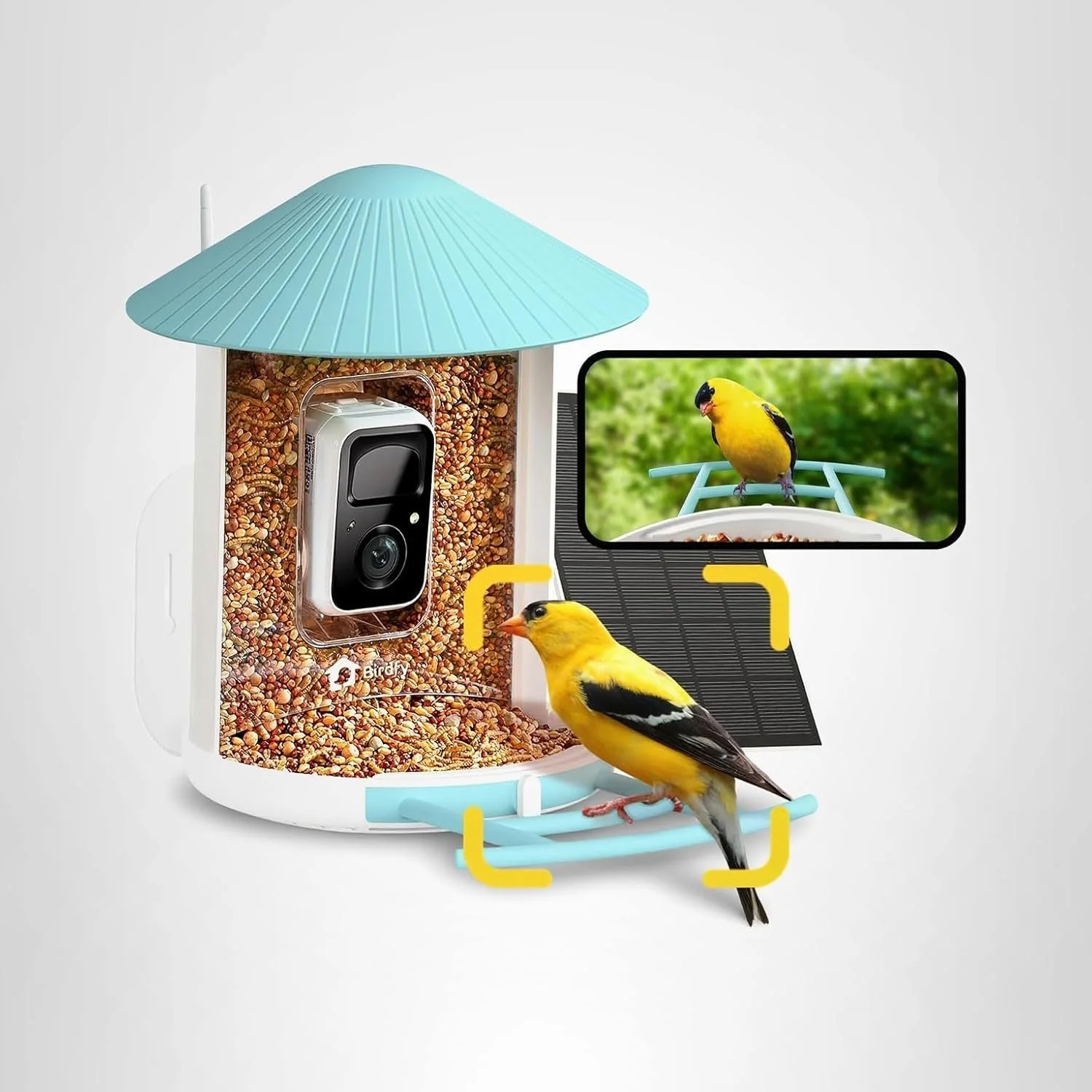
Purchase now
A smart bird feeder with a camera (and in some cases, solar power) feels like cheating in the best possible way—like suddenly having a tiny nature documentary crew stationed in your yard, quietly filming the moments you always miss. Not the big, dramatic stuff (though you’ll get that too). I mean the everyday magic: the shy finch that appears at dawn, the “sneak-in-and-grab” titmouse, the hummingbird who returns at the same time every afternoon like an appointment. And all while I’m at work all day. I can stream my backyard birds whenever I want!
If you’ve been eyeing these feeders and wondering if they’re worth it—especially if you’re more “binoculars + notebook” than “notifications + Wi-Fi”—this post is for you. Let’s talk about what smart feeders do well, how they change your backyard birding game, and what you need to know to set one up for success (and keep it humming along, literally) for seed eaters and hummingbirds.
What Exactly Is a Smart Bird Feeder?
At its simplest: it’s a feeder with a built-in camera that captures photos or video of visiting birds. Think a “ring door bell” for your backyard birds. Most connect to your phone through an app so you can:
See live video or recorded clips
Get motion alerts when birds arrive
Save and share your favorite moments
Sometimes get AI “best guess” IDs (fun, not flawless)
Now add solar into the mix and the experience becomes even smoother. Solar panels can keep the feeder topped up between charges, which means less climbing ladders, fewer battery headaches, and more “set it and forget it” bird joy.
Smart feeders come in a few styles: seed feeders for songbirds, nectar feeders for hummingbirds, and hybrids (less common, but they exist). Some are designed to mount on poles, posts, rails, or windows. Many include night vision or low-light capability. A few offer two-way audio (not my favorite feature, personally—birds don’t need us narrating their snack time), but it’s out there.
Bottom line: smart feeders don’t replace birding skills. They add a new layer of backyard discovery. Think of them as a “time machine” for your yard—rewindable moments you didn’t even know happened.
Why Smart Feeders Feel Like Backyard Birding on Easy Mode (In a Good Way)
Here’s the thing about regular feeders: your best birds rarely show up when you’re watching.
You step inside to refill coffee—boom, a new visitor.
You answer a text—boom, the bird you’ve been hoping for all week.
You sit outside for 30 minutes—nothing.
You go to the bathroom—apparently the entire finch community holds a meeting.
A smart feeder solves that emotional roller coaster.
1) You stop missing the good stuff
The camera catches what your eyes don’t. That includes:
Quick drop-ins
Early morning or late evening visitors
Skittish species that avoid humans
Birds that visit for 8 seconds, grab one seed, and vanish
2) You learn faster (and more confidently)
This is huge for beginner birders and surprisingly helpful for experienced folks too. You can:
Rewatch and study field marks
Compare similar species (hello, sparrows)
Notice behaviors you never caught in real time (dominance, feeding posture, “who yields to whom”)
3) You get better data for your birding records
If you’re a lister, a logger, or someone who participates in citizen science, having photo/video evidence helps with:
Confirming IDs
Tracking first/last seasonal visits
Watching changes in plumage over time
Documenting unusual visitors (and being able to share proof—very satisfying)
4) It’s ridiculously fun
Let’s not pretend this doesn’t matter. Smart feeders bring joy. They make birding feel like a daily surprise gift.
And if you’ve ever wanted to share birding with family or friends who “don’t get it yet,” sending them a video of a hummingbird hovering like a living jewel is… persuasive.
Smart Seed Feeders: A Front-Row Seat to the Backyard Drama
Seed feeders are where smart feeders really shine, because songbirds are busy. There’s a whole ecosystem of quick visits, pecking order moments, and “grab-and-go” strategies.
What you’ll love most for seed eaters
You’ll capture a wider range of birds than you think.
Even if you’re focused on finches and chickadees, you’ll likely record:
Cardinals (depending on feeder design and perch spacing)
Titmice, nuthatches, wrens
Woodpeckers that cling, hop, or awkwardly attempt to perch
Jays showing up like they own the place
Occasional surprise guests during migration
You’ll witness behavior, not just presence.
Smart feeders turn birding into a mini ethology lesson:
Who dominates the perch
Which birds feed in pairs
Which species are bold vs. cautious
How flock dynamics shift through the day
You’ll learn what your yard really supports.
Sometimes the camera reveals the truth: maybe you’re offering food, but your placement makes birds feel exposed. Or maybe squirrels are visiting more than you realized. Or maybe the feeder is too close to a window and birds hesitate.
A smart feeder gives you feedback you can actually act on.
Smart Hummingbird Feeders: Small Feeder, Big Payoff
If seed feeders are backyard reality TV, hummingbird smart feeders are backyard cinematography.
Hummingbirds move so fast that even when you’re staring right at them, you miss details: the gorget flash, the tongue flick, the tiny foot placement, the split-second hover adjustments. A camera changes that. And the less colorful female hummingbirds can be nearly impossible to sort out.
Why smart hummingbird feeders are especially magical
You finally see what you’ve been trying to see.
Slow-motion or high-frame-rate footage (when available) can reveal:
Gorget color shifts with angle
Subtle differences in tail shape
Feeding patterns and “favorite ports”
Aggressive guarding behavior (classic hummer move)
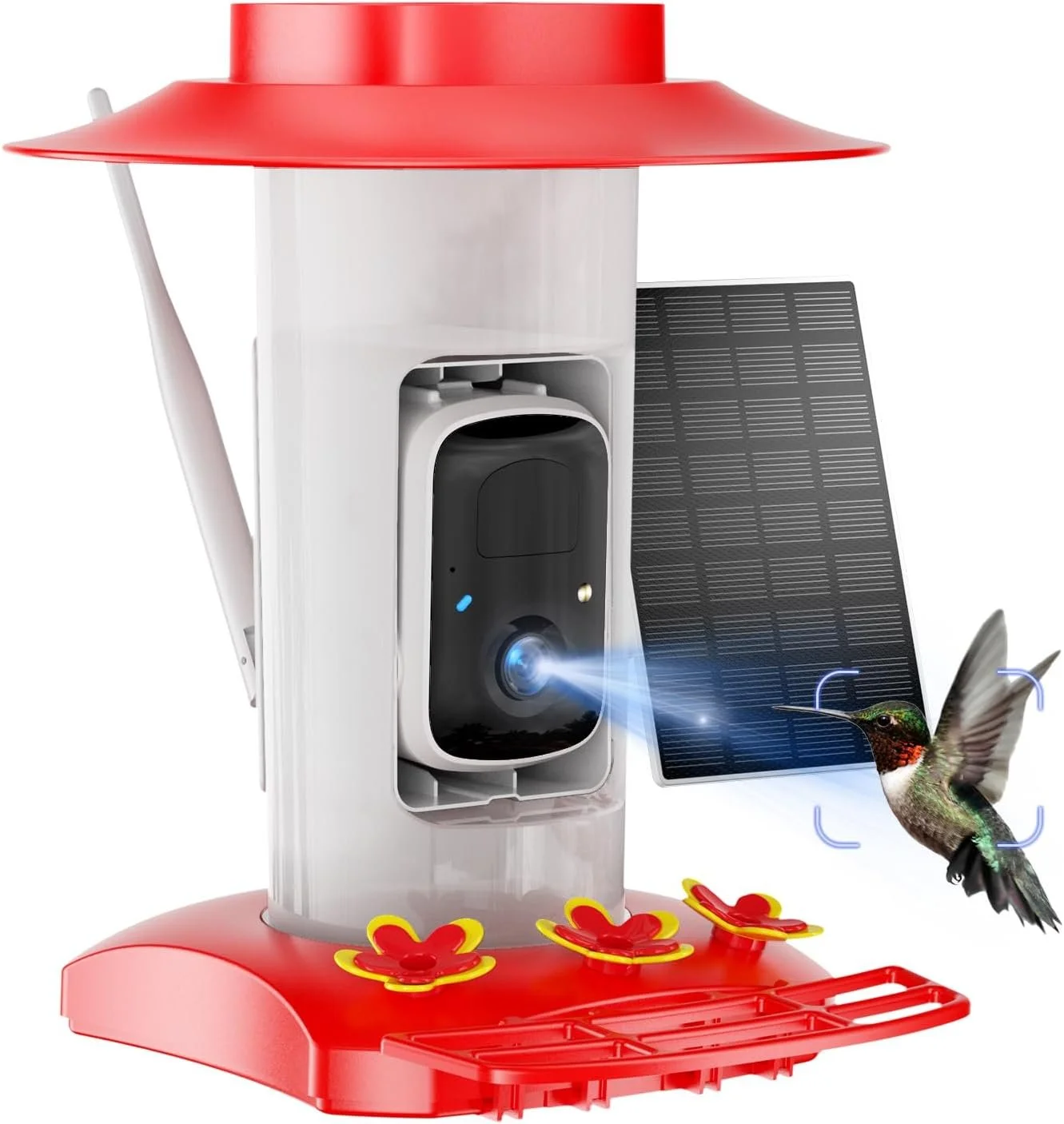
See more options
You can track routines.
Many hummingbirds become regulars. A smart feeder helps you notice:
Daily timing (they can be shockingly consistent)
Seasonal changes in visits
When territorial behavior intensifies
When migrants arrive and the vibe changes overnight
It’s a gateway to better hummingbird stewardship.
A smart feeder makes you more aware of feeder cleanliness and nectar levels—because you’re checking the app and seeing visits. You become more attentive, and that’s good for the birds.
Placement: The Make-or-Break Factor (for Birds and Camera)
Smart feeders are still feeders, which means placement rules apply. But now you’re thinking about two things at once:
Bird safety and comfort
Camera angle, lighting, and usability
Here’s how to do both.
For seed feeders
Aim for a calm “bird comfort zone.”
Birds generally prefer feeders:
Near cover (shrubs/trees) so they can retreat quickly
But not so close that predators can hide and pounce
A good rule of thumb: about 10–15 feet from protective cover—close enough to feel safe, far enough to reduce ambush risk.
Avoid direct window strike risk.
If your feeder is near a window, add bird-safe window treatments, decals, or screens. Smart feeders can be mounted in many places—choose a safer option if you can.
Consider a dedicated feeder pole setup.
A pole with a baffle can reduce squirrel chaos and stabilize the camera view. Stable mount = better video.
For hummingbird feeders
Sun matters more than you think.
Too much direct sun can:
Warm nectar quickly
Increase fermentation risk
Attract more insects
Try bright shade or morning sun / afternoon shade. And if your feeder has solar, you’ll want enough light for charging without baking the nectar. That balance is everything.
Give hummingbirds a clear approach path.
They like visibility and space to hover. Avoid placing the feeder deep inside clutter where they can’t easily maneuver.
Watch for territorial hotspots.
If one hummingbird guards the feeder relentlessly, consider:
Adding a second feeder out of sight of the first
Spacing them far enough apart that one bird can’t defend both
Your camera may actually help you spot this problem!
Care and Special Considerations: Because “Smart” Doesn’t Mean “Low Maintenance”
This part matters. A smart feeder is still a food source. Cleanliness, safety, and good food practices come first—always.
Seed feeder care
Keep seed dry and fresh.
Moisture is the enemy. It leads to:
Mold
Clumping
Increased disease risk
Choose a location that minimizes rain exposure, and clean out old seed before topping off too often.
Clean regularly (yes, really).
A simple routine:
Dump old seed and debris
Wash with hot water (and mild soap if needed)
Rinse thoroughly
Dry completely before refilling
Frequency depends on weather and usage, but a regular schedule matters—especially during wet seasons.
Watch for overcrowding.
Smart feeders can unintentionally become popular, especially if the footage is so fun that you keep it stocked nonstop. If you’re seeing crowding and aggressive behavior, consider adding a second feeding station to reduce stress.
Hummingbird feeder care (extra important)
Hummingbird feeders require a higher level of hygiene. Nectar spoils fast. It really only takes a couple of minutes a few times a week but it’s so important providing healthy nectar to those tiny jewels.
Use the right nectar recipe.
Standard guidance: 1 part white sugar to 4 parts water, boiled then mixed well, cooled before use. No dyes. No honey. No brown sugar. Keep it simple.
Clean frequently—more often in heat.
Hot weather can mean cleaning every couple of days. Cooler weather buys you more time, but staying vigilant is key.
Don’t let “camera excitement” override nectar discipline.
It’s easy to get caught up in the clips and forget the basics. But the basics are the whole point: safe, healthy feeding. Dedicate yourself to clean hummingbird feeders or pass on the project altogether.
Solar Power: What It Changes (and What It Doesn’t)
Solar is one of the best upgrades in the smart feeder world because it reduces maintenance friction. But it’s not magic.
Solar helps with:
Less frequent charging
More consistent uptime
Better long-term convenience
Solar doesn’t solve:
Poor Wi-Fi signal
Bad placement lighting (backlit birds can look like silhouettes)
Dirty lens or rain spots
The need for regular feeder cleaning
Pro solar tip
If your solar feeder struggles, it’s often a placement issue:
Too shaded
Panel angle not optimized
Short winter daylight hours
A small adjustment can make a big difference.
A Quick Reality Check on AI Bird IDs
Some smart feeders offer AI identification. It’s fun and sometimes surprisingly good. It’s also sometimes hilariously wrong.
Use it like this:
As a suggestion, not a verdict
As a way to narrow down possibilities
As a prompt to check your field guide (paper forever!)
The best part is when you combine them: AI offers a guess, you confirm with your own eyes, and you actually learn something instead of outsourcing the whole moment. Check the image/video against the field guide and make mental notes why this bird is this species - commit the fieldmarks to memory so next time you see one, you’ll immediately say “that’s a White-crowned Sparrow!”
Are Smart Feeders “Real Birding”?
Yes. Full stop.
Birding has always used tools:
Binoculars
Scopes
Field guides
Checklists
Cameras
Audio recordings
A smart feeder is simply another tool—one that happens to be incredibly good at capturing the moments you can’t be present for.
If it helps you notice more, learn more, and care more? That’s birding.
And honestly, for people who are homebound, busy, new to birding, or trying to involve kids or neighbors—smart feeders can be the bridge that brings more people into the joy and stewardship of birds. That’s a win.
How to Make a Smart Feeder Work Beautifully in Your Backyard
If you want the “best results” version of this experience, here’s your simple setup strategy:
Pick the bird-first location (safe, comfortable, near cover)
Then optimize the camera angle (stable mount, good light, not facing direct glare)
Make power easy (solar if possible, or a charging plan you can actually keep up with)
Match food to your target birds (seed type or nectar, kept fresh)
Commit to a cleaning schedule (put it on your calendar like a real grown-up)
Do those five things and you’ll go from “this is neat” to “I can’t believe I ever lived without this.”
Final Thought: The Tech I Didn’t Know I Needed
I still love paper field guides. I still love the quiet, analog side of birding—the part that feels like a practice, not a performance.
But my smart feeder has done something unexpected: it’s made my backyard feel bigger.
It’s expanded the hours I can “be present” for birds. It’s helped me learn faster. It’s caught visitors I didn’t know I had. It’s made me more attentive to feeder care. And it’s given me moments of delight that show up in my day like a tiny gift—Look who stopped by.
So if you’ve been on the fence, I get it. I was too.
But if you’re even slightly curious, I’ll say this: a smart feeder doesn’t replace birding. It adds a whole new window into it—and once you have that window open, it’s hard to close it again.
When you’re ready, you can plug in your specific product picks, and we’ll tailor the post with “best for hummingbirds,” “best for seed eaters,” and a clean comparison section. For now, you’ve got the story, the guidance, and the excitement—because yes, I’m still surprised by how much I love this thing.
Not sure if you want to go tech with your new feeder? There are lots of traditional options to feed birds - check out this post Best Bird Feeders
