

Why Summer Birding Feels Quiet
(And Why That’s a Good Thing)
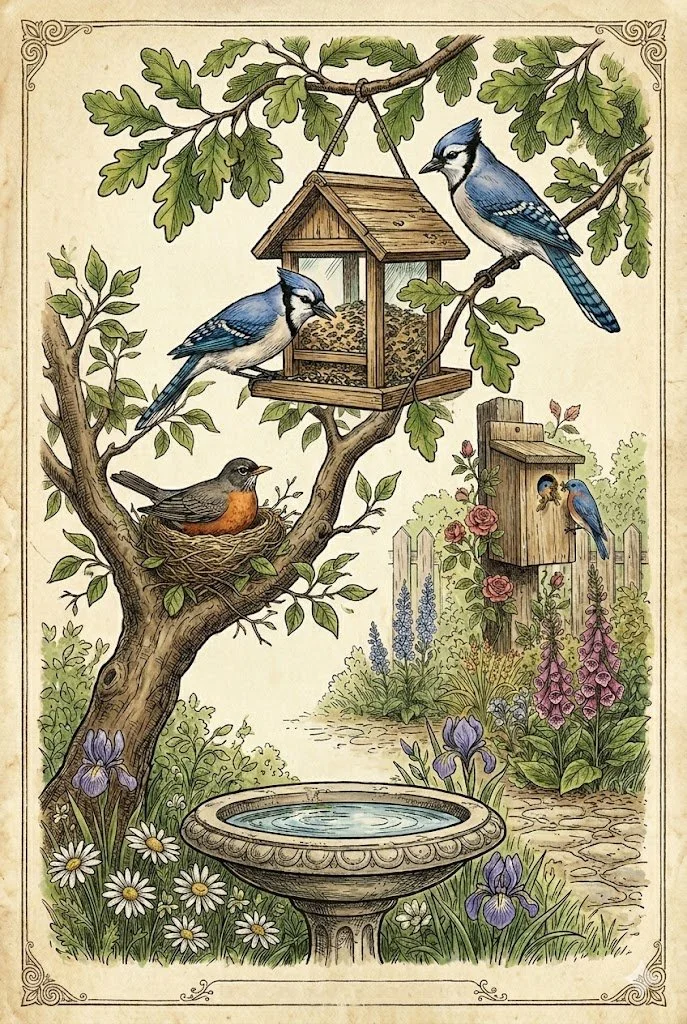
If you’ve spent any time birding through spring migration—the rush of warblers, the thrill of “what might show up next,” the sheer volume of birdsong—you probably notice something as June settles in:
It gets… quiet.
Not empty. Not lifeless. Just quieter.
And if you’re a newer birder (or even a seasoned one riding the high of spring), that quiet can feel a little unsettling. Like maybe you’re doing something wrong. Like the birds have disappeared. Like the magic has faded just a bit.
But here’s the truth:
Summer birding isn’t a step down. It’s a shift. And it might be one of the most important—and rewarding—seasons for becoming a better birder.
Let’s take a walk through why things feel quieter, what’s actually happening out there, and why this might quietly become your favorite season.
The Big Shift: From Movement to Stillness
Spring is about movement.
Birds are migrating—sometimes thousands of miles—racing north to claim territory, find mates, and raise young. That urgency shows up in everything:
Loud, persistent singing
Bright, fresh plumage
Birds out in the open, competing and displaying
New species arriving almost daily
It’s birding at full volume.
But by summer, most of that work is done.
Birds have:
Claimed their territories
Found mates
Built nests
Started raising young
The frenzy settles into routine.
And routine… is quieter.
Why the Singing Slows Down
One of the first things birders notice is the drop in birdsong.
In spring, male birds sing constantly to:
Attract mates
Defend territory
Once that job is done, the need to advertise fades.
You’ll still hear songs—especially early in the morning—but:
Singing becomes less frequent
Calls replace full songs
Birds are more discreet
Instead of a chorus, you get a conversation.
And this is where something interesting happens:
You start to listen differently.
The “Leaf-Out” Effect: When Birds Disappear Into Green
Spring birding has one huge advantage: visibility.
Trees are just budding, branches are still open, and birds are relatively easy to spot.
Then summer arrives, and suddenly:
Trees are full
Shrubs are dense
Grasses are tall
Birds haven’t vanished—they’ve just stepped behind the curtain.
This is what birders often call the “leaf-out challenge.”
It can feel frustrating at first. You hear a bird… you know it’s right there… and you just can’t see it.
But here’s the upside:
This is where your skills sharpen fast.
You begin to:
Track movement instead of relying on clear views
Identify birds by sound more confidently
Use small clues (a flick of a tail, a flash of color, a silhouette)
Summer forces you to become a more complete birder.
Molting Season: When Birds Go Incognito
Another reason summer birding feels “off” is that birds don’t always look like you expect them to.
After breeding season, many species enter molt—a period where they replace worn feathers.
During molt:
Colors may appear duller
Patterns can look less crisp
Some birds look downright scruffy
A bright spring male can suddenly seem… ordinary.
This throws a lot of birders off.
But again, it’s a quiet opportunity:
You start relying less on bold colors and more on:
Shape
Behavior
Structure
Habitat
In other words, you move beyond “that bright yellow bird” and into true identification skills.
The Secret Life of Summer Birds
While things seem quieter on the surface, summer is actually one of the busiest times in a bird’s life.
It’s just… hidden.
Nesting and Raising Young
Birds are:
Feeding chicks constantly
Guarding nests
Teaching fledglings how to survive
This activity is often tucked away in dense cover, which is why you don’t see it as easily.
Fledglings Everywhere
Keep an eye out for:
Slightly awkward birds
Short tails
Fluffy or uneven plumage
Persistent begging calls
These are young birds learning the ropes.
And watching them? That’s one of summer’s best rewards.
Family Groups
You’ll start noticing:
Parents and juveniles moving together
Quiet feeding interactions
Subtle communication
It’s a more intimate kind of birding—less spectacle, more story.
Why Summer Birding Makes You Better
Let’s be honest: spring can make birding feel easy. Although the pace of spring birding can be exhausting sometimes (in a good way), catching a glimpse of an American Redstart or a White-eyed Vireo in breeding plumage can leave you awestruck. Spending a summer afternoon correctly identifying first-year birds is what makes you a better birder.
Birds are active, visible, and vocal.
Summer takes away some of those advantages—and that’s exactly why it’s so valuable.
1. You Learn to Bird by Ear
With fewer visual cues, you lean into sound.
You start recognizing:
Contact calls
Alarm calls
Subtle variations in song
And once that skill clicks, it stays with you year-round.
2. You Improve Your Field Mark Skills
Instead of relying on bright colors, you begin noticing:
Bill shape
Tail length
Wing bars
Posture and movement
Behavior (treetop bird or ground skulker? Do they investigate branches upside down or hang off of sunflower flowers?)
This is the foundation of confident identification.
3. You Slow Down (In the Best Way)
Summer birding rewards patience.
Instead of chasing the next new species, you:
Spend more time observing fewer birds
Notice behavior more deeply
Appreciate small details
It becomes less about checking boxes and more about understanding birds.
A Different Kind of Joy
There’s a moment that happens in summer birding that doesn’t get talked about enough.
You’re standing in your backyard or along a quiet trail. It’s early. The light is soft. The air is warm.
You hear:
A distant call
Leaves rustling
Maybe one or two birds singing
And instead of feeling like something’s missing…
It feels complete.
This is birding without urgency.
No migration rush. No pressure to see everything.
Just you, the birds, and a slower rhythm.
What to Look For (and Listen For) in Summer
If you lean into the season, summer birding opens up in surprising ways.
Early Morning Activity
Birds are most active at dawn before the heat builds.
Water Sources
Bird baths, ponds, and streams become hotspots:
Drinking
Bathing
Social interaction
Edges and Openings
Where forest meets field, or yard meets woods:
Easier visibility
More bird movement
Subtle Sounds
Instead of loud songs, tune into:
Chips
Ticks
Soft whistles
These are your clues.
Backyard Birding Shines in Summer
This is where your “sanctuary backyard” idea really comes to life.
With migration slowed, your yard becomes:
A consistent habitat
A safe feeding and watering space
A place to observe daily patterns
You’ll start recognizing individual birds, routines, even personalities.
And that connection? That’s the heart of birding.
A Gentle Reset for Birders
Summer is also a great time to reset your approach.
Instead of asking:
“What new species can I see?”
Try asking:
“What can I learn from the birds I already have?”
Watch a single species for 10 minutes.
Notice:
How it moves
Where it feeds
How it interacts with others
You’ll come away with more insight than a fast-paced checklist ever gives you.
[SPECIAL NOTE: This is a great opportunity. Take a journal/notebook along with you and jot down your observations. Note the month and year of your observations and, of course, the species. Writing down observations in addition to seeing the behavior will help you remember the facts long-term]
Why the Quiet Matters
Here’s the bigger picture.
Birding isn’t just about the peaks—the migration waves, the rare sightings, the big lists.
It’s also about the spaces in between.
Summer gives you:
Time to practice
Time to observe
Time to connect
It’s where skills deepen.
It’s where habits form.
It’s where birding becomes less of an activity… and more of a way of seeing the world.
And Then… Fall Comes
The quiet doesn’t last forever.
As summer winds down:
Young birds disperse
Migration begins again although southern movement in autumn is more scattered and last weeks and weeks compared to spring migration
Activity slowly builds
And when it does, you’ll be ready.
Because summer didn’t take anything away—it gave you:
Better listening skills
Stronger identification ability
A deeper connection to the birds around you
Final Thought: Don’t Skip the Quiet Season
It’s tempting to think of summer as the “off-season” for birding.
But that’s not quite right.
It’s the training season.
It’s where you:
Refine your skills
Build your confidence
Learn to appreciate the everyday
So the next time things feel a little quiet out there…
Pause.
Listen.
Watch a little longer.
Because in that quiet, something important is happening.
Not just for the birds.
But for you as a birder.
Check out the blog “Be a Better Birder” for more information focusing on skill improvement and awareness.
