

Magee Marsh & the Biggest Week in American Birding
Why Northwest Ohio Becomes the Warbler Capital of the World
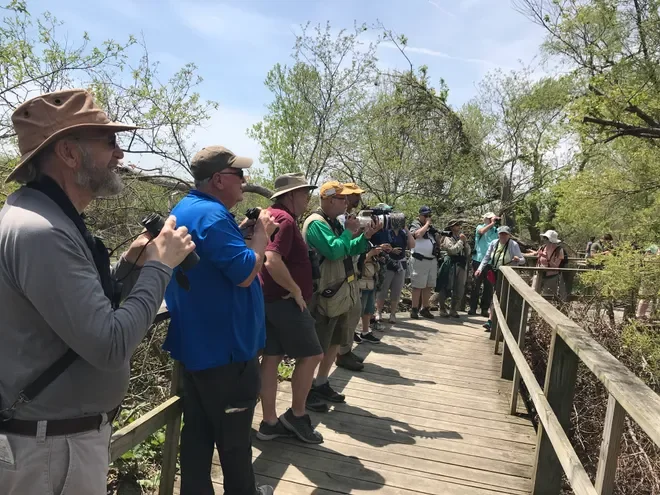
If you’ve ever wondered whether there’s a place in North America where birding feels almost… unfair—where warblers are practically at eye level, glowing in full breeding color, and everywhere you turn someone is whispering “Did you get that Blackburnian?”—this is that place.
Welcome to Magee Marsh Wildlife Area and the legendary The Biggest Week in American Birding.
Every May—specifically May 8–17, 2026—this quiet stretch of Lake Erie shoreline transforms into one of the greatest birding spectacles on the continent.
And if you want to add lifers - potentially a bunch of lifers if you’re a newbie - this is the place.
Why Magee Marsh Works (And Why It Works So Well)
Let’s start with the big question:
Why here? Why northwest Ohio?
At first glance, Lake Erie’s southern shore doesn’t scream “epic migration hotspot.” It’s not a mountain pass. It’s not a desert oasis. It’s not even especially remote.
But that’s exactly what makes it magical.
The Migration Bottleneck Effect
In spring, millions of birds are heading north—many crossing the Gulf of Mexico overnight. Of course they refuel along the way but they’re working against a deadline so they keep pushing. By the time they reach Ohio, they’re exhausted.
Now imagine being a warbler flying north and suddenly hitting Lake Erie—a massive barrier of open water.
What do you do?
You stop.
And you stop right at the shoreline, where Magee Marsh sits like a perfectly placed welcome mat.
The Secret Ingredient: Habitat + Geography
Magee Marsh is a narrow band of trees and shrubs sandwiched between marshland and Lake Erie. That combination creates:
A migration funnel (birds stack up along the shoreline)
Immediate habitat for resting and feeding
A natural “edge” that concentrates birds
The result?
Birds drop down in huge numbers, often in dense pockets.
And here’s the kicker…
Eye-Level Warblers (Yes, Really)
In most places, warblers stay high in the canopy.
At Magee Marsh?
They come down low—sometimes literally at eye level—to feed after a long migration push.
This is why people say things like:
“You can take selfies with warblers”
“It’s the best place in the U.S. to see warblers up close”
It sounds exaggerated…until you’re there.
The Biggest Week in American Birding (May 8–17, 2026)
The festival itself is organized by the Black Swamp Bird Observatory and runs for 10 days during peak migration.
Think of it as:
Part birding trip
Part learning experience
Part reunion of your “bird people”
What Happens During the Festival
You’ll find:
Guided field trips (including Magee Marsh boardwalk walks)
Workshops on ID, photography, and birding skills
Keynote speakers (some of the biggest names in birding)
Evening socials (food + birds + stories = perfect combo)
Optics Alley (test gear before you buy)
Birders’ Marketplace
And importantly…
👉 You don’t have to register to bird the area
👉 But the festival adds structure, access, and community
What You Might See (And Why It’s So Special)
Let’s talk birds—because this is where Magee Marsh really separates itself.
Warblers, Warblers, and More Warblers
On a good morning, you might see:
Blackburnian Warbler (flaming orange face)
Magnolia Warbler
Cape May Warbler
American Redstart
Canada Warbler
Yellow-rumped Warbler
It’s not unusual to see 15+ warbler species in a single walk.
And they’re not just “seen”—they’re studied, admired, photographed.
Beyond Warblers
Magee and the surrounding area also offer:
Thrushes (Swainson’s, Gray-cheeked)
Cuckoos
Shorebirds
Waterfowl
Raptors (including Bald Eagle)
American Woodcock displays at dusk
Nearby hotspots like:
Ottawa National Wildlife Refuge
Maumee Bay State Park
…add even more diversity.
Planning Your Trip (RBB Style)
Let’s make this practical—because this is where a great trip becomes a great experience.
When to Go
Peak migration typically falls:
👉 Early to mid-May (right in festival dates)
👉 Best birding: mornings (but can be good all day)
Where to Stay
The festival hub is:
Maumee Bay Lodge and Conference Center
Pros:
Central location
Festival events on-site
Easy access to Magee Marsh
Cons:
Books up early (very early)
Other Options
Look in:
Oregon, OH
Port Clinton
Oak Harbor
Toledo (short drive)
RBB Tip: Book months in advance when possible—this is not a last-minute destination.
How to Get There
Closest airports:
Detroit (DTW)
Cleveland (CLE)
Then:
👉 Rent a car (you’ll need it)
Best Birding Locations (Beyond the Boardwalk)
1. Magee Marsh Boardwalk
The main event.
Accessible
Dense bird concentrations
Can be crowded—but worth it
2. Ottawa National Wildlife Refuge
More space, fewer crowds.
Waterfowl
Shorebirds
Eagles
3. Maumee Bay State Park
Great mix of habitats.
Woodland trails
Lake views
Migrant songbirds
4. Oak Openings Region
A hidden gem.
Unique sandy habitat
Different species mix
Less pressure
What It Feels Like to Bird Magee Marsh
Let me give you the real experience…
You’re walking the boardwalk at sunrise.
Someone quietly says, “Cape May Warbler… on the right at 4 o’clock.”
You look up.
And there it is—ten feet away.
Bright. Still. Unbothered.
Then someone else calls out:
“Blackburnian behind you.”
You turn.
Now there are three species in view.
And this just… keeps happening.
For hours.
What to Pack (Don’t Overthink It—but Do This Right)
Essentials
Binoculars (your best pair—this is not the place to go cheap)
Comfortable walking shoes
Field guide or birding app
Daypack
Clothing (This Matters More Than You Think)
Lake Erie weather is… unpredictable.
Expect:
50s in the morning
70s or better by afternoon
Wind off the lake
👉 Dress in layers
Nice-to-Have Gear
Camera (you’ll want it)
Spotting scope (optional)
Portable stool (for crowded boardwalk days)
Notebook (or eBird app)
RBB Pro Tip
Bring a lightweight rain shell or emergency poncho—even if the forecast looks perfect. And, oddly enough, bring sunscreen. Lots of sun along the shore and even wooded areas.
Strategy for Birding the Biggest Week
1. Go Early (But Stay Flexible)
Morning is best—but:
👉 Big fallout days = all-day action
2. Don’t Just Do the Boardwalk
Yes, it’s iconic.
But:
👉 The surrounding areas often hold just as many birds with fewer people
3. Take Breaks Midday
Even the festival suggests:
Bird mornings and afternoons
Relax midday with programs
4. Talk to People
This is one of the most social birding events anywhere.
Ask questions
Share sightings
Learn fast
Why This Should Be on Every Birder’s List
Here’s the honest truth:
There are a lot of great birding locations in North America.
But there are very few places where:
Migration is this concentrated
Birds are this visible
Learning happens this quickly
Community feels this strong
Magee Marsh isn’t just a hotspot.
It’s an accelerator.
You don’t just see birds here—you become a better birder.
Final Thought (RBB Style)
If you’ve ever thought:
“I wish I could really learn warblers…”
This is where you go.
If you’ve ever wanted:
“One trip that reminds me why I love birding…”
This is that trip.
And if you’ve ever wondered whether a quiet stretch of Ohio shoreline could hold one of the greatest birding experiences in the world…
Now you know.
It absolutely does.
