

Can You Identify This Graceful Backyard Acrobat?
This Master of the Sky Helps Control Insects
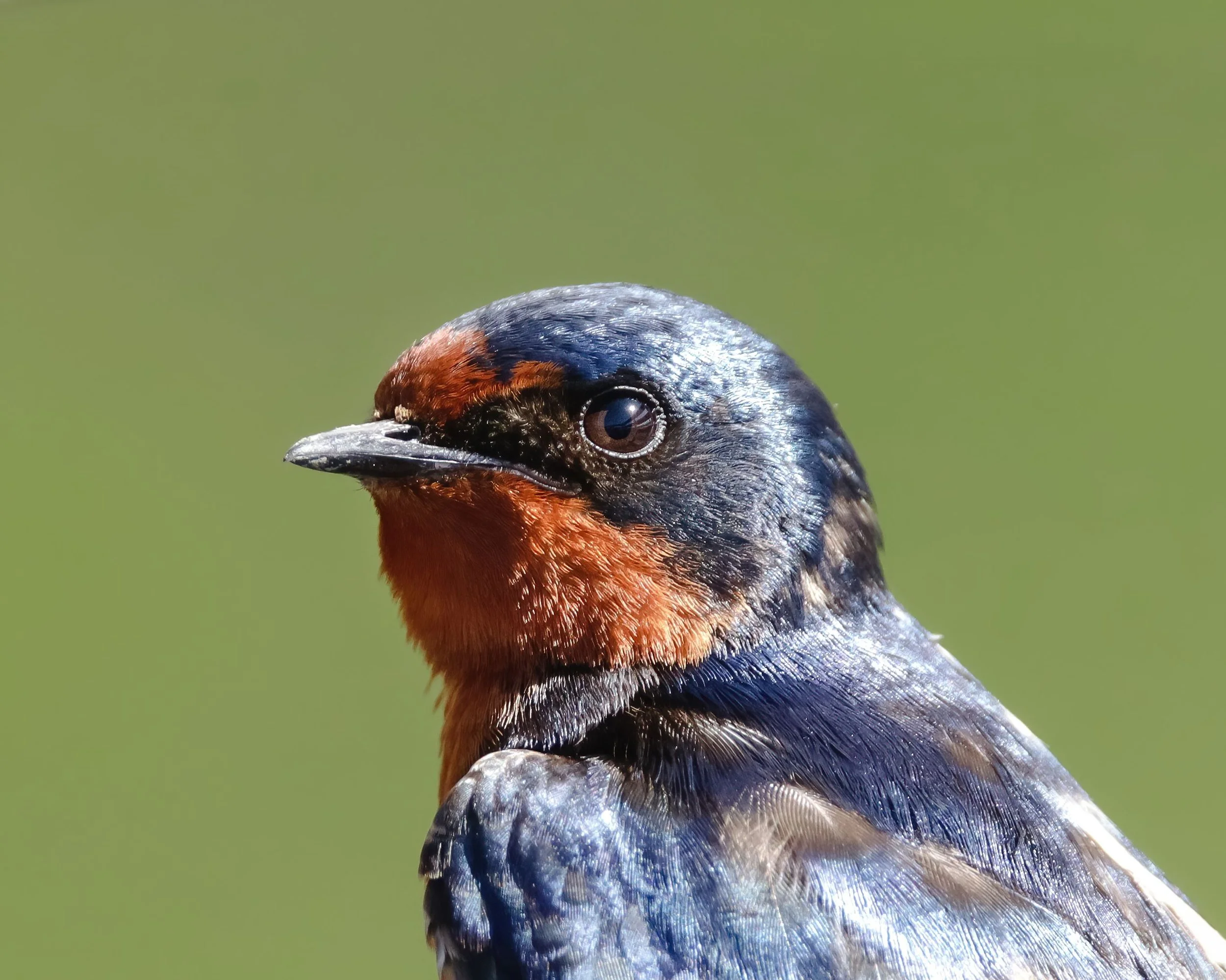
You may notice this week’s mystery bird as a dark shape skimming low over a pasture, pond or open field. It twists, turns and changes direction with such ease that it seems to be dancing through the air.
Your first clue may be its silhouette. This slender bird has long, pointed wings and a deeply forked tail with two narrow streamers. When the light catches it, the dark upperparts become a beautiful, glossy cobalt blue. Look more closely and you may also see a rusty forehead and throat, warm buff-colored underparts and a dark band across the upper chest.
Have you identified it yet?
Meet the Barn Swallow
The Barn Swallow is one of our most familiar—and most graceful—summer birds. It spends much of its day in flight, capturing flies, beetles, moths and other insects from the air. Watch one carefully and you may see it sweep just inches above a field or the surface of a pond.
The deeply forked tail is an excellent field mark. Tree Swallows and Cliff Swallows may share the same feeding areas, but neither has those long, elegant tail streamers.
Where Do Barn Swallows Live?
Barn Swallows prefer open country where flying insects are plentiful. Look for them around farms, pastures, meadows, marshes, lakes, ponds, parks and roadsides. They often rest on utility wires, fences and rooflines between feeding trips.
They breed across most of North America, from Alaska and Canada south through the United States and Mexico. After nesting season, most North American Barn Swallows migrate south to spend the winter in Mexico, Central America and South America. The species has an enormous global range and breeds across much of the Northern Hemisphere.
A Nest Made From Mud
Barn Swallows once placed many of their nests on cliffs and inside caves. Today, they rely heavily on structures built by people.
A pair may tuck its nest beneath a bridge, under an eave or against a beam inside a barn, shed, stable or parking garage. Both birds help construct the open cup by carrying hundreds of tiny pellets of mud mixed with grass. The inside is lined with softer grasses and feathers.
A pair may return to the same nesting location—and sometimes the same repaired nest—year after year. If you find an active nest, give the family plenty of room. Native bird nests containing eggs or young are protected and should not be disturbed.
Are Barn Swallows in Trouble?
Barn Swallows remain widespread and are classified globally as a species of Least Concern. However, that reassuring label does not tell the entire story. North American monitoring data indicate a long-term population decline. The North American Breeding Bird Survey estimated a cumulative loss of approximately 25 percent between 1966 and 2019.
Changes in farming practices, fewer suitable nesting structures, pesticide use and declines in flying insects may all contribute. Leaving safe nests in place, maintaining muddy areas during nesting season and reducing pesticide use can help these beautiful insect-eaters remain part of our summer skies.
Did you recognize the Barn Swallow from its forked tail—or did the mud nest give it away?
Ready to try another quiz? Here you go!
