Meet the Small Owl with the Big Personality
Two colors increase its chances to survive.
The Eastern Screech-Owl may be one of the most overlooked owls in North America. While larger owls often steal the spotlight, this little woodland hunter quietly goes about its business right in our neighborhoods, parks, and forests. Many birders have heard one without ever seeing it.
Despite its name, the Eastern Screech-Owl rarely "screeches." Instead, it produces a haunting series of soft trills and descending whinnies that drift through the night. Once you learn the sound, you'll realize these owls are much more common than most people think.
Description
Eastern Screech-Owls are compact birds, standing only about 6–10 inches tall with a wingspan of roughly 18–24 inches. They have large yellow eyes, prominent ear tufts, and intricate plumage that helps them blend perfectly into tree bark.
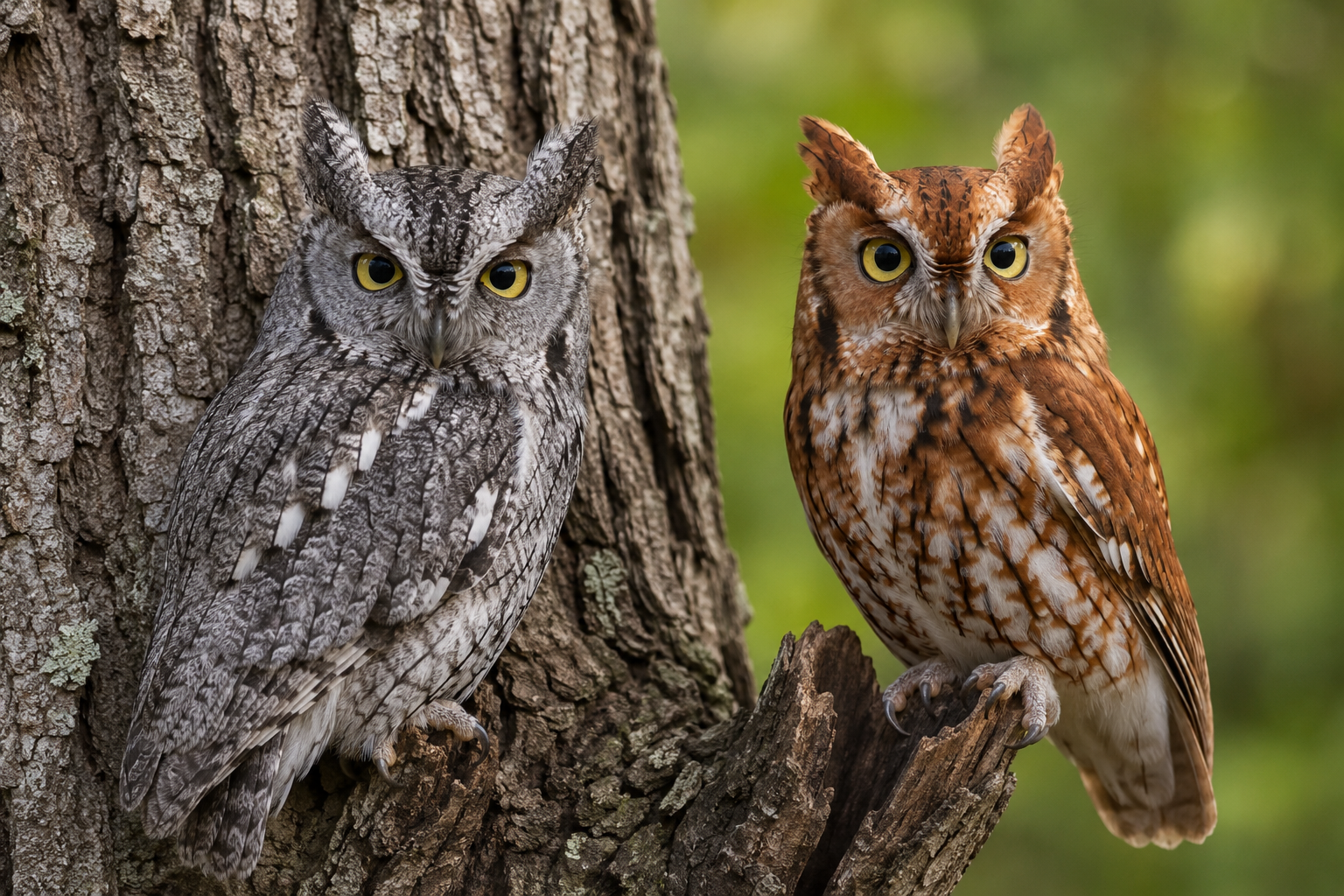
One of the most interesting things about this species is that it occurs in two main color forms, called morphs:
Gray Morph:
The most common form across much of its range. These birds are beautifully patterned in shades of gray, silver, black, and white. When perched against a tree trunk, they can become nearly invisible.
Red (Rufous) Morph:
Some Eastern Screech-Owls are rich reddish-brown or cinnamon colored. The patterning is identical to the gray birds, but the warm colors help them blend into certain forest environments. The red morph is more common in some regions than others.
Both color forms are the same species and can even occur within the same family.
Habitat
Eastern Screech-Owls are highly adaptable. They live in deciduous forests, woodland edges, suburban neighborhoods, city parks, farms, and even residential areas with mature trees.
Unlike some owl species that require vast wilderness areas, Eastern Screech-Owls often thrive close to people. They spend daylight hours tucked into tree cavities, dense foliage, or nest boxes, becoming active after sunset.
Their diet is equally varied. They hunt insects, mice, small birds, frogs, lizards, and other small prey, making them valuable natural pest controllers.
Voice
If you've never heard an Eastern Screech-Owl, you might be surprised.
Rather than a classic "hoot," they produce two primary calls:
A descending whinny that sounds somewhat like a tiny horse.
A soft, tremulous trill often described as a bouncing ball slowing down.
These calls are frequently heard on calm evenings and throughout the breeding season. Learning them is one of the easiest ways to discover Eastern Screech-Owls in your area.
How We Can Help
Eastern Screech-Owls benefit greatly from bird-friendly yards and communities.
You can help by:
Preserving mature trees and natural cavities whenever possible.
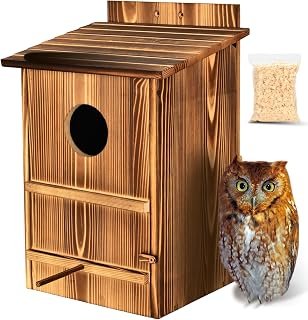
Installing properly sized owl nest boxes.
Reducing pesticide use, which helps maintain healthy insect populations.
Leaving some natural habitat and brushy areas in your yard.
Driving carefully at night, especially on rural roads where owls often hunt.
Because they readily accept nest boxes, Eastern Screech-Owls are one of the easiest owl species for homeowners to support.
The next time you hear a mysterious trill or whinny drifting through the darkness, pause and listen. There’s a good chance a tiny Eastern Screech-Owl is nearby, watching the world from a hidden perch and reminding us that some of nature’s most fascinating birds are also among its best-hidden treasures.
Reader Challenge: Now that you have identified the Eastern Screech cousin, look at your field guide for the other cousins - Western Screech-Owl and Whiskered Screech-Owl. Take a look at the differences in size and field marks. Find their calls online so you can compare. Which Screeches live in your neighborhood?
Final Thoughts: Like to bring Screech Owls to your backyard? If you have at least one mature shade tree (more is better) and would like to install a nest box, your Screech Owls may thank you. Make sure the box floor is 8×8” and the hole (circular or half moon) is 3” (bigger entrance hole encourages larger owls and squirrels which will drive Screech Owls away). It should not have a perch on the outside, it’s not needed. Check out this great box from our store.