

Hooded Merganser
The Woodland Duck with the Amazing Hairdo
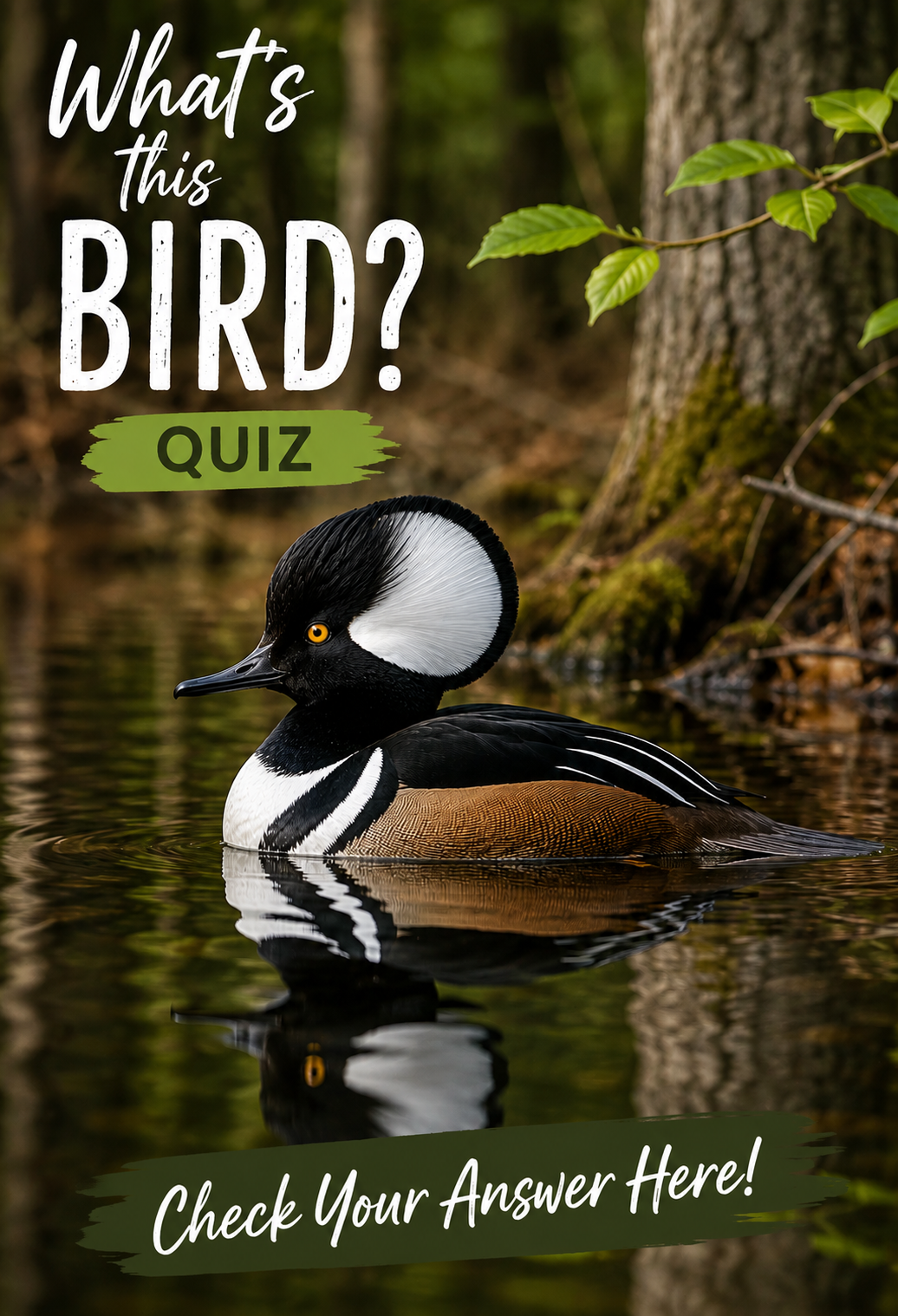
If you guessed Hooded Merganser, congratulations! This striking duck is one of North America's most distinctive waterfowl and is often a favorite among birders because of its bold appearance and fascinating behavior.
Field Marks to Notice
Adult Male
Large black head with a dramatic white fan-shaped crest (hood)
Bright yellow eyes
Black back with bold white stripes
Rich chestnut-colored sides
Thin, serrated bill designed for catching fish
The male can raise or lower his crest depending on his mood, creating one of the most memorable profiles of any North American duck.
Adult Female
Warm brown head with a shaggy cinnamon-colored crest
Slim body
Yellowish eyes
Gray-brown body
Many beginning birders overlook females, but that distinctive "punk-rock" crest is a great clue.
Habitat
Unlike many ducks that prefer open lakes and marshes, Hooded Mergansers are often found in:
Woodland ponds
Beaver ponds
Forested lakes
Slow-moving rivers
Flooded timber
Quiet backwaters
They especially favor water surrounded by trees because they nest in natural cavities.
Interesting Facts
Hooded Mergansers are among the smallest mergansers in North America.
They are expert divers and can remain underwater for up to a minute while hunting.
Their bills have tiny serrations that help them grip slippery fish.
They nest in tree cavities and readily use nest boxes.
Ducklings often leap from nesting cavities 20–50 feet above the ground within a day of hatching!
What Do They Eat?
Hooded Mergansers primarily feed on:
Small fish
Aquatic insects
Crayfish
Tadpoles
Small amphibians
Watch for them diving repeatedly in shallow woodland ponds as they search for prey underwater.
Range and Distribution
Breeding Season (Spring & Summer)
Much of the eastern United States
Great Lakes region
Southern Canada
Pacific Northwest
Winter
Southeastern United States
Gulf Coast states
Atlantic Coastal Plain
Portions of California and the Pacific Coast
Year-Round
Parts of the Mid-Atlantic region
Portions of the Southeast where suitable wooded wetlands are available
Birding Tip
When you spot a duck with a strange shape or hairstyle, don't immediately focus on color. Notice the silhouette first. The Hooded Merganser's oversized crest creates a unique profile that stands out even at a distance. Learning distinctive shapes like this is one of the fastest ways to improve your bird identification skills.
