

Worm-eating Warbler: The Bird with the Misleading Name
Meet the delicate woodland warbler
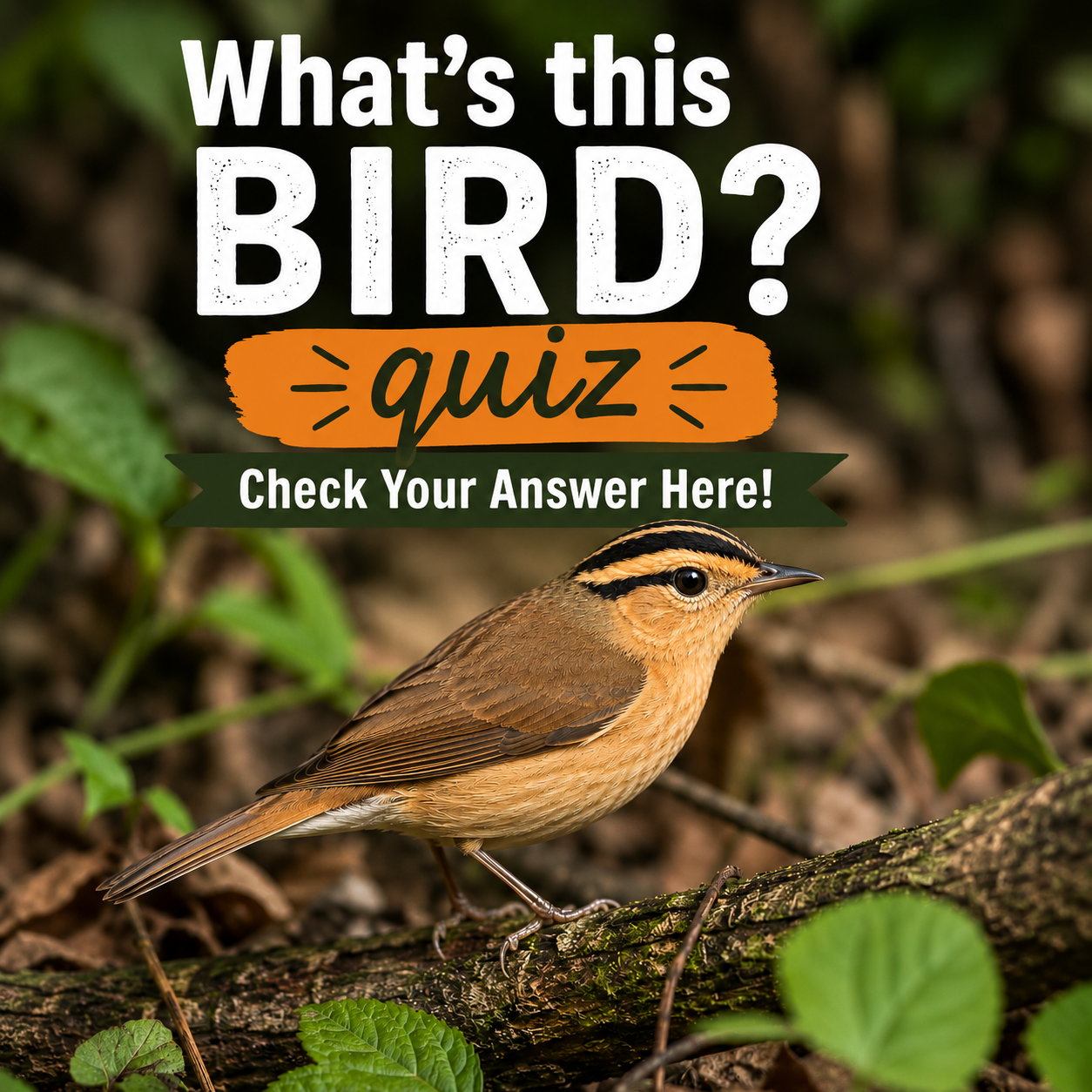
Despite its unusual name, the Worm-eating Warbler doesn't actually spend much time eating worms. Instead, this secretive little songbird specializes in hunting caterpillars, insects, spiders, and other small invertebrates hidden among leaves and branches. The name comes from an older use of the word "worm," which often referred to caterpillars and other crawling insects rather than earthworms.
The Worm-eating Warbler is one of the more distinctive warblers in eastern North America. Unlike many warbler species that display bright yellows, blues, or oranges, this bird wears a much more subtle outfit. Its overall plumage is warm brown above and buffy-white below, helping it blend perfectly into the leaf litter and shaded understory where it spends much of its time. The easiest field mark is its boldly striped head. Four dark brown stripes run across the crown and continue toward the nape, creating a pattern that immediately catches the eye once you notice it.
These birds favor mature deciduous forests, especially wooded hillsides and ravines with dense understory vegetation. During spring and summer, they breed throughout much of the eastern United States, particularly in the Appalachian region and surrounding forests. In winter, they migrate south to Mexico, Central America, and portions of the Caribbean.
Unlike many warblers that spend their time flitting through the tops of trees, Worm-eating Warblers often forage much lower. Birders frequently find them creeping along branches, inspecting curled leaves, or searching through dense tangles of vegetation. Their behavior can sometimes resemble that of a small vireo more than a typical warbler.
Their song is also distinctive. Many birders describe it as a dry, insect-like trill that sounds somewhat similar to a Chipping Sparrow. Learning the song can be especially helpful because the birds themselves can be surprisingly difficult to see, often remaining hidden among leaves even while singing continuously.
Worm-eating Warblers build their nests directly on the ground, usually tucked into leaf litter on steep wooded slopes. This nesting strategy helps conceal the nest but can also make the species vulnerable to predators and habitat disturbance. Forest fragmentation and loss of large tracts of mature woodland can negatively affect local populations.
For beginning birders, the Worm-eating Warbler offers a great lesson in looking beyond bright colors. Its beauty lies in its subtle patterns, specialized habitat, and fascinating behavior. Once you learn to recognize the striped crown and warm brown plumage, you'll discover that this understated warbler is one of the most memorable birds of eastern forests.
Quick ID Tips
Bold dark stripes across the crown
Warm brown upperparts
Buffy-white underparts with little to no streaking
Often forages low in dense woodland vegetation
Distinctive dry, insect-like trilling song
Found in mature deciduous forests during the breeding season
When you finally spot a Worm-eating Warbler creeping through a tangle of leaves on a wooded hillside, you'll quickly understand why so many birders consider it one of the hidden gems of eastern forests.
