

The Bird Kissed with Sunshine
What’s This Bird Quiz?
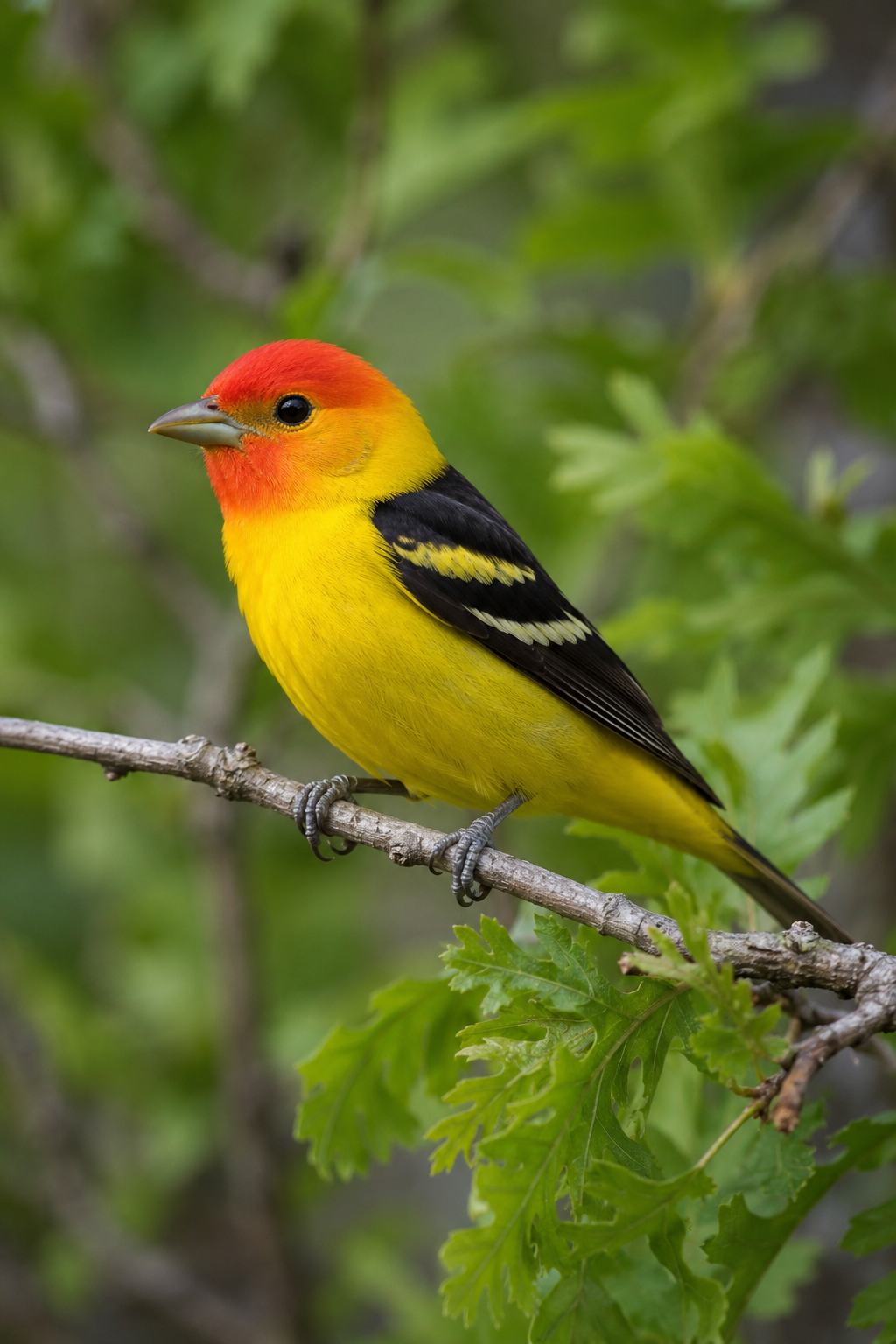
If you could imagine a songbird kissed by sunshine and flame then splashed with a little black ink, there is a good chance you’re imagining a Western Tanager.
Male Western Tanagers are one of those birds that can stop a birder mid-sentence. In breeding plumage, the male has a bright yellow body, black wings, two pale wingbars, and that unforgettable red-orange head. It is a bird that looks almost tropical, which makes it feel even more surprising when you find one in a western pine forest, mountain campground, or shady patch of trees.
But here is the quiz trick: not every Western Tanager looks like the calendar-photo male.
Females and young birds are much more subtle. They are usually yellow-green to olive-yellow, with grayish or dusky wings and pale wingbars. They may not have the glowing red head at all. So if you saw a bird that seemed “almost goldfinch-like” but larger, longer-bodied, and moving through the trees instead of bouncing around a feeder, Western Tanager is worth considering.
Western Tanagers are birds of the western forests, especially open conifer and mixed woodlands. During nesting season, they are often high in the trees, which is deeply unfair of them considering how beautiful they are. A bright male can still be hard to spot when he is feeding among needles, leaves, and shifting light. Sometimes your first clue is not color, but movement: a medium-sized songbird working slowly through the canopy, pausing to pick insects from foliage.
They eat many insects, including beetles, wasps, ants, and other small prey. They also eat fruit, especially during migration and later in the season. That mix of insects and berries is one reason they may show up in unexpected places during migration, including parks, yards, riparian corridors, and patches of trees that give them a place to rest and refuel.
[Personal Story: I once looked out the back window of our creek side townhouse and noticed a small pine tree absolutely lit up with yellow, orange & red lights. I thought who would string lights there? I looked more closely and noticed movement and realized it wasn’t Christmas lights but a tree FULL of Western Tanagers - 50-100 of them I’m sure. It was breath-taking!]
Migration is one of the best times for many birders to see Western Tanagers. They breed across much of the western United States and into western Canada, then migrate south for winter, mostly into Mexico and Central America. Like many songbirds, they often migrate at night, which means a bird that was not in your yard yesterday can seem to magically appear this morning.
For identification, focus on the whole bird, not just the color. Look for a medium-sized songbird with a fairly sturdy bill, pale wingbars, and a habit of staying higher in trees. On males, the yellow body, black wings, and red-orange head are the big clues. On females and immature birds, look for the soft yellow-green body, grayish wings, and wingbars.
The Western Tanager is a wonderful reminder that bird identification is not only about naming the obvious birds. It is also about noticing the almost-hidden ones — the flash of yellow in the treetops, the unfamiliar shape in the leaves, the bird that makes you stop and say, “Wait. What was that?”
