

Beginning Birding by Ear
How Listening Makes You a Better Birder
Birding for Beginners - Part 4
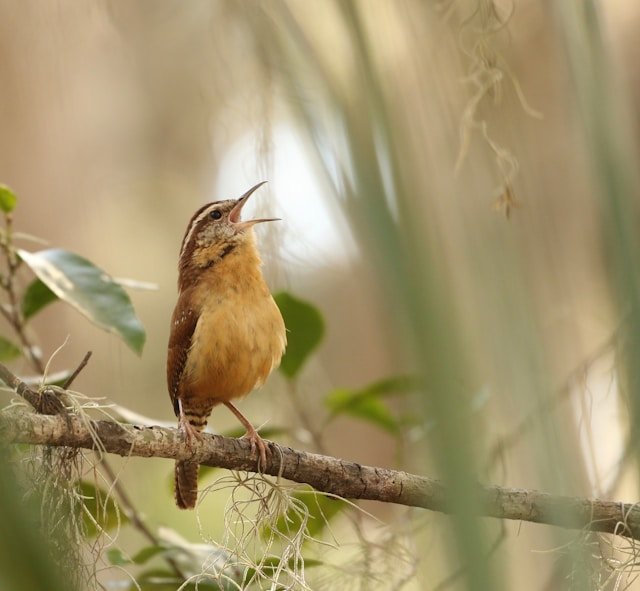
If you ask experienced birders how they really find birds, many will tell you the same thing:
They hear them first.
Before binoculars come up. Before a field guide is opened. Before a flash of color moves through the trees—there is sound.
For beginners, birding by ear can feel intimidating. Birds seem to sing constantly, often from hidden perches, and many songs sound confusingly similar. But here’s the good news: you do not need perfect pitch or musical training to learn birds by ear. You only need curiosity, patience, and a willingness to listen.
In fact, learning to identify birds by sound often accelerates every other birding skill. It trains your attention, sharpens your awareness, and helps you notice birds you would otherwise never see.
This guide will help you begin—comfortably, practically, and without overwhelm.
Why Birding by Ear Matters (Especially for Beginners)
Many birds are far easier to hear than to see. Dense foliage, low light, distance, or constant motion can make visual identification difficult. Sound cuts through all of that.
Birding by ear helps you:
Detect birds hidden in trees or brush
Identify birds before they move into view
Separate confusing species that have nearly identical field marks
Confirm visual IDs when field marks are unclear
Recognize habitat changes and seasonal shifts
Stay engaged even when birds aren’t visible
In forests, wetlands, and even suburban neighborhoods, listening often reveals more species than watching alone.
For beginners especially, learning a few common sounds builds confidence quickly. Instead of feeling like everything is happening too fast, you begin to recognize patterns. Familiar voices emerge. The landscape starts to speak.
Start With Calls, Not Songs
One of the most common beginner mistakes is trying to learn songs first. Songs can be long, complex, and highly variable.
Instead, start with calls.
Calls are:
Short and simple
Used year-round
Often consistent across regions
Easier to remember
Think of calls as a bird’s everyday voice—contact notes, alarm sounds, or brief check-ins with flock mates.
Some examples:
The sharp “chick-a-dee-dee-dee” of chickadees
The metallic “pink!” of a House Finch
The squeaky hinge call of a Blue Jay
Once calls feel familiar, songs become much easier to place in context.
Learn Birds in Small, Familiar Places
Just as with field marks, location matters when learning bird sounds.
Start where you already spend time:
Your backyard or balcony
A neighborhood park
A favorite walking trail
A nearby pond or creek
Hearing the same birds repeatedly is the fastest way to learn them. Repetition builds recognition.
Choose 3–5 common local species and focus only on those at first. Resist the urge to learn everything at once.
Birding by ear is cumulative. Every familiar sound becomes an anchor for future learning.
Sound Categories: A Helpful Mental Shortcut
Instead of memorizing exact notes, many birders use sound categories. This keeps listening intuitive rather than technical.
Common categories include:
Whistles – clear, pure tones (many thrushes, sparrows)
Trills – rapid repeated notes (wrens, kinglets)
Buzzes – insect-like sounds (some warblers)
Chips – short, sharp calls (finches, sparrows)
Rattles – harsh, mechanical sounds (kingfishers, jays)
Ask yourself:
Is it musical or harsh?
Fast or slow?
Rising, falling, or even?
These impressions are often more useful than exact pitch.
The “One Bird at a Time” Listening Exercise
This simple exercise trains focus and reduces overwhelm.
Step outside or sit near an open window
Close your eyes for 60 seconds
Choose one bird sound to follow
Ignore everything else
Ask:
Does the sound repeat regularly?
Does it move through space?
Does it change when another bird responds?
This practice mirrors the binocular-raising exercise from earlier in the series: intentional, repeatable, and calm.
Over time, your brain naturally separates overlapping sounds—just like voices at a crowded table.
Use a Few Tricks Along the Way
Many birds say their own name. At your feeder, the tiny black and white Chickadee says “Chick-a-dee-dee-dee”. At night in May, go to a woodland lot and listen for the night birds. In the East, you might hear a Whip-poor-will that says it’s name. Here in Texas we listen nightly to the Chuck-Will’s-Widow. They nest behind my house every year and once you hear that call, you’ll never forget get.
Other birds sing a call/song that fits with a human phrase. The Olive-sided Flycatcher says “Quick 3 beers!” Most of our vireos incorporate the word “vireo” into their song. And the Barred Owl says “Who cooks for you? Who cooks for you all.”
Using catchy phrases and phonetics, you can accumulate a quick repertoire of bird calls.
Using Apps and Tools (Without Letting Them Do the Work)
Technology can be incredibly helpful when used intentionally.
Apps like Merlin Bird ID allow you to:
Hear verified recordings
Compare similar species
Identify birds by sound in real time
But here’s the key: listen first, then confirm.
This builds skill instead of dependency.
Try this approach:
Hear the bird
Describe it in your own words
Guess the species
Use the app to check
Put words to the sounds you hear (Whip-poor-will says exactly that. The Common Yellowthroat says “wichety, wichety, wichety.” The Great Kiskadee says “kiskadee”. And the Barred Owl says “who cooks for you, who cooks for you all.”)
Not all birds have a song that neatly fits into people phrasing but some do and it becomes easier to remember the melody.
Field guides with audio components are also excellent companions, especially paperback guides you can flip through after a walk.
Seasonal Awareness: Birds Sound Different Throughout the Year
Bird vocal activity changes dramatically with the seasons.
Spring: Peak singing for territory and mates
Summer: Calls become more common as nesting progresses
Fall: Quieter overall, with migration calls overhead
Winter: Sparse but distinctive calls from resident birds
Knowing why birds are vocal helps you anticipate what you’ll hear. A loud dawn chorus in May feels less chaotic once you understand its purpose.
Common Beginner Frustrations (And Why They’re Normal)
“I can’t keep them straight.”
“They all sound the same.”
“I forget what I just learned.”
All of this is normal.
Birding by ear develops gradually. Progress often shows up quietly—one day you realize you noticed a bird before seeing it. That’s the win.
If frustration sets in:
Narrow your focus
Slow down your listening
Return to familiar places
Consistency matters more than intensity.
Ducks and Waterbirds: An Unexpected Listening Opportunity
While ducks are often recommended for visual practice, they’re also helpful for sound learning.
Many ducks have:
Distinctive quacks, whistles, or grunts
Clear male/female vocal differences
Predictable vocalizations on open water
Listening to ducks at a pond reinforces the connection between sound, behavior, and species—especially when visibility is good.
Birding by Ear Deepens the Experience
Learning bird sounds isn’t just about identification—it changes how you experience the outdoors.
Walks become richer. Quiet moments feel purposeful. Even familiar spaces gain depth.
You begin to notice:
When a hawk passes overhead
When nesting activity increases
When migration quietly arrives
Birds narrate the landscape if you learn to listen.
Final Encouragement: You’re Already Learning
If you’ve ever paused because a sound caught your attention, you’ve already started birding by ear.
You don’t need to name everything. You don’t need to be fast. You just need to listen—regularly, gently, and with curiosity. Even if you don’t know what bird is making the sound, the sound can direct you to the bird’s location. Often once you see AND hear the bird together, you will create a stronger memory to use in the future.
In time, those background sounds become familiar voices.
And once you hear birds clearly, you’ll never walk outside the same way again.
Check out the first 2 parts of the Birding for Beginners series:
