

How to Create a Bird Sanctuary in a Small Yard, Patio, or Balcony
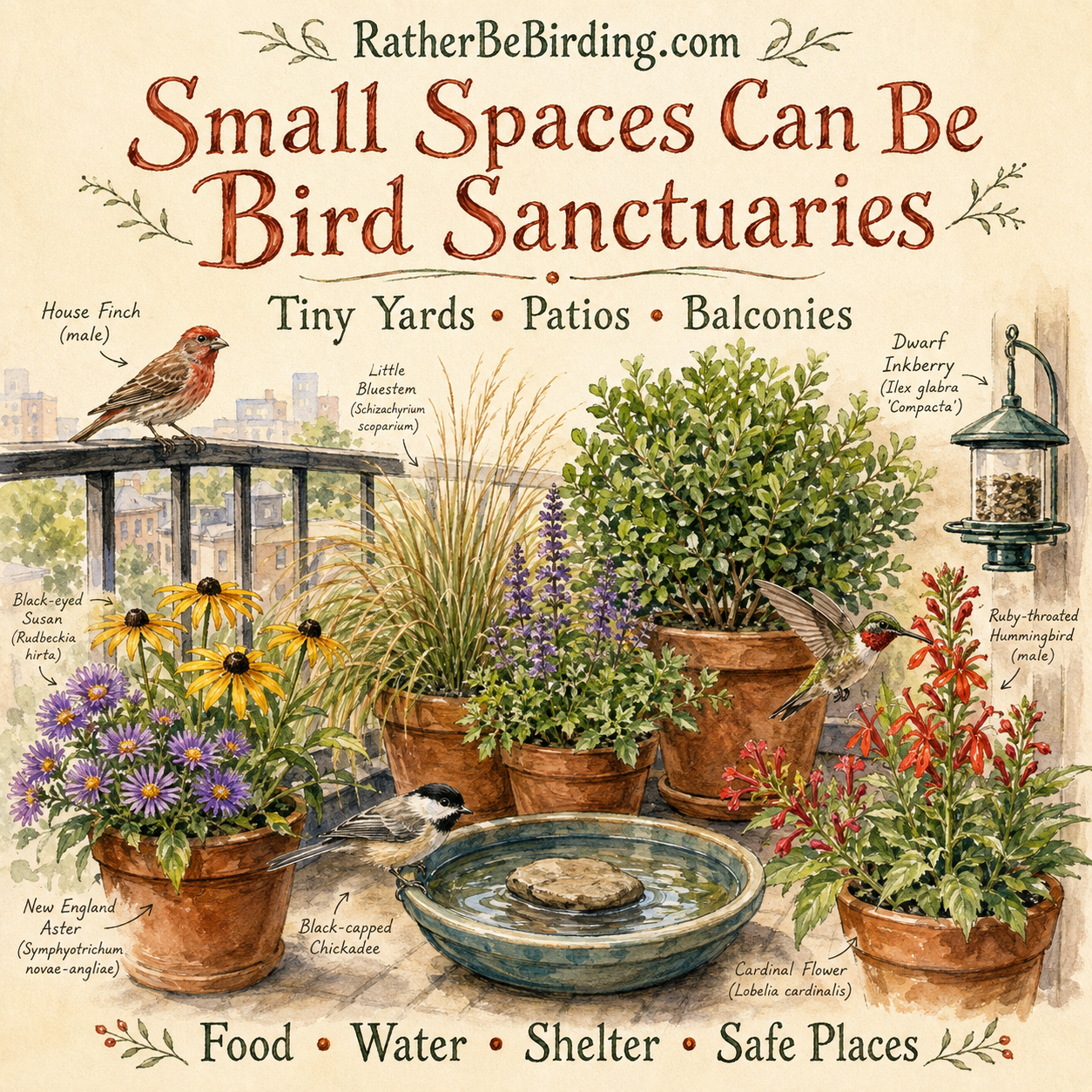
You do not need a sprawling yard, a wooded property, or an elaborate landscape plan to make life a little easier for wild birds.
Sometimes a bird sanctuary begins with one pot of native flowers. Sometimes it is a shallow dish of clean water tucked beside a leafy shrub. It may be a small feeder outside an apartment window or a narrow garden bed that gives a tired migrant one safe place to pause.
Birds do not measure habitat in acres. They notice what a place provides.
If your small yard, patio, or balcony offers something useful—food, water, shelter, nesting material, or a safe resting place—it can become part of the larger patchwork of habitat birds depend on. A tiny space may not provide everything, but it does not have to. Even one well-planned corner can make a meaningful difference.
The secret is to stop thinking about how much space you lack and begin looking at every surface, edge, and vertical layer you can use.
Start With What Birds Need, Not With the Size of the Space
Every useful bird sanctuary is built around four basic needs:
Food
Water
Shelter
Safe places to nest or rest
In a large yard, those needs might be met by mature trees, hedges, flower beds, a pond, and several feeding stations. In a small space, one feature may do more than one job.
A berry-producing shrub in a large container can offer food, protective cover, shade, and a perch. A pot of native flowers can provide seeds for birds and nectar for insects that birds eat. A shallow water dish can serve both resident birds and migrants passing through.
That is small-space habitat at its best: every choice earns its place.
Before buying anything, watch your space. Notice the sun, shade, wind, rain, existing perches, and birds already moving through the area.
Your sanctuary plan should grow from what you observe.
Think Vertically
When ground space is limited, height becomes your friend.
Birds naturally use habitat in layers. Some forage close to the ground, others move through shrubs, and still others prefer higher branches and open perches. You may not be able to reproduce a woodland on a balcony, but you can create a small version of layered habitat.
Try combining:
A low tray or pot planted with ground-hugging native flowers
Medium-height grasses or flowering plants
A larger container holding a compact shrub
A railing planter, hanging basket, or vine on a trellis
The result is more useful than a row of pots that are all the same height. Varied plant heights create places to land, forage, hide, and look around.
On a patio, use a corner to form a protected pocket of greenery. In a small yard, plant along the perimeter and leave the center more open, creating an edge between cover and open feeding areas.
Do not crowd a balcony so tightly that birds cannot approach or escape. A little open flying room matters, especially in an elevated space.
Grow Native Plants in Containers
Native plants are not limited to large garden beds. Many grow beautifully in pots, window boxes, half barrels, and other containers, provided their light, soil, water, and root-space needs are met.
Why choose natives? Plants that evolved in your region are connected to the local food web. They may produce nectar, seeds, fruits, or the insects that birds need. Even birds that visit feeders usually depend on natural foods during part of the year, and nearly all North American land birds feed insects to their young.
Look for regional native flowers and grasses suited to your sunlight and compact native shrubs that offer berries, dense branching, or both. Your state native plant society, extension office, Audubon chapter, or a reputable native nursery can help you select suitable species.
Choose plants with different blooming and fruiting periods when possible. A sequence of spring flowers, summer blooms, autumn seeds, and persistent winter stems extends the usefulness of your tiny habitat.
Leave some seed heads standing after the flowers fade. They provide natural food and give birds a reason to investigate. Hollow or pithy stems can also shelter overwintering insects. A perfectly trimmed container garden may look tidy to us, but a slightly relaxed garden is often more generous to wildlife.
Offer Water—Even If All You Have Is a Saucer
Water may be the easiest way to make a small space useful to a wider variety of birds. Some birds that rarely visit seed feeders will stop for a drink or bath.
You do not need a pedestal bird bath. A sturdy plant saucer, shallow ceramic dish, or compact railing-mounted basin can work. The important details are depth, footing, placement, and cleanliness.
Keep the water shallow—generally no more than about two inches at the deepest point, with an even shallower edge. Add a flat stone or two if the bottom is slick or the depth varies. Birds need secure footing and an easy way to step in and out.
Place the basin where you can clean and refill it easily. In hot weather, water can evaporate quickly on a balcony, and a small dish may need attention every day. Scrub away droppings, algae, and debris regularly, rinse well, and add fresh water. Avoid cleaners that leave strong residues or fragrances.
A gentle drip or small solar bubbler can help birds notice the water, but it is not required. Clean, shallow, dependable water matters more.
If the basin sits near cover, birds have a place to retreat after bathing. Just avoid placing it where a roaming cat or other predator could hide immediately beside it.
Related: The Bird Baths Birds Actually Want
Choose Feeders for Your Space—and Your Neighbors
A feeder can be a helpful part of a small sanctuary, but it should fit the setting.
On a balcony, seed hulls and droppings can fall onto neighboring spaces. Wind can scatter lightweight seed, and spilled food can attract rodents. Before hanging a feeder, check building, condominium, homeowners association, or lease rules.
If seed feeding is allowed, choose a compact, easy-to-clean feeder and food the birds in your region actually eat. Shelled sunflower hearts create less waste, although they cost more and spoil when damp. Avoid bargain mixes filled with grains birds discard; the waste may mold or attract unwanted visitors.
A small suet feeder may work in cool weather. A nectar feeder can suit areas with hummingbirds, but it requires frequent cleaning and fresh, undyed nectar—especially in heat.
Put out only as much food as birds will use while it remains fresh. Keep feeders clean, discard wet or spoiled food, and pause feeding if you see sick birds or if local wildlife officials advise it.
Plants can also be feeders. Native flowers, grasses, and berry-producing shrubs provide natural food without concentrating birds as heavily in one spot.
Related: The Ultimate Guide to Choosing the Right Birdseed
Create Shelter in a Place With No Trees
A bare patio may feel exposed because, to a bird, it is exposed.
Birds like to assess a feeding or watering place from a nearby perch. They also need a quick escape route if a hawk appears or a loud noise startles them. Container-grown shrubs, ornamental native grasses, and dense vines can help create that sense of security.
Balcony plants face strong wind, reflected heat, rapid drying, and limited soil. Use containers large enough for the roots, provide drainage, and secure anything that could fall.
If live plants are not practical year-round, even the placement of your features can help. A water dish positioned near a leafy container is more inviting than one sitting alone in the middle of bare concrete. A feeder near—but not buried within—cover lets birds check the area before approaching.
Avoid fake webbing, loose netting, sticky traps, or dangling threads that could entangle birds. Keep trellises and plant supports secure.
What About Nesting Birds?
Not every small sanctuary needs a nest box, and a balcony is not automatically a safe nesting site.
Nest boxes are species-specific. The entrance size, floor dimensions, mounting height, habitat, and predator protection all matter. A decorative birdhouse placed wherever it looks charming may never attract birds—or it may create a dangerous situation.
Before installing one, learn which cavity-nesting birds live nearby and whether your setting meets their needs. Consider heat, direct sun, wind, maintenance, predators, and frequent foot traffic.
You can support nesting without a box. Native plants attract insects, dense branches provide cover, and pesticide-free spaces protect the food supply.
Skip dryer lint, yarn, string, and pet hair. These materials can hold moisture, tangle around feet, or contain chemical residues. Birds are remarkably capable nest builders when we provide healthy habitat and let them choose safe materials.
Make Windows Safer
In a patio or balcony sanctuary, glass may be the greatest hidden danger.
Birds may see open sky or plants reflected in glass. A few decorative decals spaced far apart are usually not enough to show them that the surface is solid.
Effective treatments use a dense, repeating pattern on the outside of the glass. External screens, closely spaced cords, films, tempera markings, or other tested systems can break up reflections. Treat the glass nearest your plants, water, and feeders first.
Feeder placement matters too. Position a feeder very close to a window—within about three feet—or much farther away. At close range, a startled bird generally cannot build up as much speed before reaching the glass. The area between those placements can allow a more forceful collision.
Turn off unnecessary lights at night, particularly during migration, when light can disorient birds. Closing blinds and curtains also reduces light spill.
Related: 10 Backyard Bird Sanctuary Mistakes—and How to Fix Them
Keep Your Small Sanctuary Healthy
Because birds and resources are concentrated in a small area, cleanliness matters.
Sweep up spilled seed, wash water dishes and feeders, remove spoiled food, and keep container drainage open. Avoid broad-spectrum pesticides, which reduce the insects birds depend on and may expose wildlife to harmful chemicals.
If you have a cat, keep it indoors or provide a secure, enclosed outdoor space. A balcony railing is not a safe boundary for either a cat or a bird.
Also remember that more is not always better. Three well-maintained features are more valuable than ten neglected ones. Begin with what you can care for consistently.
A Simple Plan for Each Kind of Small Space
For a tiny yard
Use the perimeter to create layers. Add a small native shrub, a patch of flowers or grasses, a shallow bird bath, and one carefully placed feeder. Reduce unnecessary lawn if you can, leave some fallen leaves beneath plants, and protect windows that reflect the habitat.
For a patio
Group containers in a sheltered corner while leaving room for birds to approach. Combine one larger shrub with several flowering or seed-producing plants. Add a shallow water dish where it is easy to refill and a feeder only if waste can be managed.
For a balcony
Check the rules first. Choose secure, wind-resistant containers and railing fixtures. Grow native plants vertically, provide shallow water, minimize seed waste, and treat nearby glass. Keep all objects safely inside the railing and never balance a heavy pot or basin where it could fall.
Let the Birds Tell You What Works
Once your sanctuary begins to take shape, give it time.
Birds may discover water within days, while new plants can take a season or two to become truly useful. Watch how birds approach the space. Do they pause on a railing but avoid the feeder? They may need more cover. Does the water go untouched? Try moving it closer to vegetation or adding a gentle ripple. Are seeds piling up? Offer less or switch to a food birds in your area prefer.
Keep a simple list of visitors. Note the date, time, weather, and what each bird used. These observations turn a few pots and a dish of water into a living experiment—and they help you become a better birder.
You may see only common neighborhood birds at first. That is not failure. House Finches, chickadees, wrens, sparrows, robins, doves, and other familiar birds still need safe places. During migration, a surprising visitor may appear for a drink, an insect, or a few quiet minutes of rest.
Your Small Space Can Be Part of Something Larger
No single yard or balcony can meet every need of every bird. Even large sanctuaries are connected to the habitat around them.
But imagine a neighborhood where one balcony offers nectar plants, another provides water, a courtyard holds native shrubs, and a small yard supplies seeds and shelter. Together, these scattered spaces form stepping-stones that help birds move through an increasingly built-up landscape.
That is why your effort matters.
Do not wait for a bigger property or a perfect plan. Start with one square, one pot, or one shallow basin. Choose something useful, keep it clean, and watch what happens.
A small bird sanctuary is still a sanctuary—and it may become the favorite part of your home.
Ready to add another piece of habitat? Visit the Backyard Bird Sanctuary Guide and learn how food, water, shelter, nesting space, and safety work together. Then choose one small improvement you can make this week.
