

The Pecking Order is Real
Understanding Wild Bird Hierarchy
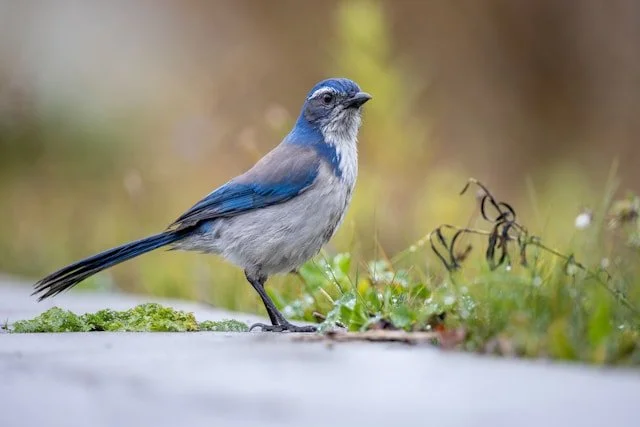
If you’ve ever watched your backyard feeder long enough, you’ve probably noticed something curious—and unmistakably consistent. Some birds wait. Some dart in quickly, grab a seed, and vanish. Others arrive like they own the place, scattering feathers and complaints in all directions.
That’s not imagination. It’s hierarchy.
What birders casually call the pecking order is a real, well-documented behavioral structure rooted in survival, competition, intelligence, and personality. While the phrase may have originally come from observations of domestic chickens, the same principle applies across much of the avian world—especially among highly intelligent, social birds like jays.
Sometimes it’s merely a matter of size - the bigger the bird, the more power we wields. But for some birds, their personalities carry more weight than their actual size.
My own feeder in our Colorado hometown tells a perfect story: shy Scrub Jay arriving first, followed by the bolder Blue Jay, and finally the unapologetically assertive Steller’s Jay, who clear the deck entirely—at least until the even more formidable Magpie shows up.
That sequence isn’t random. It’s hierarchy in action.
Let’s unpack why wild birds establish pecking orders, how those hierarchies work, and why the Jay family offers one of the clearest, most fascinating examples of dominance and rank at the feeder.
What Is a Pecking Order—and Why Does It Exist?
At its core, a pecking order is a social ranking system that determines who gets priority access to limited resources such as food, nesting sites, shelter, and mates. In the wild, resources are rarely unlimited. Birds that can secure food quickly—and safely—have a survival advantage.
Hierarchies reduce constant fighting. Once roles are established, birds don’t need to battle every time they encounter one another. A glance, posture, or brief display often settles the question of “who moves and who stays.”
This is especially important at feeders, which act as artificial concentration points. Birds that might normally spread out across acres of habitat are suddenly competing at a single tray or platform. That compression makes hierarchy visible in a way it might not be elsewhere.
How Birds Establish Rank
Bird hierarchies form through a combination of:
Size and strength
Aggression and confidence
Experience and age
Social intelligence
Group support (numbers matter)
Once established, rank is reinforced through behavior rather than constant physical conflict. Displays such as wing spreading, vocalizations, lunging motions, or simply holding ground are usually enough.
Corvids—crows, ravens, jays, and magpies—excel at this. They remember individuals, hold grudges, recognize alliances, and learn quickly who outranks whom.
Why Jays Dominate Feeder Hierarchies
The Jay family (Corvidae) is practically built for dominance.
Jays are:
Highly intelligent (on par with primates in some problem-solving tasks)
Omnivorous and opportunistic
Physically robust with strong bills
Loud, confident, and socially aware
They also cache food, defend territories, and assess risk constantly. When a jay approaches a feeder, it isn’t just hungry—it’s evaluating who’s present, who might challenge it, and whether it’s worth asserting dominance.
That makes jays natural hierarchy-setters wherever they appear.
The Jay Hierarchy at the Feeder: A Familiar Progression
Scrub Jays: The Calculators
Scrub Jay often arrive first at feeders, especially in quieter moments. Their behavior can seem timid compared to other jays, but it’s better described as strategic.
Scrub Jays are observant. They watch from nearby trees, wait for movement to slow, and often grab food quickly before retreating. This isn’t weakness—it’s efficiency. In habitats where they coexist with larger, more aggressive corvids, discretion is survival.
They rely heavily on caching and memory. A Scrub Jay doesn’t need to dominate the feeder if it can quietly stash enough food elsewhere. Yielding space temporarily is often a smart trade-off.
Blue Jays: The Middle Managers
Enter the Blue Jay—larger, louder, and more confrontational.
Blue Jays often displace smaller birds easily and will stand their ground against Scrub Jays with little hesitation. They use body language aggressively: raised crests, wing spreading, and sharp calls that signal intent.
Yet Blue Jays still show restraint when higher-ranked birds arrive. They’re dominant—but not reckless. If a Steller’s Jay or large corvid appears, Blue Jays often yield after brief posturing.
They occupy the middle tier beautifully: assertive enough to control space, smart enough to know when to retreat.
Steller’s Jays: The Enforcers
Few feeder visitors announce themselves like a Steller’s Jay.
Bigger-bodied, darker-plumed, and intensely confident, Steller’s Jays tend to take control immediately. Their arrival often empties a feeder in seconds—not because they attack, but because everyone else knows better.
Steller’s Jays are famously bold. They’re more willing to confront competitors directly, and their vocalizations alone can trigger retreat. They also remember which birds back down and which don’t.
At many feeders, Steller’s Jays sit near the top of the local hierarchy.
Magpies: The Ultimate Disruptors
Until the magpies arrive.
Magpies—whether Black-billed or Yellow-billed—are larger, longer-bodied, and often operate in pairs or family groups. Their social coordination gives them an edge even over assertive jays.
When Magpie show up, the dynamic shifts immediately. Even Steller’s Jays often give ground. Numbers, size, and confidence combine into undeniable authority.
Magpies don’t just dominate feeders—they reshape the hierarchy temporarily, pushing everyone else into observer mode.
Hierarchy Is Contextual, Not Absolute
It’s important to note that pecking orders are local and situational.
A Blue Jay might dominate a feeder in one yard but defer in another where larger corvids are common. Seasonal changes also matter. During breeding season, territorial aggression increases. During winter, hunger can override caution.
Even individual personality plays a role. Bold juveniles may test boundaries. Older birds may rely on reputation rather than force.
Hierarchy is fluid—but not chaotic.
What Smaller Birds Do About It
Songbirds like chickadees, finches, and sparrows adapt by:
Visiting during quiet windows
Using grab-and-go tactics
Feeding from different heights
Avoiding peak jay activity
This isn’t failure—it’s niche partitioning. Different species survive by using space and time differently, reducing direct conflict.
Why This Matters for Birders
Understanding hierarchy changes how you see your feeder.
That sudden scatter when a jay lands isn’t chaos—it’s order. It’s a system that has evolved to minimize injury and maximize survival. Watching it unfold offers insight into intelligence, adaptation, and the subtle rules governing wild communities.
It also reminds us that feeders don’t create dominance—they reveal it.
Encouraging Balance at Your Feeder
If you want to support diverse species while hosting dominant birds like jays:
Offer multiple feeding stations
Different kinds of feeders can be utilized - tube feeders with short perches for little birds
Use platform feeders for jays and ground feeders elsewhere
Space feeders apart to reduce conflict
Provide natural cover nearby for quick retreats
Jays belong at your feeder—but so does everyone else.
Final Thoughts: Order in the Chaos
The observation—from Scrub Jays to Blue Jays to Steller’s Jays, all the way to magpies—is a textbook example of avian hierarchy playing out in real time.
It’s not bullying. It’s not bad manners. It’s evolution, intelligence, and survival wrapped in feathers.
And once you see it, you’ll never look at a busy feeder the same way again.
Birding is not just seeing as many species as possible. It’s also observing, appreciating and understanding why the birds have evolved the way they have and developed the behaviors that will hopefully increase their species ability to survive.
Like learning about Jays? Find out more by visiting the Jay Family of Birds post.
