

Birding by Behavior
The Secret Skill That Helps You Identify More Birds
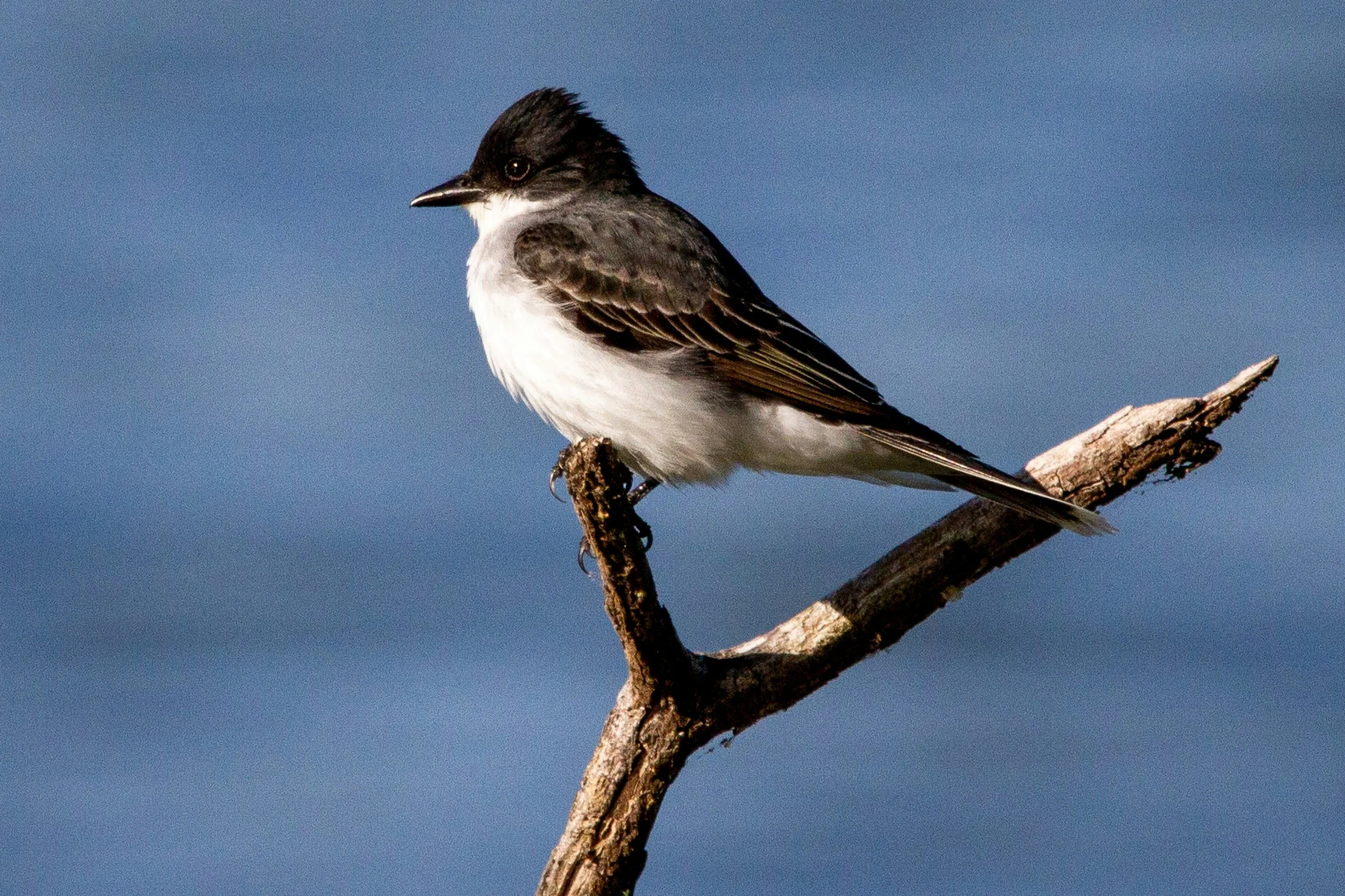
Few beginning birders ask, "What is that bird doing?"
Most beginning birders immediately reach for color.
Was it red?
Did it have a yellow wing bar?
Was the breast streaked?
Color certainly matters. Field marks matter. Size matters.
But experienced birders often identify birds before they ever see those details.
How?
They watch behavior. “What’s that bird doing?”
In fact, behavior is one of the most overlooked bird identification skills available to beginners. Learning to notice how a bird moves, feeds, flies, and interacts with other birds can dramatically improve your identification skills—even when the lighting is poor, the bird is distant, or it refuses to sit still long enough for you to see a single field mark.
The best part?
Behavior is often easier to observe than plumage details.
Let's explore how bird behavior can help you identify more birds and enjoy birding on a much deeper level.
Birds Behave Like Birds
One of the first things experienced birders learn is that birds from the same family often behave similarly.
A warbler acts like a warbler.
A woodpecker acts like a woodpecker.
A swallow acts like a swallow.
A sparrow acts like a sparrow.
That doesn't mean every species behaves identically, but family-level behaviors are often surprisingly consistent.
Think about a woodpecker.
Even before you see markings, what is it doing?
It's probably clinging vertically to a tree trunk.
Maybe it's hitching upward.
Perhaps it's probing bark or drumming.
The behavior itself narrows your choices considerably. [Like when you notice a woodpecker feeding on the ground. What? What’s that woodpecker doing on the ground? By noticing that behavior you’ve already reduced your possibles down about 95% to one likely species - can you figure out which one?]
Likewise, if you see a bird swooping through the air catching insects, you're likely looking at a swallow, martin, or perhaps a flycatcher—not a sparrow or finch.
Behavior becomes an identification shortcut.
What Is the Bird Eating?
One of the easiest questions to ask yourself is:
What is the bird trying to eat?
Diet often reveals identity.
Seed Eaters
Birds that eat seeds frequently spend time at feeders or searching the ground beneath vegetation.
Examples include:
Finches
Sparrows
Juncos
Doves
Their bills tend to be thick and sturdy because they're designed for crushing seeds.
When you see a bird hopping around beneath a feeder picking through fallen seed, you've already narrowed your options considerably.
Insect Eaters
Birds that specialize in insects often move differently.
Warblers rarely sit still.
Flycatchers make short sallies from a perch.
Wrens probe crevices.
Swallows capture insects in flight.
Watching how a bird finds food often tells you more than its color ever will.
Nectar Feeders
If a tiny bird hovers around flowers, you don't need binoculars to suspect a hummingbird.
Behavior instantly narrows the possibilities.
Fish Eaters
Birds stalking shorelines or diving into water reveal clues as well.
Herons stalk
Kingfishers plunge
Ospreys and Bald Eagles dive feet-first
Pelicans scoop
Different feeding strategies often indicate different bird families.
Where Is the Bird Feeding?
Habitat and feeding location go hand in hand.
Ask yourself:
Is it on the ground?
In shrubs?
High in trees?
On a tree trunk?
Over open water?
In a marsh?
Many species occupy surprisingly specific feeding zones.
Ground Feeders
Towhees, sparrows, quail, and many doves spend considerable time on the ground.
Trunk Specialists
Woodpeckers, nuthatches, and creepers work tree bark.
Canopy Feeders
Many warblers stay frustratingly high in treetops.
Marsh Specialists
Red-winged Blackbirds, Marsh Wrens, rails, and bitterns often remain tied to wetlands.
Noticing where a bird spends most of its time can eliminate dozens of possibilities.
Is the Bird Alone or With Others?
Flock behavior is another valuable clue.
Some birds are social.
Others are surprisingly solitary.
Large Flocks
If you see hundreds of birds moving together, possibilities include:
Blackbirds
Starlings
Snow Geese
Cedar Waxwings
Grackles
Small Feeding Groups
Many songbirds join mixed-species flocks.
Winter woodlands often contain:
Chickadees
Titmice
Nuthatches
Woodpeckers
Kinglets
If you locate chickadees, it often pays to watch nearby birds carefully because other species frequently associate with them.
There is safety in numbers. More eyes to watch for predators from the ground and from the sky.
Solitary Birds
Many raptors hunt alone.
Great Blue Herons often feed alone.
Some flycatchers defend territories aggressively.
Social behavior can become an important identification clue.
Watch How Birds Move
Movement patterns can be incredibly distinctive.
In fact, some experienced birders identify birds primarily by movement.
Hopping vs. Walking
This sounds simple, but it's useful.
Many songbirds hop.
Blackbirds often walk.
Killdeer walk and run.
American Robins alternate between hopping and running.
Movement style becomes part of the bird's personality.
Tail Movements
Some species practically announce themselves through tail behavior.
Spotted Sandpipers
Constantly bob their rear end.
Palm Warblers
Frequently wag their tails.
Wrens
Often carry their tails cocked upward.
Phoebes
Frequently pump their tails.
The moment you recognize these habits, identification becomes easier.
Flight Style Matters
Bird flight can be as distinctive as plumage.
Woodpecker Flight
Woodpeckers typically fly in an undulating pattern.
Flap.
Pause.
Dip.
Flap again.
Once you learn this flight style, you'll recognize woodpeckers much more quickly.
Goldfinch Flight
American Goldfinches often produce a bouncing flight pattern accompanied by their familiar calls.
Swallows
Swallows appear almost acrobatic.
Their flight is fast, twisting, and highly maneuverable.
Raptors
Different hawks and falcons often show characteristic flight styles.
Some soar extensively.
Others flap frequently.
Behavior can help narrow your identification before plumage details become visible.
Harriers often fly low over a field methodically quartering the field by sections and using their superior hearing. Red-tails and American Kestrels are the only North American raptors that will often “wait on” for prey. This means they can hover in place high above prey in the field until they decide is right to strike.
Ferruginous hawks are among the few raptors to hunt in groups (Harris’s Hawk hunt in groups using different tactics). One or two of the beautiful Ferruginous hunting party will land on the ground in the middle of a prairie dog town to draw attention from the resident prairie dogs. Another of the hawks will fly in at full speed just a few feet off the ground AND from behind - an effective way to supply enough food for dinner for everyone.
Learn Common Bird Personalities
Birds often develop reputations among birders.
These "personalities" can be surprisingly useful.
Chickadees
Curious.
Active.
Friendly.
Frequently investigate nearby people.
Wrens
Energetic.
Busy.
Often vocal.
Always seem to have something important to do.
Nuthatches
Upside-down experts.
They're among the few birds regularly moving headfirst down tree trunks.
Kinglets
Tiny balls of energy.
Rarely sit still.
Usually quite high in the trees.
Cedar Waxwings
Elegant.
Social.
Polite-looking fruit lovers.
These aren't scientific descriptions, of course, but they help build mental connections.
Listen to Behavior Too
Behavior isn't only visual.
Sound reveals behavior as well.
Consider these examples:
Woodpecker Drumming
You may hear drumming long before seeing the bird. The slower and deeper the drumming often means the larger the woodpecker species.
Chickadee Alarm Calls
Chickadees often alert other birds to predators.
Pay attention when the woods suddenly become noisy.
Silence is Another Clue
The opposite is also true. Has everything suddenly gone quiet? Have the songs and chirps just turned off? Check the trees for accipiters (bird-eating raptors) and the ground for house cats and snakes.
Crows Mobbing Hawks
A group of upset crows often means a hawk or owl is nearby.
Many birders have found raptors simply by following the sound of mobbing birds.
Listening helps you understand what birds are doing, not just where they are.
The Story Is Often More Interesting Than the Name
Here's a secret many experienced birders eventually discover:
Birding becomes more rewarding when you focus on behavior rather than simply collecting names.
Yes, identifying a bird is satisfying.
But understanding what it's doing is often even more fascinating.
Why is that wren carrying sticks?
Why are those swallows gathering mud?
Why is that hawk circling?
Why are the blackbirds suddenly silent?
Bird behavior turns birdwatching into natural history.
You stop seeing birds as moving field-guide illustrations and start seeing them as living creatures solving problems, finding food, raising families, and surviving another day.
Practice Birding by Behavior
The next time you go birding, challenge yourself.
Before reaching for a field guide, ask these questions:
Behavior Checklist
What is the bird doing?
What is it eating?
Where is it feeding?
Is it alone or in a flock?
How does it move?
Does it hop or walk?
Does it wag its tail?
How does it fly?
Is it vocal?
What birds are nearby?
You may discover that you've already narrowed the possibilities dramatically before looking at color or field marks.
Why This Skill Matters for Beginning Birders
Many new birders become frustrated because birds rarely cooperate.
They stay hidden.
They move quickly.
They appear briefly.
They refuse to pose like the illustrations in a field guide.
Behavior gives you another way to identify birds when those perfect views never happen.
And let's be honest—that's most of birding.
The bird that disappears into a bush after two seconds still leaves clues.
You may not know its exact species yet.
But you can often identify its family.
You can understand its habits.
And each observation strengthens your skills for the next encounter.
Over time you'll begin to combine behavior, habitat, sound, size, shape, and field marks into a complete picture.
I say this to nearly every birder I teach in class or take on a field trip,
“to experience a bird, you have to think like a bird.”
That's how experienced birders identify birds so quickly.
They're not relying on a single clue.
They're gathering dozens of clues all at once.
Final Thoughts
One of the biggest breakthroughs in birding happens when you stop asking only, "What bird is that?" and start asking, "What is that bird doing?"
Behavior provides clues that plumage sometimes can't.
It helps you identify birds under difficult conditions.
It teaches you how different bird families live.
And perhaps most importantly, it makes birding more enjoyable.
The next time you're outside, spend a few minutes simply watching.
Forget the checklist.
Forget the field guide.
Watch the bird.
Notice how it moves.
Notice where it feeds.
Notice how it interacts with the world around it.
You might be surprised how much identification—and enjoyment—comes from paying attention to behavior.
