

Red-tailed Hawk: North America’s Most Familiar Raptor
And Its Many Faces
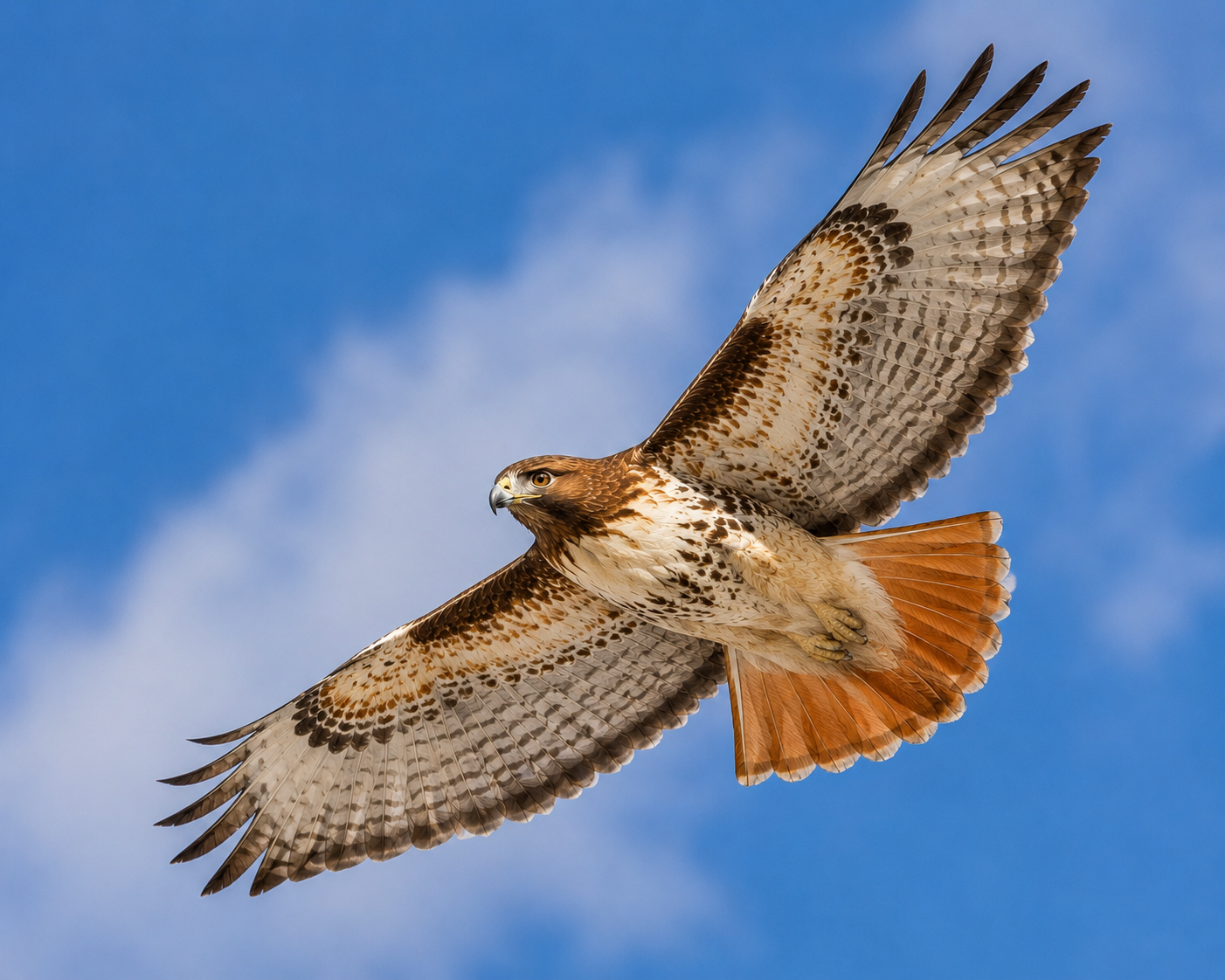
From roadside fence posts to soaring over western deserts, the Red-tailed Hawk is one of the most widespread and recognizable birds of prey in North America. Yet many birders are surprised to learn that not all Red-tailed Hawks look alike. In fact, several recognized subspecies can appear so different that they sometimes look like entirely different species.
Meet the Hawk Almost Everyone Sees
If you've spent much time driving rural roads, walking nature trails, or simply looking up, you've probably seen a Red-tailed Hawk.
Perhaps it was perched on a utility pole scanning a field for mice. Maybe it was circling high overhead, riding invisible currents of warm air. Or perhaps it gave that classic piercing scream that Hollywood often uses whenever it wants viewers to think "eagle."
Ironically, that famous movie sound is usually not an eagle at all. It's almost always a Red-tailed Hawk.
The Red-tailed Hawk (Buteo jamaicensis) is the most widespread hawk in North America. It occurs from Alaska to Panama and can be found in nearly every habitat except dense forests and treeless tundra.
For beginning birders, learning Red-tailed Hawks provides an excellent introduction to raptor identification because they are common, relatively large, and often cooperative.
But they also teach an important birding lesson:
Birds don't always look exactly like the pictures in the field guide.
A Hawk of Many Colors
Most birders learn the classic field-guide image:
Brown upperparts
Pale breast
Dark belly band
Brick-red tail
Or as I teach in my classes, the head-breast-belly pattern of the Red-tail is dark-light-dark. Simple enough, right?
Not exactly.
Red-tailed Hawks are among the most variable birds in North America. Depending on age, location, and subspecies, they may be:
Nearly white
Chocolate brown
Rusty orange
Almost black
Heavily streaked
Barely marked
This variation often confuses beginners who expect every Red-tailed Hawk to resemble the illustration in their guidebook.
Fortunately, there are several clues that remain remarkably consistent.
How to Identify a Red-tailed Hawk
Regardless of color variation, Red-tailed Hawks usually share several characteristics:
Broad Wings
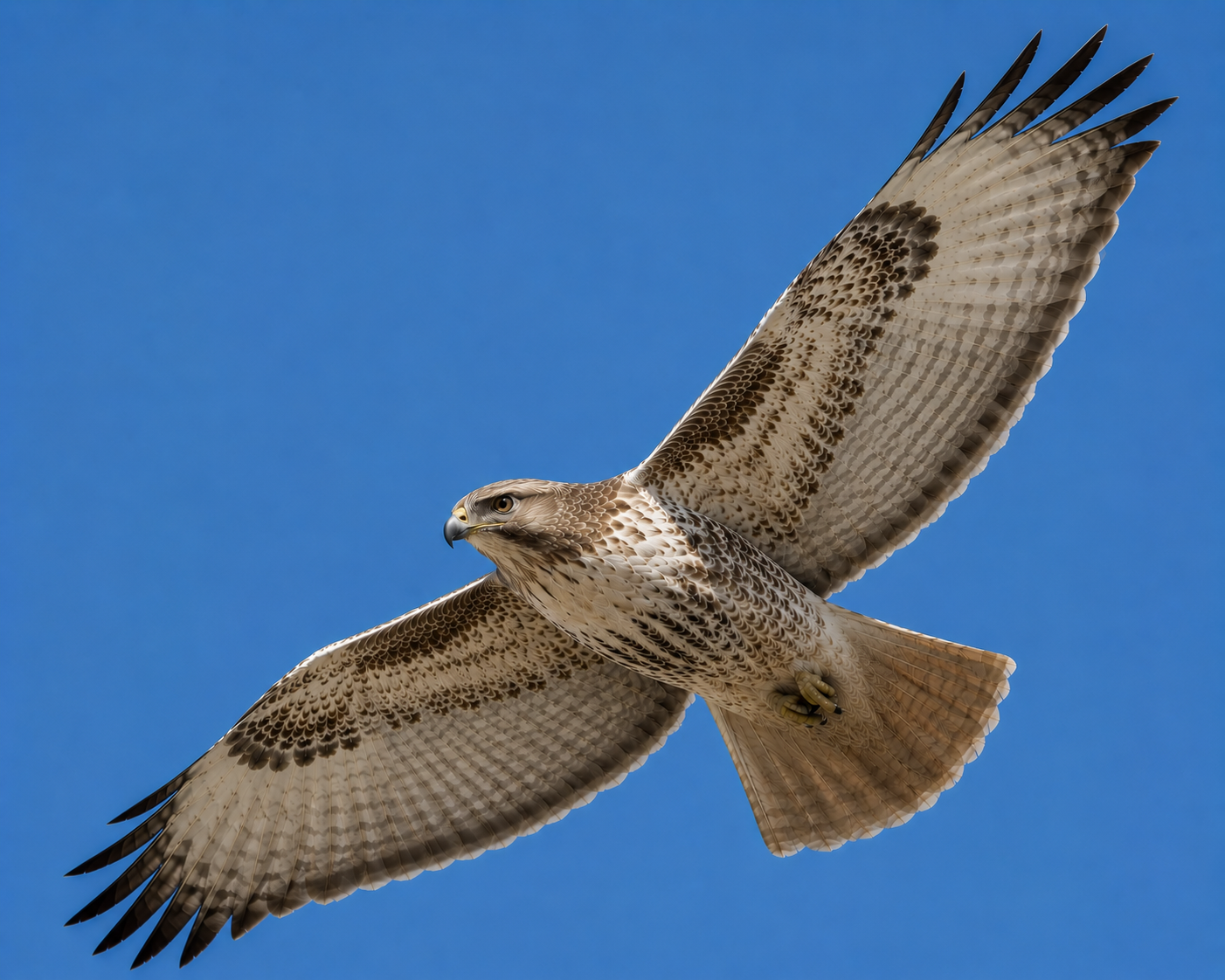
Red-tails have broad, rounded wings compared to the pointed wings of falcons.
Stocky Build
They are hefty birds with wide chests and powerful bodies.
Short, Wide Tail
Even when the tail isn't red, its shape remains useful.
Soaring Behavior
Red-tailed Hawks frequently soar in circles using thermals.
The Famous Belly Band
Many birds show a band of darker streaking across the lower belly.
This "belly band" is one of the best field marks for eastern birds.
The Dash-Comma Pattern is Diagnostic
When observing a Red-tail in flight, the wings of many Red-tails exhibit a long dash along the leading edge of each wing and a “comma” of dark feather where the flight feathers meet the shorter covering wing feathers (coverts). No other hawk shows this pattern (however, remember it can’t be seen on all individual birds).
Patience
Unlike falcons that actively chase prey, Red-tailed Hawks often hunt by waiting.
They may sit motionless for long periods before suddenly dropping onto prey.
Why So Many Subspecies?
Red-tailed Hawks occupy a huge geographic range.
Over thousands of years, populations adapted to different environments, climates, and prey bases.
These adaptations produced several recognized subspecies across North America.
While taxonomic opinions occasionally shift, birders generally recognize at least nine major North American subspecies that are useful to know.
Let's meet them.
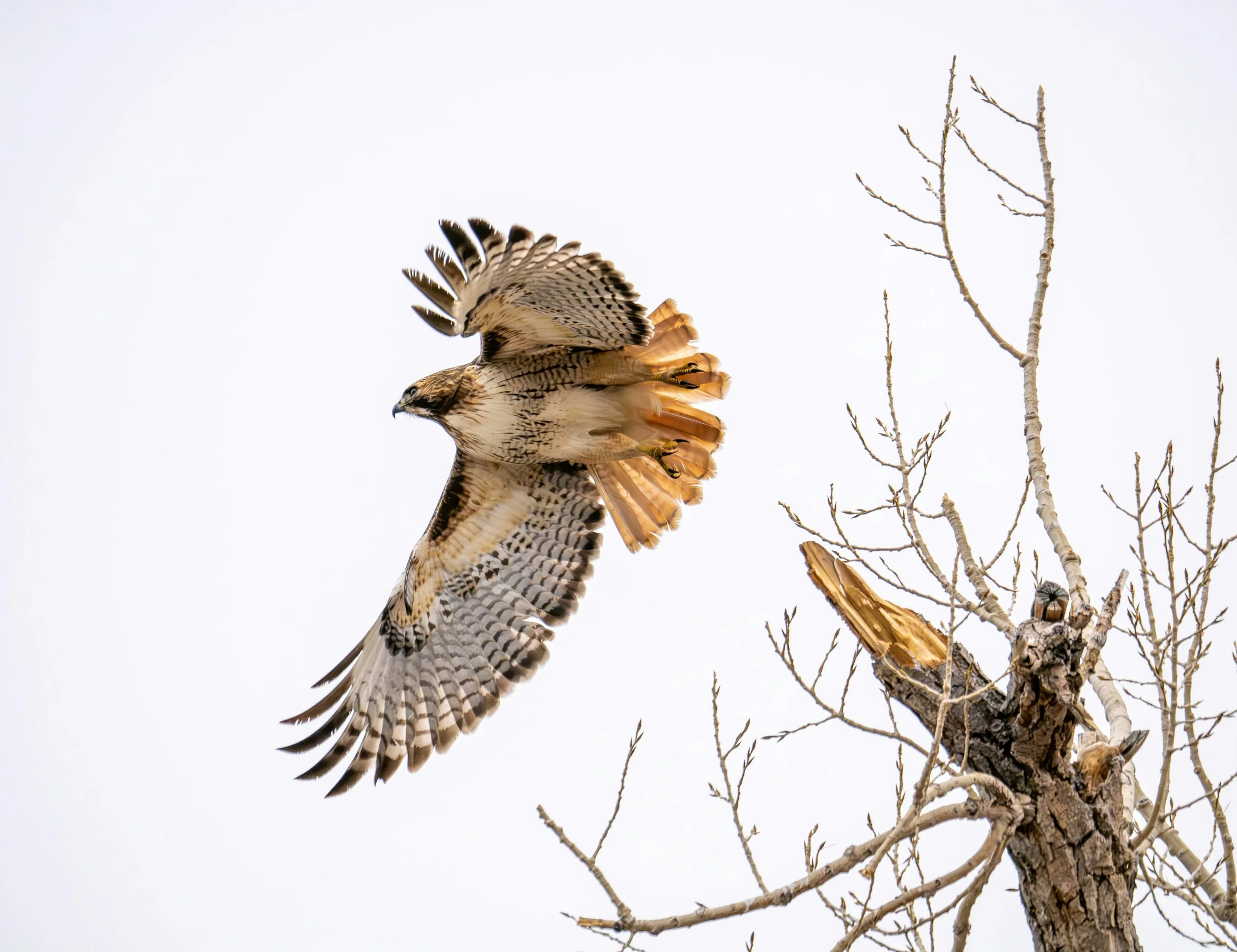
Eastern Red-tailed Hawk (Buteo jamaicensis borealis)
This is the "standard" Red-tailed Hawk featured in most field guides.
Range
Eastern United States
Southern Canada
Wintering farther south
Appearance
White throat
Pale chest
Distinct dark belly band
Rich reddish tail in adults
If you live east of the Great Plains, this is probably the Red-tailed Hawk you see most often.
For many birders, borealis becomes the mental template for all other Red-tailed Hawks.
Which is why the western subspecies can be such a surprise.
Western Red-tailed Hawk (Buteo jamaicensis calurus)
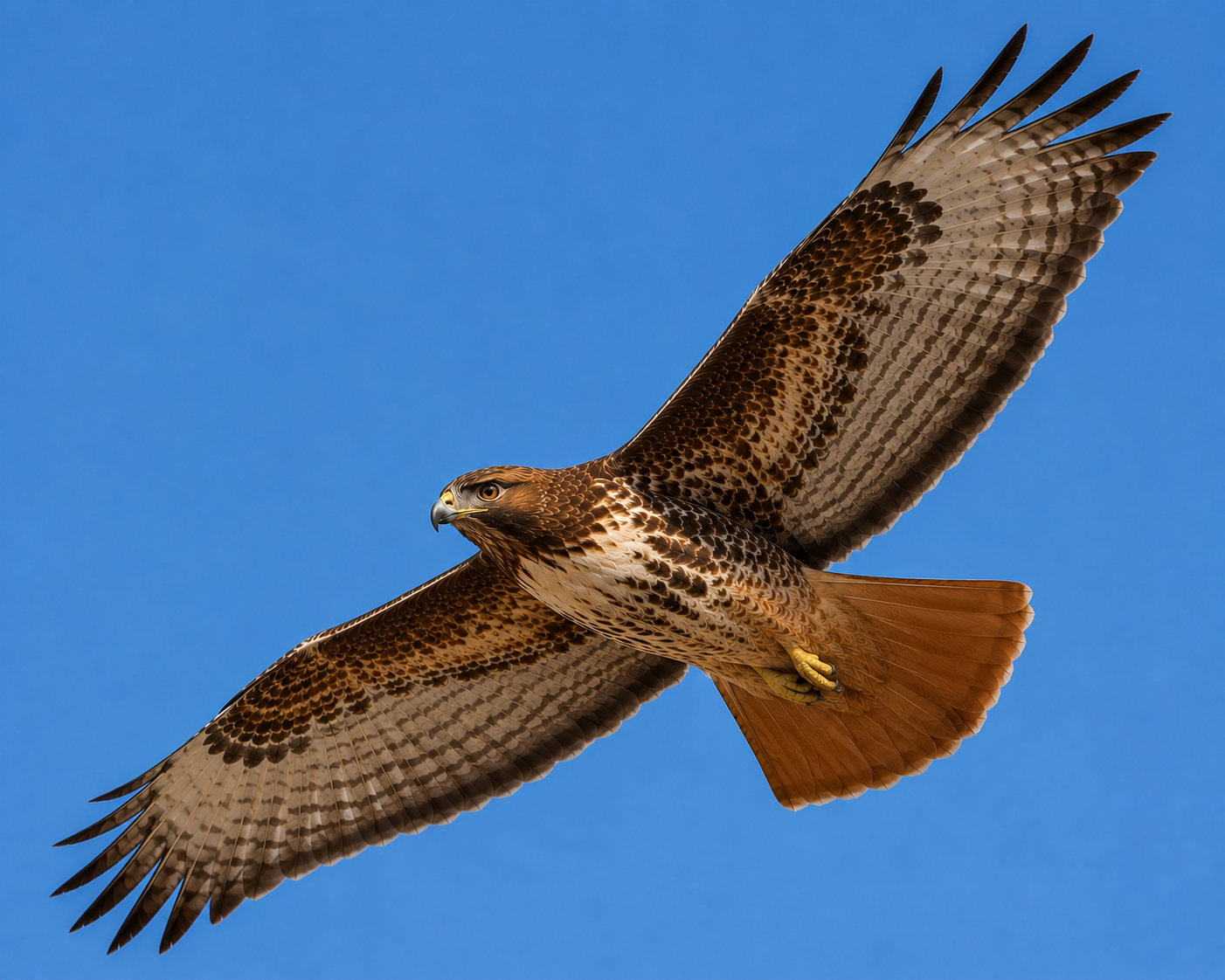
The Western Red-tail may be the most variable of all.
Range
Western North America
Rocky Mountains
Pacific Coast
Great Basin
Appearance
This subspecies can occur in multiple color morphs:
Light Morph
Similar to eastern birds but often richer in color.
Dark Morph
Chocolate brown overall with reduced contrast. Adults still show a red tail.
Rufous Morph
A stunning form featuring rich orange-red underparts and dark body coloration.
Some dark western birds are so different from eastern Red-tails that new birders often mistake them for entirely different species.
Harlan's Hawk (Buteo jamaicensis harlani)
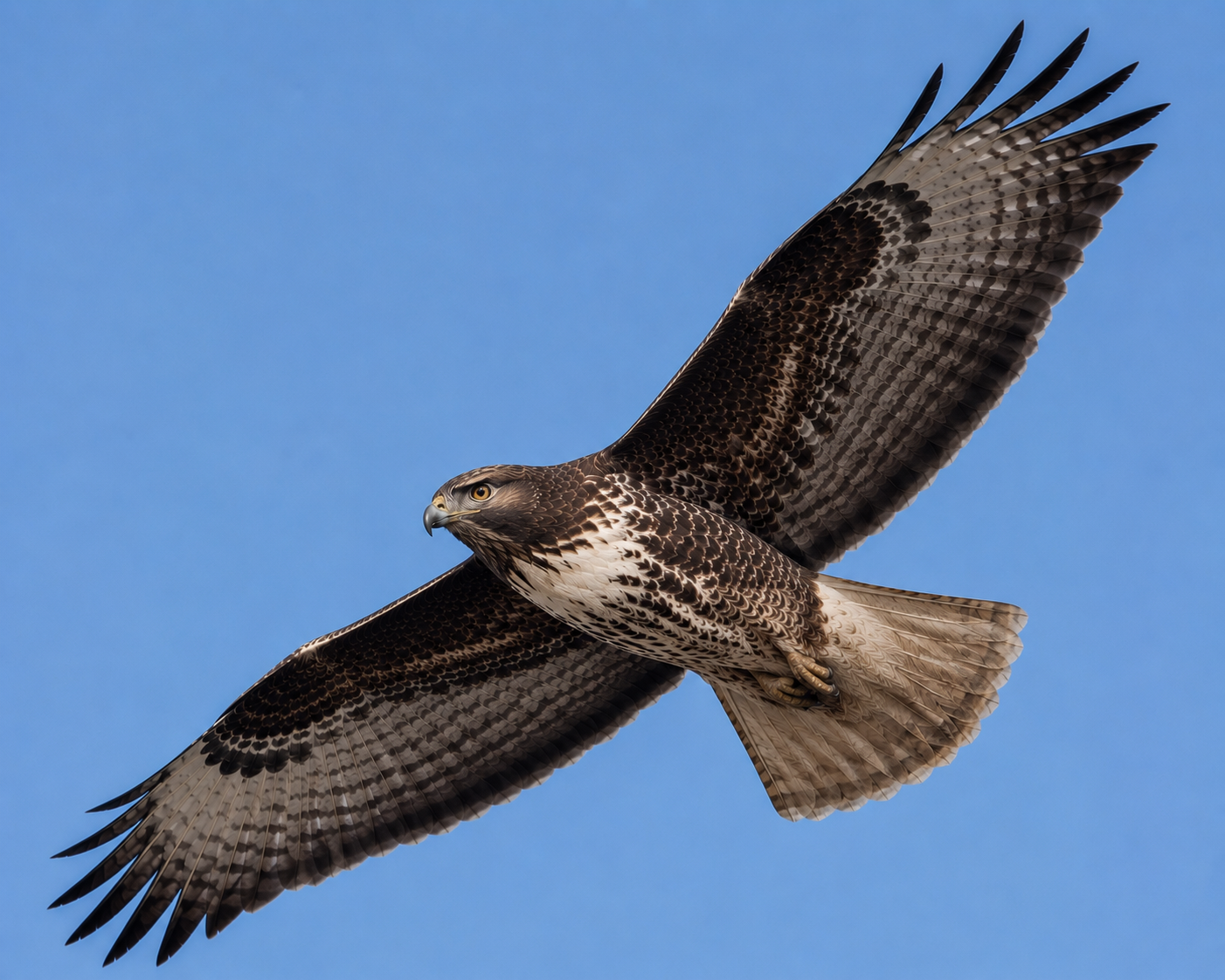
No Red-tailed Hawk causes more identification headaches.
For many years Harlan's Hawk was considered a separate species.
Today it is generally recognized as a Red-tailed Hawk subspecies.
Range
Breeds primarily in:
Alaska
Yukon
Winters across:
Great Plains
Midwest
Southern United States
Appearance
Extremely variable.
Possible features include:
Dark charcoal plumage
White mottling
Marbled tails with no red
Silver-gray highlights
Nearly black overall appearance
Some individuals scarcely resemble a traditional Red-tailed Hawk.
Finding and identifying a Harlan's Hawk is a favorite challenge among experienced birders.
Krider's Hawk (Buteo jamaicensis kriderii)
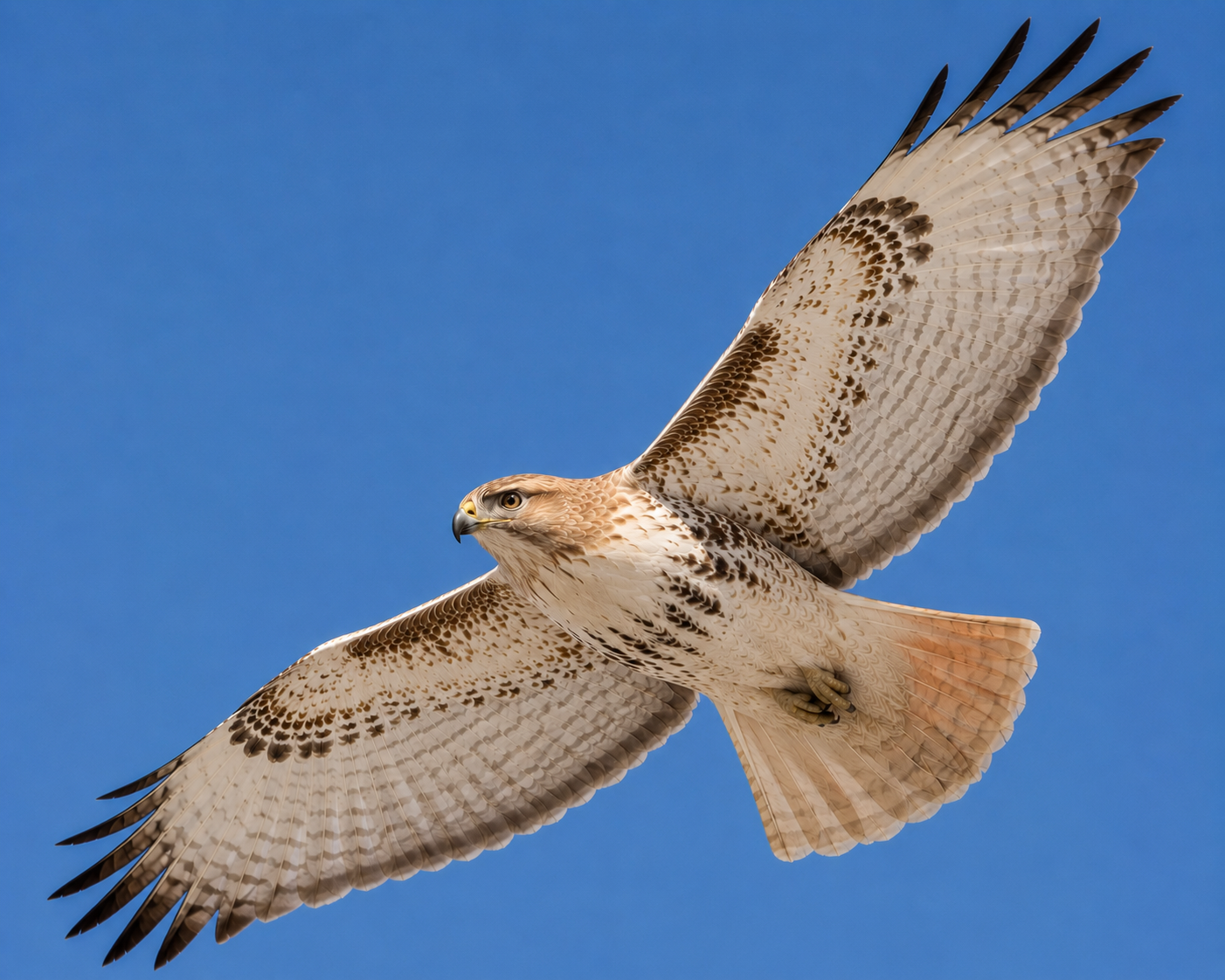
If Harlan's is the dark mystery, Krider's is the pale ghost.
Range
Northern Great Plains:
North Dakota
South Dakota
Montana
Southern Canadian Prairies
Appearance
Very pale body
Reduced belly band
Light head
Whitish tail with faint color
Krider's Hawks can appear almost washed out compared to eastern birds.
Against a bright prairie sky they can look remarkably elegant.
Fuertes' Hawk (Buteo jamaicensis fuertesi)
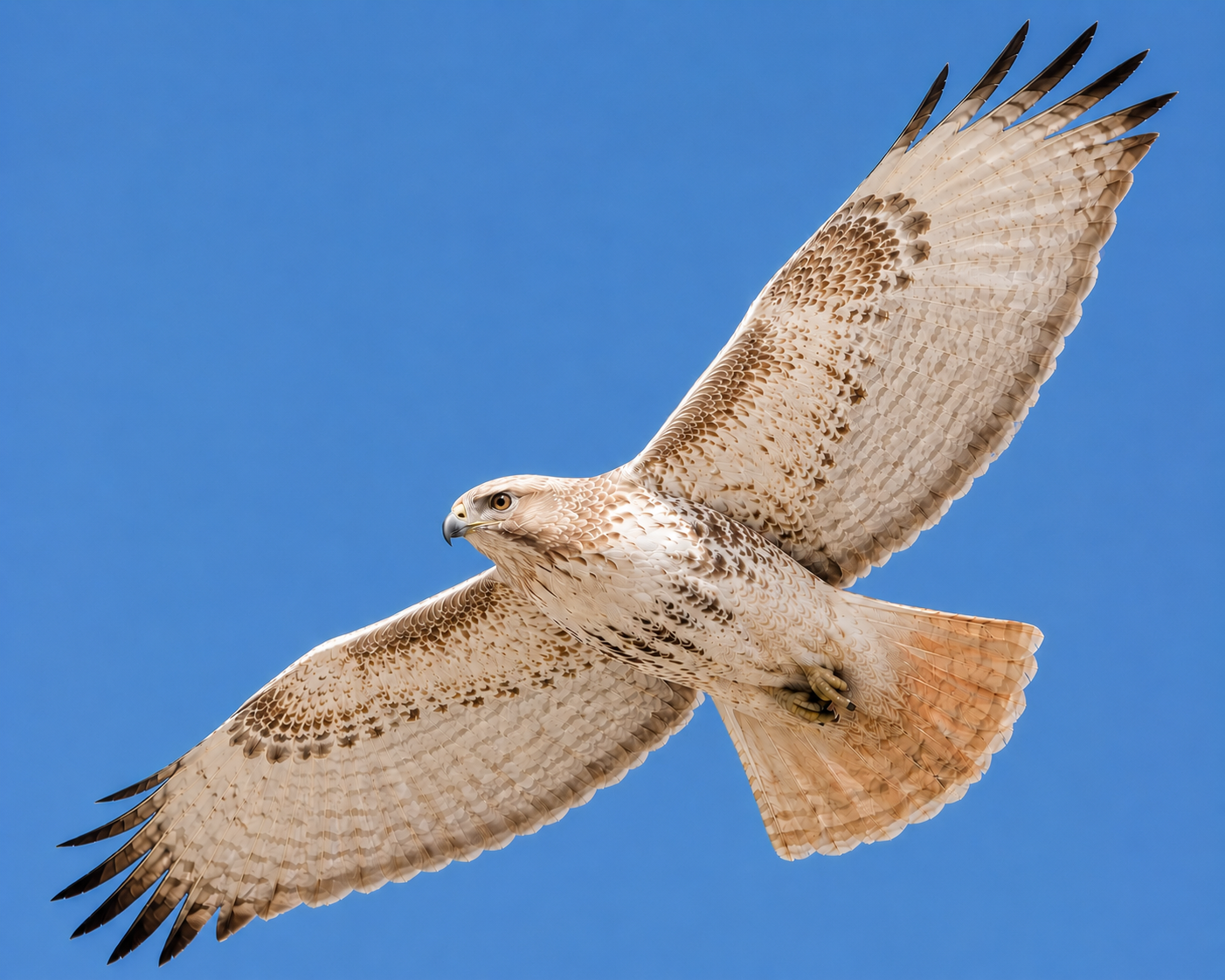
One of the least familiar subspecies.
Range
South Texas and northeastern Mexico.
Appearance
Pale overall
Reduced belly markings to a varying degree
Whitish head
Light underparts
Texas birders occasionally encounter this distinctive form, especially during winter.
Because your RBB readers include many Texas birders, this is a particularly interesting subspecies to watch for.
[At a distance. it’s light coloration (especially in a perched bird) might be mistaken for a Ferruginous Hawk]
Florida Red-tailed Hawk (Buteo jamaicensis umbrinus)
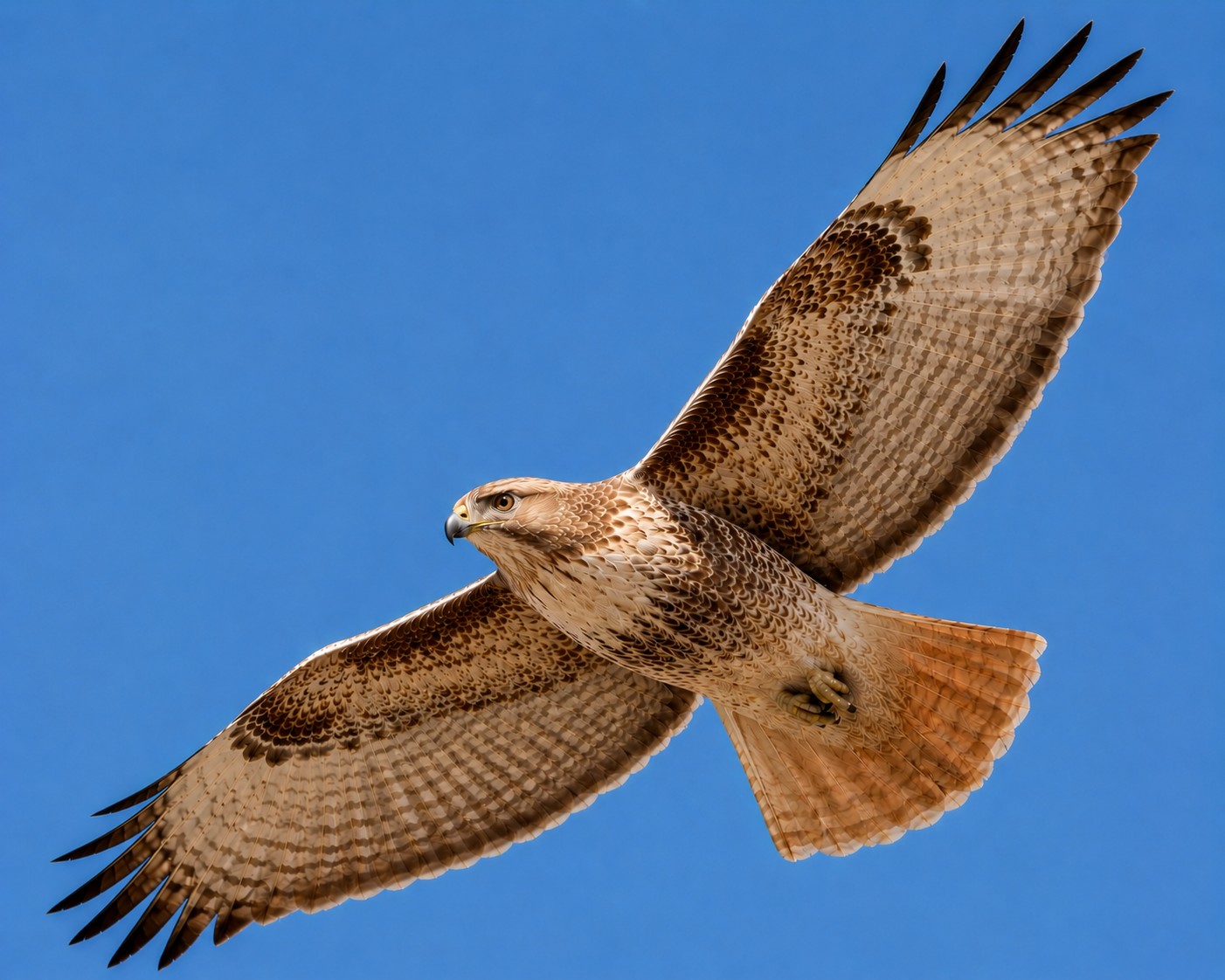
Florida's resident birds have adapted to a subtropical environment.
Range
Peninsular Florida.
Appearance
Slightly smaller
Darker overall
Richer coloration
Heavier streaking
These birds tend to be year-round residents rather than migrants.
Jamaican Red-tailed Hawk (Buteo jamaicensis jamaicensis)
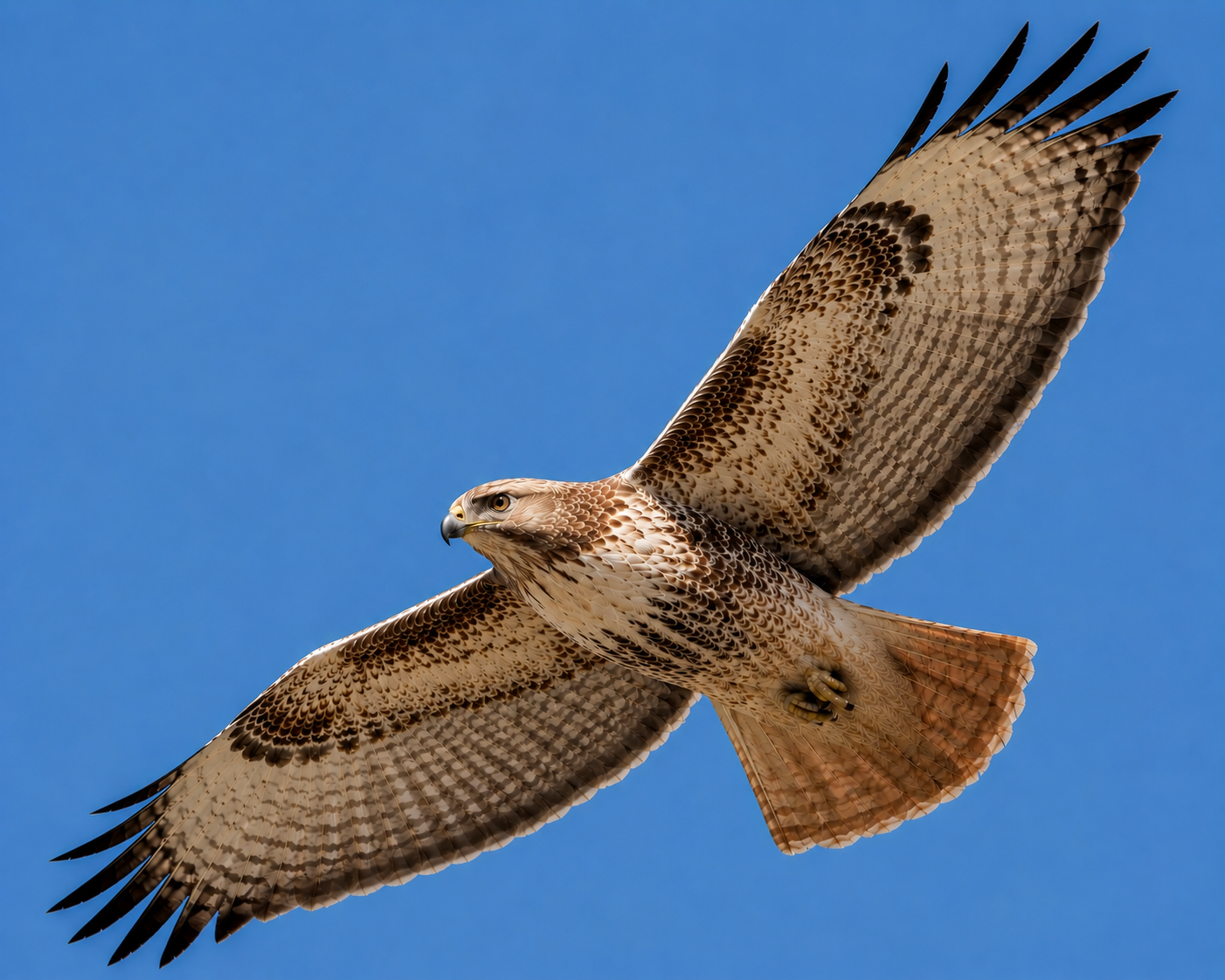
The nominate subspecies that gave the species its scientific name.
Range
Jamaica.
Appearance
Generally smaller than many mainland forms and adapted to island conditions.
Though most North American birders never encounter this subspecies, it represents the original population upon which the species description was based.
Tres Marias Red-tailed Hawk (Buteo jamaicensis fumosus)
Range
Tres Marías Islands off western Mexico.
Appearance
Generally darker and somewhat isolated from mainland populations.
Island subspecies often evolve unique characteristics due to geographic separation.
Socorro Red-tailed Hawk (Buteo jamaicensis socorroensis)
Range
Socorro Island, Mexico.
Appearance
Localized and distinctive due to long isolation.
This is one of the least-seen forms for North American birders.
Age Matters Too
As if subspecies weren't enough, age complicates matters further.
Juvenile Red-tailed Hawks do not have red tails.
Instead they show:
Brown banded tails
Less distinct coloration
Variable streaking
One of the most important field marks on a juvenile Red-tailed Hawk is a light eye. Adults have dark, brown eyes regardless of their subspecies.
Many beginning birders spend months looking at juvenile Red-tailed Hawks and wondering where the famous red tail went.
Adults typically acquire the characteristic reddish tail after their first year. But some subspecies adults show little to no red in their tail.
Hunting Skills That Make Them Successful
Part of the Red-tailed Hawk's success comes from flexibility.
They eat:
Mice
Voles
Rabbits
Ground squirrels
Snakes
Lizards
Small birds
Occasionally carrion
This adaptable diet allows them to thrive across a huge range of habitats.
A Red-tail can hunt:
Open prairie
Ranchland
Forest edges
Agricultural fields
Suburban areas
Desert landscapes
Few North American raptors are as versatile.
Why Do They Sit on Utility Poles?
Beginning birders often ask this question.
The answer is simple:
Utility poles make excellent hunting perches.
From a raised vantage point, a Red-tailed Hawk can scan large areas while conserving energy. They can see up to a mile from their perch depending upon the size of the prey and weather conditions.
Rather than constantly flying, the hawk waits for prey to reveal itself.
This strategy helps explain why Red-tails are so frequently observed from highways.
In fact, many birders identify their first Red-tailed Hawk from a car window.
Migration Patterns
Migration varies widely.
Northern birds often migrate south.
Southern birds may remain year-round.
Some populations move only short distances while others travel hundreds or even thousands of miles.
This means winter birders in Texas may encounter local birds plus migrants from Canada, Alaska, or the northern Great Plains.
The diversity of subspecies can become especially noticeable during migration and winter.
Red-tailed Hawk vs. Red-shouldered Hawk
Beginning birders often confuse these two species.
Red-tailed Hawk
Larger
Broader wings
Often found in open country
Usually shows belly band
Red tail in adults
Red-shouldered Hawk
Smaller
More strongly barred underparts
Prefers woodlands
Distinctive checkered wings
Different call
Learning these differences is one of the first major milestones in raptor identification.
Conservation Success Story
Unlike many birds facing significant population declines, Red-tailed Hawks have generally adapted well to human-modified landscapes.
Open agricultural areas often create excellent hunting habitat.
Protection under federal laws also helped raptor populations recover following pesticide-related declines during the mid-20th century.
Today Red-tailed Hawks remain among the most successful and widespread birds of prey in North America.
A Perfect Bird for Learning Raptors
If you're interested in becoming a better birder, few species offer more opportunities for learning than the Red-tailed Hawk.
They teach:
Shape recognition
Flight style
Behavior-based identification
Geographic variation
Age-related plumage changes
Subspecies diversity
Most importantly, they remind us that bird identification is rarely about matching a single picture.
Birds are living, variable creatures.
The more time you spend observing Red-tailed Hawks, the more you'll appreciate just how much diversity exists within a single species.
And someday, when a strangely pale Krider's Hawk glides over a prairie or a dark Harlan's Hawk appears on a winter fence post, you'll understand why experienced birders get so excited about a bird many people simply call "a hawk."
The Red-tailed Hawk isn't just North America's most familiar hawk.
It's one of its most fascinating.
Continue Learning Bird Identification
If you enjoyed learning about Red-tailed Hawks, continue building your bird identification skills with these popular Rather Be Birding articles:
The more bird families you learn, the faster you'll recognize birds in the field—and few bird families are more rewarding than North America's magnificent raptors.
