

The Power of Slow Birding:
Why Seeing Less Can Help You Learn More
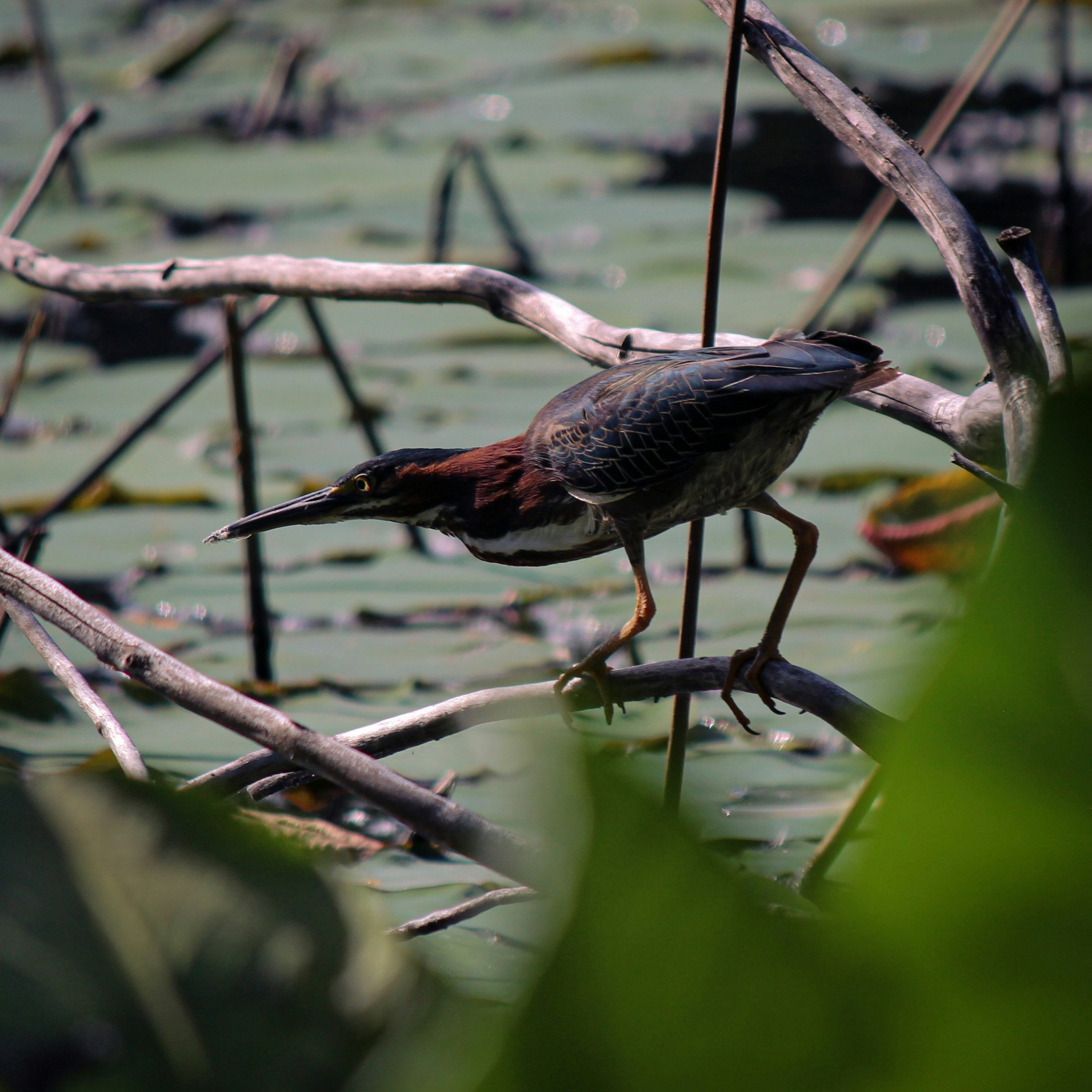
"The birds were there all along. I just finally slowed down enough to notice them."
Modern life encourages us to move fast.
We rush through our workdays. We skim articles instead of reading them. We multitask while watching television. Even our hobbies can become competitions if we're not careful.
Birding is no exception.
Many of us start birding with a goal of finding more birds, identifying more species, and building longer life lists. There is absolutely nothing wrong with that. Lists can be fun. Challenges can be motivating. Travel can introduce us to incredible species and habitats.
But somewhere along the way, some birders discover something unexpected.
The birds become more meaningful when we slow down.
This approach has become known as slow birding, and it may be one of the most powerful skills you can develop if your goal is to become a better birder.
Slow birding isn't about seeing fewer birds. It's about seeing birds more completely.
It's about observation over accumulation.
It's about mindfulness over hurry.
It's about connection over competition.
And perhaps surprisingly, slow birding often helps you identify birds faster and more accurately in the long run.
Let's explore why.
What Is Slow Birding?
Slow birding is exactly what it sounds like.
Instead of constantly moving from one bird to the next, you spend more time observing the birds already in front of you.
You might watch a single Carolina Chickadee for five minutes.
You might spend twenty minutes observing a Great Blue Heron hunting along a shoreline, watching in awe as it stands motionless waiting for the perfect moment to strike the fish swimming at its feet.
You might sit quietly beside a feeder and simply watch interactions among cardinals, finches, chickadees, and woodpeckers. You come away with a clearer understanding of the term pecking order.
The goal is not necessarily to add species.
The goal is to learn.
When you slow down, details begin to emerge.
You notice behaviors.
You notice posture.
You notice feeding styles.
You notice social interactions.
You notice habitat preferences.
Most importantly, you start recognizing patterns.
Those patterns are what experienced birders rely on every day.
Why Beginners Often Rush
Many beginning birders feel pressure to identify everything immediately.
A bird appears.
They flip through the field guide.
Check an app.
Look at photos online.
Try to find the name.
Move on.
The problem is that bird identification is much more than matching pictures.
Birds move.
Birds change posture.
Birds change plumage.
Birds appear in different lighting conditions.
Birds may only be visible for a few seconds.
If your only strategy is matching visual details, birding can quickly become overwhelming.
That's one reason we discussed behavior in our postBirding by Behavior: The Secret Skill Beginners Often Ignore.
Behavior often tells you as much as color.
Sometimes it tells you more.
Slow birding gives you time to notice those clues.
Instead of asking:
"What bird is that?"
You begin asking:
"What is that bird doing?"
That small shift can transform your birding.
Observation Beats Memorization
Many new birders think experienced birders know thousands of field marks.
The reality is often much simpler.
Experienced birders are excellent observers.
They notice patterns.
They recognize familiar behaviors.
They understand habitats.
They know what looks unusual.
That's why experienced birders often seem to identify birds so quickly.
As we discussed in Why Experienced Birders ID Birds Faster, speed usually comes from recognition rather than memorization.
Recognition develops through repeated observation.
And repeated observation requires time.
The more time you spend watching birds, the more your brain learns what "normal" looks like.
Then unusual birds become easier to recognize.
Learning Bird Behavior
One of the greatest benefits of slow birding is learning behavior.
Every bird family behaves differently.
Woodpeckers climb.
Nuthatches move headfirst down trunks.
Wrens flick their tails.
Flycatchers sally out and return to the same perch.
Shorebirds probe, peck, or chase prey depending on species.
Herons stalk.
Gulls patrol.
Swallows sweep through the air.
These behaviors become incredibly useful identification clues.
Imagine watching a small gray bird for only two seconds.
Difficult.
Now imagine watching it for five minutes.
You notice it repeatedly flies from a branch, catches insects in midair, and returns to the same perch.
Suddenly you've gathered valuable information.
You may be looking at a flycatcher.
Behavior narrowed the possibilities long before field marks did.
Slow birding helps you build this behavioral library.
Over time, identification becomes easier because you're recognizing patterns rather than solving puzzles from scratch.
Mindfulness and Birding
Birding may be one of the easiest forms of mindfulness available.
Mindfulness simply means paying attention to the present moment.
Birds naturally encourage this.
A singing meadowlark doesn't care about your inbox.
A hunting egret isn't worried about tomorrow's schedule.
Birds exist entirely in the present.
When we watch them carefully, we often find ourselves doing the same.
You notice the breeze moving through grasses.
You hear distant songs.
You watch sunlight changing across a marsh.
You become immersed in the experience.
Many birders describe this as one of the reasons they continue birding for decades.
The birds matter.
But the feeling matters too.
Slow birding creates space for both.
Birding as Stress Relief
Modern research continues to show connections between time in nature and reduced stress.
Most birders don't need a study to tell them this.
They've experienced it firsthand.
After a difficult week, an hour outdoors often feels restorative.
Birds encourage us to slow down.
They encourage us to look up.
They encourage us to pay attention.
When birding becomes a race to find the next species, some of those benefits can diminish.
Slow birding reminds us that every outing doesn't have to be productive.
Every walk doesn't need a rarity.
Every trip doesn't need a personal record.
Sometimes the best birding day is simply a peaceful one.
Some of my favorite birding memories involve common birds.
A Carolina Wren singing from a fence.
A family of Eastern Bluebirds feeding young.
A Red-tailed Hawk soaring overhead.
None of these added new species to a list.
But they created lasting memories.
Building a Deeper Connection
Slow birding encourages something many people seek but rarely discuss.
Connection.
You begin noticing seasonal changes.
You recognize individual territories.
You learn where certain birds nest.
You know when migration begins.
You anticipate arrivals and departures.
The local pond becomes familiar.
The neighborhood park becomes meaningful.
The trail develops stories.
Birds become more than names.
They become neighbors.
This deeper connection often creates stronger conservation awareness as well.
People protect what they understand.
People value what they know personally.
Slow birding helps create those relationships.
A Simple Slow Birding Exercise
If you've never intentionally practiced slow birding, try this exercise.
Choose one bird.
Just one.
Watch it for five minutes.
Don't identify another bird.
Don't check your phone.
Don't move on.
Simply observe.
Ask yourself:
What is it eating?
How does it move?
Is it alone?
Is it vocalizing?
Does it seem territorial?
How does it react to other birds?
Where does it spend most of its time?
You may be surprised how much information appears.
Five minutes can reveal more than dozens of quick sightings.
The Power of a Sit Spot
Another popular slow birding technique is using a "sit spot."
Choose a comfortable location.
Visit regularly.
Stay still.
Observe.
Many birders discover that birds come closer when we stop moving.
The landscape becomes quieter.
Wildlife resumes normal behavior.
Patterns emerge.
You begin noticing species you previously overlooked.
A sit spot can be a backyard chair, a park bench, a marsh overlook, or a woodland trail.
Consistency is the key.
The same location changes dramatically through seasons.
Slow birders learn those changes firsthand.
Slow Birding Makes You a Better Birder
At first glance, slowing down might seem like the opposite of becoming a skilled birder.
The reality is exactly the opposite.
Slow birding strengthens nearly every important birding skill.
It improves observation.
It improves behavior recognition.
It improves habitat awareness.
It improves listening skills.
It improves patience.
It improves memory.
All of these contribute to better identification.
The irony is that birders who slow down often become more efficient identifiers later because they've developed stronger observational foundations.
Connecting Slow Birding to the Be a Better Birder Series
If you've been following our Be a Better Birder series, you've probably noticed a recurring theme.
The best birders don't necessarily know more facts.
They notice more.
Slow birding supports nearly every skill we've discussed:
Birding by Behavior
Behavior becomes easier to recognize when you spend time watching birds rather than chasing them.
Why Experienced Birders ID Birds Faster
Fast identification often comes from years of careful observation.
Relative Size
Slow observation allows you to compare birds against nearby species and surroundings.
Learning Bird Families
Family traits become obvious when you watch multiple related species behaving naturally.
How to Use a Field Guide
Field guides work best after careful observation has provided meaningful clues.
Eliminating ID Overwhelm
Instead of trying to identify everything, focus deeply on one bird at a time.
Invite a Friend Birding
Slow birding creates wonderful opportunities for conversation, teaching, and shared discoveries.
All of these skills reinforce one another.
Are You Equipped for Slow Birding?
Do you have helpful binoculars? Maybe a journal to record your observations and learning experiences? Check Amazon for all your shopping needs.
Final Thoughts
Birding doesn't have to be a race.
The birds aren't going anywhere.
Well, some of them are migrating—but you know what I mean.
You don't need a rare bird every weekend.
You don't need a longer list than someone else.
You don't need to identify every bird instantly.
Sometimes the most rewarding birding happens when you stop chasing and start observing.
Watch longer.
Listen carefully.
Notice behavior.
Pay attention to habitat.
Enjoy the moment.
The next time you're out birding, challenge yourself to slow down.
Pick one bird and really watch it.
You might not add a new species to your list.
But you may gain something even more valuable.
A deeper understanding of birds.
A stronger connection to nature.
And perhaps a reminder that slowing down isn't just good for birding.
It's good for us, too.
