

For the Birds and for Yourself
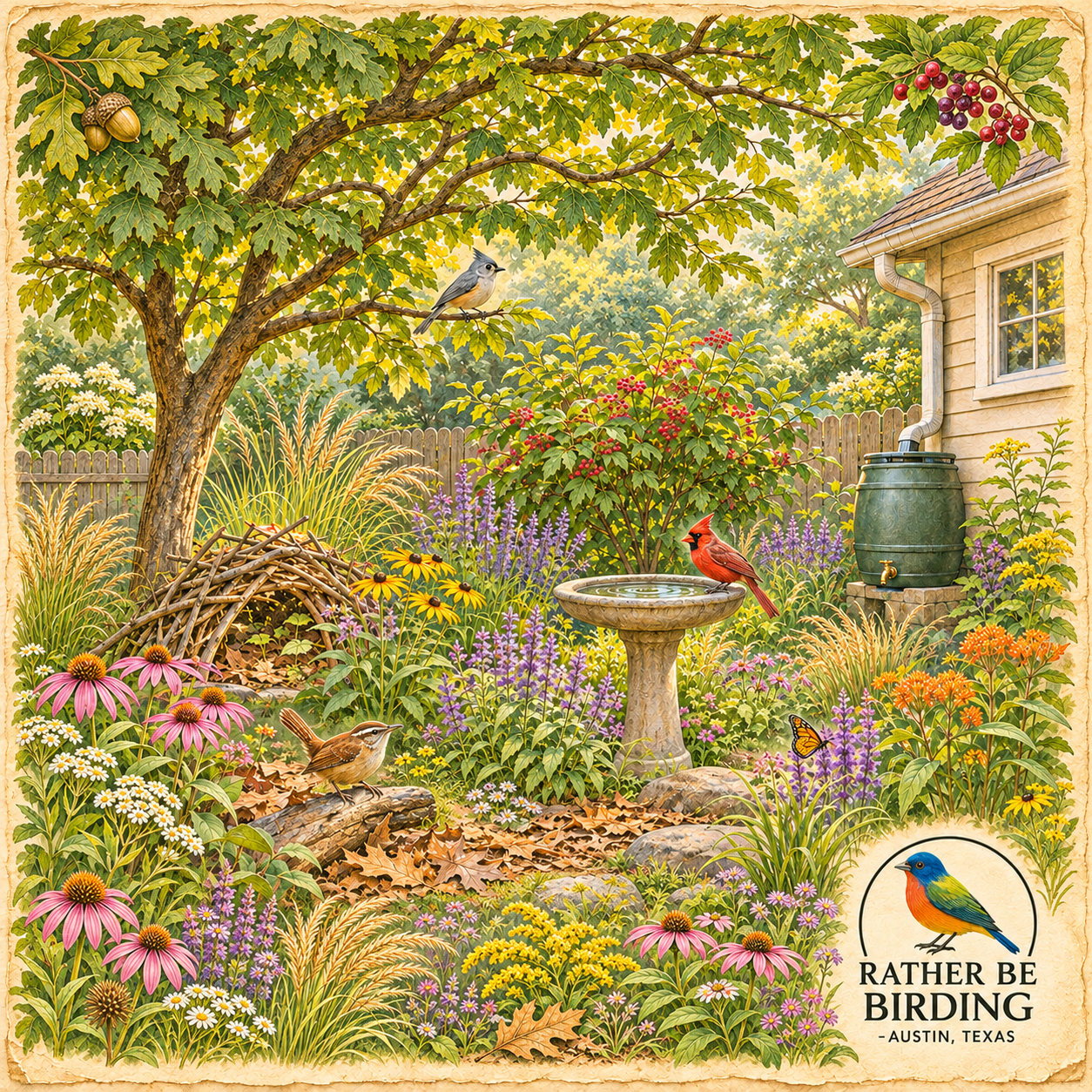
There is a moment in backyard birding when the familiar yard begins to look different. You notice that the cardinal disappears into the shrub after feeding. You hear a wren calling from the brush pile you almost hauled away. A butterfly visits the flowers, a bee works the last bloom of the afternoon, and a thirsty bird takes its turn at the shallow dish by the patio.
That is when a yard stops being a picture we arrange and starts becoming a place that supports life.
Creating a sustainable backyard does not mean turning your property into a wilderness or signing up for a long list of chores. It means making thoughtful choices that use resources well and give birds what they need: food, clean water, places to shelter, safe places to raise young, and room to move through the landscape. It means working with the conditions you have instead of fighting them every season.
And it can be deeply satisfying. A sustainable yard can be more alive, more interesting, and often easier to care for than a space that depends on constant watering, chemical treatments, and weekly tidying. You do not need to do everything at once. One native shrub, one safer window, one clean water source—each is a real beginning.
What does a sustainable backyard look like?
It looks different from one place to another. A small Austin patio, a suburban lawn in Ohio, and a shady lot in the Pacific Northwest will not support the same plants or birds. Sustainability starts with noticing your local conditions: sun and shade, soil, rainfall, heat, cold, and the species that already live nearby.
The goal is not a perfect yard. The goal is a living yard that can keep doing its work with less waste and less intervention. Native and well-adapted plants can provide seeds, berries, nectar, caterpillars, and shelter. Trees and shrubs create layers birds can use. Leaf litter and a modest brush pile offer cover and habitat for insects. Water is available without being wasted. Windows are made more visible to birds. Feeding stations are clean and managed responsibly.
Think of the yard as a small part of a much larger habitat. Birds do not recognize property lines. A patch of useful habitat can help connect a park, creek corridor, greenbelt, or neighboring garden. Even a modest space can provide a resting and feeding stop for birds moving through the neighborhood.
Start with what is already working
Before buying plants or supplies, walk your yard slowly. Where do birds already perch? Which areas stay damp? Where is the afternoon sun strongest? Is there a quiet corner where leaves could remain? Does a shrub provide cover, even if it is not a plant you would choose today?
Make a simple sketch if that helps. Mark the trees, structures, sunny spots, water sources, windows, and places you use most. Then watch for a few days. Notice where birds feed, where they retreat, and which parts of the yard stay empty. This small bit of observation can prevent expensive guesswork.
Keep the healthy trees and shrubs you already have whenever you can. Mature plants offer shade and structure that take years to replace. If a plant is not invasive and is not causing a safety problem, consider whether it can remain while you add more useful habitat around it. Sustainable gardening is often about adding, adapting, and reducing over time—not clearing everything out for a dramatic makeover.
Plant for the place you live
Plants native to your region are adapted to local conditions and have relationships with local wildlife. Many native plants host the caterpillars that songbirds need to feed their young. Others produce berries or seeds, attract pollinators, or offer cover through the seasons. The right plants also tend to need less extra water once established, though every new planting needs care while its roots settle in.
Choose plants for the conditions in your own yard, not just because a label says “native.” A sun-loving prairie flower may struggle in deep shade. A shrub that thrives in moist soil may fail on a hot, dry slope. Ask a local native plant society, county extension office, botanical garden, or knowledgeable nursery for recommendations suited to your ecoregion and site.
Whenever possible, build a few layers: ground-level plants, flowers and grasses, shrubs, and trees. Not every yard has room for every layer, but even a small shrub can make a difference. Ground-feeding birds may search among leaf litter; wrens and sparrows use dense cover; cardinals often move between shrubs and feeders; and many birds forage in tree canopies. Layers offer more choices than a closely mowed lawn.
Plant for a sequence of benefits across the year. Look for a mix of flowering times, seed heads that can remain through winter, and fruiting plants that feed birds when insects are scarce. Leave some stems standing and some seed heads intact until spring cleanup. The tidy garden impulse is understandable, but a garden that is stripped bare at the first sign of fall has less to offer wildlife.
Avoid planting invasive species, even if they are attractive or easy to grow. Check local guidance before buying unfamiliar plants, and remove invasive plants in manageable stages so you do not leave bare soil or eliminate cover all at once. If you use a nursery, ask whether its plants have been treated with systemic insecticides. When in doubt, seek plants from trusted local sources.
Save water without making the yard less welcoming
Water is precious, especially in places where summers are hot and rainfall is unpredictable. Group plants with similar water needs, use mulch to help soil hold moisture, and water deeply when new plants need it instead of giving every area a little splash every day. Drip irrigation or a soaker hose can direct water toward roots with less evaporation than overhead spraying.
Rain barrels can capture water from a roof for later garden use, where local rules and conditions allow. A rain garden can help slow runoff, but it needs the right location and plants; start with local advice before digging or changing drainage. For a simpler first step, direct downspouts toward a planted area where water can soak in safely rather than running straight across pavement.
Birds need water too. A shallow basin in a visible, open spot can provide drinking and bathing opportunities. Keep it clean, refresh the water regularly, and place it where birds have nearby cover but a clear view of approaching danger. A rough surface or a few stones can help smaller birds find secure footing. In freezing weather, a heated birdbath can help if you can maintain it safely; otherwise, fresh unfrozen water when practical is a useful contribution.
Let nature do more of the work
Pesticides can harm the insects birds eat, including the caterpillars many parent birds gather for nestlings. They can also affect birds directly or move through the food web. A sustainable yard leaves room for insects and accepts that a few chewed leaves are part of a living garden.
When a plant has a pest problem, first identify what is happening. Sometimes the damage is temporary, or beneficial insects are already responding. Improve plant health, choose plants suited to the site, and use physical barriers or targeted methods only when needed. Avoid broad-spectrum sprays, particularly on flowering plants or near water. If a product is necessary, read and follow its label exactly and keep it away from birds, pollinators, and runoff.
Leaves are not trash. A thin layer under trees and shrubs can shelter insects, feed the soil as it breaks down, and reduce the need for bagged mulch. You can rake leaves off paths and lawns, then tuck them beneath plants or compost them. Leave some bare, open ground too: not every bird wants dense cover, and some native bees nest in soil.
Make the yard safer for birds
Habitat is only helpful if birds can use it safely. Window collisions are a major risk, especially where glass reflects trees or sky. If birds hit a window, treat that pane rather than waiting for another collision. Exterior screens, closely spaced visual markers, or tested bird-safe films can make glass more visible. A single decal with wide gaps between stickers is usually not enough; the pattern needs to cover the area birds see as open sky or vegetation.
Keep cats indoors or provide a secure outdoor enclosure. This protects cats as well as birds and other wildlife. If you feed birds, place feeders where you can keep them clean and monitor activity. Clean feeders regularly, store seed dry, and remove spoiled food. If sick birds appear, take feeders down temporarily and follow current advice from wildlife or public health authorities in your area.
During nesting season, give active nests space. Avoid trimming shrubs where birds are nesting, and keep dogs and people from repeatedly approaching the nest. A nest box can help some cavity-nesting species, but it should be built to the right specifications, placed appropriately, and monitored responsibly. Boxes are one tool within habitat—not a substitute for it.
Feeders are optional; habitat is essential
Feeders bring birds close enough to study and enjoy, and they can supplement natural food. But a sustainable backyard does not depend on a feeder. A yard with native plants, safe water, shelter, and insects can support birds even when no seed is hanging from a pole.
If you choose to feed, match the food and feeder to birds in your region, clean equipment, and pay attention to where seed lands. A tray beneath a feeder can reduce waste and discourage rodents. Keep feeders at a safe distance from windows or use a placement strategy recommended by bird-safety organizations for your circumstances. If you cannot maintain feeders consistently, it is fine to pause them. The birds still have the habitat you have planted and protected.
Two simple DIY projects
1. Make a shallow bird-bath station
Use a wide, shallow dish—such as a sturdy plant saucer—and set it on a stable pedestal or low platform in a spot you can see and clean. Add a few clean, rough stones so birds of different sizes have places to stand. Keep the water shallow, refresh it often, and scrub the dish routinely without leaving soap or chemical residue. Place it near shrubs for a quick escape route, but not so close that a lurking cat can hide beside it.
This project takes only a few minutes to set up, and you can adjust the height and location after watching how birds use it. If you want moving water, a small recirculating solar bubbler can add motion, but it is optional. Fresh, clean water matters more than a gadget.
2. Build a modest brush shelter
Choose a quiet corner away from doors, play areas, and sightlines where brush will be a nuisance. Lay a few sturdy branches on the ground to create a base, then loosely stack smaller prunings on top, leaving gaps and openings. Do not use treated wood, thorny trimmings where people walk, or invasive plant material that could spread. Keep the pile modest and stable, and check it after storms.
A brush shelter can offer cover to small birds and wildlife, especially when shrubs are sparse. It also gives useful branches a second life. If you have a small yard, make a compact pile beneath an existing shrub instead. Keep it away from buildings and follow local fire-safety guidance, especially in dry climates.
The benefits reach beyond the fence
For birds, sustainable yards provide more than a quick meal. They can offer nesting materials, shelter during bad weather, insects for growing chicks, water during dry spells, and safe places to pause between larger habitat patches. No single backyard can solve the challenges birds face, but many connected yards can create a more welcoming neighborhood landscape.
For you, the benefits arrive in small, daily moments. You may find yourself learning which birds use the shrub you planted, or recognizing the call of a visitor before you see it. You might spend less time mowing and more time watching. Shade can make an outdoor space more comfortable; healthier soil can need less maintenance; and a garden alive with birds and pollinators offers a changing view through every season.
There is also the quiet satisfaction of knowing that your choices line up with your values. You are not expected to make your yard perfect or carry the whole responsibility for conservation. You are choosing to make one small place more useful to life. That is meaningful work—and it is work we can enjoy.
Start with one change
Choose one action that fits your time, space, and budget. Plant a locally appropriate shrub. Let a patch of leaves remain. Add a shallow water dish and keep it clean. Make a window safer. Replace a section of lawn with flowers and grasses suited to your region. Remove one invasive plant and replace it with something that feeds birds. Then give the change time and watch what happens.
Birding has taught me that paying attention changes what we see. A sustainable backyard begins with that same attention: to the birds already here, to the needs of the place, and to the small choices we can keep making. We do not have to do everything. We can begin where we are, make room for more life, and let the yard teach us what comes next.
Skill Builder -
Spend ten quiet minutes watching one part of your yard. Note which birds use it, what they do there, and what the space offers: food, water, cover, or a safe route through. Pick one small change that could make that spot more useful, then check back in a few weeks.
Your backyard does not need to be large or polished to matter. Make it welcoming, make it safer, and enjoy the birds who find their way there.

A sustainable backyard can be lively, practical and easierr to care for. Learn how native plants, clean water, safer windows, and two simple DIY projects can help birds - and make your yard more enjoyable for you.