

Experienced Birders ID Birds Faster
And How You can Learn to Do It Too
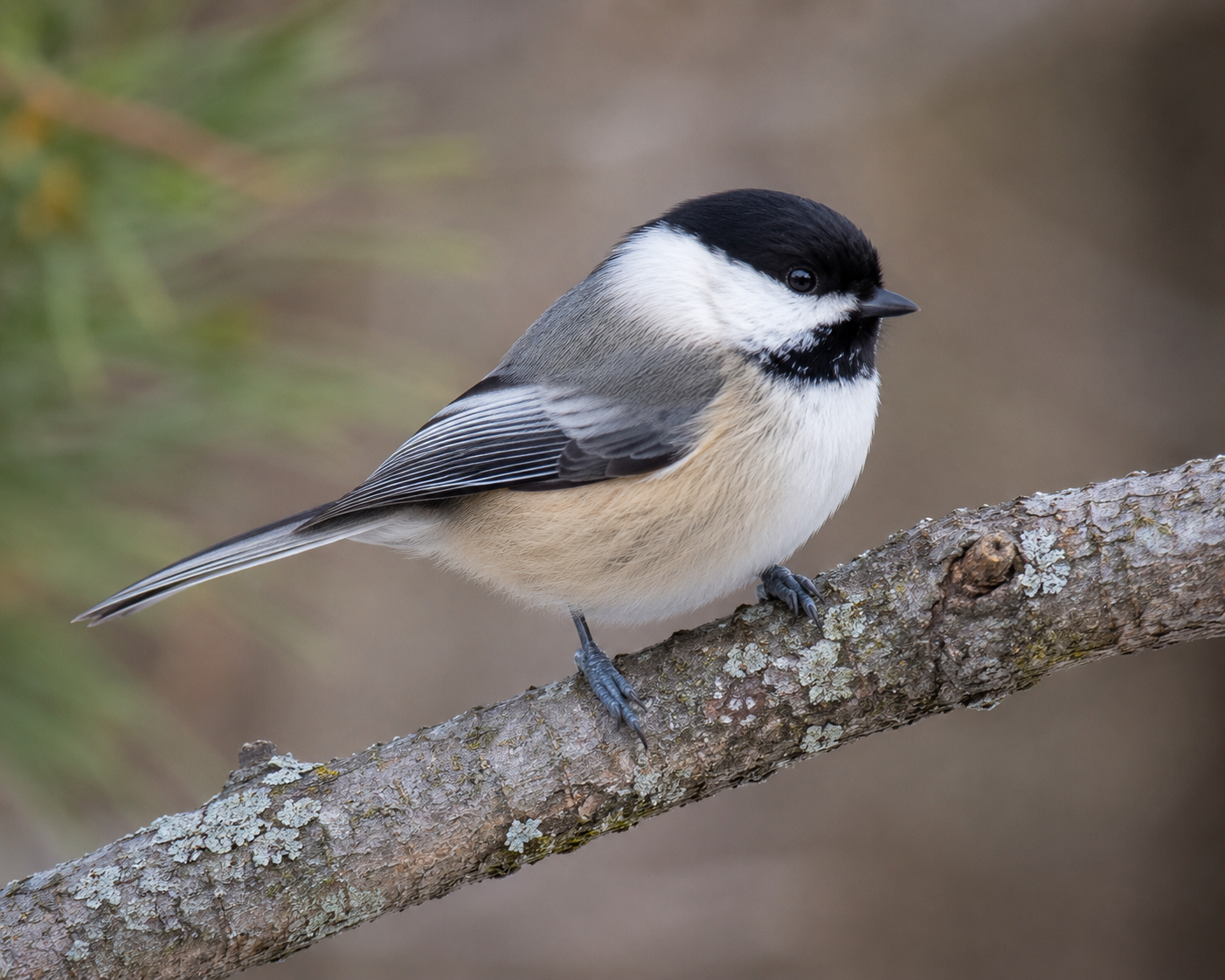
Have you ever been birding with someone who seems almost superhuman?
A bird darts across a trail for half a second and they casually say, "Female Black-and-white Warbler."
A hawk circles high overhead and before you've even lifted your binoculars they announce, "Juvenile Red-tailed Hawk."
Meanwhile, you're still trying to figure out where the bird went.
If you've ever wondered how experienced birders identify birds so quickly, the answer is surprisingly simple:
They usually aren't seeing more than you are. They're seeing different things than you are.
And perhaps even more importantly, they're processing those observations differently.
The good news is that bird identification isn't some mysterious talent that only a lucky few possess. It's a skill. Like any skill, it improves with practice and experience.
In fact, understanding how experienced birders identify birds can dramatically shorten your own learning curve.
Let's pull back the curtain and see what's really happening.
Experienced Birders Don't Start With Species
One of the biggest mistakes beginning birders make is trying to identify every bird as a species immediately.
Imagine walking into a parking lot and trying to identify every vehicle as an exact make, model, and year.
You wouldn't do that.
You'd first notice:
Car
Truck
SUV
Motorcycle
Van
Birders do exactly the same thing.
When an experienced birder sees a bird, their brain immediately begins sorting it into broader categories:
Hawk
Gull
Sparrow
Warbler
Duck
Woodpecker
Flycatcher
This happens almost instantly. And that’s why you seldom hear a seasoned birder say “What’s that bird?” They usually say, “Which tern was that!?” because they’ve already started the elimination process.
A beginning birder often sees 900 species.
An experienced birder first sees perhaps 10 or 15 major groups.
That alone makes identification much faster.
They Learn Bird Families First
This is one reason I often encourage beginning birders to learn bird families before worrying about every individual species.
Suppose you encounter a small blue bird.
A novice may think:
"What is it?"
An experienced birder thinks:
"Looks like a songbird."
Then:
"Probably a bunting, bluebird, jay, or grosbeak."
Now the possibilities have become much smaller.
Learning bird families gives your brain filing cabinets.
Without those filing cabinets, every bird is a completely new puzzle.
With them, every bird already belongs somewhere.
This is one reason field guides are organized by related birds rather than alphabetical order.
Birds that look alike (and are related) tend to be grouped together because that's how birders think.
They Use GISS Constantly
One of the most valuable concepts in bird identification is GISS:
General Impression of Size and Shape.
Experienced birders rely on GISS far more than most beginners realize.
Before noticing color patterns or field marks, they're often evaluating:
Size
Body shape
Posture
Bill shape
Tail length
Flight style
Consider a crow and a raven.
At a distance, color tells you almost nothing.
Both are black.
But their shape is different.
Their flight style is different.
Their bill is different.
Their proportions are different.
Experienced birders often identify birds from shape alone.
In some situations, shape becomes more important than color.
This is especially true at dawn, dusk, or when birds are silhouetted.
They Know What Birds Are Expected
This may sound like cheating, but it isn't.
It's simply using information wisely.
Birders constantly ask:
"What species are likely here?"
Imagine you're birding at a Texas pond in July.
You spot a duck.
An experienced birder already knows which species are common there during summer.
Instead of considering every duck in North America, they may only need to consider five or six possibilities.
That's a huge advantage.
Bird distribution matters.
Habitat matters.
Season matters.
Location matters.
The more birds you learn, the more these clues begin helping automatically.
Habitat Is a Powerful Clue
Birds don't randomly appear everywhere.
Many species strongly prefer certain habitats.
Experienced birders know this.
When they enter a habitat, they already have a mental list of likely species.
A marsh suggests:
Red-winged Blackbirds
Marsh Wrens
Herons
Rails
A mature forest suggests:
Woodpeckers
Nuthatches
Vireos
Warblers
A grassland suggests:
Meadowlarks
Dickcissels
Grasshopper Sparrows
The habitat itself narrows the possibilities before the bird is even found.
Beginners often focus entirely on the bird.
Experienced birders pay attention to the habitat first.
They Look for What's Different
Here's a trick many advanced birders use.
Instead of trying to see everything, they focus on what stands out.
What is different?
What is unusual?
What catches the eye?
For example:
A flock of gulls may contain dozens of nearly identical birds.
An experienced birder immediately notices the one bird with:
Longer wings
Different leg color
Darker back
Larger bill
They train themselves to notice exceptions.
This skill develops over time.
The more birds you see, the easier it becomes to notice the bird that doesn't fit the pattern.
Pattern Recognition Does Most of the Work
Many beginning birders assume experts memorize thousands of details.
That's not really what's happening.
Experienced birders rely heavily on pattern recognition.
Think about recognizing a friend.
You don't consciously analyze:
Eye color
Nose shape
Hairline
Chin structure
You simply recognize them.
Bird identification gradually becomes similar.
After seeing hundreds of Northern Cardinals, your brain develops a mental pattern.
The same thing happens with:
Blue Jays
American Robins
Red-tailed Hawks
Mourning Doves
Over time your brain begins recognizing familiar patterns almost automatically.
This is why experience matters so much.
Pattern recognition only develops through repetition.
They Spend Less Time Looking at Their Field Guide
This sounds backwards.
After all, shouldn't experts use field guides more?
Actually, experienced birders often use field guides differently.
Beginners frequently open a guide and start searching from page one.
Experienced birders first narrow the possibilities.
Then they use the field guide to confirm their conclusion.
Instead of comparing a bird against hundreds of species, they're comparing it against perhaps two or three.
This makes identification much faster and more accurate.
They Know Which Field Marks Matter
One of the most common beginner mistakes is trying to memorize every field mark.
Experienced birders don't do that.
They focus on diagnostic field marks.
These are the features that separate one species from another.
For example:
A beginning birder might notice:
Brown back
White belly
Black eye
Gray bill
An experienced birder notices:
Distinct eye ring
That single detail may immediately solve the identification.
The trick isn't seeing more details.
It's seeing the right details.
They Watch Birds More Than They Watch Their Binoculars
Many beginning birders become trapped inside their optics.
They spend so much effort adjusting binoculars and searching for field marks that they miss behavior.
Behavior is often one of the strongest identification clues available.
Consider:
Nuthatches moving headfirst down trees
Flycatchers sallying out for insects
Woodpeckers hitching up trunks
Kingfishers hovering and diving
Shorebirds feeding in different ways
Behavior can sometimes identify a bird before colors are even visible.
Experienced birders learn to watch how birds act.
They Accept Imperfect Identifications
This surprises many beginners.
Experienced birders do not always identify every bird.
In fact, good birders are often comfortable saying:
"I don't know."
Or:
"Probably."
Or:
"Let's leave that one unidentified."
Beginners often feel pressure to name every bird.
Experienced birders understand that uncertainty is part of birding.
Learning to accept uncertainty actually improves identification skills because it encourages careful observation rather than guessing.
Why This Matters for New Birders
Understanding these techniques can dramatically accelerate your progress.
Instead of trying to memorize hundreds of species, focus on learning how birders think.
Start with:
Bird Families
Learn the major groups first.
Habitat
Notice where birds live.
Shape
Practice identifying silhouettes.
Behavior
Watch what birds do.
Common Species
Master the birds you see every week.
Field Guides
Use them to confirm rather than randomly search.
These skills create a strong foundation.
Once that foundation exists, species identification becomes much easier.
Three Simple Exercises to Build Faster ID Skills
1. The Family Challenge
Visit a park or feeder.
Instead of naming species, identify bird families.
Ask:
Sparrow?
Finch?
Blackbird?
Woodpecker?
This develops classification skills.
2. The Shape Game
Look at birds in silhouette.
Ignore color entirely.
Focus on:
Bill
Tail
Body shape
Posture
This strengthens GISS skills.
3. Habitat Predictions
Before starting a bird walk, write down ten birds you expect to find.
Then compare your list with what you actually observe.
This teaches distribution and habitat associations.
The Real Secret
Experienced birders aren't faster because they have better eyesight.
They aren't faster because they're smarter.
And they certainly weren't born knowing bird identification.
They're faster because thousands of observations have trained their brains to recognize patterns.
Every bird they've watched helped build that mental library.
The encouraging news is that you're building the same library every time you go outside.
Every chickadee at a feeder.
Every duck on a pond.
Every hawk circling overhead.
Every warbler flitting through the trees.
Each observation adds another page to your birding experience.
One day you'll surprise yourself.
A bird will flash past for a second and you'll identify it almost automatically.
Someone standing beside you may wonder how you did it.
And you'll realize you've joined the ranks of those experienced birders who once seemed almost magical.
The truth is they weren't performing magic at all.
They were simply seeing birds through the lens of experience.
And with a little patience, you'll get there too.
Check out our Beginning Birder Series and learn more about birding and awareness.
