

How to Learn Bird Songs
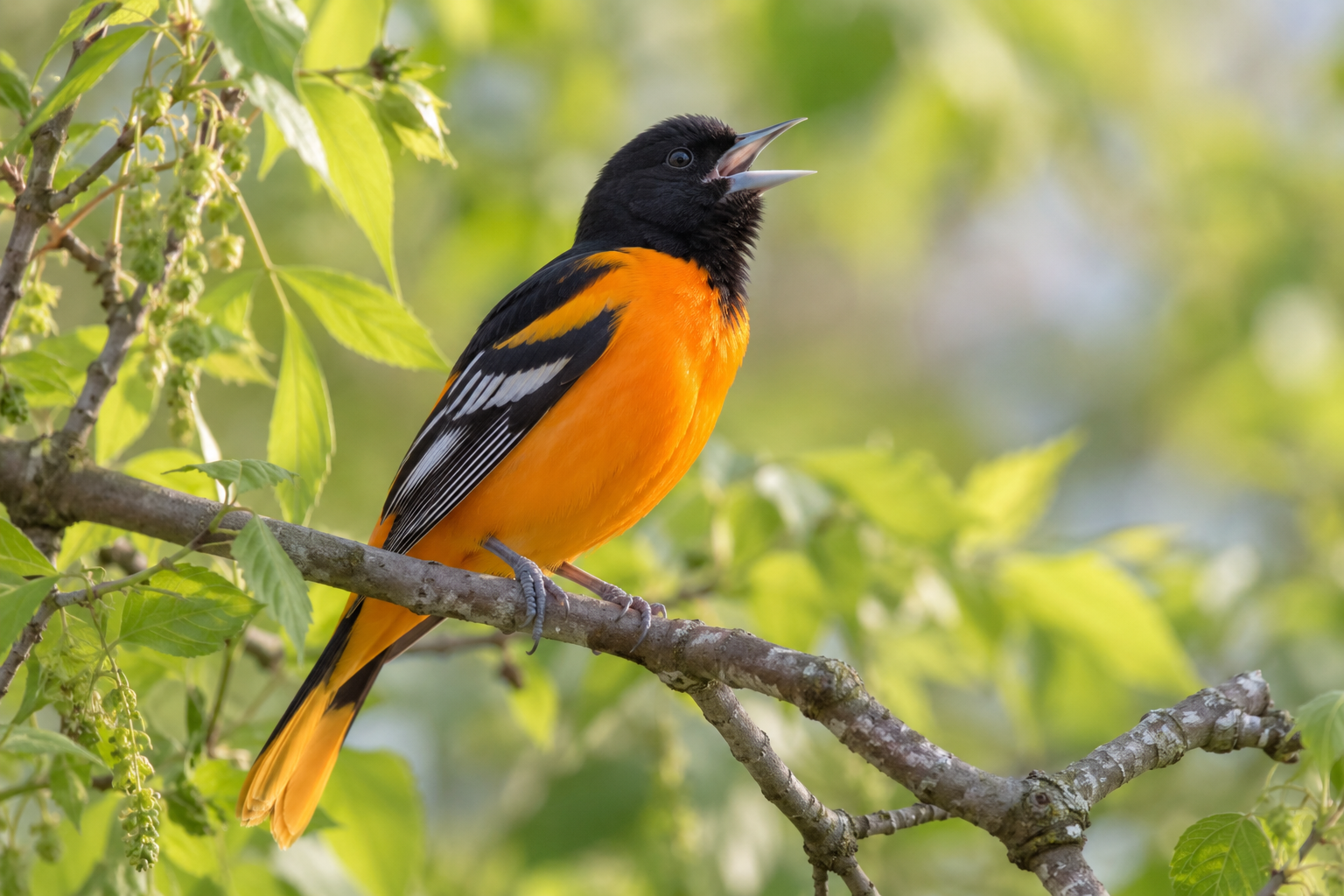
Practical Ways to Remember Who is Singing
Long before you see the bird, you may hear it.
A Carolina Wren announces itself from somewhere behind the shed. A Northern Cardinal whistles from the tallest branch in the neighborhood. An Eastern Towhee calls from deep inside a thicket where you might never have found it with binoculars alone.
Learning bird songs opens an entirely new side of birding. You begin noticing birds hidden by leaves, active before sunrise or too far away to identify by field marks. A quiet walk becomes a lively conversation happening all around you.
But the dawn chorus can be overwhelming. When half a dozen birds are singing at once, how are you supposed to separate one voice from another—and remember any of them later?
You do not need a naturally musical ear. You need a manageable learning system, several kinds of memory clues and regular practice with birds you are likely to hear.
Start With a Small Local Cast
One of the biggest mistakes beginning birders make is trying to learn too many songs at once. Listening to fifty random recordings from across North America may feel productive, but it usually creates a jumble of unfamiliar sounds.
Start with five to ten common birds from your region and the current season. Better yet, choose birds you regularly encounter in your yard, neighborhood park or favorite birding location.
Your first group might include:
One bird with a clear whistle
One bird with a repeated phrase
One bird with a trill
One bird with a harsh or buzzy voice
One bird that sings very early in the morning
One bird you already recognize visually
Local and seasonal practice gives every sound useful context. A song becomes easier to remember when it belongs to a bird you have watched singing from your own fence or heard every morning near the same patch of woods.
Once those voices become familiar, add two or three more. Birding by ear is built gradually, the same way you learn the people in a new group—not all at once, but one recognizable voice at a time.
Put Words to the Song
Word phrases, often called mnemonics, are among the best-known tools for learning bird songs. They turn an abstract series of notes into a phrase your verbal memory can hold.
The Barred Owl’s familiar hooting is often rendered as:
Who cooks for you? Who cooks for you-all?
The Common Yellowthroat may sound like:
Wichity-wichity-wichity.
An Ovenbird’s emphatic, rising song becomes:
Teacher! Teacher! Teacher!
An Eastern Towhee may appear to command:
Drink your tea!
These phrases do not reproduce every note perfectly. That is not their purpose. They provide a handle your memory can grab.
The most effective mnemonic is not necessarily the one printed in a field guide. It is the one that sounds right to you. If a Northern Cardinal seems to sing birdie, birdie, birdie to one listener and cheer, cheer, cheer to another, both phrases can work.
Listen several times, speak or whisper the rhythm and then make up your own words. Personal phrases are often more memorable because your brain participated in creating them. Cornell and Audubon both recommend mnemonics as useful memory aids, while emphasizing that listeners can—and should—invent their own. Cornell Lab of Ornithology | National Audubon Society
Do not worry if your version sounds silly. Silly can be memorable.
Describe What the Song Reminds You Of
Not every bird sounds as though it is saying words. Sometimes an image, instrument or everyday noise makes a better memory hook.
A Wood Thrush may remind you of a flute or tiny woodland bells. A Sandhill Crane sounds bugling and prehistoric. A Common Nighthawk gives a nasal call that may suggest a buzzer. The metallic notes of some blackbirds can sound like rusty hinges, machinery or water droplets.
Ask yourself:
Does it sound like bells, whistles or a flute?
Is it buzzy, metallic, squeaky, nasal or raspy?
Does it resemble a bouncing ball?
Does it sound like laughter, scolding or a question?
Does it remind me of water, an alarm or a rusty gate?
What mood does it create—cheerful, hurried, lonely or mysterious?
A description does not have to impress anyone else. “Tiny silver bells in a shady forest” may help you remember a Wood Thrush far better than technical terminology.
You can also create a mental scene. Imagine the Barred Owl as a nighttime cook calling from the kitchen or the Ovenbird as an impatient teacher repeating the same instruction. Unusual and vivid associations give the brain more ways to find the name again.
Listen for Structure, Not Just Words
Mnemonics are helpful, but they do not work for every song. They can also break down when a bird changes its tune or when two people hear the same notes differently.
A stronger birder learns the underlying shape of a sound.
The Cornell Lab recommends listening for four basic qualities: rhythm, repetition, pitch and tone. These features remain useful even when you cannot turn the notes into words. Cornell Lab: Basic Parts of a Bird Song
Rhythm
Is the song slow and deliberate or hurried? Are the notes evenly spaced? Does the bird pause between phrases?
Try tapping the rhythm on your leg. Your body may remember a pattern that your ears alone forget.
Repetition
How many times does the bird repeat a sound before changing it?
This can separate confusing mimics. Brown Thrashers typically repeat phrases in pairs, while Northern Mockingbirds commonly repeat a phrase several times before switching to another imitation.
Instead of trying to identify every copied sound, remember the pattern: two and change for the thrasher; several and change for the mockingbird.
Pitch
Is the voice high or low? Does the song rise, fall or remain level?
The Canyon Wren’s clear whistles tumble downward. The Prairie Warbler’s buzzy notes climb upward. Even when you forget every individual note, remembering “descending whistles” or “a rising buzz” may lead you back to the bird.
Tone
Tone is the texture or character of the voice. Is it clear, buzzy, trilled, harsh, liquid, scratchy or flute-like?
Tone can identify a bird family before you identify the species. Thrushes often have rich, musical voices. Wrens may sound energetic and forceful. Many sparrows use clear whistles, buzzes or trills in recognizable combinations.
Words tell you what a song seems to say. Structure tells you what the sound is actually doing. Use both whenever possible.
Use Spectrograms to See the Sound
A spectrogram turns sound into a picture. Time moves from left to right, while pitch moves from low to high. Long lines may represent whistles, close-packed marks may show a trill, and repeated shapes reveal repeated phrases.
You do not have to become an audio expert to benefit from this. Simply watch a spectrogram while listening. Notice whether the marks rise, fall, cluster together or appear in evenly spaced groups.
This engages visual memory along with auditory memory. It can also reveal details you missed, such as a tiny break between notes or a change in pitch inside a rapid phrase. Cornell’s Bird Song Hero was designed around this connection between listening and seeing sound patterns. Cornell Bird Song Hero
Spectrograms are especially helpful for people who believe they are “not good with sounds.” You may discover that you remember the shape of a song more easily than its exact musical qualities.
Learn With the Bird in Front of You
Recordings are useful, but the strongest lesson often happens outdoors.
When you hear a bird singing, try to find it. Watch its bill open. Notice its posture, perch, habitat and behavior. Is it singing from an exposed treetop, deep shrubbery, the forest floor or the edge of a marsh?
Now the sound is connected to an entire experience:
The bird’s appearance
Its movement
The place where you found it
The season and time of day
The direction from which the sound came
The feeling of finally locating it
That collection of clues makes the memory much richer than a name attached to an isolated recording.
After the bird moves away, pause and replay the song in your mind. Hum it, whistle it or repeat your word phrase. Then write a quick note such as:
Carolina Wren—loud three-part phrase from brush pile; sounded like “tea-kettle, tea-kettle.”
The note does not need to be technically perfect. It needs to remind you what you heard.
Repeat—but Do Not Merely Replay
Repetition matters, but passive listening has limits. A regional playlist running in the background may make songs feel familiar without teaching you to name them.
Turn repetition into a small identification challenge.
Listen to a song without looking at the answer. Try to name the bird or describe the sound first. Then check. This act of pulling information from memory—called retrieval practice—strengthens learning more than simply hearing the answer repeatedly.
Space your practice over several days instead of cramming it into one long session. Research on learning consistently shows that spaced study improves long-term retention more effectively than massed repetition. Smolen, Zhang and Byrne, Nature Reviews Neuroscience
A simple schedule might look like this:
Day 1: Learn three songs.
Day 2: Test yourself on the same three.
Day 4: Review them and add one new song.
Day 7: Test all four in a different order.
The following week: Listen again, including different recordings of each species.
The pauses between sessions are useful. A little forgetting makes your brain work to retrieve the answer—and that effort helps build a more durable memory.
Listen to More Than One Recording
A bird species may have several songs and calls. Individual birds can sound different, and some species have regional dialects. One perfect recording should not become your entire definition of a bird’s voice.
Once you recognize a standard example, listen to several recordings from your region. Look for the qualities they share: the same rhythm, tone, pitch movement or pattern of repetition.
Think of it as recognizing a friend’s voice. Your friend may speak loudly, quietly, quickly or through a telephone, but the underlying voice remains familiar.
Regional listening is especially important before travel. Instead of studying every possible bird at your destination, build a short playlist of common and distinctive species from the habitat and season you will visit. Listen for a few minutes each day during the week before your trip.
Compare Similar Songs Side by Side
Bird sounds are often easier to learn through contrast.
If two species confuse you, alternate between them. Ask one specific question during each comparison:
Which is faster?
Which is higher?
Which sounds buzzier?
Which repeats twice?
Which ends with a flourish?
Which has longer pauses?
Which bird is more likely in this habitat?
You might compare the paired phrases of a Brown Thrasher with the longer repetitions of a Northern Mockingbird, or the steady trill of a Chipping Sparrow with a similar trill that changes pitch.
Do not practice only the easy examples. Include several recordings and some background noise. The goal is not to memorize one audio file. It is to recognize the bird.
Separate Songs From Calls
Birds do not make only one sound.
Songs are often longer and more complex and are commonly associated with courtship or territorial behavior. Calls may be short notes used for alarms, contact, begging or communication within a flock. The exact distinction varies among species, but it is useful to study the two categories separately.
Begin with the prominent song, then add one common call. A bird you recognize easily in spring may use only short chips or contact notes during another season.
Learning calls takes time, but it eventually makes your listening far more useful throughout the year.
Let an App Be Your Teacher, Not Your Final Answer
Sound-identification apps can help isolate voices in a busy chorus and show a live spectrogram. Merlin Sound ID, for example, provides real-time suggestions and encourages users to compare their recording with reference songs and calls to confirm what they heard. Merlin Bird ID
The important word is suggestions.
Use the app to focus your attention. When a name appears, listen again. Look for the bird. Consider the habitat, range and season. Ask what feature of the sound supports the identification.
Then put the phone away for a moment and try to recognize the next song yourself. Otherwise, the app becomes the birder while you simply watch the screen.
A Ten-Minute Bird-Song Practice
You can make meaningful progress with ten focused minutes a day:
Choose three common local birds.
Listen to one recording of each while reading the name.
Give each song two memory hooks—perhaps a phrase and a description of its tone.
Play the recordings in random order without looking.
Name or describe each bird before checking the answer.
Review the same birds tomorrow.
Find at least one of them outdoors this week.
Keep the group small until your answers come quickly. Then add another bird.
And practice playback through headphones or speakers at home. In the field, avoid broadcasting recordings merely to draw birds closer. The American Birding Association advises limiting audio attraction, especially near nests, in heavily birded places and around rare or threatened species. ABA Code of Birding Ethics
You Are Learning to Pay Attention
Birding by ear is not a test of musical talent. It is an exercise in noticing.
At first you hear a wall of sound. Then one whistle separates itself from the background. A week later, you recognize the rhythm. Eventually, you hear the first two notes and know a Carolina Wren is somewhere nearby—even before you consciously work through the clues.
That is how the skill grows: one local bird, one memorable phrase, one careful comparison and one real encounter at a time.
Do not wait until you know every song to trust your ears. Choose one voice outside your window today. Listen until it is no longer simply a bird singing.
Listen until it becomes someone you know.
