

The Jay Family
Bold Brains, Big Personalities, and Birds You’ll Never Forget
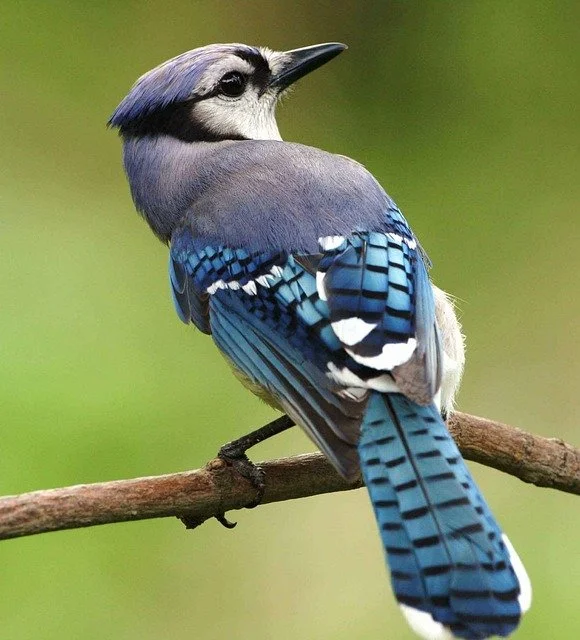
If you’ve spent any amount of time birding—or even just watching feeders from a kitchen window—you already know this: jays are not subtle. They announce themselves. They scold. They steal. They mimic hawks, rally the neighborhood, and somehow manage to be both admired and side-eyed at the same time.
The jay family (part of the crow family, Corvidae) includes some of the most intelligent, adaptable, and behaviorally complex birds in North America. Jays remember food caches months later, recognize individual humans, communicate specific threats, and display family bonds that rival many mammals. They’re problem-solvers with feathers—and they bring drama wherever they go.
In this guide, we’ll explore the major jay species birders encounter across North America and into Mexico: Blue Jays, Scrub Jays (and their subspecies), Steller’s Jays, Green Jays, Gray Jays, Mexican Jays, and Pinyon Jays. Along the way, we’ll look at what they eat, how they behave, where they nest, whether they show up in backyards, and the little details that make each species unforgettable.
What Makes a Jay a Jay?
Before diving into species, it helps to understand what jays share in common:
High intelligence – Jays can solve puzzles, plan ahead, cache food, and learn from one another.
Complex vocalizations – Beyond harsh “jay!” calls, many species mimic hawks and other birds.
Omnivorous diets – Insects, seeds, nuts, berries, eggs, and even small vertebrates.
Strong social dynamics – From tight family groups to massive roaming flocks.
Bold personalities – Curious, assertive, and rarely shy once established.
They’re not just colorful birds—they’re characters.
Blue Jay
The Classic Eastern Icon
The Blue Jay is often the first jay people notice—and remember. With its crisp blue, white, and black patterning and unmistakable voice, this species is both beloved and notorious.
Range & Habitat
Blue Jays are widespread east of the Rockies, from southern Canada through the eastern and central United States. They favor mixed woodlands, forest edges, suburban neighborhoods, and parks.
Diet
Blue Jays are opportunistic omnivores:
Acorns and nuts (a favorite—and an ecological gift to forests)
Seeds and grains
Insects and caterpillars
Berries and fruits
Occasionally eggs or nestlings of other birds
Here’s a great feeder for Jays:
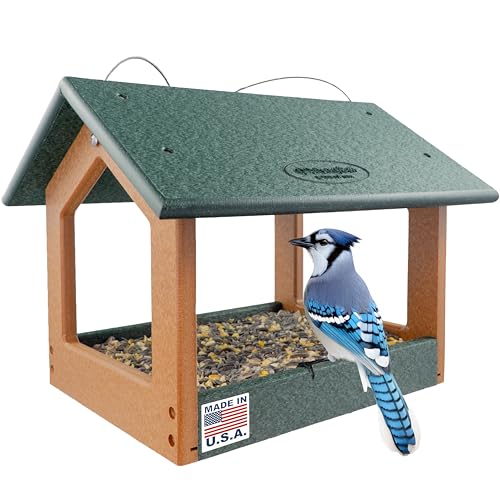
Their habit of caching acorns helps regenerate oak forests, even if they don’t get much credit for it.
Behavior & Intelligence
Blue Jays are famously vocal and alert. Their ability to mimic Red-shouldered and Red-tailed Hawk calls is thought to warn other jays—or to clear feeders. They form tight family bonds and often travel in small groups outside the breeding season.
Nesting
Nests are built in trees or large shrubs, typically 10–25 feet above ground. Both sexes help build the nest, and pairs may mate for multiple seasons.
Backyard Status
Very common backyard visitors. Offer peanuts (always unsalted) in shell or peanut pieces, sunflower seeds, and suet. Be prepared: where one Blue Jay appears, others are usually nearby.
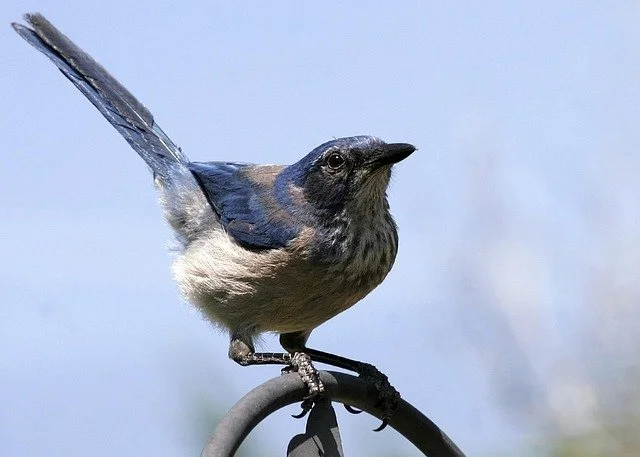
Scrub Jays
The Neighborhood Watch
Scrub Jays are ground-oriented, sharp-eyed, and endlessly alert. In the western U.S., they’re often the birds that let everyone else know you’ve arrived.
Range & Habitat
Scrub-Jays occupy dry scrublands, oak woodlands, chaparral, and suburban areas of the western and southwestern U.S. as well as Florida. Several regional forms are now considered individual species:
California Scrub-Jay
Florida Scrub-Jay (range-restricted and conservation-dependent)
Woodhouse’s Scrub-Jay (interior West)
Island Scrub-Jay
Diet
Acorns and nuts
Insects and spiders
Seeds and berries
Small reptiles or eggs when available
Florida Scrub Jays, in particular, rely heavily on oak scrub ecosystems.
Behavior & Social Structure
Scrub Jays are territorial year-round. Many populations practice cooperative breeding, where young from previous years help parents raise new broods. They are excellent food cachers and can remember hundreds of stash locations.
Nesting
Cup nests are built in shrubs or small trees. Helpers may assist with feeding nestlings.
Backyard Status
Regular in suitable habitat, especially near oak trees. They’re bold but cautious and quickly learn routines.
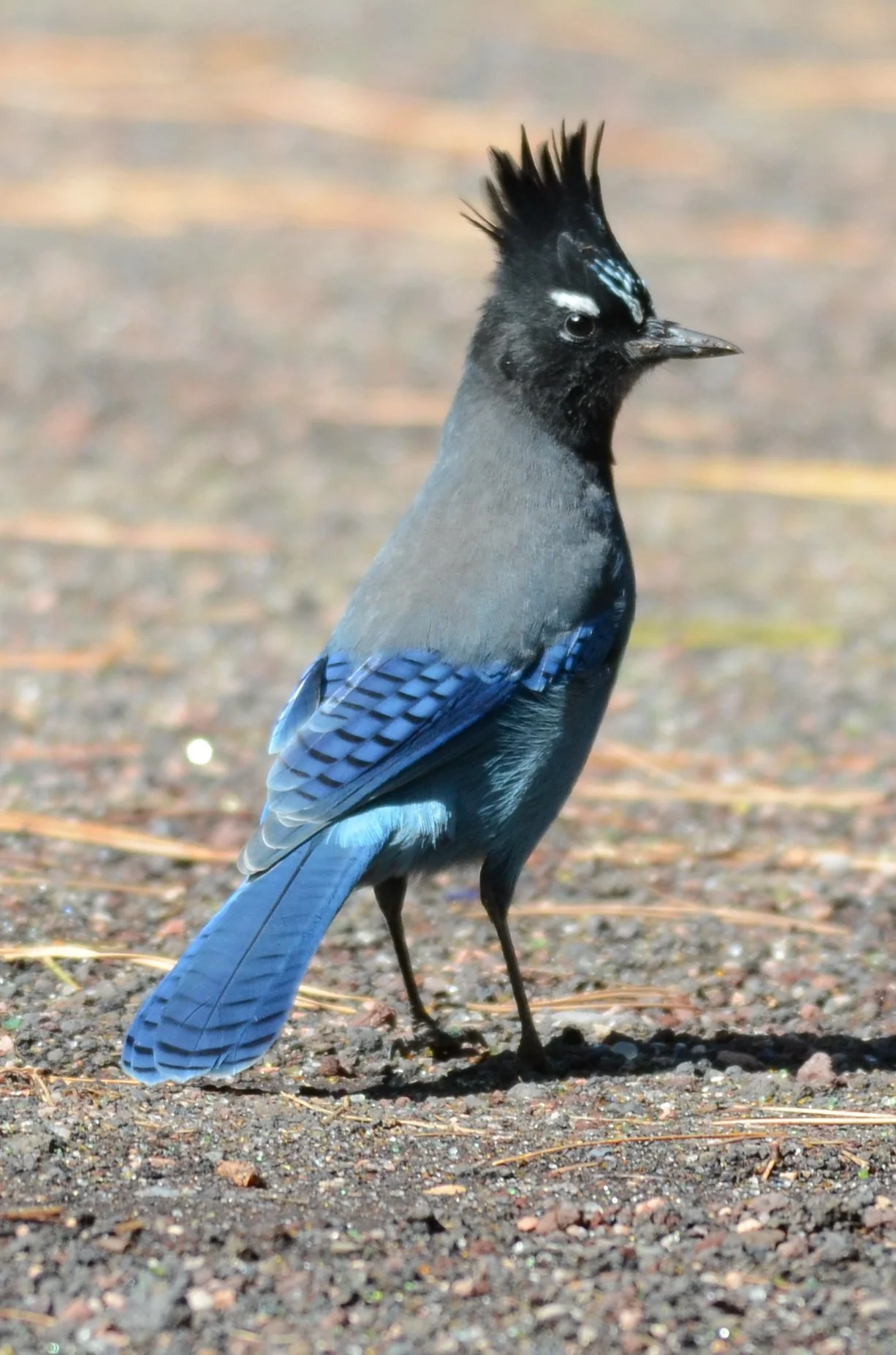
Steller’s Jay
The Punk Rock Jay of the Mountains
With its deep blue body, black crest, and piercing stare, Steller’s Jay looks like it belongs on an album cover.
Range & Habitat
Found in western North America, especially coniferous forests from the Rockies to the Pacific Coast. Often replaces the Blue Jay at higher elevations.
Diet
Nuts and seeds
Insects
Berries
Human food scraps near campgrounds (unfortunately)
Behavior
Loud, inquisitive, and sometimes downright mischievous. Steller’s Jays are exceptional mimics and known for raiding unattended picnic tables. Despite their boldness, they are highly intelligent and socially complex.
Nesting
Nests are placed high in conifers and well concealed. Pairs are typically monogamous during the breeding season.
Backyard Status
Common in mountain towns and forested neighborhoods. If you feed peanuts, expect a Steller’s Jay to find them.
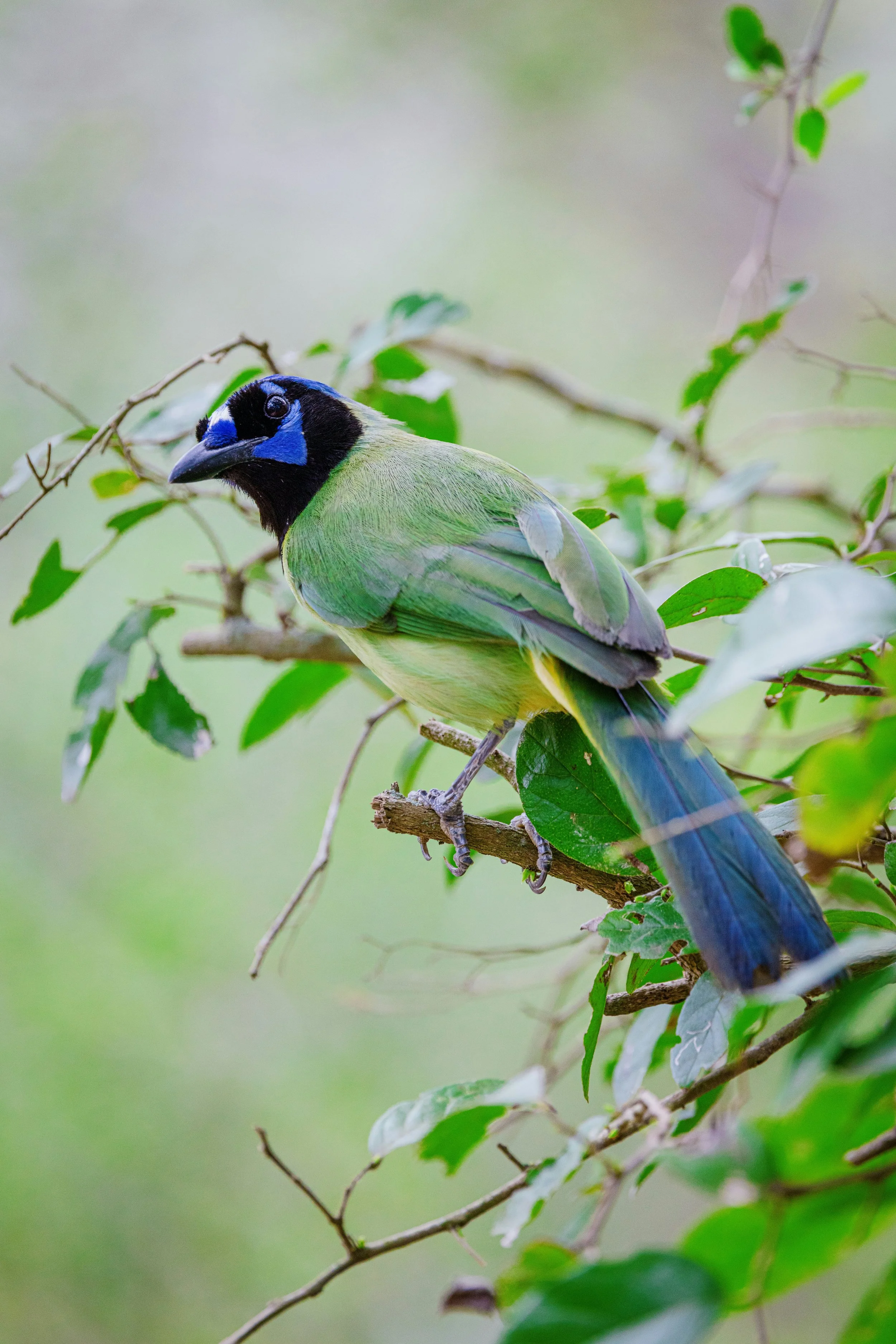
Green Jay
The Tropical Jewel
The Green Jay feels almost unreal the first time you see one—bright green, blue, yellow, and black all in one bird.
Range & Habitat
Primarily found in southern Texas and Mexico, favoring thorn forests, brushy woodlands, and river corridors.
Diet
Insects
Fruits and berries
Seeds
Small vertebrates on occasion
Behavior
Highly social and vocal. Green Jays often forage in family groups and display cooperative behaviors, including group mobbing of predators.
Nesting
Nests are built in dense shrubs or low trees. Extended family members may help defend the nest area.
Backyard Status
Local but enthusiastic feeder visitors where they occur. They’re a highlight species for many birders visiting Texas and they rarely disappoint.
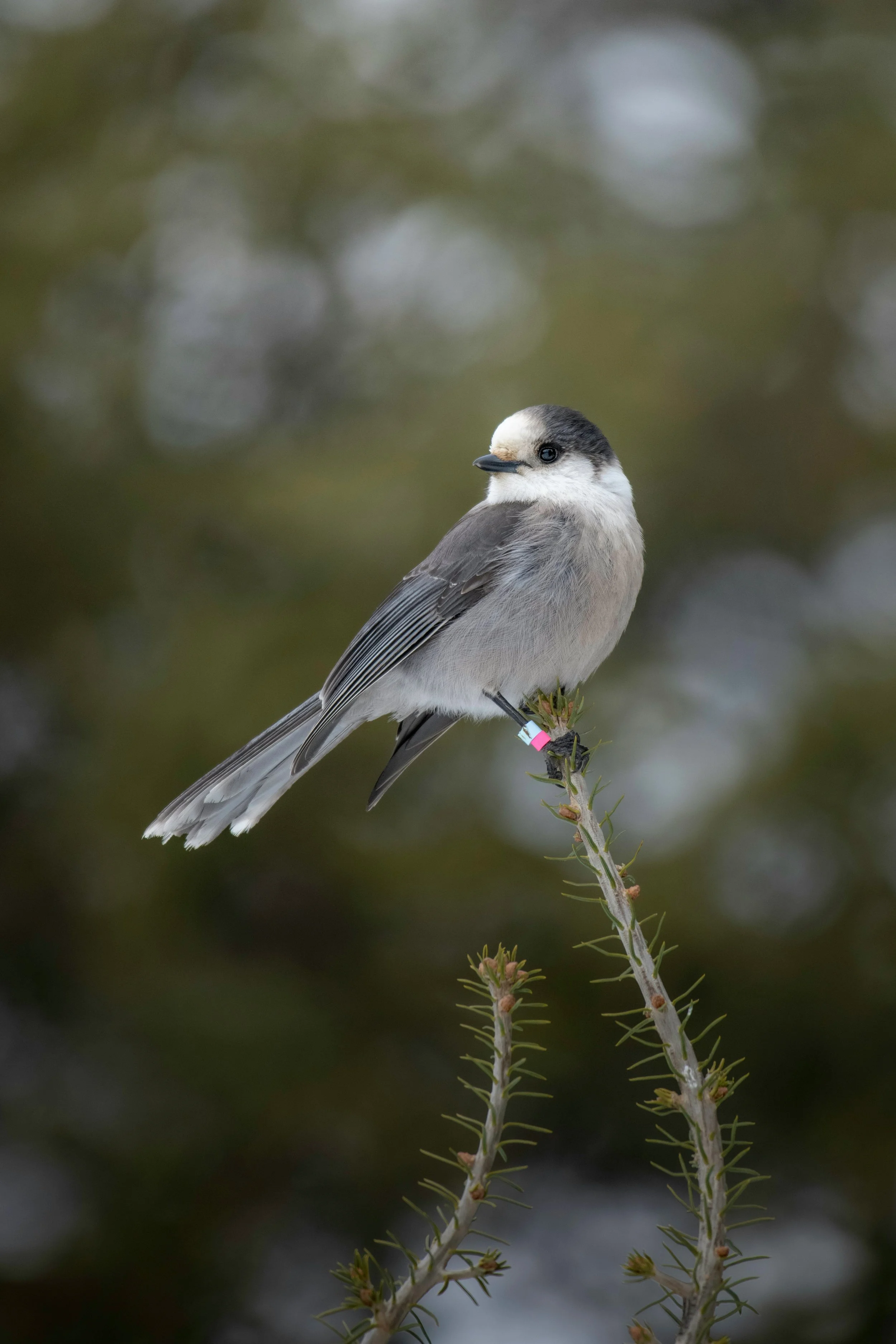
Canada Jay
The Camp Robber with a Soft Side
Canada Jays (formerly the Gray Jay) are famously tame—and famously sneaky. Also known as “camp robbers,” they’ve learned that humans often mean food.
Range & Habitat
Boreal forests of Canada and the northern U.S., as well as high-elevation mountain forests farther south.
Diet
Insects
Berries
Fungi
Meat scraps and carrion
They store food using sticky saliva, attaching it to bark for later use—often months later in winter.
Behavior
Exceptionally trusting of humans, especially in remote areas. Gray Jays rely heavily on memory to retrieve cached food during harsh winters.
Nesting
One of the earliest nesters of any North American bird, often laying eggs while snow is still on the ground. Cached food is critical to this early breeding strategy.
Backyard Status
Rare in traditional suburban yards, but common around campsites and rural forested homes.
Jays and the Backyard: Love Them or Side-Eye Them?
Jays can be polarizing. They’re loud. They dominate feeders. They sometimes eat things we wish they wouldn’t. But they are also:
Forest planters
Insect controllers
Sentinels that warn other birds
Intelligent neighbors with long memories
If you want to attract jays responsibly:
Offer unsalted peanuts and sunflower seeds
Use platform or large hopper feeders
Accept that they will rearrange the pecking order
Jays don’t just visit your yard—they move in.
Why Jays Matter
Jays remind us that birds are not background scenery. They are thinking, planning, adapting beings with social lives and personalities. They challenge us to see intelligence in unexpected places and to appreciate complexity beyond beauty alone.
Whether it’s a Blue Jay shouting from a maple tree, a Steller’s Jay stealing your trail mix, or a Pinyon Jay flock flowing across the desert sky, jays leave an impression. They demand attention—and reward it with endless fascination.
If birding is about connection, curiosity, and learning to notice more deeply, the jay family delivers all of that… loudly, brilliantly, and unapologetically.
Looking Ahead: Going Deeper with Jays
If jays have captured your attention—and they tend to do that—you’re in the right place. In upcoming detailed posts, we’ll take a closer look at Blue Jays, Green Jays, and Steller’s Jays, exploring their identification nuances, seasonal behaviors, vocalizations, and regional differences. We’ll also share a practical guide to the best feeders for jays, what foods truly benefit them and a deeper dive into jay hierarchy and social dynamics—why certain birds dominate feeders, how family groups communicate, and what those loud interactions really mean. Consider this post your foundation; the stories, strategies, and science behind these remarkable birds are just getting started.
