

Landscaping for Hummingbirds
Turning Your Yard (or Balcony) Into a Hummingbird Haven
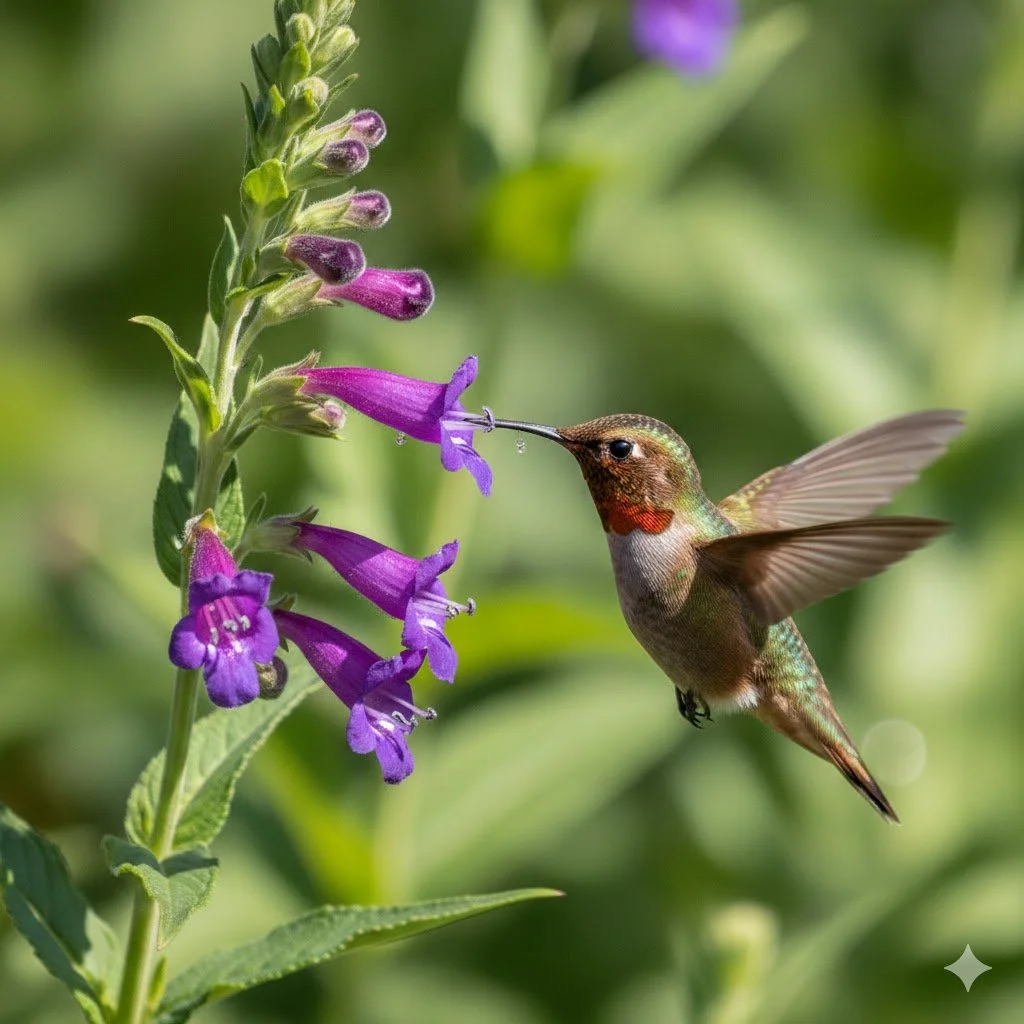
There are few sights in nature more magical than a hummingbird hovering over a flower, its wings buzzing like a tiny engine while it sips nectar from a blossom. For many backyard birders, hummingbirds are the gateway species—the bird that first makes someone stop, look closer, and fall in love with birding.
The good news is that you don’t need a huge property or elaborate landscaping to attract hummingbirds. With a thoughtful selection of plants, even a small backyard, patio, or balcony can become a hummingbird hotspot.
In fact, landscaping with hummingbirds in mind does more than attract birds. It brings color and life to your yard, supports pollinators, reduces lawn space, and creates a more vibrant ecosystem right outside your door.
Let’s look at how to design a hummingbird-friendly landscape—and the plants that consistently bring these dazzling birds back year after year.
Why Landscaping Matters for Hummingbirds
Hummingbirds depend heavily on nectar-producing flowers for energy. Their metabolism is one of the fastest in the animal world, and they must feed constantly throughout the day.
A well-planned hummingbird garden provides three key things:
1. Reliable nectar sources
Hummingbirds prefer flowers that produce abundant nectar.
2. A sequence of blooms
Plants that flower from spring through fall help sustain hummingbirds during migration and breeding.
3. Shelter and resting spots
Small trees, shrubs, and perches allow hummingbirds to rest and defend feeding territory.
A hummingbird-friendly landscape essentially becomes a natural fueling station.
What Makes a Good Hummingbird Plant?
Over time, hummingbirds have evolved alongside certain flower shapes and colors. While they will sample many plants, some flowers clearly perform better than others.
Look for plants that share these characteristics:
Bright colors
Red is the classic hummingbird color, but orange, pink, and purple flowers also attract them.
Tubular flower shapes
Long, narrow flowers are perfect for hummingbird bills and tongues.
High nectar production
Plants that produce large amounts of nectar quickly become hummingbird favorites.
Minimal fragrance
Interestingly, hummingbirds rely on sight than smell.
Butterflies and bees often prefer flat flowers, while hummingbirds prefer deep tubular blossoms. A mixture of both usually provides a sustainable blooming season.
Native Plants: The Best Long-Term Strategy
Whenever possible, choose native plants for your region.
Native plants:
Produce more nectar
Bloom at the right times
Support native insects
Require less water and maintenance
They also integrate naturally with local ecosystems.
A hummingbird garden built around native plants becomes a mini wildlife sanctuary, supporting birds, butterflies, bees, and beneficial insects.
Short List of Proven Hummingbird Plants
While there are hundreds of plants hummingbirds may visit, a few consistently stand out as reliable performers.
Bee Balm (Monarda)
Bee balm is one of the most dependable hummingbird plants in North America.
Why hummingbirds love it:
Bright red or pink tubular blooms
Large nectar supply
Long summer bloom period
Side benefits:
Excellent pollinator plant
Native to much of North America
Fragrant foliage
Bee balm also spreads naturally, creating a colorful hummingbird patch over time.
Cardinal Flower (Lobelia cardinalis)
This striking plant produces deep red flowers that almost seem designed specifically for hummingbirds.
Key features:
Tall spikes of scarlet blooms
Thrives in moist soil
Native to much of eastern North America
When cardinal flower blooms, hummingbirds often visit repeatedly throughout the day.
Salvia (Sage)
Many salvias are hummingbird magnets.
Popular varieties include:
Scarlet sage
Pineapple sage
Autumn sage
Benefits:
Long bloom season
Drought tolerant varieties
Performs well in containers
Salvia is especially valuable in southern and western gardens where heat tolerance matters.
Trumpet Vine (Campsis radicans)
This vigorous climber produces large trumpet-shaped flowers hummingbirds can’t resist.
Highlights:
Bright orange blooms
Extremely nectar-rich
Blooms in summer
Trumpet vine can grow aggressively, so it’s best used where it has space to climb—fences, arbors, or trellises.
Columbine (Aquilegia)
Columbine is a spring favorite for hummingbirds.
Features:
Early blooms that coincide with migration
Elegant nodding flowers
Often red and yellow combinations
This makes columbine particularly important as an early nectar source when hummingbirds first arrive.
Penstemon (Beardtongue)
Penstemon is a western hummingbird favorite.
Why it works:
Tubular blossoms
Many native species
Excellent drought tolerance
Western hummingbirds, including Anna’s and Rufous hummingbirds, frequently visit penstemon.
Regional Plant Suggestions
Because hummingbird species and climates vary across North America, plant choices should reflect your region.
Eastern United States
Strong hummingbird plants include:
Bee balm
Cardinal flower
Coral honeysuckle
Columbine
Trumpet vine
Ruby-throated Hummingbirds are the primary species here and readily visit these flowers.
Western United States
Western hummingbirds have slightly different preferences.
Top choices include:
Penstemon species
California fuchsia
Red hot poker
Salvia species
Desert honeysuckle
These plants are also better adapted to dry climates.
Southern United States
Southern gardens benefit from plants that tolerate heat and humidity.
Consider:
Turk’s cap
Firebush
Pineapple sage
Coral honeysuckle
Salvia
In places like south Texas or southern California, hummingbirds may remain year-round residents, making continuous bloom cycles valuable.
Container Gardening for Hummingbirds
You don’t need a full garden to attract hummingbirds. Many hummingbird plants grow beautifully in containers.
Great container plants include:
Salvia
Fuchsia
Cuphea (cigar plant)
Lantana
Petunias
A few strategically placed containers on a patio or balcony can become a tiny hummingbird feeding station.
Tips for container success:
Use large pots that retain moisture
Provide consistent watering
Mix colors and bloom shapes
No outdoor cats
Hummingbirds quickly learn the location of reliable nectar sources—even if they’re on a small balcony.
Designing a Hummingbird-Friendly Landscape
Think of your yard as a nectar buffet.
Instead of planting one large bed of the same plant, create a mix of species that bloom at different times.
A simple hummingbird garden might include:
Spring bloomers (columbine)
Summer bloomers (bee balm, salvia)
Late-season bloomers (pineapple sage)
This approach ensures continuous nectar availability.
Grouping flowers in clusters also makes them easier for hummingbirds to spot from above.
Don’t Forget Perches and Shelter
While hummingbirds spend much of their time feeding, they also need places to rest.
Good options include:
Small trees
Shrubs
Thin branches
Garden trellises
Male hummingbirds often sit on exposed perches where they can guard feeding territory.
A yard with flowers and perches is far more attractive to hummingbirds than flowers alone.
Reducing Lawn Space Helps Birds
Many traditional yards consist largely of lawn.
While lawns may look tidy, they provide very little value for wildlife.
Replacing portions of lawn with:
native plants
flowering shrubs
pollinator gardens
creates a far more productive habitat.
Even converting a small corner of lawn into a hummingbird garden can dramatically increase backyard bird activity.
Supplementing With Feeders
Even with excellent landscaping, many birders choose to supplement natural nectar sources with feeders.
Feeders provide:
reliable energy during migration
backup food during drought
easy viewing opportunities
A simple nectar recipe works best:
1 part white sugar to 4 parts water
No dyes are necessary.
Place feeders:
near flowering plants
in partial shade
spaced apart to reduce aggression
cleaned often
If you’d like more details on feeder placement, nectar recipes, and cleaning tips, be sure to read our companion post on hummingbird feeders and care.
Together, flowers and feeders create the ultimate hummingbird support system.
The Hidden Benefits of a Hummingbird Garden
Planting for hummingbirds has ripple effects beyond attracting birds.
Your yard becomes more beautiful
Colorful flowers add visual interest and curb appeal.
Pollinators benefit
Butterflies, bees, and beneficial insects also use nectar plants.
Reduced lawn maintenance
Replacing lawn with plants reduces mowing and watering.
A healthier ecosystem
Native plants help rebuild local biodiversity.
In short, landscaping for hummingbirds creates a win-win for wildlife and homeowners alike.
Watching the Magic Happen
Once your hummingbird garden is established, something wonderful happens.
The first hummingbird finds it.
Then another.
Soon you may notice a favorite perch, a regular feeding route, or a tiny territorial battle over a particularly good patch of flowers.
Hummingbirds have remarkable memories and will return repeatedly to reliable nectar sources.
Your yard becomes part of their daily routine.
And suddenly, what began as a simple garden becomes a living, buzzing connection to the natural world.
A Backyard That Supports Wildlife
One of the joys of birding is realizing how small actions can make a meaningful difference.
Planting a few nectar flowers…
Adding a feeder…
Reducing lawn space…
These simple steps can support migrating hummingbirds traveling hundreds or even thousands of miles each year.
And along the way, they transform an ordinary yard into something extraordinary—a place where wildlife thrives and where every summer morning might begin with the whir of tiny wings among the flowers.
