

Specialty Bird Feeding
Beyond Seeds, Into the Buffet Line
If you’ve been feeding birds for any length of time, you already know the basics: a good seed selection, a clean feeder, fresh water, and a little patience.
But then something happens.
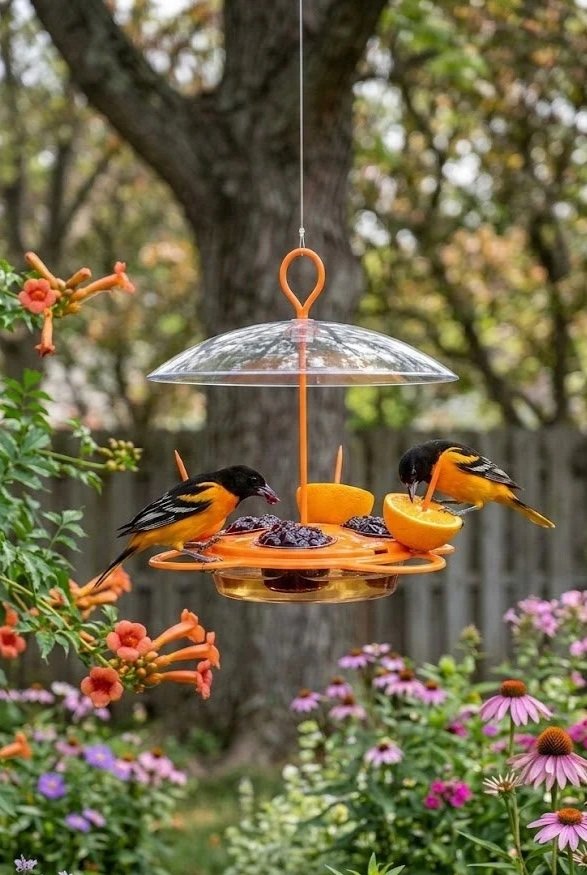
You hear about someone attracting a bright orange oriole with grape jelly.
You see a hummingbird hovering at a feeder like a tiny helicopter.
You learn that bluebirds will happily gobble live mealworms like popcorn at a movie.
And suddenly you realize…
There’s a whole other level of backyard bird feeding beyond the standard black oil sunflower seed.
Welcome to specialty bird feeding — the art (and joy) of offering specific foods to attract specific birds. It’s fun. It’s strategic. And sometimes it feels a little like running a very tiny, feathered restaurant.
Let’s explore what works, what doesn’t, and how to do it wisely.
Why Go Beyond Seed?
Traditional seed feeders attract a dependable cast of backyard regulars:
Cardinals
Chickadees
Finches
Sparrows
Nuthatches
And that’s wonderful.
But some of the most exciting backyard visitors don’t show up for standard seed blends. They prefer fruit. Nectar. Insects. Or very particular treats.
If you’d like to expand your birding experience — and your life list — specialty feeding can be a game changer.
Just remember: specialty feeders often attract less common, seasonal, or migratory birds. That means patience is part of the process.
This isn’t fast food. It’s fine dining.
Hummingbird Nectar: Tiny Athletes, High-Octane Fuel
Few things electrify a backyard like a hummingbird zipping in.
In much of the eastern U.S., that star performer is the Ruby-throated Hummingbird. In the West, you may host Anna's Hummingbird, Black-chinned Hummingbird, or others depending on region. And don’t get me started on southeast Arizona and deep south Texas where there are a myriad of regular as well as rare hummingbird species visiting feeders.
The Right Recipe
Hummingbird nectar is simple:
1 part white granulated sugar
4 parts water
No dye
No honey
No brown sugar
Boil water, dissolve sugar, cool, and serve.
That’s it.
Red dye is unnecessary (feeders provide enough visual cue), and honey can promote dangerous fungal growth.
Placement & Maintenance
Hang feeders near natural cover (shrubs or trees).
Keep them in partial shade when possible.
Clean every 2–3 days in hot weather (yes, even if they look clean).
Hummingbirds are territorial. When you notice squabbles (and you will), try placing multiple feeders out of sight from one another.
A Note on Patience
Hummingbirds are migratory in many regions. If you put up a feeder, you may not see immediate action. They move through on timing that is ancient and instinctive.
Put the feeder out early in spring and leave it up through fall migration. You’re supporting birds that may have flown hundreds or even thousands of miles.
Fruit Feeders: Orioles and the Jelly Debate
If you want to attract an oriole, you might have to think like a fruit stand owner.
East of the Rockies, the dazzling Baltimore Oriole and its cousin the Orchard Oriole are drawn to sweet foods, especially during migration and early breeding season. In the western part of the continent, Bullock’s Oriole and Scott’s Oriole can replace their eastern counterparts. In southern Arizona you may see as many as 4 oriole species and Texas takes the prize with as many as 6 species.
What Works
Orange halves (fresh, replaced often)
Grape jelly (smooth, no artificial sweeteners)
Mealworms (yes, really)
Grape jelly works because it mimics the sugar content of fruit. Offer it in small quantities in a shallow dish designed for orioles. Watch where you place it, the jelly will surely attract ants.
Moderation Matters
Jelly should supplement natural foraging — not replace it. Think of it as a snack bar, not the full menu.
The Patience Factor
Orioles are migratory. You may host them for just a few weeks in spring. That’s normal. It makes the experience feel rare and special.
It also means you don’t panic if the feeder sits untouched for days.
They’re on their own schedule.
Mealworms: The Protein Powerhouse
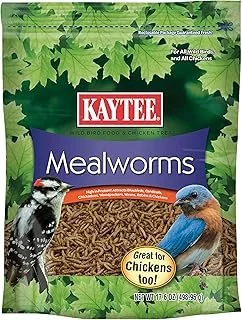
If you want to win the affection of insect-eating birds, mealworms are the golden ticket.
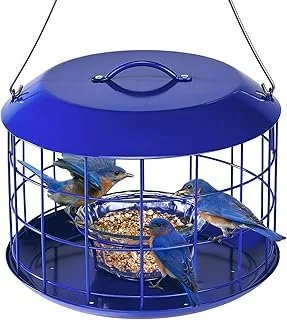
The beloved Eastern Bluebird is a prime example. So are wrens, chickadees, and occasionally woodpeckers.
Live vs. Dried
Live mealworms: Most attractive, especially during nesting season.
Dried mealworms: Convenient, store easily, should be rehydrated.
Offer them in a shallow dish or a feeder designed to keep larger birds out.
Why It Matters
During nesting season, birds need protein for growing chicks. Mealworms can support breeding success — especially in early spring when natural insect populations are still building.
A Reality Check
Bluebirds may not appear overnight. If you don’t already have them in your area, adding mealworms won’t magically summon them from three counties away.
But if they’re nearby? You’ve just opened the buffet.
Grape Jelly: Controversial or Clever?
Let’s circle back to jelly for a moment.
Yes, it works.
Yes, birds love it.
Yes, people worry about it.
When used responsibly (small amounts, clean feeders, limited seasonally), grape jelly can be an effective migratory attractant.
Problems arise when:
Feeders are not cleaned.
Jelly molds.
It becomes the primary diet.
Keep portions small and remove it when orioles move on.
Fruit Beyond Orioles
Don’t forget:
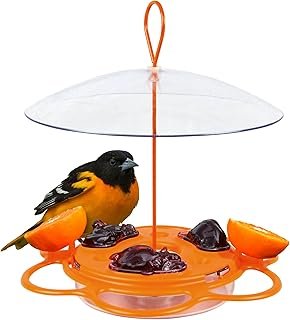
Apple and orange slices or halves
Berries
Raisins soaked in water
Thrushes, catbirds, and even some woodpeckers may sample fruit offerings. The charismatic Gray Catbird is especially fond of berries and fruit.
Again — seasonal and often migratory.
Specialty feeding rewards patience.
Suet: A Semi-Specialty Option
While not as exotic as jelly or mealworms, suet deserves mention.
Woodpeckers like the Downy Woodpecker and Red-bellied Woodpecker rely heavily on high-fat foods in winter.
Suet is especially valuable during cold months when calories matter most.
Specialty Feeders: Sometimes the Hardware Matters
Not all feeders are created equal.
Hummingbird feeders prevent access by bees and wasps.
Oriole feeders include perches suited to their body shape.
Mealworm feeders may feature small openings to exclude starlings.
Fruit spikes securely hold orange halves.
Specialty birds often require specialty equipment.
And yes — sometimes squirrels will still try to outsmart you. Consider it part of the adventure.
What NOT to Feed Birds
Now for the cautionary portion of our program.
Just because birds can eat something doesn’t mean they should.
Avoid:
Bread (low nutrition, can cause digestive issues)
Processed human food (chips, crackers, sweets)
Salty snacks
Honey in hummingbird nectar
Artificial sweeteners
Moldy anything
Birds need nutrient-dense food aligned with their natural diets.
Your backyard is not a fast-food drive-thru. If it isn’t good for US as a primary food source, why would it be okay for wild birds? And that includes the ducks and geese at the nearby pond.
The Patience Principle
Here’s the truth about specialty feeding:
You may invest in a new feeder and see… absolutely nothing for a while.
That’s normal.
Specialty birds are often:
Migratory
Territorial
Seasonal
Naturally less abundant
But when they do arrive — when that first oriole flashes orange in the spring sunlight — you’ll forget every quiet day before it.
Specialty feeding teaches us something birding always teaches:
Patience is rewarded. And the memory will last forever.
Our Story:
We live in a rural setting on a couple acres of a former cattle pasture. And while we are working to reclaim the grassland, it remains pretty mundane. Our bird life can be quite exciting though. Our winters are filled with hundreds of Chipping Sparrows and we boast residents like Blue Jays, Cardinals, Chickadees and more.
Every spring we anticipate the return of our beloved Painted Buntings with up to 5 pairs nesting in our hedgerow or little woodland. They frequent our millet feeder set up for them in particular.
One year during spring migration, Skip and I glanced out at the feeder to see not only Painted Buntings but an Indigo Bunting, a Lazuli Bunting (a little out of his normal range) and a Blue Grosbeak - all at the same time! It was an amazing sighting and in our own backyard!
A Word About Balance
Feeding birds is supplemental.
The real foundation of a bird-friendly yard is:
Native plants
Clean water
Shelter
Safe nesting sites
Specialty feeding is the icing, not the cake.
Why We Love It Anyway
There’s something deeply joyful about learning what each species prefers.
It makes us better observers.
Better stewards.
Better hosts.
When you offer nectar to a hummingbird or mealworms to a bluebird, you’re not just tossing out food. You’re participating in a relationship between human and wildlife.
And sometimes that relationship shows up in bright orange, metallic green, or electric blue.
Final Thoughts: Is Specialty Feeding Worth It?
Absolutely — if you approach it with:
Realistic expectations
Clean practices
Proper foods
Patience
You won’t turn your yard into a tropical rainforest overnight.
But you might host a migrant passing through.
You might help a nesting pair raise healthy chicks.
You might witness behavior you’d never see at a basic seed feeder.
And that, for many of us, is reason enough.
So go ahead.
Add the jelly cup.
Hang the nectar feeder.
Offer a few mealworms.
Then pour yourself a cup of coffee and wait.
The buffet is open.
And the guests — when they arrive — are unforgettable.
[Read about SEED bird feeding as well.
