

Be a Better Birder
10 Skills That Build Confidence in the Field
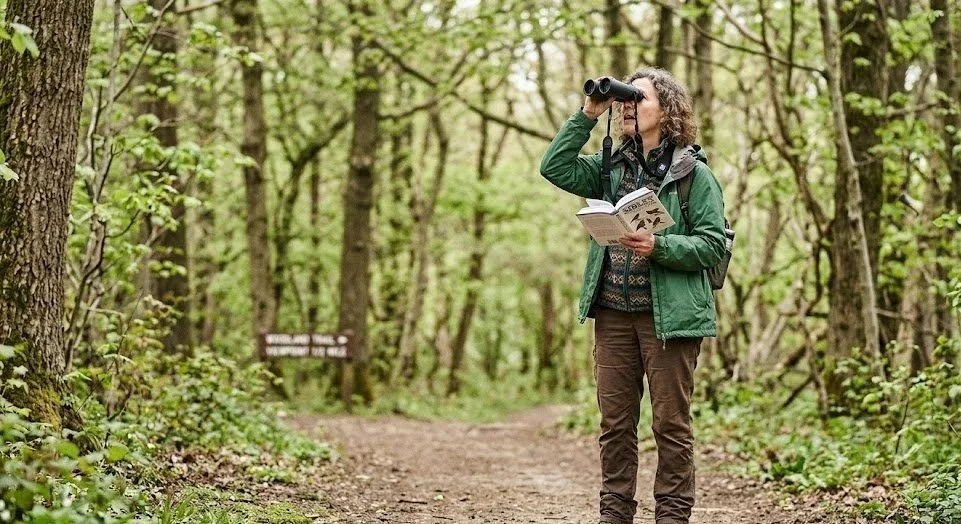
One of the great joys of birding is that you never run out of things to learn.
Even experienced birders are constantly refining their skills — noticing new behaviors, recognizing unfamiliar calls, or identifying a bird that once would have slipped past unnoticed. The more time you spend watching birds, the more your awareness grows.
But every birder eventually reaches the same point.
You know a few birds. You enjoy being outside. You might even have a pair of binoculars and a field guide.
And then the question naturally appears:
How do I become a better birder?
The good news is that improving your birding skills doesn’t require exotic travel, expensive equipment, or decades of experience. Most birding improvement comes from learning a handful of practical skills and practicing them regularly.
In this guide we’ll introduce 10 skills that instantly improve your birding. Each one will be explored in more detail in our Be a Better Birder series, but this overview will help you start sharpening your abilities right away.
And if you’re completely new to birding, we strongly recommend starting with our Beginning Birding series, which walks through the fundamentals step by step. Once you’re comfortable with the basics, the skills below will help you build confidence and identify more birds with ease.
Let’s dive in.
The 10 Skills That Instantly Improve Your Birding
1. Learning to Notice
Birding begins with paying attention to the world around you.
Many birds are easy to overlook if you’re not actively scanning trees, shrubs, and open spaces. A birder learns to watch movement, listen for subtle sounds, and notice shapes that stand out from the background.
Often the first clue isn’t a perfect view of a bird — it’s simply noticing something moved.
This skill develops quickly with practice. The more you slow down and observe, the more birds you’ll see.
2. Raising Your Binoculars Quickly and Smoothly
A surprisingly important birding skill is getting your binoculars on the bird quickly.
Beginners often see the bird first with their eyes, then lose it while trying to find it again through binoculars.
The trick is simple practice:
Spot the bird with your naked eye.
Keep your eyes locked on it.
Raise the binoculars directly to your face without looking down.
With repetition this becomes second nature and dramatically improves your ability to study birds before they move.
On average a birder loses the bird 70% of the time if the birder takes his/her eyes off their target so Getting use to using binoculars correctly is essential.
3. Recognizing Field Marks
Field marks are the visual clues that distinguish one species from another.
These might include:
Eye rings
Wing bars
Tail patterns
Bill shape
Color patches
Learning to notice these details is a major step forward in bird identification.
Instead of thinking “small brown bird,” you begin to notice:
A streaked chest
A bold eyebrow stripe
Yellow edges on the wings
Those details quickly narrow down the possibilities.
4. Understanding GISS (General Impression of Size and Shape)
Birders often talk about GISS, which stands for General Impression of Size and Shape.
Before you ever notice color patterns, your brain is already registering clues like:
Body shape
Posture
Bill length
Tail length
Flight style
A crow and a hawk may both appear dark against the sky, but their shapes and flight patterns are completely different.
With experience, you’ll often recognize a bird’s family or species instantly just from its silhouette.
5. Judging Relative Size
One of the easiest identification tools is learning to compare birds to common “reference birds.”
Many birders mentally measure birds against three familiar species:
American Robin – medium-sized bird
American Crow – large songbird
Red-tailed Hawk – large raptor
When you see an unfamiliar bird, simply ask:
Is it robin-sized?
Smaller than a robin?
Crow-sized?
Hawk-sized?
This simple comparison instantly narrows the list of possibilities.
6. Listening and Birding by Ear
Birdsong is one of the most powerful birding tools.
In many habitats you’ll hear far more birds than you see.
Learning common bird songs and calls allows you to detect species that might otherwise remain hidden in dense foliage.
Start with a few common backyard birds and gradually add new sounds to your mental library. Over time the forest begins to feel alive with recognizable voices.
[True confession: I am a lousy birder by ear. I use to study for weeks the songs of birds I expected to see on a trip - over & over & over. It seemed to always boil down to either it’s a song I’ve heard or a new song to me and I had no idea what bird it was but I probably can tell you what bird family it belongs to which narrows down my focus quickly.]
7. Understanding Bird Families
Bird families provide an incredibly helpful shortcut to identification.
Birds within the same family often share:
Similar body shapes
Feeding behaviors
Flight styles
Habitat preferences
For example:
Woodpeckers
Climb tree trunks
Use stiff tails for support
Peck and probe bark
Swallows
Sleek bodies
Long pointed wings
Fast aerial flight
Ducks
Floating posture
Wide bills
Water-based behavior
Recognizing these patterns allows you to quickly narrow down what you’re seeing.
8. Learning Birding Jargon
Every hobby has its vocabulary, and birding is no exception.
Terms like:
Lifer
FOY (First of Year)
GISS
LBJ (Little Brown Job)
…can sound mysterious at first.
But learning the language helps you communicate with other birders and understand field reports and trip lists.
More importantly, these terms often represent concepts that improve your birding skills.
9. Using a Field Guide Effectively
A good field guide remains one of the most valuable tools in birding.
While apps are convenient, many birders still prefer a paperback field guide for studying and learning.
Field guides allow you to:
Compare similar species side by side
Study range maps
Notice subtle differences in plumage
Learn seasonal variations
Write notes in the margin, highlight Texas birds for your first visit, circle your lifers and even add sticky notes when appropriate
One of the best ways to grow as a birder is simply to spend time flipping through your field guide regularly.
Think of it as immersion learning.
Notice:
Range maps
Seasonal plumages & age-related differences
Subtle markings
Differences in bill shapes
Over time your brain begins storing these images, so when you see a bird in the field something clicks.
You might not know exactly why at first — but you recognize it.
That recognition comes from familiarity built through immersion.
Even a few minutes a day increases your familiarity with birds you haven’t seen yet.
We’ll talk more about this idea in an upcoming 1-Minute Read about studying your field guide daily.
10. Practicing Your Skills Often
Like any skill, birding improves with practice.
The more often you watch birds, the more your brain builds connections between:
Shapes
Sounds
Behaviors
Habitats
Practice can happen anywhere:
Your backyard
Local parks
Neighborhood walks
Nature preserves
You don’t need rare birds to improve. In fact, common birds are the best teachers.
Watch them closely and you’ll begin noticing details you once missed.
Birding Is Even Better With Friends
Birding may look like a solitary hobby, but it often becomes more enjoyable when shared with others.
A second pair of eyes can spot birds you might miss, and discussing what you’re seeing reinforces learning.
If you’ve never tried birding with someone else, consider inviting a friend along. We wrote a quick read about this called “Invite a Friend Birding.”
Sometimes four eyes really are better than two.
Birding together creates a relaxed environment where you can compare observations and learn from each other.
Join Local Bird Walks and Field Trips
Another excellent way to improve your birding is by joining local bird walks or field trips.
These outings are often organized by:
Local Audubon chapters
Nature centers
Birding clubs
State parks
Wildlife refuges
Experienced birders frequently lead these walks and are usually happy to share their knowledge.
In fact, most birders remember exactly what it felt like to be new — and many enjoy helping beginners learn the ropes.
Don’t be shy about asking questions. And a good field trip leader will not move on until everyone sees each bird located whenever possible.
You might learn:
How experienced birders locate birds quickly
Which habitats attract certain species
Identification tricks that aren’t obvious in books
The local areas that are very birdy so you can return to them later
And you’ll likely come away with a few new birds on your list.
Confidence Comes From Practice
Many beginners worry that birding requires an encyclopedic memory.
It doesn’t.
Birding is really about building familiarity through observation.
So instead of trying to memorize all 1100 species (ABA area) and their variations, the trick is to eliminate families based on GISS, song, field marks, etc. so the focus becomes either which family might a bird belong to or the unusual exceptions (like Pipits or Verdins).
Every outing adds a few new pieces to the puzzle.
Eventually those pieces begin fitting together.
You start recognizing:
Families
Behaviors
Flight patterns
Calls
And suddenly birds that once seemed impossible to identify begin making sense.
Continue Your Journey
If you're just starting your birding adventure, we encourage you to revisit our Beginning Birding series, where we cover foundational skills like:
Learning to see like a birder
Noticing field marks
Birding by ear
Putting it all together
Those lessons provide the perfect starting point.
From there, the Be a Better Birder series will help you refine the skills that build confidence in the field.
Birding is a lifelong learning experience — and that’s part of the fun.
Every walk outside offers a chance to see something new.
So grab your binoculars, open your field guide, and spend a little time with the birds.
You might be surprised how quickly your skills begin to grow.
I look forward to birding with you - in the field.
