

The Backyard Wildlife Sanctuary Checklist
Simple Steps to Make Your Yard More Welcoming
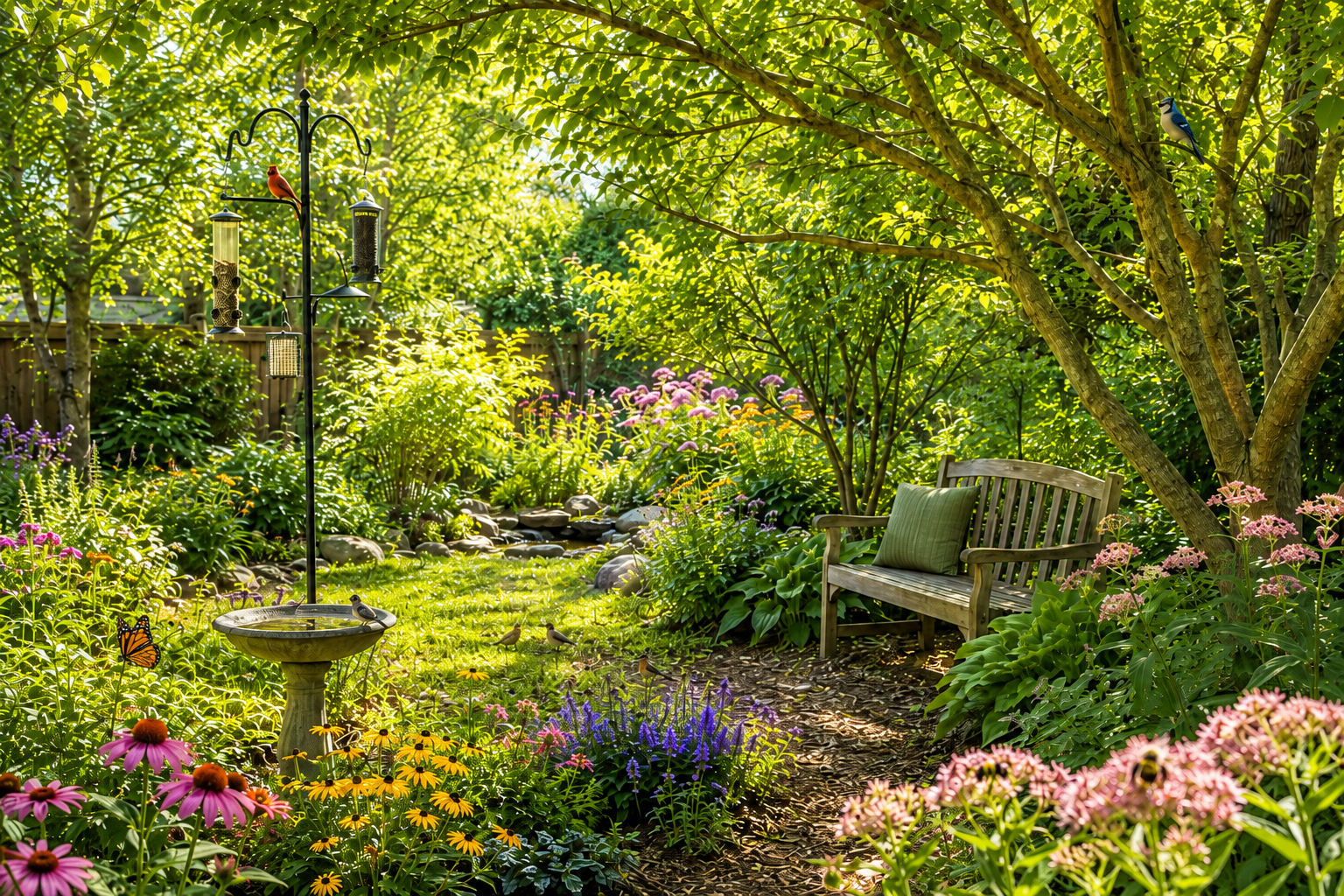
A backyard wildlife sanctuary does not have to be large, perfectly landscaped, or overflowing with expensive plants.
It does not even have to look like a traditional garden.
A true wildlife sanctuary is simply a place where birds and other wild creatures can find some of the things they need to survive: food, water, shelter, nesting places, and protection from common dangers.
That means almost any outdoor space can become more wildlife-friendly.
A suburban backyard can become a sanctuary. So can a small townhouse garden, a patio filled with containers, or a balcony with a few carefully chosen plants. You do not have to complete everything at once, either. Wildlife-friendly yards are usually built gradually, one tree, one bird bath, and one small decision at a time.
Use this backyard wildlife sanctuary checklist to evaluate what your yard already provides and discover a few practical improvements you can make next.
Start With a Simple Wildlife Survey
Before buying plants or rearranging your entire yard, spend a little time observing what is already happening.
Sit quietly outside for 10 or 15 minutes. Notice which birds visit. Look for butterflies, bees, dragonflies, squirrels, lizards, frogs, or other small animals.
Where do the birds land before approaching a feeder? Which shrubs do they disappear into? Are there parts of the yard that remain damp after rain? Is there an exposed corner where the wind always seems especially strong?
Wildlife will often show you how your yard is already being used.
Look for signs such as:
Birds visiting the yard
Butterflies or native bees
Trees or shrubs used for cover
Areas where birds search for insects
Natural nesting sites
A reliable source of water
Protected areas away from heavy activity
Do not worry if your first survey reveals very little wildlife. That simply gives you a starting point.
Provide More Than One Kind of Food
Bird feeders are wonderful, but a complete backyard wildlife sanctuary offers more than seed.
Wild birds eat a wide variety of foods throughout the year. Depending on the species and season, they may rely on insects, berries, nuts, seeds, nectar, fruit, spiders, or other small animals.
A feeder may attract birds to your yard, but plants and natural habitat encourage them to stay.
Add Native Plants
Native plants have developed alongside the wildlife in your region. They are often especially valuable because they support native insects, which in turn feed birds.
Even birds that regularly visit seed feeders may depend heavily on insects during nesting season. Young songbirds require protein, and caterpillars are among the most important foods many adult birds carry back to their nestlings.
You do not have to replace every plant in your yard. Begin with one native shrub, flowering perennial, or small tree.
Helpful additions might include:
At least one native flowering plant
A native shrub that produces berries
A tree that provides seeds, nuts, insects, or fruit
Several plants that bloom at different times
A variety of species rather than large areas planted with only one kind of plant
The more variety you provide, the more forms of wildlife your yard may support.
Let Some Flowers Go to Seed
It is tempting to remove every faded flower as soon as blooming ends. However, those aging flower heads may become valuable natural bird feeders.
Goldfinches, sparrows, buntings, and other seed-eating birds may visit dried sunflowers, coneflowers, asters, and native grasses.
Leaving at least a few seed heads standing also gives your yard winter texture. More importantly, it allows birds to forage naturally.
Consider:
Leaving selected flower heads standing after blooming
Allowing native grasses to produce seed
Keeping some fallen seeds beneath plants
Waiting until late winter or early spring to cut everything back
A slightly untidy garden is often a very busy wildlife garden.
Offer Bird Feeders Thoughtfully
Bird feeders can still play an important role in your sanctuary, especially during periods of cold weather, migration, drought, or food shortages.
Rather than hanging several identical feeders, consider offering different foods in different feeder styles.
A tube feeder may serve smaller birds such as chickadees, titmice, finches, and nuthatches. A platform feeder can accommodate cardinals, jays, towhees, and doves. A suet feeder may attract woodpeckers and other insect-eating birds.
A well-maintained feeding station should include:
Fresh, high-quality bird seed
More than one feeder style
Seed protected from moisture
Feeders that are cleaned regularly
Prompt removal of moldy or contaminated food
Nearby cover where birds can escape if danger appears
Your feeding station does not need to resemble a bird-themed amusement park. A few well-maintained feeders are better than a large collection that is difficult to keep clean.
Add a Safe Water Source
Water is one of the most effective features you can add to a wildlife-friendly yard.
Not every bird eats sunflower seed, but every bird needs water.
Birds use water for drinking and bathing. Butterflies may gather around moist soil. Bees and other insects may drink from shallow edges. In the right habitat, frogs, toads, and dragonflies may also benefit.
Choose a Shallow Bird Bath
Many decorative bird baths are deeper than birds prefer. Most songbirds are more comfortable in shallow water, generally no more than an inch or two deep.
A gently sloping basin allows birds of different sizes to choose a comfortable depth. A flat rock placed in the center can create an additional landing place.
A bird-friendly water source should have:
A shallow bird bath or water tray
A rock or rough surface for secure footing
An open location where birds can see approaching danger
Shrubs or branches nearby, but not close enough for a cat to hide beside the water
Fresh water that is replenished regularly
Birds may be especially cautious around a new water source. Give them time to discover it.
Keep the Water Moving
Moving water is easier for birds to notice. A small bubbler, dripper, fountain, or solar-powered water mover can turn an ordinary bird bath into one of the most popular places in the yard.
The gentle sound of dripping or splashing water may attract birds that rarely visit feeders.
Good options include:
A bubbler
A slow dripper
A small fountain
A solar-powered water mover
A simple suspended container that produces a gentle drip
Make sure the water movement stays gentle, and check that cords, tubing, or equipment do not create hazards. Pumps and bubblers should also be cleaned as needed.
Clean Bird Baths Frequently
Bird baths collect feathers, dust, leaves, droppings, pollen, and algae. During hot weather, they may require attention every day.
Cleaning does not have to be complicated. Empty the basin, scrub it with a stiff brush, rinse it thoroughly, and refill it with clean water.
Regular maintenance includes:
Emptying and rinsing the bath frequently
Scrubbing away algae and debris
Avoiding long periods of standing, dirty water
Keeping the basin filled during hot or dry weather
Using a bird bath heater safely if winter temperatures require one
Fresh water may be more valuable than another feeder.
Build Layers Into the Landscape
A yard with only short grass and one tall tree offers fewer opportunities than a yard with several levels of vegetation.
In natural habitats, plants grow in layers. Tall trees form the canopy. Smaller trees and shrubs create the understory. Flowers, grasses, ferns, and low plants fill the ground level.
Birds use each layer differently.
Warblers and vireos may forage high in trees. Cardinals and towhees often favor dense shrubs. Sparrows search close to the ground. Hummingbirds visit flowering plants. Wrens investigate tangled branches and sheltered corners.
A layered landscape may include:
At least one taller tree if space allows
Small trees or large shrubs
Dense shrubs for cover
Flowers, grasses, ferns, or groundcover
Smaller areas of lawn
Connected plantings rather than isolated individual plants
A layered yard gives birds places to feed, rest, hide, court, nest, and raise their young.
Create Safe Shelter
Wildlife needs places to escape from predators, bad weather, and human disturbance.
An isolated feeder in the middle of an open lawn may leave birds feeling exposed. Adding shelter nearby can make the entire feeding area more appealing.
Plant Dense Shrubs
Shrubs with closely spaced branches provide excellent hiding places. Evergreen shrubs are especially useful because they offer protection throughout the year.
Thorny native shrubs may provide additional security for nesting birds.
Useful shelter features include:
Dense shrubs near feeding areas
Evergreen cover where appropriate
Protected corners away from constant foot traffic
Enough space between shrubs and windows to reduce collision risks
Plants allowed to grow in a naturally dense form
Birds appreciate a tidy feeding station. They are less concerned about whether every shrub has been trimmed into a perfect green ball.
Leave a Brush Pile
A small brush pile can provide shelter for sparrows, towhees, wrens, rabbits, lizards, and beneficial insects.
Place branches in a quiet part of the yard where the pile will not create a fire hazard or conflict with local rules.
A safe brush pile should:
Use fallen branches or pruned limbs
Be built loosely enough to create interior spaces
Sit away from buildings and ignition sources
Avoid locations where outdoor cats can easily ambush birds
Be allowed to collect some leaves naturally
A brush pile may not win a neighborhood landscaping award, but the towhees may give it five stars.
Keep Some Fallen Leaves
Fallen leaves create habitat.
They shelter insects and other small creatures. Birds such as thrushes, towhees, wrens, and sparrows scratch through leaf litter looking for food.
Instead of removing every leaf, allow some to remain beneath trees, shrubs, and flower beds.
You might:
Leave a layer of leaves beneath plantings
Move leaves from sidewalks into garden beds
Avoid shredding every leaf immediately
Watch for birds foraging in the litter
The soft rustling sound beneath a shrub may be your first clue that a new bird has arrived.
Offer Nesting Opportunities
Birdhouses can be helpful, but they are only one kind of nesting site.
Some birds nest in cavities. Others build nests on branches, inside shrubs, on ledges, or close to the ground.
A good sanctuary provides a variety of possibilities.
Protect Natural Nesting Sites
Dense shrubs, mature trees, vines, and sheltered ledges may all be used for nesting.
Before pruning during spring and summer, inspect the area carefully.
Helpful practices include:
Checking shrubs and trees for active nests
Delaying major pruning until nesting season has passed
Preserving safe tree cavities when possible
Keeping people and pets away from active nests
Allowing birds to choose their own nesting locations
Once birds begin building a nest, observation from a respectful distance is usually the best approach.
Install the Right Nest Box
A nest box should be selected for a particular species. Hole size, interior dimensions, mounting height, habitat, ventilation, and drainage all matter.
A box that is perfect for a chickadee may not be appropriate for a bluebird. A decorative birdhouse with a large entrance hole may invite predators or unwanted occupants.
A properly designed nest box should have:
Dimensions suited to a species found in your area
The correct entrance-hole size
Adequate ventilation and drainage
Secure mounting
A predator guard when appropriate
Regular, responsible monitoring and cleaning
Avoid adding an exterior perch to most songbird nest boxes. Birds generally do not need it, but predators may find it useful.
Reduce Common Backyard Dangers
Attracting wildlife also creates a responsibility to reduce hazards.
A beautiful feeding station is not truly a sanctuary if birds regularly strike nearby windows, encounter pesticides, or face stalking cats.
Make Windows Safer
Window collisions kill large numbers of birds. Reflections of sky and vegetation may look like open habitat, especially when feeders or plants are nearby.
A few decorative decals spaced far apart are usually not enough.
Effective window treatments create a visible pattern across the outside surface of the glass.
Important steps include:
Identifying windows where birds have struck
Applying closely spaced markings to the outside of the glass
Using screens, cords, dots, film, or other proven treatments
Moving feeders very close to windows or much farther away
Reducing unnecessary nighttime lighting during migration
Do not wait for repeated collisions. One strike is enough reason to address a dangerous window.
Keep Cats Indoors
Even well-fed cats retain their hunting instincts.
Keeping cats indoors protects birds and other small wildlife. It also protects cats from traffic, disease, predators, and other outdoor dangers.
Safer options include:
Keeping pet cats indoors
Providing a secure outdoor enclosure or catio
Preventing cats from hiding near feeders or bird baths
Talking with neighbors respectfully about roaming pets
A wildlife sanctuary should not become a hunting zone.
Reduce Pesticide Use
Insects are part of a healthy food web.
When pesticides remove insects, they also remove food for birds, pollinators, bats, amphibians, and other wildlife. Chemical treatments may also harm creatures they were never intended to target.
Try to:
Avoid broad-spectrum insecticides
Use the least harmful solution available
Accept some leaf damage as part of a living garden
Encourage natural predators such as birds and beneficial insects
Avoid spraying plants while pollinators are actively visiting
A few chewed leaves may be evidence that your sanctuary is working.
Make the Yard Easier to Maintain
A sanctuary should bring you pleasure, not become an exhausting list of chores.
Choose improvements you can realistically care for.
A large pond may sound wonderful, but a clean bird bath may be more practical. Ten feeders may attract more birds, but three feeders may be easier to maintain safely. An elaborate native garden may be a long-term goal, but one new shrub is still progress.
To keep your sanctuary manageable:
Choose projects that fit your time and budget
Place water where it is easy to refill
Keep cleaning tools near the feeding station
Add plants gradually
Take photographs so you can track changes
Keep a simple list of visiting species
When maintenance is manageable, you are more likely to continue.
Your Backyard Wildlife Sanctuary Checklist
You do not need to complete every item before your yard counts as a sanctuary.
Begin with the basics:
Food from feeders and natural plants
Fresh, shallow water
Trees, shrubs, flowers, and ground-level cover
Safe shelter from weather and predators
Nesting opportunities
Fewer pesticides
Safer windows
Cats kept away from wildlife
Regular cleaning and maintenance
Time spent observing what visits
Choose one item and make it your next project.
Plant a shrub. Add a shallow water dish. Leave a few leaves beneath the hedge. Treat a dangerous window. Clean an old feeder. Let the coneflowers go to seed.
Small actions begin to connect.
A bird lands in the new shrub before approaching the feeder. A butterfly discovers the flowers. A wren investigates the brush pile. A robin splashes in the bird bath. Eventually, the yard begins to feel different—not only to wildlife, but to you.
You begin noticing when the first hummingbird arrives. You recognize the towhee scratching under the leaves. You hear young chickadees calling from the shrubs. You realize that your yard is no longer simply an outdoor space.
It has become habitat.
And that is the real goal of a backyard wildlife sanctuary: not perfection, but a living place where wild creatures are welcome and where you have a front-row seat to the small, remarkable events happening just outside your door.
Read our blog How to Create Layers in Your Backyard for More Birds.
