

The Ultimate Guide to Backyard Bird Seed
What to Offer, What to Skip, and Who You’ll Attract
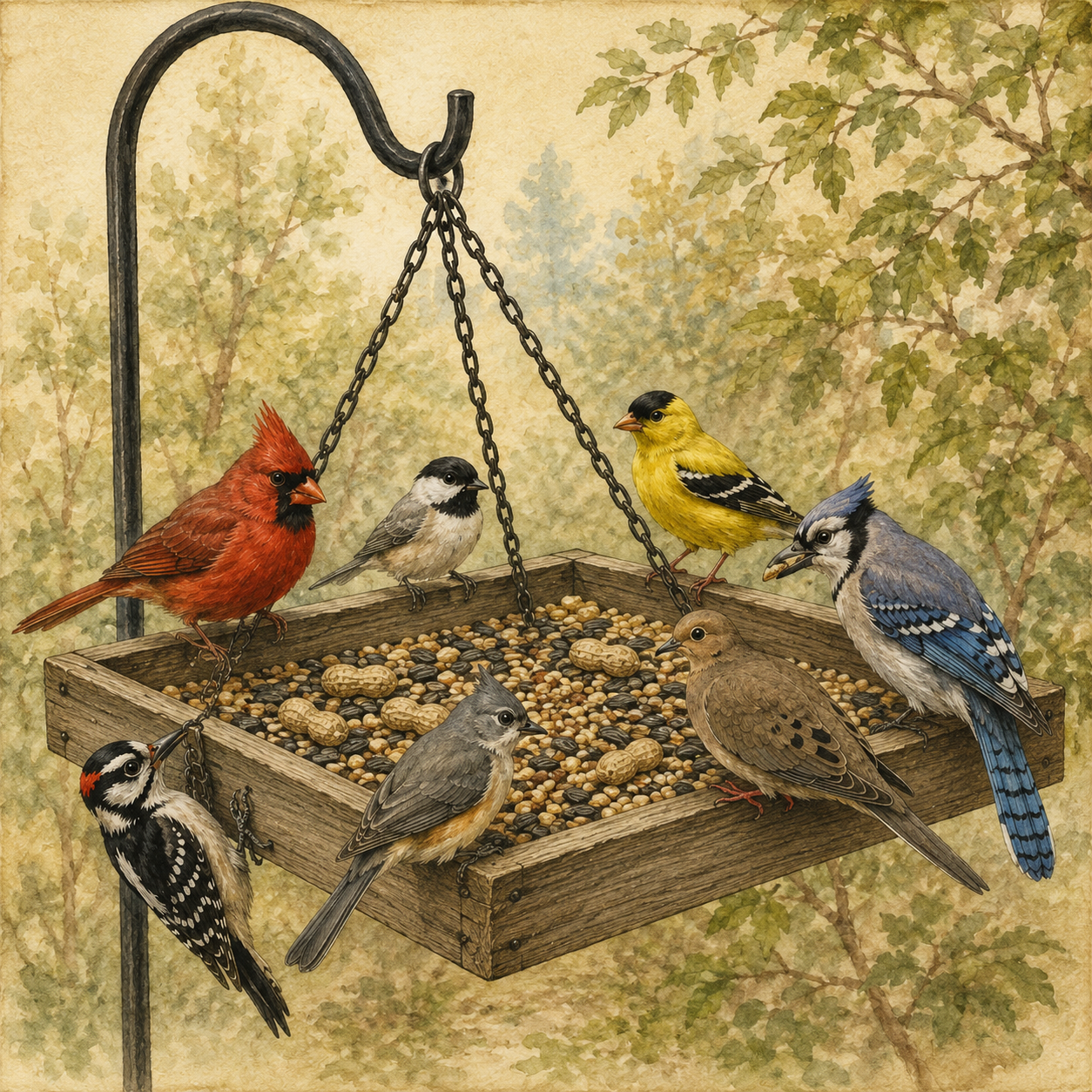
You've spent good money on bird seed. Yet half of it ends up on the ground. The squirrels seem happier than the birds. Grackles arrive in a noisy flock, while the cardinals you hoped to attract never seem to get a turn at the feeder.
The problem might not be your feeder.
It might be your seed.
Backyard bird feeding is one of the simplest joys of nature, yet choosing the right seed can feel surprisingly complicated. Bags of colorful mixes crowd the shelves, each promising to attract a “variety of songbirds,” but most contain fillers, waste, or seed that your backyard birds won’t eat so they will simply toss the seed to the ground.
The secret to a thriving, low-waste backyard bird buffet isn’t buying the biggest, brightest bag — it’s understanding which seeds birds actually prefer, which birds they attract, and which seeds to avoid if you want a clean feeding area and fewer unwanted guests like grackles, starlings, and squirrels.
This descriptive guide will walk you through the four most valuable seeds — black oil sunflower, millet, safflower, and nyjer — plus crowd-pleasing peanuts — and reveal the seeds that only look like a bargain but often do more harm than good.
Whether you’re a seasoned birder or a new feeder enthusiast, you’ll walk away knowing exactly what to put in your feeders to keep your backyard bustling with healthy, happy birds.
The Most Expensive Bird Seed Isn’t the One With the Highest Price Tag
A $35 bag of premium sunflower seed may actually be cheaper than a $15 bargain mix loaded with red milo and fillers. Birds often toss undesirable seeds to reach their favorites, leaving you with waste, mold, rodents, and empty dollars scattered beneath the feeder. Cornell Lab and other bird-feeding experts consistently note that black-oil sunflower attracts the widest variety of backyard birds, while fillers like red millet and milo are often ignored and become that moldy pile under your bird feeder.
1. Black Oil Sunflower Seed: The Gold Standard of Birdseed
If backyard birds could vote, black oil sunflower would win “Most Popular Feed” every year. Its thin shell is easy to crack, its oily kernel is rich in calories and in cooler months birds crave high-energy food.
Birds that love sunflower seed
You’ll see an impressive variety of species visit when you offer it, including:
Northern Cardinals
Carolina and Black-capped Chickadees
Tufted Titmice
House, Purple, and American Goldfinches
Downy and Hairy Woodpeckers
Nuthatches
Grosbeaks
Jays, including Blue Jays
Many sparrows
Even birds with smaller bills, like finches and chickadees, can easily handle the shells.
Why sunflower works so well
Black oil sunflower provides:
High fat and protein content (essential for winter survival)
Excellent per-seed nutrition, so birds spend energy efficiently
It’s also relatively affordable compared to boutique mixes and can fill almost any feeder — tube, hopper, tray, platform, even ground-level feeding stations.
Sunflower seed drawbacks
A few things to keep in mind:
Hulls can pile up under feeders if you offer sunflower in-shell
Starlings, grackles, and squirrels adore it
It can be messy on patios or decks
To reduce cleanup, many bird enthusiasts switch to sunflower hearts or chips. They’re more expensive but produce zero hull waste — which means less mold and fewer rodents.
2. White Millet: The Under-Appreciated Seed Small Birds Love
White proso millet is one of the most underrated seeds in backyard bird feeding. While it lacks the glamour of sunflower or the mystique of nyjer, millet is beloved by ground feeders and small-billed birds who thrive on tiny, energy-rich seeds.
Birds attracted to white millet
Mourning Doves
Dark-eyed Juncos
House Finches
American Tree Sparrows
Song, Chipping, and White-throated Sparrows
Towhees
Indigo Buntings
Painted Buntings (in some regions)
Millet is also a favorite for feeder newbies: small birds investigating a new feeder often feel more confident when they spot familiar seeds on a tray or platform.
Where millet shines
White millet is ideal for:
Ground platforms
Open trays
Low-slung feeders near shrubs
Areas where sparrows and buntings feed naturally
These birds prefer staying close to cover while they forage, darting in and out with quick, nervous energy. Millet fits their natural feeding rhythm perfectly.
Millet drawbacks
Millet attracts wonderful birds — but also some unwanted ones:
Cowbirds
House sparrows
Pigeons
If you want buntings and native sparrows without encouraging large flocks of invasive or nuisance birds, offer millet in small amounts and avoid broadcast scattering. Small feeders with equally small perches can also work. A tube feeder will rule out pigeons, doves and most probably cowbirds because they won’t be able to stand on the perch and rotate their body to face the seed ports.
3. Safflower Seed: The Secret Weapon Against Squirrels and Bullies
If your feeders are dominated by grackles, starlings, or squirrels, safflower seed might be your new best friend. Its husk is harder to crack through, and while many songbirds enjoy it, squirrels (they may not like the taste) and aggressive birds often leave it alone — which gives smaller, more desirable species a chance.
Birds that enjoy safflower
Cardinals
House Finches
Purple Finches
Chickadees
Nuthatches
Grosbeaks
Titmice
Cardinals, especially, adore safflower and will return repeatedly for it.
Why safflower helps rebalance your feeders
Safflower can:
Discourage squirrels (not always, but often!)
Reduce starling and grackle activity
Create a calmer feeder environment for shy species
Offer excellent nutrition comparable to sunflower seeds
If your backyard bird feeding has devolved into a standoff with aggressive birds, offering safflower in a dedicated feeder can shift the dynamic almost overnight.
Safflower drawbacks
Some drawbacks to consider:
Some birds need time to learn safflower is food
It’s more expensive than millet
Starlings occasionally acquire a taste for it, eliminating its advantage
Try mixing a small amount of safflower with sunflower seed at first to help birds adapt.
4. Nyjer (Thistle): The Favorite Seed of Finches
Nyjer — often called thistle, though it’s not actually related to the plant — is a small, oil-rich seed beloved by finches and other small-billed birds. These tiny seeds pack incredible nutrition in a small package, perfect for active birds with high metabolic demands.
Birds that flock to nyjer
American Goldfinches
Lesser Goldfinches
Pine Siskins
Common and Hoary Redpolls
Indigo Buntings (occasionally)
Nyjer is best offered in mesh-style or finch tube feeders with narrow ports, which keep larger birds from monopolizing the feeder.
Why nyjer is special
Nyjer provides:
High fat for high-energy needs
Small size perfect for delicate finch bills
Clean feeding since birds take seeds individually
Finches often feed cooperatively, meaning your nyjer feeder may have several small birds eating peacefully at once — a beautiful and calming sight.
Nyjer drawbacks
Spoils quickly if it gets damp
Can be expensive
Loses appeal if stored too long (birds will ignore stale seed)
Always buy fresh nyjer in small quantities and use feeders with weather domesor in locations that protect it from moisture.
5. Peanuts: A Protein Powerhouse for Woodpeckers and More
While not technically a seed, peanuts are a top-tier food for backyard birds — high in protein, rich in fat, and irresistible to a wide range of species.
In fact, if you surveyed MY backyard birds, their #1 choice would be peanuts pieces. Everyone prefers it (and, of course, the backyard squirrels and raccoons).
Birds that love peanuts
Downy, Hairy, and Red-bellied Woodpeckers
Nuthatches
Chickadees
Titmice
Carolina Wrens
Blue Jays
Cardinals
Buntings and Grosbeaks
Most Sparrows
Some Doves
Whether you offer shelled peanuts in a tube feeder or peanuts in the shell on a platform for the jays and woodpeckers, birds will appreciate the richness.
Benefits of offering peanuts
Excellent winter fuel
Attracts species that don’t always visit seed-only feeders
Can entice shy species, like Red-bellied Woodpeckers, into closer view
Peanut drawbacks
A major squirrel magnet
Prone to mold in humid climates
Should never be salted or seasoned
Peanut feeders should be cleaned frequently to prevent contamination.
Match the Seed to Your Birding Goals
If You Want More Cardinals...
Black-oil sunflower
Safflower
If You Want More Goldfinches...
Nyjer
Sunflower chips
If You Want More Woodpeckers...
Peanuts
Suet
If You Want More Sparrows & Juncos...
White proso millet
Seeds to Avoid: How to Minimize Waste, Disease, and Unwanted Pests
Not all birdseed is created equal — and much of what’s sold in bargain mixes ends up rotting on the ground, attracting rodents, and spreading disease in crowded feeder areas.
Skip these common filler seeds:
❌ Milo (sometimes called sorghum)
One of the most common “filler seeds,” milo is round, red, and hard. Most backyard songbirds will toss it aside, leading to massive waste.
It mainly attracts:
Pigeons
Starlings
House sparrows
Blackbirds
If you’re trying to limit large flocks of nuisance birds, avoiding milo is a smart move.
❌ Cracked corn (in large quantities)
Cracked corn attracts:
Grackles
Blackbirds
Starlings
Pigeons
Squirrels
Raccoons
Small amounts are harmless in quality mixes, but handfuls scattered on the ground can cause crowding and increase disease risk due to droppings.
❌ Red millet
Disliked by virtually all backyard bird visitors.
Most beneficial birds ignore it entirely and throw it out onto the ground.
❌ “Fruit-flavored pieces,” dyed food bits, and mystery shapes
These are not natural foods for birds and often go untouched. They also add artificial colors and potentially harmful ingredients with zero nutritional payoff.
How to Prevent Disease and Waste at Your Bird Feeders
Bird feeding should support wild populations — not accidentally harm them. Minimizing waste and maintaining clean feeder areas helps prevent outbreaks of avian diseases and keeps your backyard healthy.
1. Choose seed birds actually eat
Offering only sunflower, millet, safflower, nyjer, and peanuts dramatically reduces ground waste.
2. Keep feeders clean
Wash feeders every 2–4 weeks with a 1:10 bleach solution or with hot, soapy water.
Dry thoroughly before refilling.
3. Use weather guards
Rain leads to mold — especially in nyjer and peanut feeders. Small weather domes can extend the life of your seed and, used appropriately, deter squirrels too.
4. Offer smaller quantities in summer
Warm weather = quicker spoilage.
Refill feeders with less seed and check frequently.
5. Keep feeding areas raked
Seed hulls, droppings, and old seed can accumulate beneath feeders. Regular cleanup reduces the risk of salmonella and other illnesses.
Matching the Right Seed to the Right Feeder
Different seeds work best in different feeders. A quick guide:
Sunflower: tube feeders, hopper feeders, platform feeders
Millet: ground trays, low platforms, open trays
Safflower: tube or hopper feeders
Nyjer: finch tubes, mesh nyjer feeders
Peanuts: mesh peanut feeders, platforms, peanut wreaths
For the most variety, maintain three feeder types: a tube feeder, a platform feeder, and a specialized finch or peanut feeder.
A Healthier, Happier Backyard Starts With Quality Seed
Feeding birds is an act of stewardship — and choosing the right seed directly impacts the health of your backyard ecosystem. With a few thoughtful choices, you can attract colorful cardinals, acrobatic chickadees, brilliant goldfinches, and cheerful wrens… while avoiding waste, disease, and the uninvited crowds of pigeons and squirrels.
By focusing on sunflower, millet, safflower, nyjer, and peanuts, and avoiding common filler seeds, you’ll create a feeding station that is cleaner, safer, and far more rewarding.
Seed is Only Part of the Equation
Explain that birds aren't visiting solely because of food.
They also need:
Water
Shelter
Native plants
Layered vegetation
Nesting areas
Birds are much more likely to become regular visitors when food is combined with habitat. Clean feeders, native shrubs, and a dependable water source often attract more birds than simply adding another feeder.
Turn Your Yard Into More Than a Feeding Station
The right seed can attract more birds, reduce waste, and make your feeders more enjoyable to watch. But if you really want to create a yard filled with birds throughout the year, think beyond the feeder.
Birds need food, water, shelter, and safe places to nest. A few native shrubs, a simple bird bath, and thoughtfully placed feeders can transform an ordinary backyard into a true bird sanctuary.
If you'd like to take the next step, visit our Backyard Bird Sanctuary series where you'll learn how to create layers of habitat, choose bird-friendly plants, add water features, and design a yard that birds will return to season after season.
And if you're looking for feeders, seed storage solutions, bird baths, or other birding essentials, browse our carefully selected recommendations in the Rather Be Birding Amazon Store. We've gathered products we believe can help make bird feeding easier, cleaner, and more enjoyable.
Your feeders may bring birds into the yard.
A backyard sanctuary gives them a reason to stay.
