

When Should You Intervene with Backyard Birds?
Knowing When to Help - and When Nature Should Take Its Course
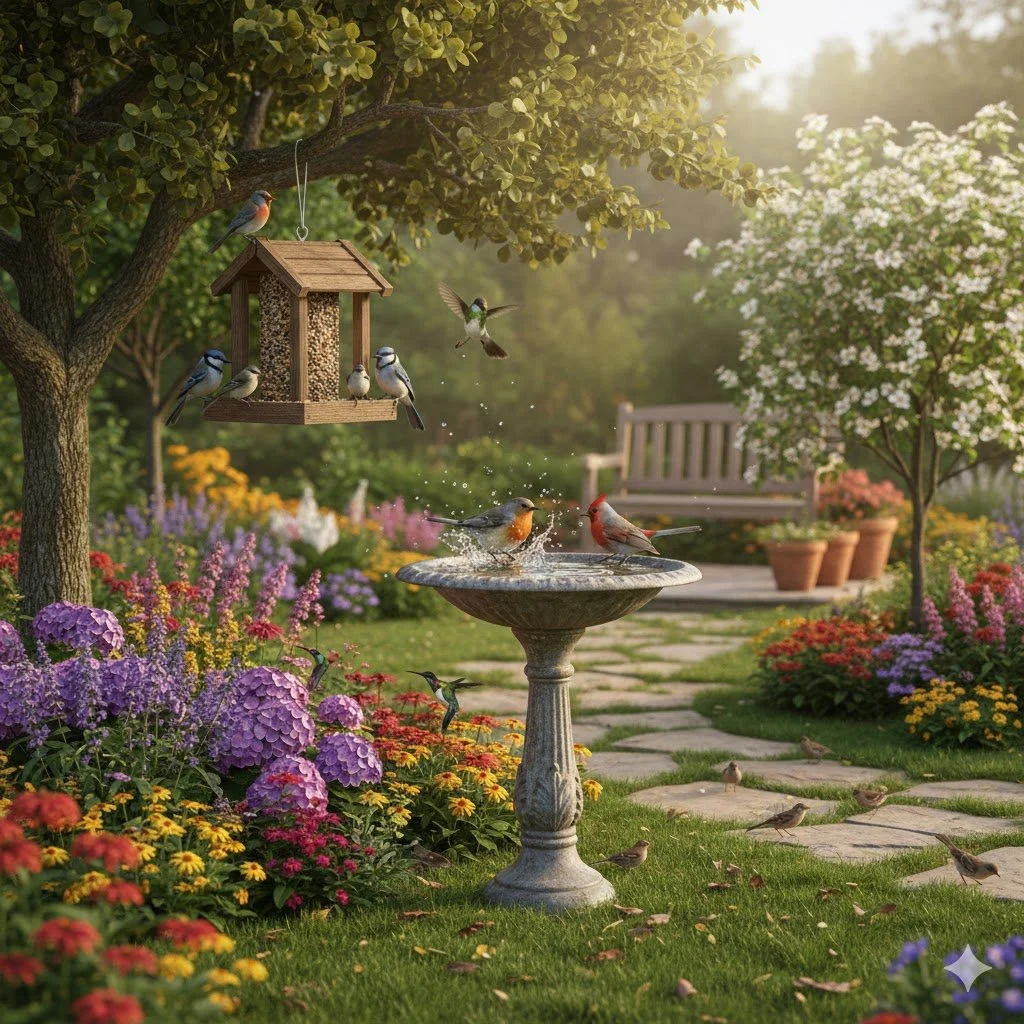
Backyard birding has a way of drawing us in emotionally. The longer we watch our feeders, the more we begin to recognize individual birds, favorite species, and even little dramas playing out in the yard. We get attached to “our birds”.
A pair of chickadees begins building a nest. A cardinal pair shows up every morning like clockwork. Goldfinches gather on the thistle feeder in a cheerful little crowd.
And then something happens. Ever notice the backyard has suddenly gone silent. There are no birds anywhere when just a few minutes ago, songbirds were all over the feeders? That’s often a sign that the neighborhood sharpie is paying a visit.
A hawk swoops through the yard. A bully bird chases smaller species away from the feeder. A neighborhood cat stalks beneath the shrubs. A fledgling sits helplessly on the lawn.
Our instinct is to jump in and protect the birds we’ve come to care about.
But the truth is this: sometimes helping birds means stepping in — and sometimes it means stepping back.
Understanding the difference is an important skill for anyone who feeds or watches birds regularly. With a little knowledge, backyard birders can reduce unnecessary risks, create safer habitats, and know when nature should simply run its course.
Let’s look at the most common backyard bird situations and how to respond wisely.
First Principle: Backyard Birds Are Still Wild
Even though feeders bring birds closer to our homes, they remain wild animals living within natural ecosystems.
Predators hunt them. Competition occurs. Weather challenges them. And most birds produce multiple young precisely because not all will survive.
It can be difficult to witness sometimes, but predation and competition are natural parts of bird life.
Intervening too aggressively can actually harm the ecosystem or disrupt natural behaviors.
Instead, the goal for backyard birders is to reduce human-created dangers while allowing natural processes to continue.
Think of it this way:
Our role is habitat steward — not wildlife referee.
Hawks at the Feeder: Should You Stop Them?
One of the most dramatic moments in backyard birding is when a hawk suddenly appears near a feeder.
Species such as:
Cooper’s Hawks
Sharp-shinned Hawks
Red-tailed Hawks
often learn that bird feeders attract prey. Smaller birds gathering for seed can create a convenient hunting opportunity.
Many backyard birders feel torn when this happens. After all, we put up feeders to help birds — not to create a buffet for predators.
But here’s the reality:
Hawks belong in the backyard ecosystem just as much as the songbirds do. And they have a specific job to do at our feeders.
Raptors are essential for controlling populations of rodents and smaller birds, and their presence is often a sign of a healthy habitat. They typically capture the sick, old or injured birds and, of course, they help control any mice or rats attracted to your yard because of the seed offered.
What NOT to do
Avoid trying to scare hawks away permanently or interfering directly with hunting attempts. Harassing birds of prey is illegal in the U.S. because raptors are protected by law - their contribution is that important.
Hawks, under most circumstances, move seasonally and often change territories so your visitor may only be around for a week or two at a time.
Also consider not putting out seed for a week. Unfortunately, it may disperse your feeder birds for a short time but it should also encourage your hawks to look for lunch elsewhere.
What you can do
If hawk activity becomes frequent, you can reduce risk for feeder birds by improving escape cover.
Helpful steps include:
• Place feeders within 10 feet of shrubs or dense vegetation
• Provide brush piles or native shrubs where birds can quickly hide
• Avoid placing feeders in large open areas with no cover
This allows birds to dart into safety when predators appear.
Many experienced birders enjoy seeing the hawks in their yards — it’s another fascinating part of the birding experience. Hawk behavior is fascinating and they are beautiful birds. As a raptor rehabilitator and former falconry, I can attest to how amazing our raptors are.
The Neighborhood Cat Problem
If hawks are natural predators, domestic cats are not.
Outdoor cats are one of the most significant threats to bird populations in North America. Studies estimate that billions of birds are killed by cats each year. They are usually responding to an instinct instead of a need for food.
Unlike hawks, which hunt as part of natural balance, domestic cats are an introduced predator often supported by humans with food and shelter.
Steps you can take
If cats frequent your yard, consider these strategies:
1. Create open sightlines near feeders
Cats rely on stealth and surprise. Avoid dense ground cover immediately beneath feeders where cats can hide.
2. Elevate feeding areas
Pole feeders placed away from shrubs or fences make it harder for cats to ambush birds.
3. Add deterrents
Motion-activated sprinklers, garden spikes, or scent repellents can discourage cats from entering your yard.
4. Talk with neighbors
If a neighbor’s cat is roaming freely, a friendly conversation about the impact on wildlife can sometimes help.
Encouraging responsible pet ownership — such as keeping cats indoors or using enclosed outdoor “catios” — protects both birds and cats.
Bully Birds at Feeders
Another common backyard concern is dominant or aggressive species taking over feeders.
Some of the usual suspects include:
Blue Jays
Grackles
European Starlings
House Sparrows
These birds can chase away smaller species and monopolize food sources.
While frustrating, this behavior is usually normal competition for resources.
Still, there are ways to balance the feeder environment so a wider variety of birds can enjoy it.
Adjust feeder types
Different feeders favor different birds.
For example:
Tube feeders with small perches discourage larger birds
Caged feeders protect seed from bigger species
Finch feeders limit access to goldfinches and offer Nyjer seed which is not of interest to other species
Offer multiple feeding stations
Spacing feeders throughout the yard reduces crowding and allows timid birds to feed elsewhere.
Change food types
Certain foods attract specific species.
Examples:
Nyjer seed attracts finches
Suet attracts woodpeckers and nuthatches
Safflower seed is ignored by many starlings but loved by cardinals
Offering a variety of foods naturally spreads birds across different feeders.
Avoid offering millet seed which is preferred by European Starlings and House Sparrows (also a European transplant).
Injured Birds: When Should You Help?
Occasionally a bird may appear injured near your feeders or windows.
Signs can include:
Inability to fly
Drooping wings
Visible wounds
Remaining on the ground for long periods
In these cases, intervention may be appropriate.
Best course of action
Contact a licensed wildlife rehabilitator in your area.
Wildlife rehab professionals have the training and permits required to treat injured birds properly.
Trying to care for birds yourself is often illegal and rarely successful without proper expertise and sometimes quite emotional.
Many state wildlife agencies maintain lists of approved rehabilitators or contact your local Game Warden or Google wild bird rehabbers in your area.
Fledglings on the Ground
One of the most misunderstood situations involves young birds that have recently left the nest.
A fluffy fledgling sitting on the lawn may look helpless — but often it is exactly where it should be.
Young birds typically spend several days on the ground or in low shrubs while they learn to fly.
During this time:
Parents are usually nearby
They continue feeding the young bird
The fledgling hides and practices short flights
When to leave them alone
If the bird appears alert, has feathers (more than just downy fuzz), and is hopping or fluttering, it is probably a healthy fledgling.
The best thing you can do is keep pets away and give the bird space.
When intervention may help
If a young bird is:
Completely featherless
Clearly injured
In immediate danger (road, sidewalk, neighborhood cat, etc.)
Then gently moving it to a nearby shrub is the best option. If that’s just not an option, contacting a wildlife rehabilitator may be appropriate.
Feeder Placement Matters More Than You Think
Many backyard bird problems can actually be prevented with thoughtful feeder placement.
Poor placement can create unnecessary risks, while good placement helps birds stay safe.
Ideal feeder setup includes:
Nearby cover
Shrubs or small trees within about 10 feet allow birds quick escape routes.
Clear flight paths
Birds need space to approach feeders safely without crashing into obstacles.
Distance from windows
Place feeders either very close to windows (within 3 feet) or farther than 30 feet to reduce collisions.
Predator awareness
Avoid locations where predators can hide directly beneath feeders.
A well-designed feeding area creates a balance between visibility for birders and safety for birds.
Landscaping for Bird Safety
Bird-friendly landscaping plays a major role in reducing risks.
Native plants provide:
Natural food sources
Shelter from predators
Safe nesting areas
Dense shrubs such as:
Dogwood
Viburnum
Serviceberry
Native grasses
offer important refuge for smaller birds.
Birds feel far safer visiting feeders when nearby cover is available.
At the same time, maintaining some open visibility near feeders prevents predators from hiding too easily.
A layered yard — with trees, shrubs, and open areas — creates the best balance.
The same applies for bird baths. Water is essential for any backyard bird feeding station and must be offered in a safe way for birds.
When the Best Action Is No Action
Perhaps the most difficult lesson in backyard birding is recognizing when not to intervene.
Nature can feel harsh at times.
A hawk catches a sparrow. A nest fails during a storm. Competition drives one bird away from another.
Yet these events are part of the natural cycles that sustain bird populations.
Birds have evolved with these pressures for thousands of years.
Trying to eliminate every challenge they face can disrupt the ecosystem rather than protect it.
Instead, focus on the things humans can control:
Reducing cat predation
Preventing window collisions
Providing safe feeders
Offering clean water
Planting native habitat
These actions help birds thrive without interfering in natural wildlife interactions.
The Backyard Birder’s Role
Backyard birding connects us deeply with the lives of wild birds.
That connection naturally creates compassion and a desire to help.
But the most effective backyard birders understand that their role is not to rescue birds from every challenge.
Instead, it is to create a healthy environment where birds can succeed on their own terms.
A yard that offers food, water, shelter, and safety becomes more than just a feeding station.
It becomes a small but meaningful piece of habitat within today’s world that sometimes seems to be a less natural world these days.
And when you watch a chickadee dart safely into a shrub after a hawk passes overhead, or see a fledgling make its first confident flight across the yard, you realize something important:
Sometimes the best way to help birds is simply to give them the space to be birds.
Also read: Backyard Bird Feeding - Help or Harm?
