

Learn Bird Families
One of the Best Shortcuts to Becoming a Better Birder
You see a small bird disappear into a thicket.
Brownish. Maybe a little streaking. Tail sticking up.
You didn't get a good look at the bill. You certainly didn't see every field mark. And the bird isn't coming back out of the reeds just because you need another look.
So what was it?
Beginning birders often start mentally flipping through individual species.
Experienced birders are more likely to start somewhere else.
What kind of bird was it?
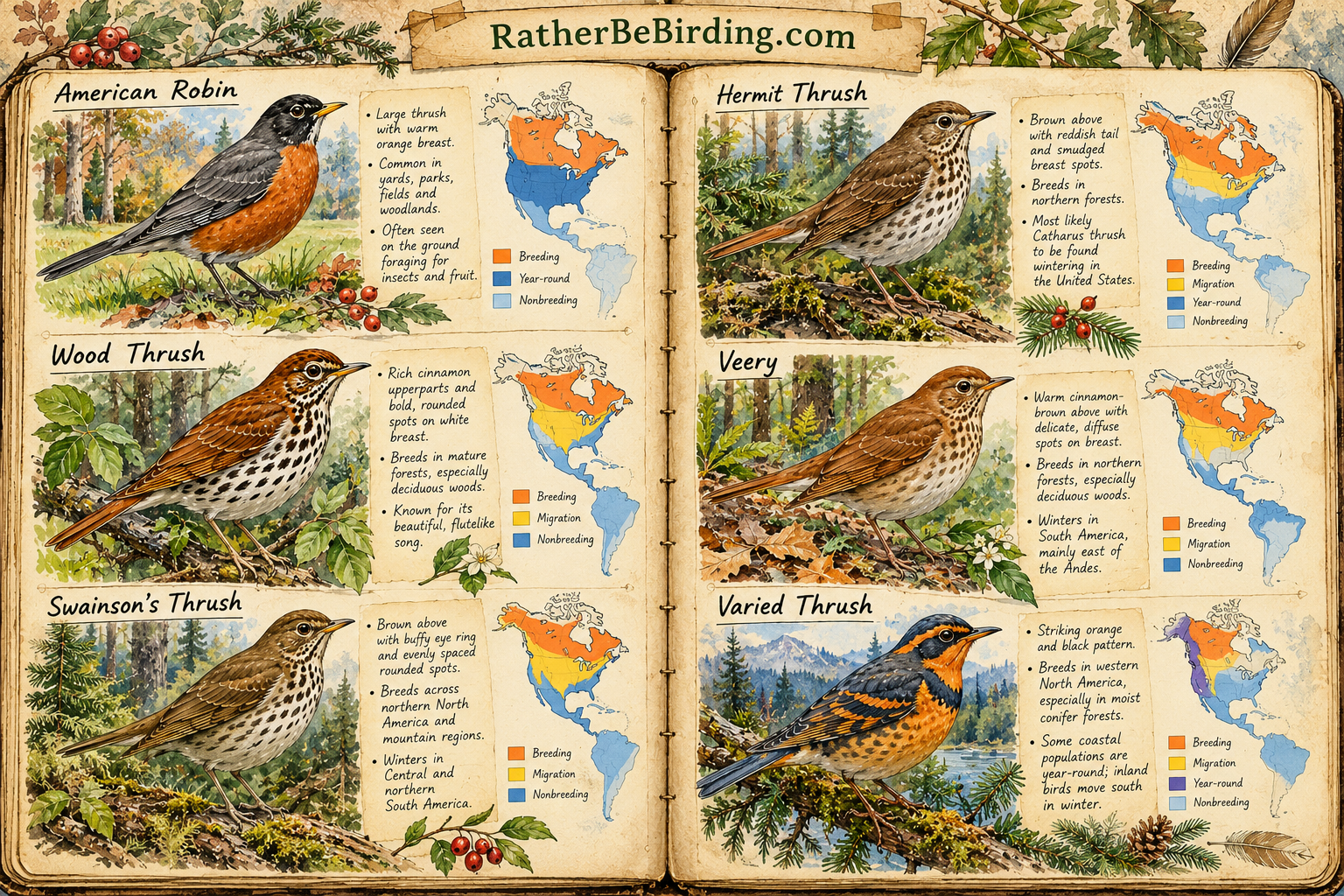
Was it a wren? A sparrow? A warbler? A thrush?
That may sound like a small difference, but it changes the entire identification process.
Instead of asking your brain to compare one mystery bird with hundreds of possibilities, you've just narrowed the search considerably.
That's why learning bird families is one of my favorite shortcuts to becoming a better birder.
You don't have to memorize every bird.
Start learning the families.
Bird Identification Gets Easier When You Stop Starting With Species
Open a North American field guide and it can be intimidating.
There are ducks and hawks and sandpipers. Pages of sparrows. Pages of warblers. Flycatchers that look frustratingly similar. Gulls in multiple plumages.
Trying to memorize them one at a time isn't a particularly efficient way to learn birds.
Fortunately, you don't need to.
Birds come with patterns.
Members of related groups often share similarities in body structure, bills, behavior, feeding methods, flight style, habitat, posture, and even the way they move through vegetation.
Once your brain starts recognizing those patterns, bird identification changes.
You see an unfamiliar bird and think:
Woodpecker.
Now you're not searching the entire field guide.
Then:
Small woodpecker.
Black and white.
Short bill.
Backyard tree.
Now you're getting somewhere.
Eventually you may arrive at Downy Woodpecker.
But notice what happened.
You went from family to species.
That's the habit we're trying to develop.
What Do We Mean by a Bird Family?
Technically, birds are classified scientifically into orders, families, genera, and species, and taxonomy occasionally changes as scientists learn more about relationships between birds.
Fortunately, you don't need to become a taxonomist to benefit from the idea.
For everyday birding, the useful lesson is simple:
Learn to recognize groups of related birds before worrying about every individual species.
Think about woodpeckers.
A Northern Flicker doesn't look exactly like a Downy Woodpecker, and neither looks exactly like a Pileated Woodpecker.
But spend enough time watching them and the family resemblance begins to show.
Strong feet for gripping.
Stiff tails used for support.
Chisel-like bills.
Tree-climbing behavior.
Characteristic flight.
Once you know "woodpecker," figuring out which woodpecker becomes a much smaller problem.
That's the shortcut.
Experienced Birders Are Constantly Eliminating Possibilities
One thing that can be confusing when you're learning to bird is how quickly an experienced birder can identify something.
A bird flies across the road.
"Flicker."
You barely saw a bird.
How did they possibly see enough field marks?
Sometimes they didn't.
They saw the overall shape.
The flight.
The flash of color.
The habitat.
Perhaps they heard one call.
Most importantly, years of experience allowed them to eliminate possibilities almost instantly.
Good bird identification isn't only about collecting clues.
It's also about eliminating things that don't fit.
That's where family recognition becomes incredibly powerful.
If you know you're looking at a thrush, you don't need to consider chickadees, wrens, woodpeckers, swallows, vireos, or hawks.
You've already done a tremendous amount of identification work.
Learn the Family Shape
Before getting buried in tiny plumage details, look at the whole bird.
This is part of what birders sometimes call GISS — General Impression of Size and Shape.
Ask:
Is it chunky or slender?
Long-legged or short-legged?
Big-headed or small-headed?
Does it have a long tail?
Is the bill thin, heavy, hooked, or cone-shaped?
How does it hold its body?
Compare a few familiar families and you'll see how useful this becomes.
A heron looks long: long legs, long neck, long pointed bill.
A swallow looks built for flight: streamlined body and long, pointed wings.
A sparrow generally looks compact, with a seed-eating bill.
A woodpecker often looks upright and sturdy, especially when clinging to a trunk.
A wren is typically small and compact, and many species frequently hold their tails upward.
Don't worry yet about the exact species.
Learn the basic architecture.
Then Watch What the Bird Does
This may be even more useful than color.
A little brown bird hops onto a tree trunk.
What does it do next?
Does it climb upward?
Creep downward?
Probe bark?
Fly out after an insect?
Drop to the ground?
Behavior can move you toward the right family surprisingly quickly and may be the first step when you can’t see the bird’s details clearly. Watch a woodpecker climb.
Watch a nuthatch move around a trunk and sometimes head downward.
Watch a flycatcher leave a perch, grab an insect, and return.
Watch a swallow chase insects continuously through the air.
Watch a heron stand motionless beside water before striking at prey.
Watch a thrush forage through leaf litter.
This is why I keep coming back to behavior throughout the Be A Better Birder series.
Don't just look at the bird. Watch the bird.
What a bird is doing can be one of your best identification clues.
Habitat Gives You Another Shortcut
Now add habitat.
Suppose you've decided your mystery bird looks thrush-like.
Where was it?
Deep forest?
Suburban lawn?
Desert canyon?
Woodland understory?
Habitat doesn't automatically identify a bird, and birds certainly don't read the field guides telling them where they're supposed to be.
But habitat helps you rank possibilities.
This is another reason experienced birders often seem to know what they're looking for before they've even seen it.
They're reading the landscape.
Walk into a marsh and you expect one collection of bird families.
Walk into a mature forest and you expect another.
Stand beside an open grassland and your possibilities change again.
The better you understand habitat, the better family recognition works.
Learn Families With Birds You Already Know
Don't start by trying to learn every North American bird family.
Start with birds you already encounter.
You probably know more than you think.
If you know an American Robin, you've already got a starting point for learning thrushes.
If you know a Downy Woodpecker, start comparing other woodpeckers.
If Northern Cardinals visit your feeder, notice their heavy seed-cracking bills and overall proportions.
If ducks gather on your local pond in winter, they're fantastic birds for learning how comparison works.
In fact, ducks make one of my favorite beginner exercises.
Find a pond with several species and spend time comparing them.
Don't immediately worry about names.
Which ducks are larger?
Which sit higher in the water?
Which have rounder heads?
Which dive?
Which tip forward to feed?
Which stay together?
Which males and females appear to belong together?
You're training your brain to see patterns.
And that's the real skill.
Try the Three-Step Family Challenge
Here's a simple exercise for your next birding trip.
When you encounter a bird you don't immediately recognize, don't reach for the species name.
Try three steps.
1. Name the broad group or family.
"That's some kind of woodpecker."
Good.
2. Describe why.
"It was climbing a trunk, had a strong pointed bill, stiff-looking tail, and an undulating flight."
Even better.
3. Only then try to identify the species.
Now look at size, plumage, range, habitat, voice, and the field marks that distinguish members of that family.
This turns identification into a process instead of a guessing game.
Your Field Guide Becomes Much More Useful
Once you start thinking this way, your field guide changes too.
Instead of opening it and searching randomly for "a little brown bird," you know approximately where to begin.
Spend some time with your field guide at home, too.
Don't study individual species.
Study a page or two of related birds. Be sure to look at the maps to eliminate non-resident possibilities.
Look at all the woodpeckers together.
Then thrushes.
Wrens.
Ducks.
Hawks.
Swallows.
Ask yourself:
What do these birds have in common?
Then ask:
What separates one from another?
That's an entirely different way of using a field guide.
You're not memorizing pictures.
You're learning relationships.
Another word about phone apps
I know you’re tired of hearing me say beginning birders should consider paper field guides over apps. But bird families really illustrate the point I’m always making. Few apps give you a clear way of comparing birds in a family. Usually you have to look up a Hairy Woodpecker then back out and select another page to look at the Downy Woodpecker making it very difficult to compare the two. Some apps tell you the bird so you miss out on learning the skills of identification. Paper guides allow you to compare head to toe comparisons while having bios and distribution maps right there at the same time.
Once you’ve got a year or two under your belt, you may start to notice your inner voice saying, “That’s a Sedge Wren not a Marsh Wren.” In that case, a phone app can be a quick reference to make sure you are correct.
Moral of the story: if you can’t name the species with high confidence, considering using paper field guides.
Some Families Are Easier Than Others
Don't expect every group to fall neatly into place.
Woodpeckers are relatively friendly to beginning birders.
So are herons.
Some other groups can make experienced birders mutter things under their breath.
Flycatchers can be difficult.
Gulls can be difficult.
Shorebirds can be difficult.
Sparrows can look remarkably similar until you've learned what to notice the details and field marks.
And that's okay.
Being able to say, "I'm pretty sure that's a sparrow, but I don't know which one," isn't failure.
It's progress.
You've already narrowed the possibilities.
One of the best habits a birder can develop is becoming comfortable identifying a bird only as far as the evidence allows.
Sometimes "woodpecker" is enough.
Sometimes "sparrow species" is the right answer.
There will always be another bird.
Families Make Travel Birding Easier, Too
This skill becomes especially valuable when you travel.
Visit another part of North America and suddenly familiar birds are replaced by species you've rarely—or never—seen.
But many of the patterns remain recognizable.
You may not know the species, but you recognize:
That's a wren.
That's a warbler, no wait, it’s a vireo.
That's a woodpecker.
That's some kind of flycatcher.
Instead of starting at zero, you're starting halfway down the road.
The same thing happens as your birding expands.
You encounter unfamiliar species, but fewer birds feel completely unfamiliar.
That's a wonderful stage to reach.
Bird Families Connect Almost Every Birding Skill
This is why I think learning families belongs in the heart of our Be A Better Birder series.
It isn't an isolated identification trick.
It pulls together almost everything else we're learning.
Relative size helps you compare family members.
GISS helps you recognize the basic shape.
Field marks help you separate similar species.
Behavior tells you what kind of bird you're watching.
Habitat helps predict which families and species are likely.
A field guide helps you compare possibilities.
Birding by ear can confirm what your eyes are telling you.
Each skill makes the others stronger.
Eventually, you're no longer running through a checklist consciously.
You simply begin to recognize birds differently.
You Don't Need to Know Every Bird to Become a Better Birder
There's a temptation in birding to measure progress by the number of names we know.
I think there's a better measure.
Are you noticing more?
Are you asking better questions?
Are you recognizing patterns?
Can you watch an unfamiliar bird and make a reasonable guess about what kind of bird it is?
If so, you're becoming a better birder.
So the next time an unfamiliar bird appears, resist the urge to immediately ask:
"What species is that?"
Start one step earlier.
"What family does this bird remind me of?"
Look at its shape.
Watch what it does.
Notice where it is.
Listen.
Then start narrowing the possibilities.
You may be surprised how much easier bird identification becomes when you stop trying to memorize every bird individually.
Focus on family. Then species.
That's not just a shortcut to identifying birds.
It's one of the ways you learn to think like a birder.
Brand new to Birding? Start with our Birding for Beginners series

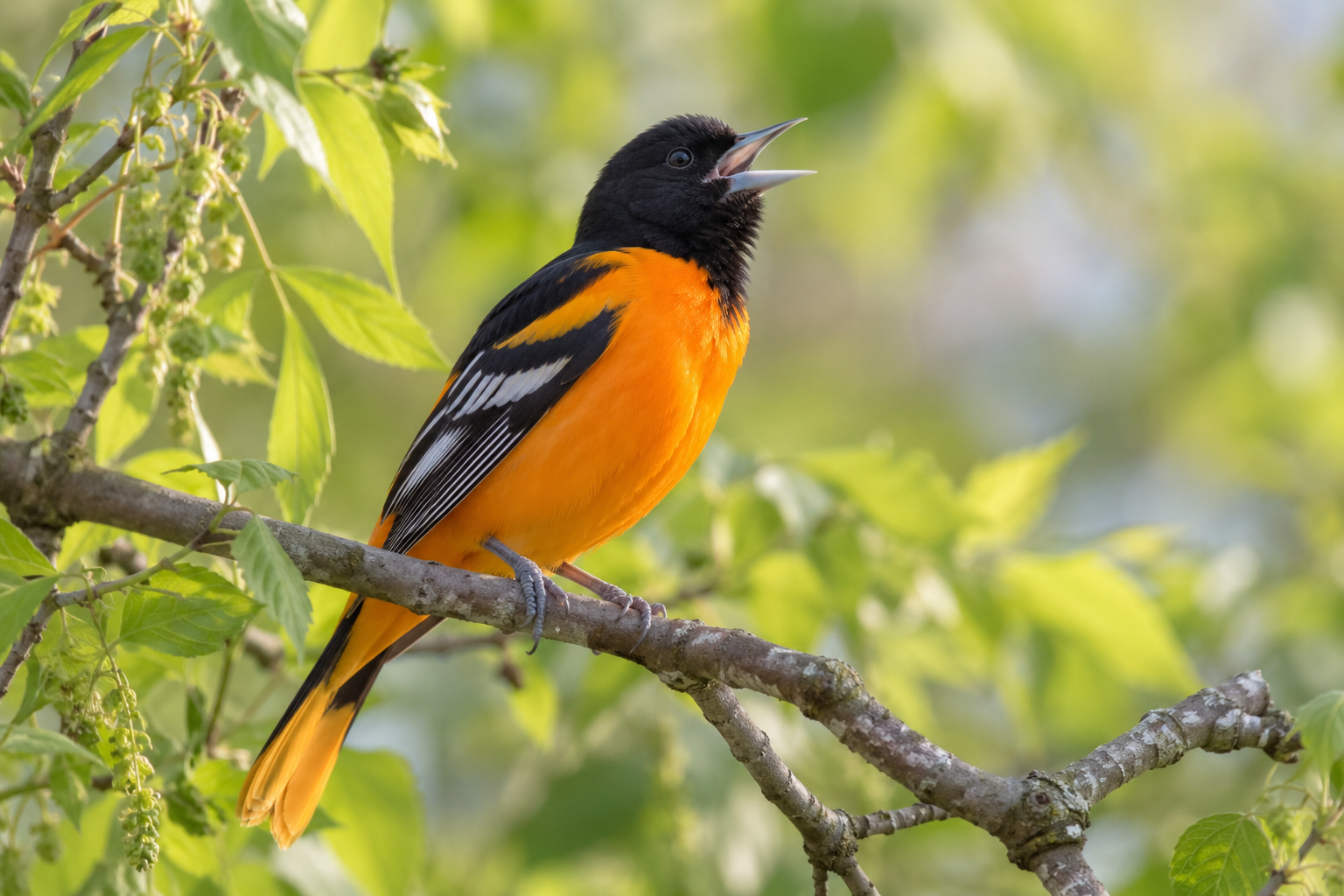

Rare bird alerts can turn an ordinary day into an adventure. They can also drain our time, money, and energy while making the birds close to home seem less important. Here is how to weigh the benefits, risks, ethics, physical demands, and real chance of success before deciding whether to make the chase.