

Fall Migration
One of Nature’s Greatest Journeys Begins Again
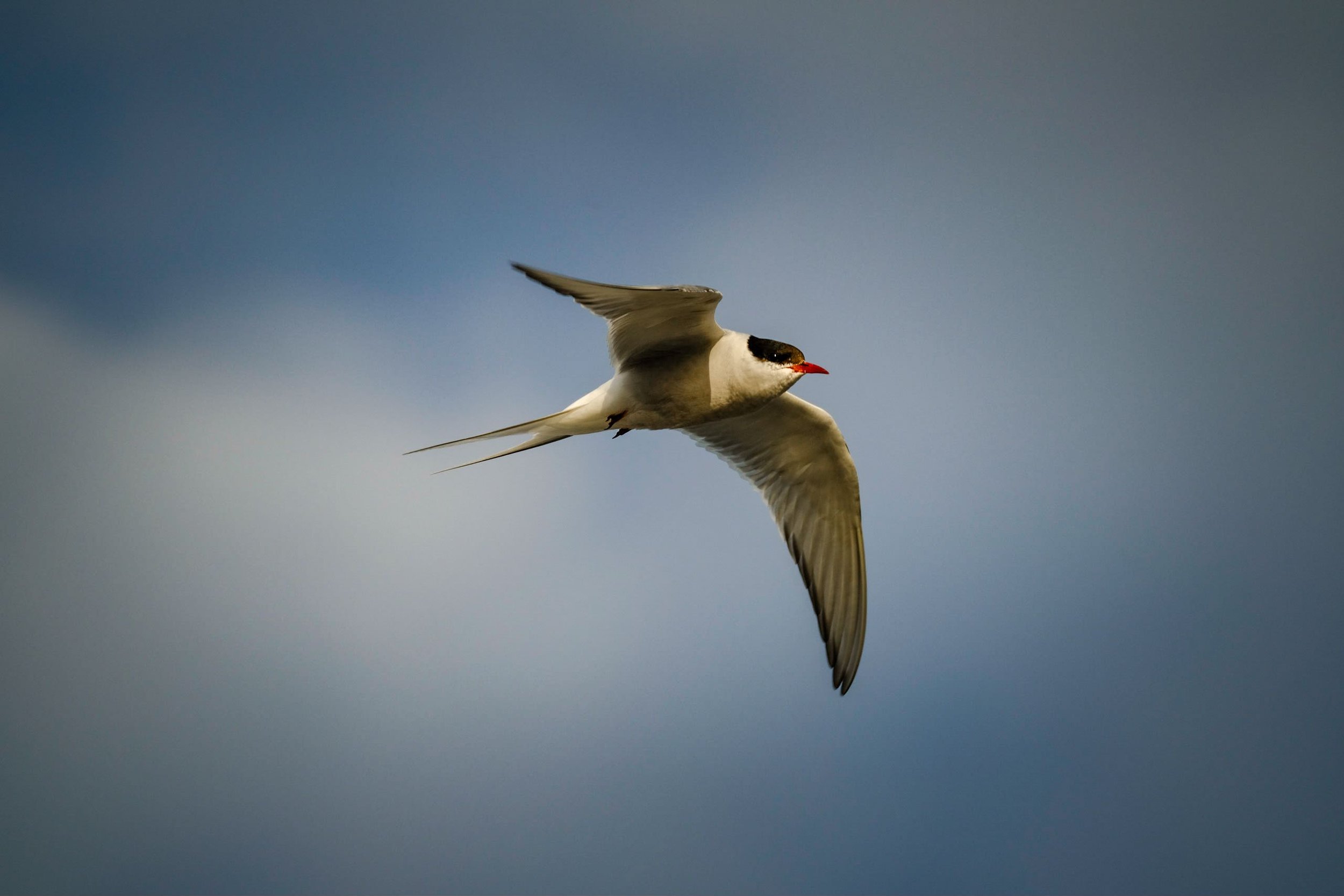
Every year, right about the time summer birding starts to feel a little quieter, something remarkable is happening all around us.
Many of the birds we spent spring celebrating are already thinking about leaving.
That sounds impossible at first. After all, didn’t spring migration just end a few weeks ago?
Yet for many North American birds, the breeding season is surprisingly short. Some species arrive on their nesting grounds, claim territories, find mates, raise young, and begin heading south again in only a matter of weeks.
While many people associate migration with September and October, the reality is that fall migration begins much earlier. In fact, some shorebirds start moving south by mid-July, and large gatherings of Purple Martins will soon be forming across much of the eastern United States.
For birders, this is one of the most exciting—and often overlooked—times of the year.
The Breeding Season Is Shorter Than You Think
One of the most amazing aspects of bird migration is how little time many species actually spend where they nest.
Take a bird like the Ruby-throated Hummingbird. It may spend only a few months on its breeding grounds before beginning the long trip back toward Mexico and Central America.
Many warblers arrive in May, nest through June, and are already becoming scarce by late July and August.
Some Arctic-nesting shorebirds have an even more compressed schedule. They rush north, nest under nearly continuous daylight, raise their young quickly, and then begin moving south before many people have even realized they arrived.
From a human perspective, it seems absurd.
Imagine traveling thousands of miles to a destination, staying only six or eight weeks, and then turning around to do it all over again.
Yet that is exactly what millions of birds do every year.
Distances That Seem Impossible
Migration distances become even more astonishing when you start looking at actual numbers.
Many birds travel farther in a single year than most people drive.
Consider a few examples:
Arctic Tern
The champion of migration is the Arctic Tern.
These elegant seabirds travel from Arctic breeding grounds to Antarctic waters and back again each year. Their annual journey can exceed 40,000 miles, and some studies suggest certain individuals travel even farther.
An Arctic Tern may fly the equivalent of traveling around Earth multiple times during its lifetime.
Blackpoll Warbler
The Blackpoll Warbler weighs less than half an ounce.
Yet every fall it undertakes one of the most incredible migrations in North America.
Many Blackpolls leave northeastern North America and launch directly over the Atlantic Ocean, flying nonstop for up to 2,000 miles toward the Caribbean and South America.
Think about that for a moment.
A bird small enough to fit comfortably in your hand flies for days over open ocean.
Red Knot
The Red Knot is another long-distance traveler.
This chunky little shorebird breeds in the Arctic and winters as far south as Tierra del Fuego near the southern tip of South America.
Round-trip migrations can exceed 18,000 miles annually.
Swainson's Hawk
Many Swainson's Hawks nesting on the Great Plains spend the winter in Argentina.
Their yearly migration may total 12,000 miles or more, making them one of North America's greatest avian travelers. Flocks of thousands of Swainson’s can be seen soaring overhead and feeding in fields throughout the southern Great Plains and through the Southwest.
How Do Birds Even Know Where to Go?
Scientists are still uncovering all the details.
Birds appear to use multiple navigation systems, including:
The position of the sun
Star patterns
Landmarks
Polarized light
Earth's magnetic field
Genetic programming
Learned migration routes
Young birds often make their very first migration without any guidance from their parents.
Imagine leaving home for the first time and somehow navigating thousands of miles to another continent.
The more we learn about migration, the more miraculous it seems.
Purple Martins Are About to Put on a Show
One of the first major signs of fall migration in many parts of the United States involves Purple Martins.
In much of the East, Purple Martins now depend almost entirely on human-provided housing.
Without martin houses and gourds maintained by dedicated landlords, eastern populations would be dramatically smaller than they are today.
As summer progresses, martins begin gathering into large communal roosts.
What starts as dozens of birds quickly becomes hundreds.
Then thousands.
Eventually some roosts hold tens of thousands—or even hundreds of thousands—of Purple Martins.
Cities across the South and Midwest have become famous for these gatherings.
Watching streams of martins funnel into a roost at sunset is one of the great spectacles of North American birding.
The sight becomes even more meaningful when you realize what you're seeing.
Every one of those birds survived because adults successfully nested earlier in the season. Most were raised in human-provided housing.
Read more about Purple Martins here.
Hundreds of thousands of birds preparing for a journey to South America.
It is conservation success and migration wonder rolled into one unforgettable experience.
If you've never visited a Purple Martin roost, consider making plans this summer.
You may never look at migration the same way again.
Shorebirds Start Early
Many birders are surprised to learn that shorebird migration begins long before autumn leaves appear.
Along the Gulf Coast, migration can be underway by mid-July.
In some species, adults begin heading south shortly after nesting concludes.
This means birders may encounter:
Least Sandpipers
Western Sandpipers
Semipalmated Sandpipers
Short-billed Dowitchers
Greater Yellowlegs
Lesser Yellowlegs
Stilt Sandpipers
Wilson's Phalaropes
And many others weeks before most people are thinking about migration.
Mudflats, coastal wetlands, flooded fields, and managed impoundments suddenly become birding hotspots.
For birders who enjoy identification challenges, shorebird season is about to begin.
Adults and Juveniles Don't Always Travel Together
Another fascinating aspect of migration is that families often separate surprisingly quickly.
Many species migrate according to age classes.
Adults may leave first.
Juveniles may leave weeks later.
Young birds often make their first migration entirely on instinct.
A juvenile shorebird that hatched only weeks earlier may soon be navigating thousands of miles without parental guidance.
This separation creates interesting opportunities for birders.
Different ages often show different plumages.
Fresh juvenile feathers can create striking patterns and colors that look very different from worn adults.
Learning these differences can dramatically improve identification skills.
Males and Females May Migrate Separately Too
Migration becomes even more complicated when sexes separate.
In several species, males and females winter in different regions.
This phenomenon, known as differential migration, occurs for a variety of reasons.
For example:
One sex may tolerate colder weather better.
One sex may dominate feeding areas.
Different body sizes may influence winter survival.
Earlier arrival on breeding grounds may provide advantages such as various food availability.
Among some hawks, sparrows, blackbirds, and songbirds, birders may notice changing sex ratios during migration.
What appears to be a population shift may actually reflect males and females moving through at different times.
Nature rarely does anything in a simple way.
Migration Makes You a Better Birder
One of the best reasons to embrace fall migration is simple:
It will improve your bird identification skills.
Spring migration often feels rushed. There’s an urgency to reach the nesting territory and find a mate.
Birds are singing.
They are defending territories.
Everything seems to happen at once.
Fall migration slows the process slightly.
Birds spend more time feeding. There’s often less urgency.
Mixed-species flocks become common.
Young birds create identification puzzles.
You begin seeing species side-by-side that may never occur together during breeding season.
This forces you to notice:
Shape
Size
Plumage
Behavior
Habitat
Feeding style
Flight pattern
In other words, the same skills experienced birders use every day.
Fall Warblers Will Test You
If spring warblers are colorful field guide illustrations come to life, fall warblers are advanced birding homework.
Bright breeding plumages fade.
[HINT: Many warblers during will show a “shadow” of their spring breeding plumage. Look for a shadow of a dark gray bib or facial pattern that may have been seen a month before. Doesn’t always work but it can help.]
Young birds often wear entirely different-looking feathers.
Many species become surprisingly similar and this is where the field guide becomes your best friend.
And you are often observing them from the ground as they perch high in the trees - not exactly the best vantage point.
The first reaction of many birders is frustration.
Mine was.
But this challenge is exactly why fall birding helps people grow.
You stop relying on bright colors.
Instead, you learn:
Face patterns
Wing bars
Tail markings
Body shape
Feeding behavior
These are durable skills that work year-round.
A birder who learns fall warblers often becomes dramatically better at identifying birds in general.
Hawk Migration Is Right Around the Corner
As summer turns toward autumn, another migration spectacle begins.
Raptors start moving south.
Places like:
Hawk Mountain Sanctuary
Cape May Point
Duluth Hawk Ridge
Texas middle Gulf Coast
become gathering places for birders hoping to witness thousands of migrating hawks.
Sharp-shinned Hawks, Broad-winged Hawks, Ospreys, Bald Eagles, Merlins, Peregrine Falcons, and many others may stream overhead during peak migration days.
Even local parks can produce impressive raptor movements if weather conditions are favorable.
How do YOU decide Where to Bird?
Deciding where to go can be tough sometimes. Want to see a Purple Martin Cloud? Google purple martin parties near me OR join me in Austin, Texas July 20 - Aug 15.
Want the opportunity to see thousands of hawks in one day’s birding? Try Cape May or Hawk Mountain or the Texas Gulf Coast around Corpus Christi.
Want to stay closer to home and watch for migrating songbirds? Creeks and rivers are often used by mixed flocks to guide birds south.
Every Migrating Bird Has a Story
The next time you see a sandpiper probing along a mudflat or a warbler feeding in a backyard tree, consider what that bird may have already accomplished.
It may have:
Nested thousands of miles away.
Crossed mountain ranges.
Navigated storms.
Avoided predators.
Flown over oceans.
Traveled farther than most humans ever will.
And it may still have thousands of miles left to go.
Migration reminds us that birds are doing extraordinary things every day—often right in front of us.
A Miracle Worth Watching
Fall migration is not merely a seasonal event.
It is one of the greatest wildlife phenomena on Earth.
Millions upon millions of birds are preparing to move.
Some will travel a few hundred miles.
Others will cross continents.
A few will span hemispheres.
Purple Martins will soon gather into enormous roosts.
Shorebirds will begin appearing along Gulf Coast mudflats.
Young birds will embark on their first journeys.
Warblers will challenge our identification skills.
Hawks will ride autumn thermals southward.
For birders, the coming weeks offer an invitation to witness something truly remarkable.
You do not need expensive equipment.
You do not need to travel far.
You simply need to pay attention.
Because right now, while summer still feels firmly in place, one of nature's greatest journeys is already underway.
And every bird overhead is part of the story.
Consider reading through our post on Using Your Field Guide next.
