

Birding Doesn’t Have to Be a Hike
Easy Ways to Enjoy Birds
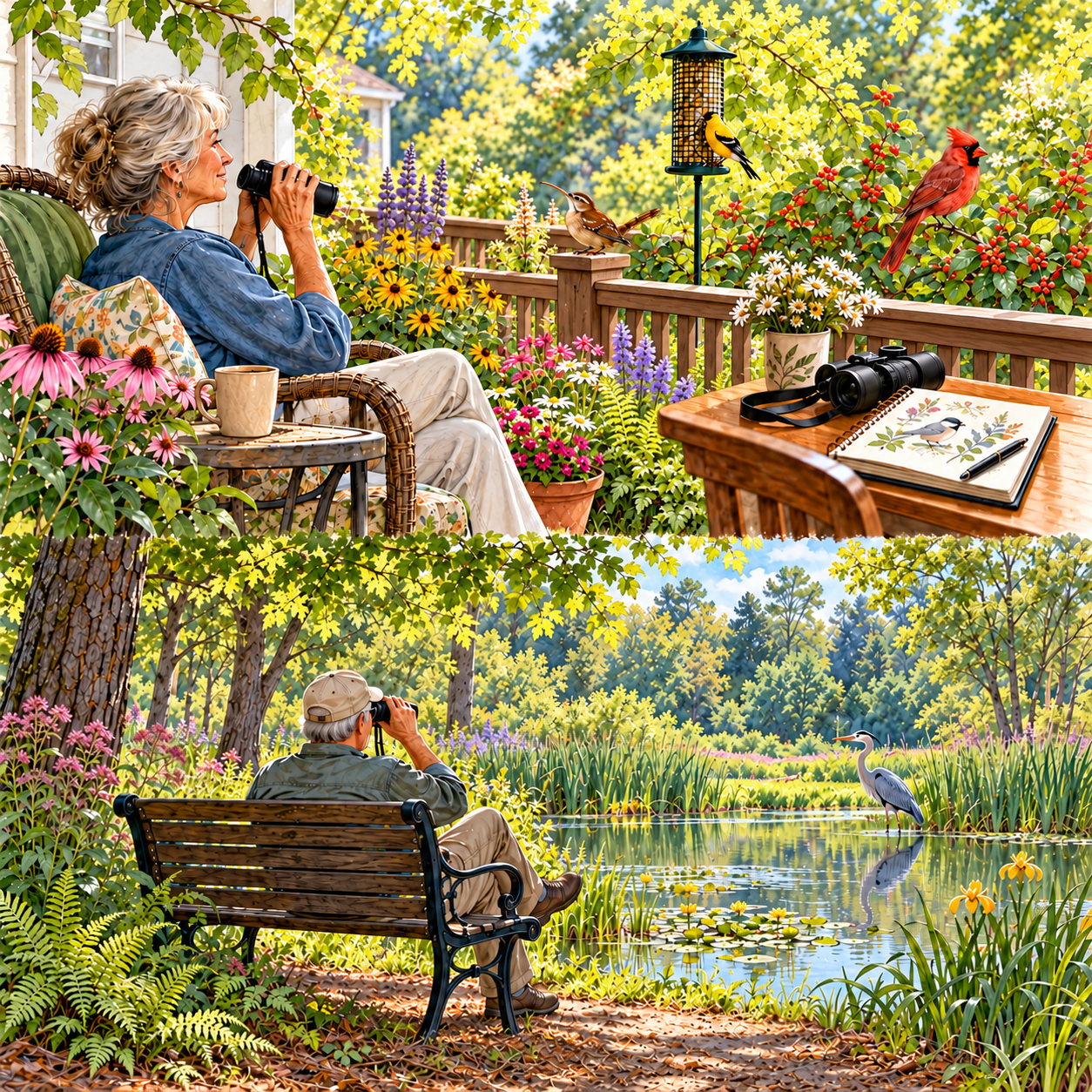
Somewhere along the way, birding acquired a rather demanding public image: hiking boots, a predawn departure, a long trail, and someone striding ahead while everyone else tries to keep up.
That can be a wonderful day. It can also be a reason someone decides birding isn’t for them.
But birding doesn’t have to be a hike. You can enjoy birds from a kitchen window, a shaded bench, a parked car, or a comfortable chair on the porch. You can spend ten minutes watching one bird and come away with something worth remembering.
Whether you’re exploring birding for beginners, looking for comfortable birding for seniors, or simply hoping to fit more nature into an ordinary day, there are easy ways to enjoy birds without walking miles.
The birds aren’t checking your step count. You don’t have to, either.
What Counts as Birding? More Than You Might Think
Birding begins when you pay attention to birds. Identifying them can be part of it, but so can noticing how they move, listening to their calls, or watching where they find food.
You don’t need an impressive species list. You don’t need to travel somewhere famous. And you certainly don’t need to be exhausted afterward.
Watching a robin pause on the lawn is birding. Following a hawk’s circles above your neighborhood is birding. Wondering why a wren keeps disappearing beneath the same shrub is birding.
For a beginning birder, familiar surroundings can make learning feel manageable. You have fewer distractions, repeated opportunities, and time to look things up afterward.
For an experienced birder, staying put offers a different invitation: look again at birds you thought you already knew.
1. Start Birdwatching From Your Window
One of the easiest places to begin is a window you already pass every day.
Choose a view that includes something birds might use: a tree, shrubs, a patch of lawn, a garden, or a stretch of sky. A feeder can help bring birds into view, but it isn’t a requirement.
Keep binoculars nearby if you have them. Add a notebook and pencil, and you have a birdwatching station that takes almost no preparation to enjoy.
Instead of scanning briefly and deciding “nothing’s out there,” give the view a few minutes. Look at the ground, then the shrubs, then the branches. Check the places where birds can disappear into shadow.
Try one question each morning:
Which bird arrives first?
Where does it land before approaching the feeder?
Does it eat here or carry food away?
What changes when another bird arrives?
A window turns an ordinary breakfast into an opportunity to notice. Coffee is welcome. A doughnut is entirely optional.
2. Try Seated Birding in One Good Spot
Seated birding is exactly what it sounds like: choose a comfortable place, settle in, and watch what happens around you.
That place might be a porch chair, a park bench, a wheelchair positioned beside a garden, or a folding chair in the shade. You don’t need a sweeping view. A small area with vegetation and a few visible perches can be enough.
Give yourself ten or fifteen minutes without expecting constant action. Birds may move through in brief bursts, with quiet stretches between them.
Look for relationships. Does one shrub receive more visits than the others? Is a bird repeatedly using the same perch? Are several species moving through together?
The Cornell Lab of Ornithology includes choosing a quiet “sit spot” among its approaches to observing birds at close range. The point is to give birds space and let their activity unfold rather than continually moving toward them.
Once you find a place you like, return to it. Familiarity helps you recognize what is ordinary—and what has changed.
3. Make Backyard Birdwatching About Habitat
Backyard birdwatching becomes more interesting when you look beyond the feeder.
A feeder is only the beginning. Birds also use plants, leaf litter, branches, shelter, and water. Watching those features helps you understand how a yard functions as habitat.
Notice a bird searching along a twig rather than heading straight to the seed. Watch the ground beneath a shrub. Check the flowers that have gone to seed and the branches that offer a sheltered resting place.
You don’t need to redesign the entire yard before you begin. Start by watching what is already there. Your observations can help you decide what your backyard bird sanctuary needs next.
Perhaps you have plenty of food but little cover. Perhaps your patio offers a view of a small container garden where birds occasionally pause.
Even a modest space can give you a place to observe. The useful question is, “What are birds finding here, and what might be missing?”
4. Choose a Birding Destination With a Seat
When planning an outing, try choosing the place where you’ll watch before choosing the route you’ll take.
A bench overlooking a pond, a nature center viewing window, or a bird blind may offer a rewarding visit with little walking. A small neighborhood park can work just as well as a large preserve if the viewing area fits your needs.
Look for a manageable route between your arrival point and your destination. A promising bench isn’t especially useful if reaching it requires a long, steep path.
Nature centers are worth investigating because some offer indoor viewing areas, seating, restrooms, or staff who can explain the layout before you arrive. Confirm the details for the particular location.
Once you’re settled, divide the scene into sections. Watch the water for a while, then the shoreline, then the trees. You don’t have to cover the whole park to discover something interesting.
5. Enjoy Birding From a Parked Car
A vehicle can sometimes provide a practical place to watch birds, especially along designated wildlife drives and at established overlooks.
You might observe waterbirds on a pond, a raptor perched in the distance, or songbirds using the vegetation beside a legal pullout.
Choose places intended for stopping. Park safely, follow posted rules, and keep roads and access points clear. The driver should be fully parked before using binoculars or concentrating on a bird.
Turn off the engine when conditions allow. An open window may help you hear nearby birds, but comfort and weather matter too.
Birding from a car can make some outings more manageable, although it won’t solve every access challenge. The value is having another option available on a day when a trail doesn’t fit.
6. Take a Tiny Birding Outing
Sometimes a little movement sounds good. A full hike does not.
Try a deliberately small outing: one garden path, one short stretch of paved trail, or the distance between two benches. Set a turnaround point that leaves you comfortable with the return journey.
You can also plan by time. Spend five minutes moving slowly, ten minutes watching from one place, and then head back.
Short birding outings fit easily around errands, appointments, or a visit with a friend. They also remove the pressure to turn every trip outdoors into a major event.
Don’t measure the outing by how much ground you covered. Ask what held your attention. A few minutes watching a bird handle its food may give you more to think about than a long walk spent hoping for something unusual.
7. Listen to Birds Without Chasing Every Sound
Birding by ear can begin from wherever you’re comfortable sitting.
Let the sounds come to you. Choose one and describe it before trying to name the bird. Is it a whistle, a rattle, a buzz, or a series of short chips? Does it repeat steadily or arrive in scattered bursts?
You don’t have to identify every voice. Start with one familiar bird and learn how it sounds in different situations.
If you can see the bird making the sound, even better. That connection between a visible bird and its voice helps build recognition.
And if listening is difficult or simply isn’t your preferred way to bird, concentrate on movement, shape, and behavior. There is no requirement to use every identification technique. Choose the clues available to you.
Easy Birding for Seniors: Plan Around Your Preferences
Birding for seniors should leave room for individual differences. Some people want rugged trails. Others prefer level paths, shorter visits, or birdwatching from home. Many enjoy different approaches on different days.
The same is true for birders of any age who have access needs, limited energy, or simply a preference for a slower outing.
Before visiting somewhere unfamiliar, ask specific questions:
How far is the viewing area from parking or the entrance?
Is the route paved, firm gravel, grass, or loose sand?
Are there steps, slopes, or narrow sections?
Where are the seats, shade, and restrooms?
Can you leave easily whenever you choose?
Birdability offers access guidance and a crowdsourced map with details about birding locations. Its central reminder is useful: what works for one person may not work for another. Check the features that matter to you and confirm current conditions before a visit.
If you’re joining a group, ask about pace, distance, breaks, and the option to finish early. You deserve enough information to decide whether the outing sounds enjoyable.
You Don’t Need Much Equipment
For easy birdwatching, begin with what you already have.
Binoculars help reveal details, but you can still watch shapes, movements, and interactions without them. A notebook can hold questions as well as identifications. A field guide or bird identification resource gives you somewhere to turn when you’re ready to investigate.
Comfort deserves a place in your preparations too. Depending on the outing, that might mean a supportive seat, water, a hat, or an extra layer.
If holding binoculars becomes tiring, take breaks and watch without them for a while. When seated, resting your elbows on a stable support may make viewing more comfortable.
You don’t need to carry every accessory you own. Take what helps you enjoy the birds you expect to watch.
Staying Put Can Help You Become a Better Birder
When you stop moving, you have more time to follow a bird’s behavior.
Watch how it travels through a tree. Does it work along the trunk, pick through outer twigs, or pause on an exposed branch? On the ground, does it walk, hop, probe, or scratch?
These observations provide identification clues while also revealing how the bird makes its living. The Cornell Lab’s bird identification guidance emphasizes watching how birds move, fly, and forage.
At Rather Be Birding, a useful principle is: Focus on Family. Then Species.
You may not know which sparrow you’re watching yet. You can still notice its size, posture, habitat, and feeding behavior. That gives you something more useful than a hurried impression of “a little brown bird.”
Don’t ask only, “What color was it?” Ask what the bird was doing.
A familiar bird, watched carefully, can teach you something new.
Skill Builders: The Ten-Minute Sit-and-Notice Challenge
Choose a window, porch chair, bench, or other comfortable place. Spend ten minutes watching from that single location.
Minutes 1–2: Take in the setting. Notice the ground, vegetation, water, and sky. Where might a bird find food or shelter?
Minutes 3–7: Follow one bird. Watch without rushing to name it. Notice its relative size, shape, movements, and the part of the habitat it uses. If it leaves, choose another bird.
Minutes 8–10: Record three observations. For example: “Smaller than a robin. Stayed near the shrub base. Scratched through leaves.” Add one question you’d like to explore.
No birds appeared? Record where you watched and try again at another time. A quiet visit is still a chance to become familiar with a place.
Repeat the exercise on three different days. Look for one thing you recognize and one thing you hadn’t noticed before.
Your Next Birding Outing Can Be Right Here
Birding doesn’t have to be a hike, a long drive, or an all-day commitment. It can begin with a chair, a window, and a few minutes you choose to spend noticing.
You don’t need to know every bird. You don’t need to keep up with anyone else. You need a way of enjoying birds that fits your life well enough that you’ll want to do it again.
Choose your easy birding spot this week, then tell us in the comments: Where do you most enjoy watching birds without going far? For your next step, explore Rather Be Birding’s Birding for Beginners, Birding for Seniors, and Backyard Bird Sanctuary articles.
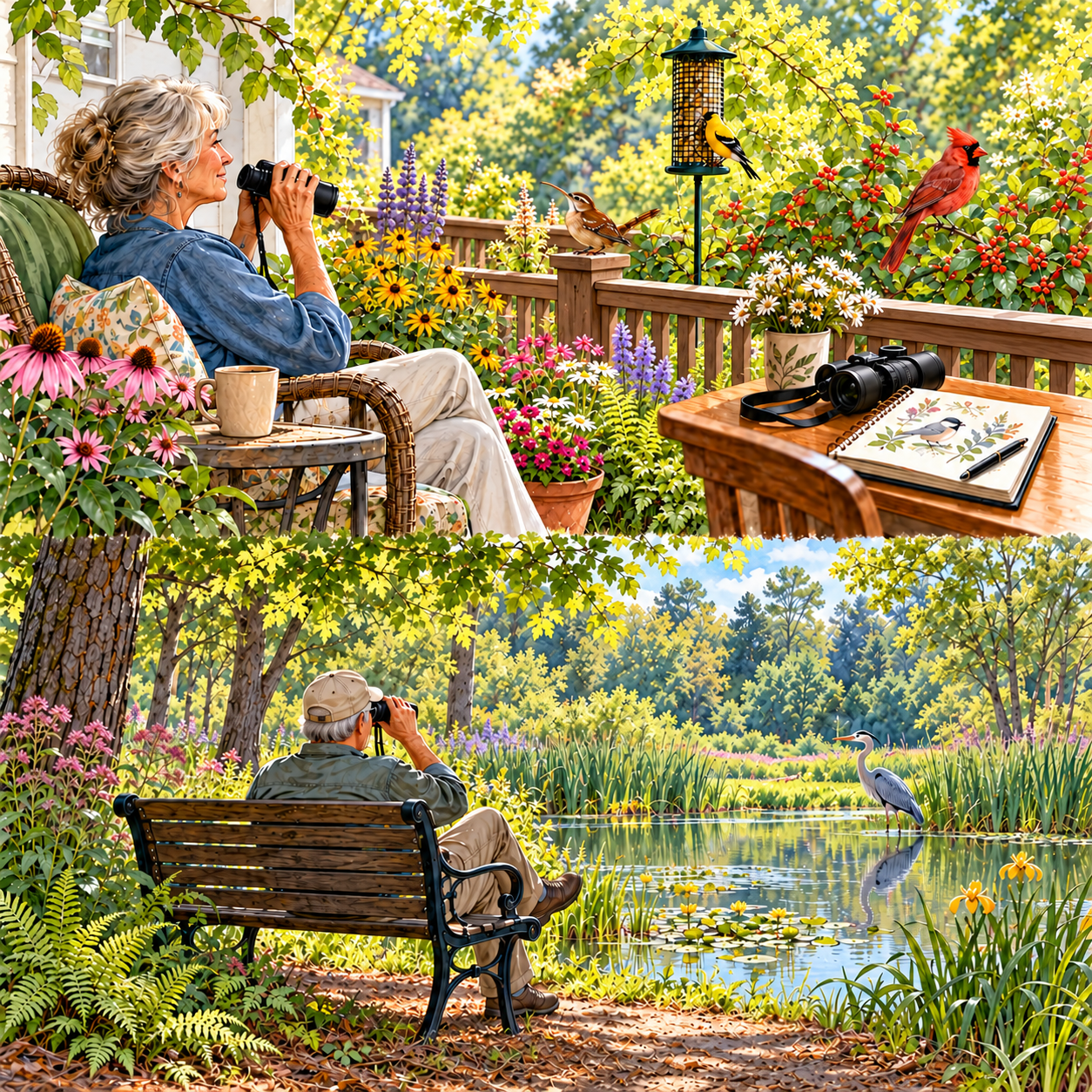
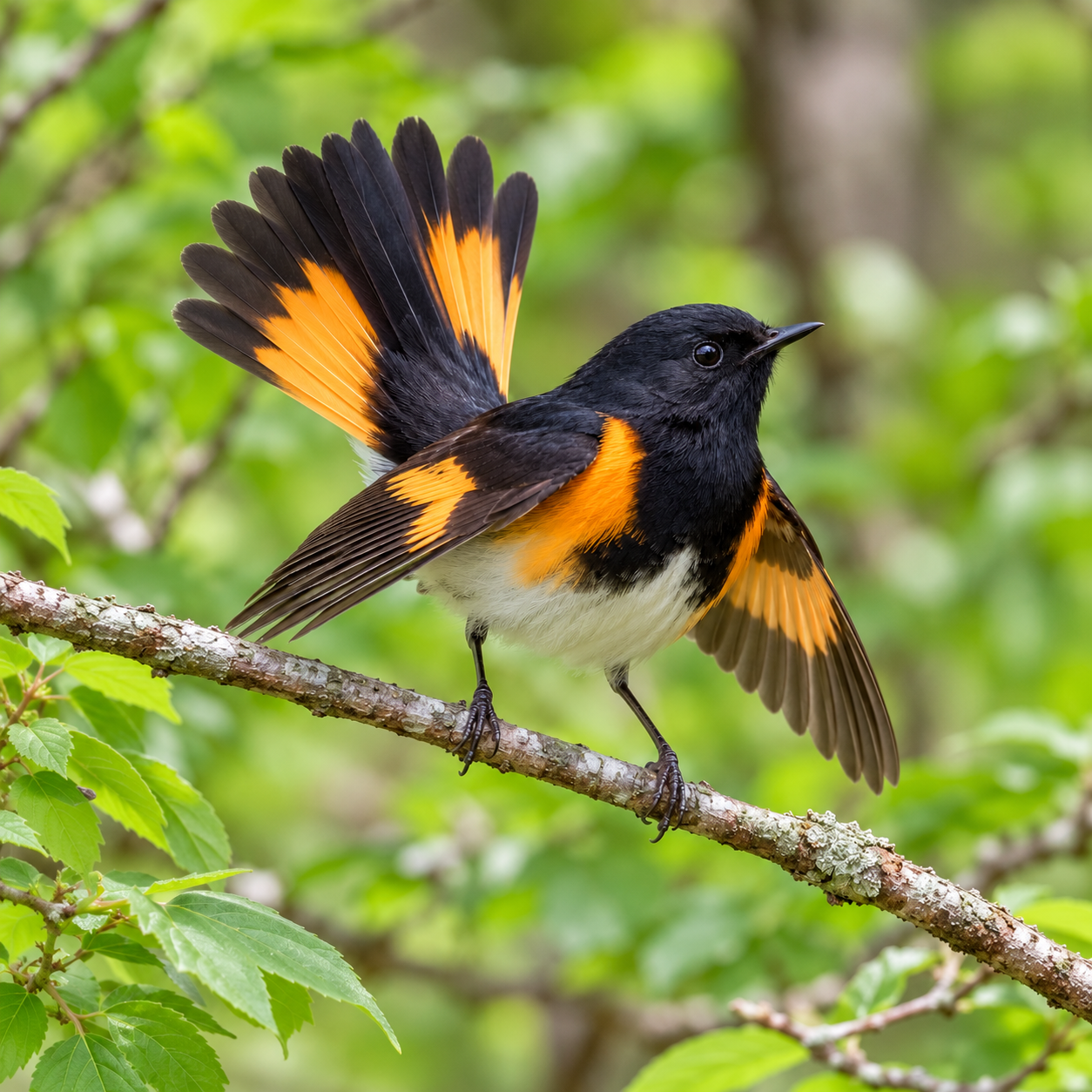

A cardinal outside the window can be the beginning of something good. Explore how birding offers opportunities for mental well-being, gentle movement, learning, and connection - with practical ideas for seniors and bird lovers of every age.