

Why We Go - and When We Shouldn’t
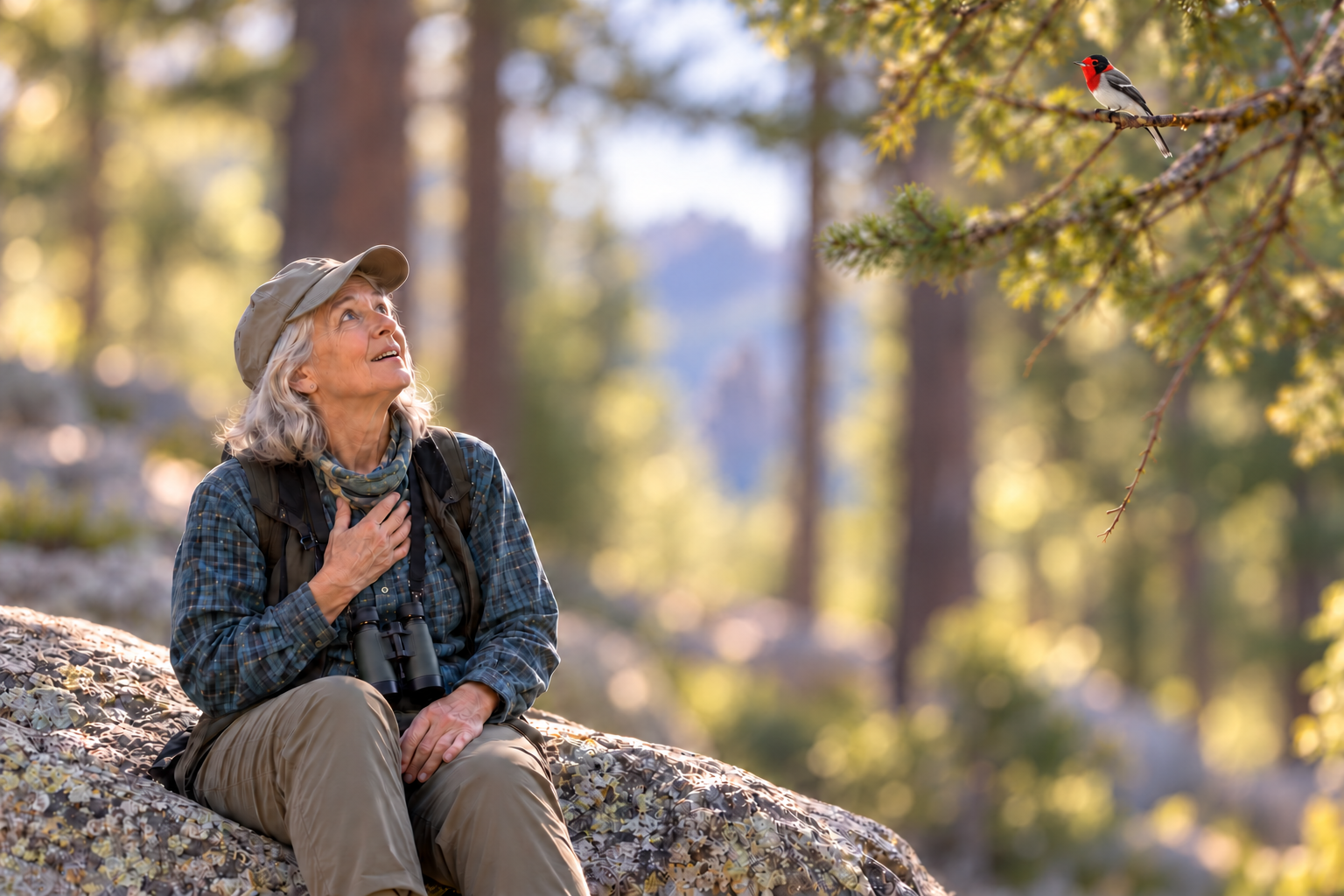
A rare bird alert can turn an ordinary morning upside down.
One minute you’re considering a familiar walk or watching the feeder. The next, you’re checking the map, estimating the drive, looking for the latest report, and wondering whether the bird will still be there when you arrive. You may be texting a friend, charging your phone, and deciding whether this is the day to drop everything for a bird you might never see again.
That rush is part of birding’s appeal. A rare bird can make the familiar world feel suddenly larger. It might appear in a place you know well, or take you somewhere you have never visited. The possibility of seeing it can sharpen your attention and send you into motion.
But excitement can crowd out judgment. The bird may be distant, elusive, or already gone. The trip may be costly or tiring. A crowd may overwhelm a sensitive site. And if every rare bird becomes an urgent mission, the birds close to home can start to feel like consolation prizes.
So, should you chase a rare bird?
There is no single answer. The better questions are: What is drawing me to this bird? What will this trip ask of me? And can I pursue it in a way that respects the bird, the people around it, and the place where it was found?
The memories that stay with us
My life list isn’t huge. It is hard-fought and exciting, but it isn’t huge. Raising three children and meeting work responsibilities didn’t leave many chances to travel across the country in pursuit of new species.
Still, I can remember nearly every lifer as if it happened yesterday. There was the Dickcissel that flew overhead for a nanosecond in Ohio. There was a white Gyrfalcon in the dead of winter on the eastern plains of Colorado. And my first face to face with a Great Gray Owl at Sax-Zim. I’ll never forget that one. Some encounters were brief; some took effort. Many were lingering moments as if we established a relationship. All of them became stories.
One of my favorites happened on a cruise. A Leach’s Storm-Petrel landed on our balcony and spent the night resting. When I got up in the morning to check the view, there it was, huddled in the corner. We checked off another lifer while still in our pajamas.
That wasn’t a chase. We hadn’t followed an alert or raced to a reported location. The bird came to us—or, more accurately, took a break in a place where we happened to be. Yet the encounter had everything that makes a lifer memorable: surprise, closeness, concern for the bird, and the feeling that an ordinary day had opened onto something extraordinary.
That story is a reminder that the value of a birding experience isn’t measured by how far we traveled or how much effort we spent. Sometimes the bird we remember most is the one we never set out to find.
Why the chase feels so exciting
Rare birds carry a sense of possibility. A bird may turn up far beyond its usual range, perhaps after a storm or during migration. It may be present for a few hours or linger for days. The chance to see it can feel both thrilling and fleeting.
The chase also gives us a goal. We study the bird’s field marks, compare it with similar species, learn about its habitat, and follow updates from people who have seen it. Planning becomes part of the adventure. Even before we leave home, we are thinking like birders: Where should we look? What conditions might affect our chances? How can we identify the bird if it appears only briefly?
Then there is the human side. At a well-managed rarity, birders often share directions, point out the bird, offer a scope view, and help one another get on it. A stranger may become a helpful companion for an hour. Beginners can watch experienced birders scan, listen, and search. Someone who has just found the bird may feel the delight of helping others see it too.
A rare bird can also lead us to a new landscape: a beach, refuge, grassland, or small town we might not have visited otherwise. If we make time to notice the place around the target, the trip can become bigger than one species.
The best chases leave us with more than a check mark. They give us a story about the bird, the place, the people we met, and what we learned along the way.
When a life list starts calling the shots
A life list can be a wonderful record. It can remind us where we have been, what we have learned, and which encounters still make us smile. Wanting to add a bird is not something to be ashamed of. The pleasure of discovery is one reason many of us keep going outside.
But a list can become a poor guide if it turns every alert into an obligation. The thought I may never see this bird again can make a trip feel urgent even when the odds are low or the cost is high. We may feel that a “serious” birder should go, or that missing the bird means missing our chance to be part of the story.
That pressure can flatten birding into a contest: who arrived first, who got the best view, who has the longest list. It can also make resident birds seem ordinary in the wrong way. The chickadee at the feeder and the wren in the brush become background while we wait for something rarer.
There is nothing wrong with wanting a lifer. The problem is letting the list decide what counts as a good day outside. A familiar bird is not a lesser bird. It may be doing something we have never noticed before, or it may be part of a local population worth watching and protecting. A day without the rarity can still be a day well spent.
The costs are real
A chase has costs, even when it succeeds. There is travel time, fuel, lodging, food, and sometimes a missed workday or a disrupted family plan. Long drives, uneven ground, cold weather, heat, hikes or extended standing can make a trip physically demanding. A rare bird may be reported from a site that is difficult to access or not suitable for every birder.
There is also the possibility of failure. The bird may leave before you arrive, remain hidden, or appear only briefly on the far side of a field. That disappointment can feel larger when the trip took a great deal of money or effort.
It helps to ask whether the outing would still have value if you do not see the bird. Is there a refuge or another habitat nearby? Could you enjoy the landscape, visit a local nature center, or spend time looking for the species that normally live there? A chase is more resilient when its success does not depend on one bird showing up on schedule.
Then there is the broader footprint of travel. One person driving a long distance is a personal choice; hundreds of people making the same trip can add traffic, crowding, and pressure on a small community or protected site. That does not automatically make a chase wrong. It does mean the scale of the response matters.
The bird comes first
Ethical birding begins with remembering that the bird is not there for us. A rare bird may be exhausted, displaced, injured, or simply trying to food and rest. Our excitement does not give us a claim on its attention.
Before traveling, check that the location is open to the public and that visitors are welcome. Follow posted rules and any guidance from land managers or local birders. Stay on permitted paths, keep a respectful distance, and avoid crowding the bird or blocking other visitors. Never trespass, enter restricted areas, or pressure a property owner because a bird has been reported nearby.
Use care with information, too. Sharing a location can help birders see a bird, but it can also send an unmanageable crowd to a fragile or private site. If local organizers ask people to hold off on posting precise directions, respect that request. Do not disclose a sensitive location simply because you want to be first with the news.
Do not use playback, flash photography, drones, and any attempts to flush a bird into view. A better look for us may mean stress or lost feeding time for the bird. If the bird moves away, let it go. If it remains hidden, accept that its welfare matters more than a photograph or a tick on a list.
The Leach’s Storm-Petrel on our balcony was a lifer, but the bird’s need to rest came first. That is part of why the memory has stayed with me.
The encounter was a gift, not a performance.
Set an intention before you go
Before a chase, pause for a moment and name your reason. Are you curious about the species? Is this a once-in-a-lifetime opportunity? Are you hoping to share the experience with someone? Are you chasing the rush, or following a genuine interest in the bird and the place?
There is no need to justify every trip in lofty terms. It is okay to say, “I would love to see this bird.” But a little honesty helps us make a better decision.
A few practical questions can help:
Are the reports recent and reliable?
Is the site open, and can visitors reach it safely?
What will the full trip cost in time, money, and energy?
Would I still enjoy the day if I missed the bird?
Can I follow local guidance and give the bird room?
Is there someone else affected by my decision to go?
Your answers may point toward a long trip, a short local detour, a wait for better reports, or a decision to stay home. All can be good choices. The right answer depends on the bird, the circumstances, your capacity, and the life you need to return to after the outing.
Let the chase make you a better birder
A rare bird can sharpen our skills, but the habits that help us find it are useful everywhere. We learn to check the habitat, study likely field marks, pay attention to behavior, and listen to people with firsthand reports. We learn that a bird’s identity is not just a label: it is a living creature in a particular place, responding to the conditions around it.
Those skills belong in the backyard and the neighborhood park, too. Common birds give us the repeated practice that helps us notice the unusual. They teach us what is normal for a habitat and season. They let us watch behavior over time rather than catching a single glimpse in a crowd.
A rare bird can be a wonderful reason to travel. It should not be the only reason we go birding.
Keep room for both
I understand the pull of a rarity. I’m planning a trip to Newfoundland to try for a Steller’s Sea-Eagle. Some birds are magnificent enough that, when the opportunity is reasonable, I want to make the attempt. And since I’ve never birded the New England and Eastern Canadian coast, I’m looking forward to new scenery and lots of new birds. I also know that the trip will have meaning beyond whether I see that eagle. The landscape, the people, and the birds that belong there will be part of the experience.
That is the balance I want: room for the rare bird and room for the familiar one; room for ambition and room for restraint. We can be excited without being entitled. We can chase a bird and still choose not to crowd it. We can accept a missed sighting without deciding the day was wasted.
A rare bird may give you a story you tell for years. Sometimes it may even land beside you while you are still in your pajamas. The common birds teach you how to see and remind you that each of us is important in the grand scheme of things. Keep room for both.


A rare bird alert can turn an ordinary day into an adventure. The chase may bring a lifer, a new place, and a story you tell for years - but it also asks us to consider cost, uncertainty, access, and the bird’s welfare. Here’s how to follow the excitement with intention and keep room for the birds close to home.