

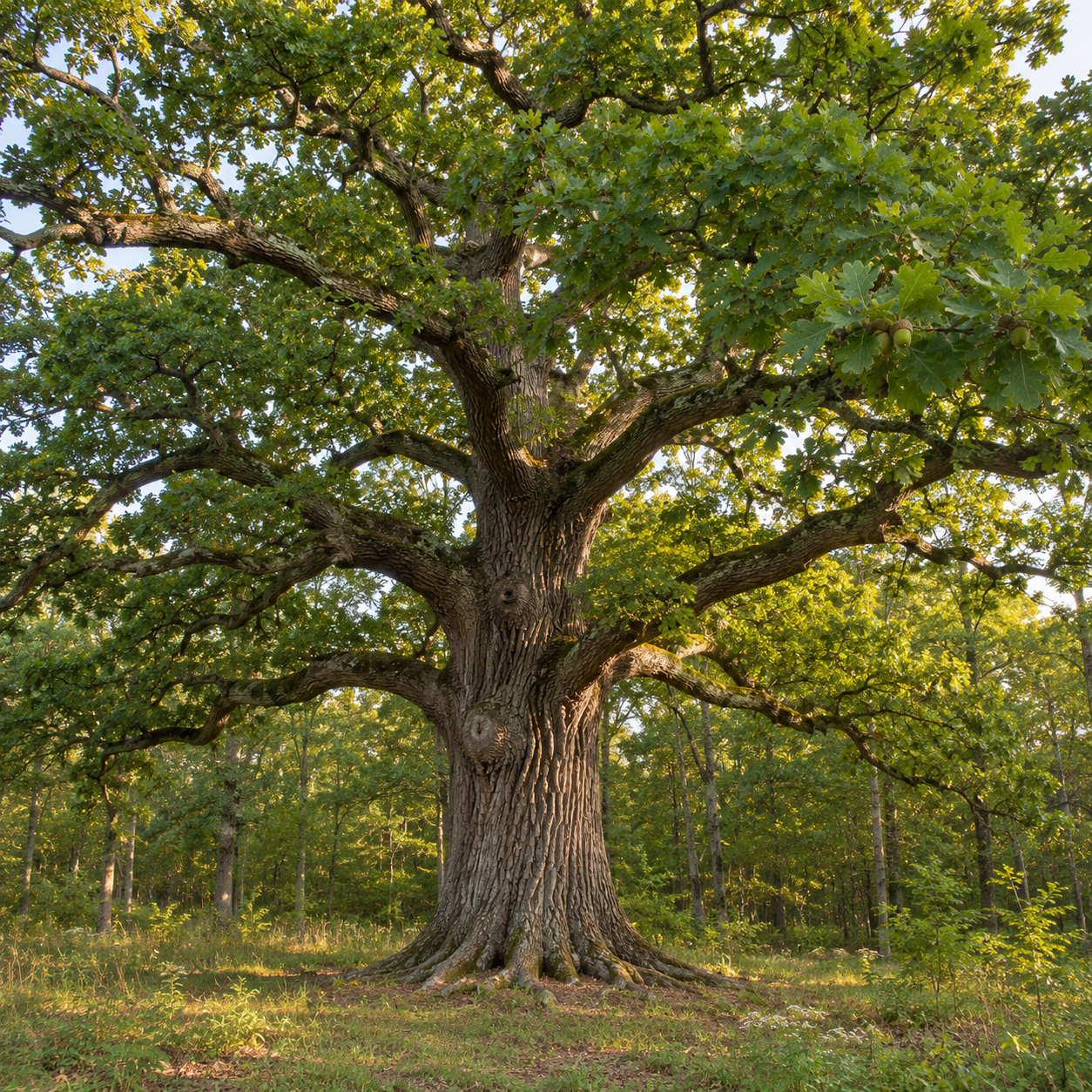
An oak is not simply a tree with acorns. It is a neighborhood, a pantry, a nesting place, a hunting ground, and a living promise that can outlast the person who plants it.
If you have room for a tree, and an oak belongs in your region and on your site, plant one. If an oak is already growing in your yard or neighborhood, protect it. And if a mature oak is slated for removal, ask whether the decision can be reconsidered. It may look like a single tree, but ecologically it is more like a small forest stacked vertically: buds and leaves above, a busy canopy in the middle, bark and cavities along the trunk, and a whole community in the leaf litter below.
Birders know that an oak can be quiet in one moment and full of life the next. A warbler searches the outer leaves. A chickadee hangs upside down to inspect a twig. A woodpecker works the bark. A jay carries an acorn away, and a nuthatch wedges one into a crevice. The oak feeds birds directly, feeds the insects birds eat, and gives them places to shelter, nest, sing, and raise young.
The oak’s most important bird food may be small and squirmy
Acorns get the attention, and for good reason. They are rich, energy-dense food. Blue Jays, crows, woodpeckers, Wild Turkeys, quail, and many other birds eat them. Jays and some woodpeckers also cache acorns, moving them away from the parent tree. A forgotten cache may germinate and become an oak. The jay is both customer and delivery service.
But for many songbirds, an oak’s greatest contribution arrives in spring and early summer, when caterpillars and other insects feed among its leaves. Oak leaves support an exceptionally rich community of moth and butterfly larvae. The National Park Service reports nearly 900 caterpillar species in U.S. oak forests. These larvae are high-protein, high-fat food for growing chicks. More than nine in ten terrestrial North American bird species feed insects to their young; a parent may make hundreds of trips to gather enough prey for one brood.
That is why a mature oak can attract migrating warblers, vireos, tanagers, flycatchers, chickadees, and other insect-eaters even when the birds never touch an acorn. They glean caterpillars from leaf surfaces, probe buds and clusters, pick insects from twigs, and hawk flying insects from the air around the canopy. In fall, birds continue to find spiders, beetles, and other invertebrates among leaves and bark. Oaks help keep a food supply available across seasons, not just during the acorn drop.
This is also why a tree’s value cannot be judged by whether we see birds eating from it every time we look. A Carolina Chickadee carrying a caterpillar to its nest is making use of the oak’s food web even if it never visits the feeder. A young bird learning to forage in the canopy is benefiting from the insects the tree supports.
Every level offers a different bird resource
Flowers and buds: Oak flowers are modest, but their spring pollen and the insects they attract feed wildlife. Buds and new growth bring a surge of small invertebrates. Some birds glean this fresh growth; others take advantage of the activity of insects drawn to it.
Leaves and branches: The canopy is a broad foraging platform. Birds search leaves, twigs, and clusters of flowers for caterpillars, beetles, spiders, and eggs. The branching structure gives small birds cover from predators and weather. A large oak canopy can also offer many feeding zones at once: outer branches in the sun, shaded interior branches, and lower limbs close to shrubs or ground cover.
Acorns: Acorns are a seasonal feast for jays, woodpeckers, turkeys, quail, and other birds. Production varies by species and year; some oaks have heavy crops in one year and modest crops in another. Different oak species also mature their acorns on different schedules. That variation spreads food through time and helps explain why a diverse, locally appropriate planting is useful where space allows.
Bark and trunk: Rough bark holds insects and spiders, creating a foraging surface for woodpeckers, nuthatches, creepers, and other bark-searching birds. Loose bark can offer roosting or hiding places for invertebrates. Older trunks may develop crevices and cavities. Where a tree has a natural cavity, birds such as woodpeckers, bluebirds, nuthatches, titmice, and owls may use it for nesting or shelter, depending on the cavity’s size and location. Not every oak develops a nest hole, but old trees and standing dead limbs are important parts of the habitat picture.
Branches and canopy structure: Birds perch, sing, preen, rest, and watch from oak limbs. Larger branches can support nests; smaller forks and dense foliage provide nest sites for some species. A mature tree’s broad crown offers shade and shelter during heat, rain, and wind. In winter, persistent leaves on some oaks can provide extra cover. The branching crown also gives fledglings a place to practice short flights and learn to move through vegetation.
Leaf litter and ground beneath the tree: Fallen leaves shelter insects, spiders, worms, and other small creatures. Towhees, sparrows, thrushes, and other ground-foraging birds scratch through the litter for food. The leaf layer protects soil and gradually returns nutrients to it. Leaving at least some leaves beneath an oak, instead of raking every inch bare, preserves a productive foraging area.
The whole habitat: Oaks are foundational trees in forests, savannas, and woodlands across much of North America. They support insects, fungi, and mammals as well as birds, and those relationships overlap. Squirrels and other mammals eat and move acorns; insects feed birds; cavities and deadwood shelter wildlife; leaf litter supports organisms that become prey. When the oak community is healthy, the benefits ripple outward.
Planting an oak is a gift on a long timeline
Oaks are often slow to moderate growers. The pace depends on species, climate, soil, water, sunlight, competition, and care. A young tree may spend its first years building roots and establishing itself, while the top seems to make very little progress. Some species, such as water oak or willow oak in suitable conditions, can grow comparatively quickly; others, including white oak and Gambel oak, are notably slower. One Clemson Extension example estimates a white oak may grow about 10 to 15 feet in its first 10 to 12 years. That is a useful illustration, not a promise for every yard.
A seedling will not replace a mature tree’s canopy in a few seasons. Think in stages: the first several years are establishment; the next decade or two may bring a young shade tree and growing habitat structure; a large, mature crown can take many decades. For some slow-growing species, abundant acorn production may not begin until the tree is several decades old. Certain oaks can live for centuries. Planting one is an act of patience and generosity—sometimes the person who plants it will never sit in its full shade.
That long wait is a reason to plant, not a reason to give up. A tree started today begins providing benefits as it grows: leaves for insects, branches for perches, shade, shelter, and eventually acorns and cavities. If you have space, planting a small group of compatible native trees and shrubs creates habitat sooner and more completely than relying on one future giant tree. Keep an existing mature oak whenever possible; a sapling cannot quickly replace its accumulated ecological value.
Before buying, match the tree to the site. Consider the oak’s mature height and spread, drainage, soil type and pH, summer water availability, and distance from buildings, pavement, and overhead wires. Buy from a reputable native-plant nursery, and prefer locally appropriate species or seed sources. Protect young trees from deer, rabbits, lawn equipment, and drought. Water deeply while the tree establishes, mulch broadly but keep mulch away from the trunk, and avoid compacting soil beneath the future canopy. A little planning now is easier than trying to make a 70-foot tree fit a 20-foot space later.
Regional oaks to consider
The list below is a starting point, not a universal planting prescription. The United States contains many oak species, and a species native to one county may be poorly suited a few hundred miles away. Use a local native-plant guide, extension service, or knowledgeable nursery to check the species’ natural range and site needs. In drier western regions especially, “oak” may mean a large shade tree, a small woodland tree, or a shrub.
RegionNative oaks to ask about:
Northeast and Mid-Atlantic-White oak (Quercus alba), northern red oak (Q. rubra), scarlet oak (Q. coccinea), chestnut oak (Q. montana), swamp white oak (Q. bicolor), and pin oak (Q. palustris) for suitable wet or acidic sites.
Great Lakes and Upper Midwest-Bur oak (Q. macrocarpa), white oak, northern red oak, swamp white oak, black oak (Q. velutina), and northern pin oak (Q. ellipsoidalis). Bur oak is especially associated with open oak savannas and tolerates challenging, dry sites once established.
Central and Southern Plains-Bur oak, post oak (Q. stellata), blackjack oak (Q. marilandica), chinkapin oak (Q. muehlenbergii), and Shumard oak (Q. shumardii) where locally native and suited to the soil. Regional conditions shift quickly from eastern woodland to dry prairie.
Southeast and Southern AppalachiansWhite oak, southern red oak (Q. falcata), black oak, scarlet oak, post oak, and chinkapin oak in uplands; willow oak (Q. phellos), water oak (Q. nigra), swamp chestnut oak (Q. michauxii), and cherrybark oak (Q. pagoda) in appropriate moist or bottomland sites.
Gulf Coast and Texas-Live oak (Q. virginiana) in much of the coastal South; post oak and blackjack oak in parts of Texas; Shumard oak and chinkapin oak in suitable central and eastern areas; bur oak farther north; and Texas live oak (Q. fusiformis) in parts of Central and South Texas. Match the species carefully to local rainfall, soil drainage, and the particular ecoregion.
Southwest and Four Corners-Gambel oak (Q. gambelii) at higher elevations; Emory oak (Q. emoryi), Arizona white oak (Q. arizonica), shrub live oak (Q. turbinella), and canyon live oak (Q. chrysolepis) in appropriate Arizona and New Mexico habitats. Some native oaks here are shrubby or drought-deciduous.
California and interior West-Coast live oak (Q. agrifolia), valley oak (Q. lobata), blue oak (Q. douglasii), California black oak (Q. kelloggii), canyon live oak, and Engelmann oak (Q. engelmannii) in their respective California habitats. In the Intermountain West, Gambel oak is a key native; chinkapin and bur oaks may suit some landscapes, depending on elevation and soils.
Pacific Northwest-Oregon white oak or Garry oak (Q. garryana) is the principal native oak for many areas west of the Cascades and in parts of southern British Columbia and Washington–Oregon valleys. California black oak occurs in parts of southern Oregon. Local habitat and summer moisture matter greatly.
You do not need to plant the biggest oak available. A smaller, site-appropriate native oak, planted where it has room to mature, can be a better choice than a prestigious species destined to struggle. In a small yard, look for naturally smaller regional oaks or consider an oak in a shared space, park, schoolyard, or community planting. If a tree is impossible, native shrubs and other host plants can still support birds—but where an oak is a realistic option, it is one of the most valuable long-term choices you can make.
A few ways to help an oak succeed
Preserve mature oaks and protect their root zones from construction, soil compaction, and repeated digging.
Choose a locally native species matched to the site, not just the one with the fastest advertised growth.
Plant in a suitable season for your region, water through establishment, and guard the young trunk from animals and mower damage.
Leave some fallen leaves and natural woody material where practical; they shelter the small life birds eat.
Avoid broad-spectrum insecticides, especially when caterpillars are feeding. Those “leaf-eating” larvae are a major reason birds visit.
If space allows, plant more than one native species and layer shrubs or flowering plants nearby for complementary food and cover.
An oak is not an instant bird-attracting gadget. It is a living habitat that grows more valuable over time. The first spring may bring only a few leaves and a patient gardener. Years later, a migrating warbler may pause in its crown, a chickadee may carry a caterpillar to a nest, or a jay may bury an acorn beneath it. Plant the oak, protect it, and let time add the birds.
Choose an oak you can observe safely. For ten minutes, note where each bird goes: canopy, trunk, branch, or ground. Record one behavior—gleaning, probing bark, calling, carrying food, or scratching through leaves. Then ask: What resource might the bird be using? Return at another season and compare. You may find the tree changes its bird community as the year moves along.
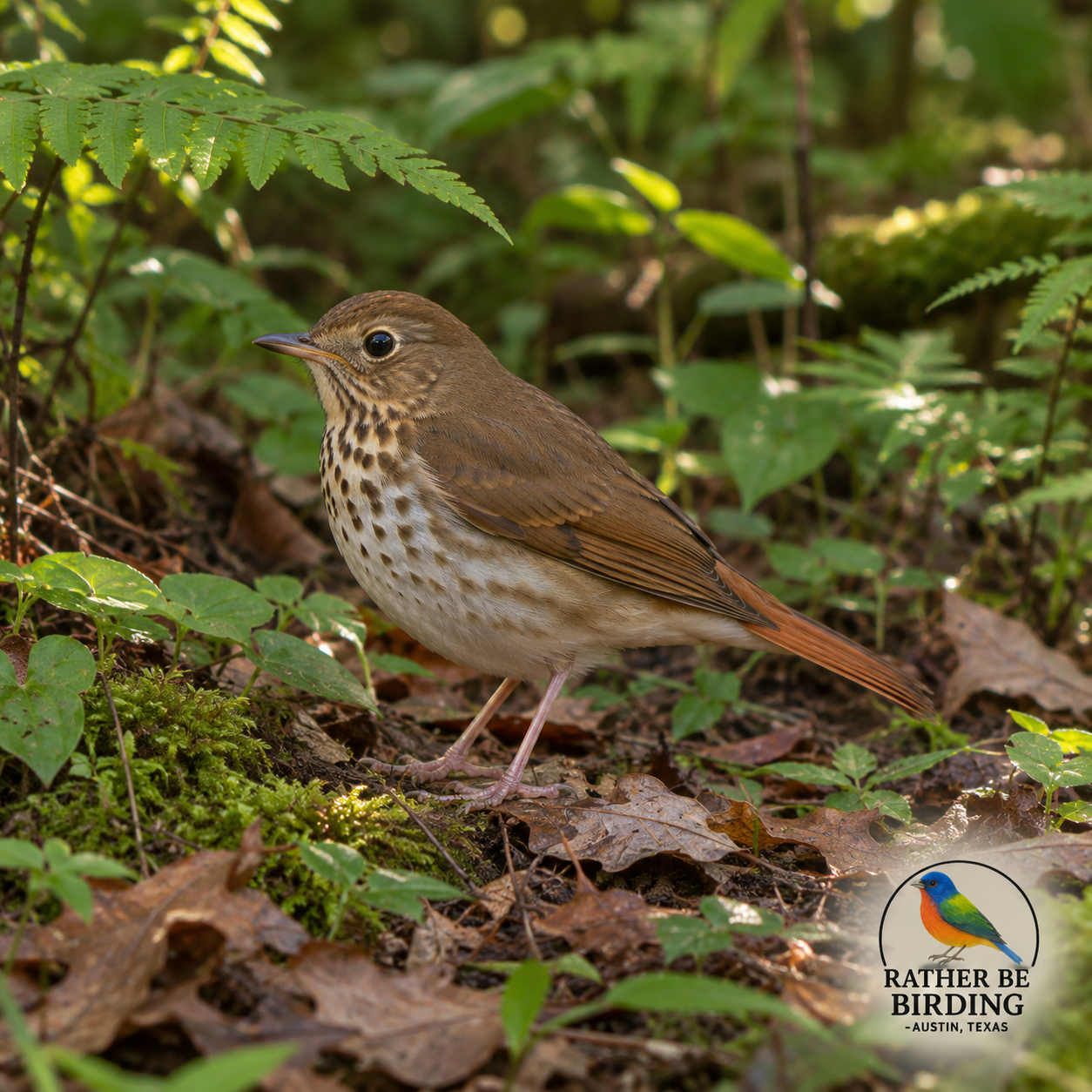


An oak is more than a source of acorns. It leaves feed caterpillars for nestlings, its bark and branches offer food and shelter, and its fallen leaves keep a busy world beneath the tree. Learn how birds use oaks, how long they take to grow, and which native oaks to consider in your region.