

The Best Birding Gear For Seniors
Comfortable, Clear, and Ready to Use
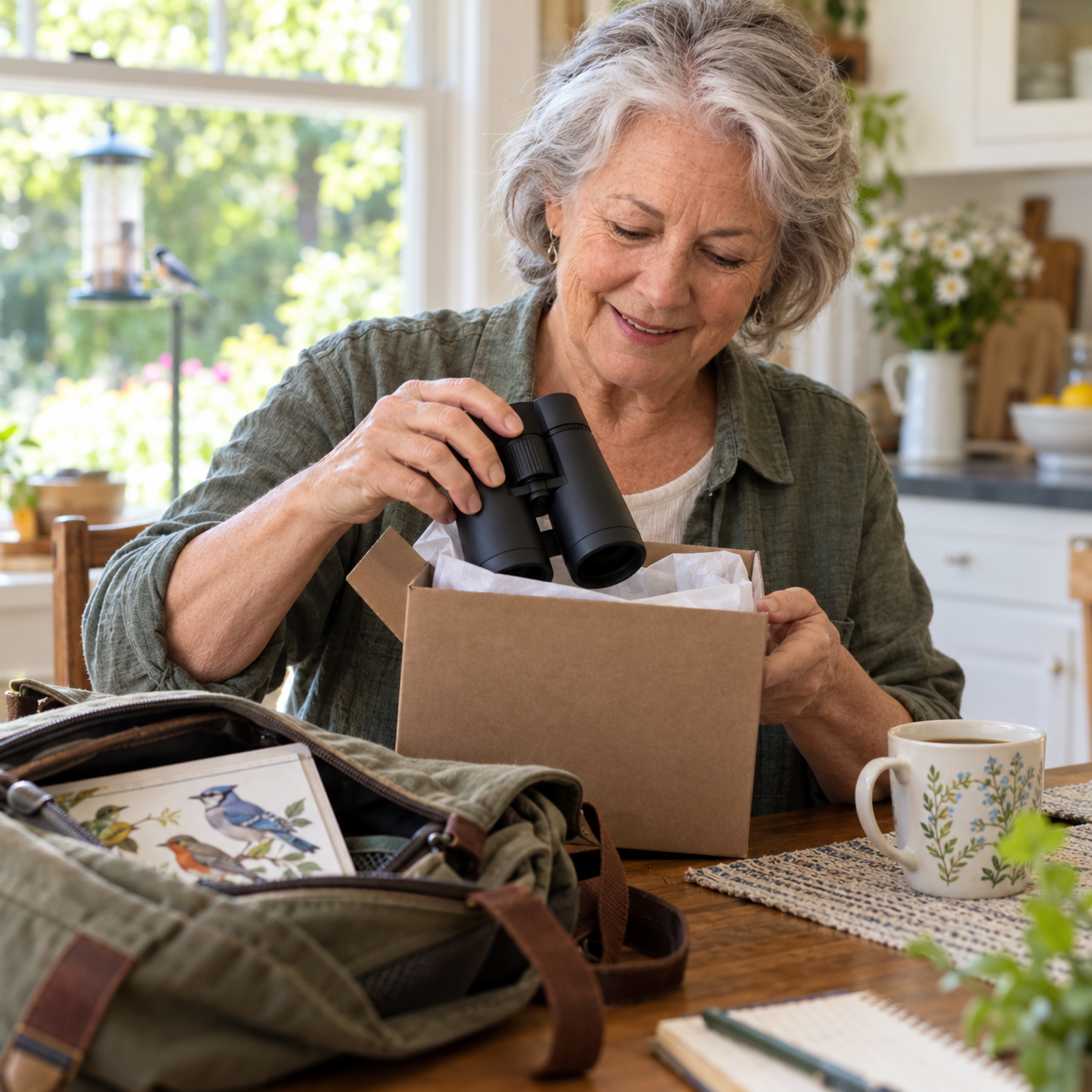
Birding does not require a long hike, expensive equipment, or perfect eyesight. It can begin at a window, on a porch, beside a pond, or along a level path. The best birding gear for seniors makes it easier to notice birds: comfortable to carry, straightforward to use, readable, and within a reasonable budget.
Whether you are beginning later in life, returning after a break, or looking for equipment that works better now, there is no single “senior” setup. Think about what would make birding more comfortable for you, then choose gear around that.
Start with the birds you want to watch
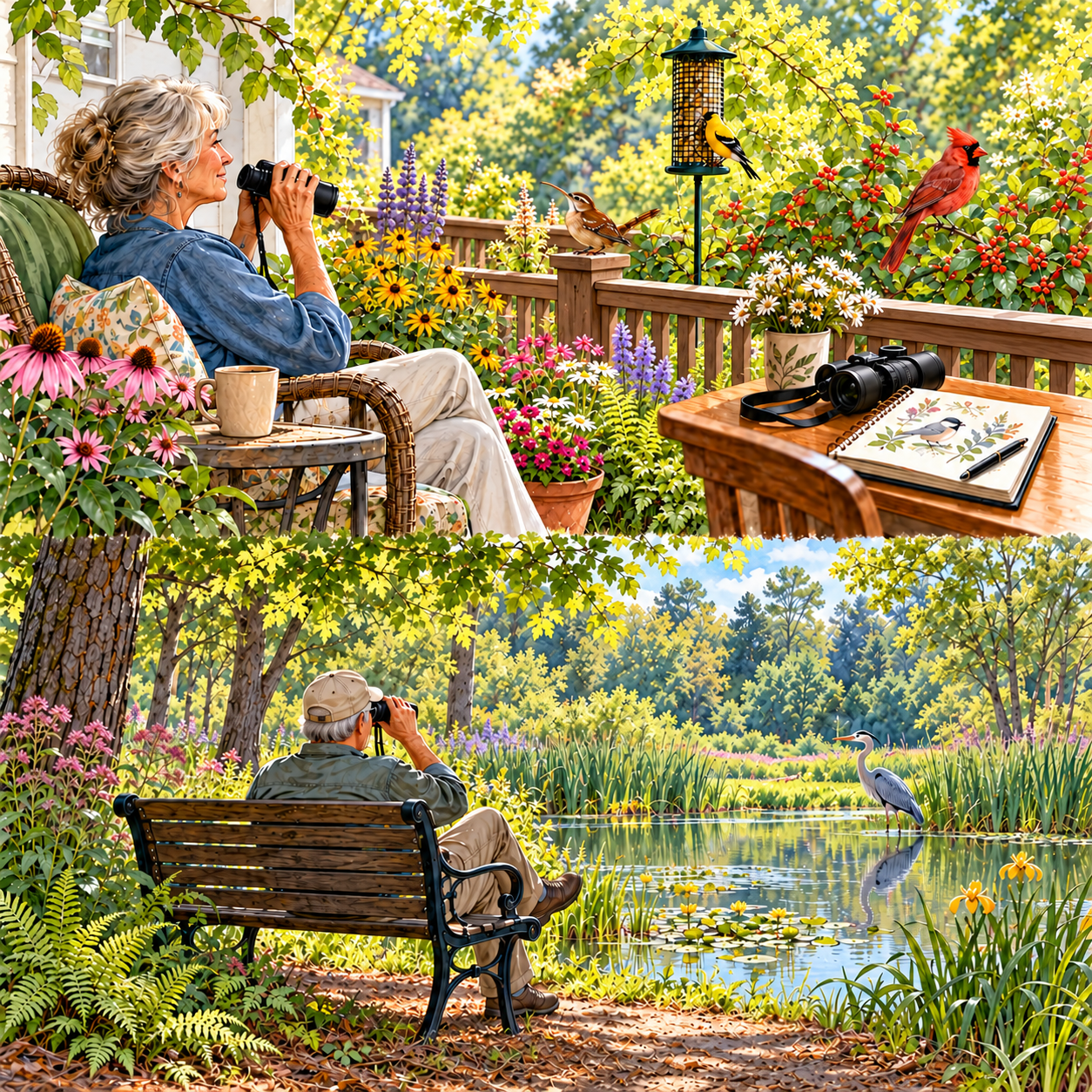
Before buying anything, consider where you expect to bird most often. Do you watch finches and chickadees at a feeder? Walk a neighborhood trail? Sit beside a pond and look for ducks? Take occasional trips to wetlands or migration hotspots? Your usual setting helps determine what equipment is useful.
A feeder watcher may want close-focusing binoculars kept near a window. A marsh birder may value a comfortable strap and, eventually, a spotting scope. Someone who prefers short outings may want a notebook, water, and light binoculars.
You do not need to purchase everything at once. Start with a pair of binoculars if they would help you see details, plus one identification resource you enjoy using. Add other items only when you notice a specific need.
Binoculars: choose comfort and control
For many people, binoculars are the most important birding purchase. The numbers on the label—such as 8×42—describe magnification and the diameter of the objective lenses. An 8×42 pair magnifies eight times and has 42-millimeter front lenses. Eight-power binoculars are a common birding choice because they offer a wide view that helps you find a bird and follow it, while remaining easier to hold steady than higher magnification for many users. Cornell Lab’s binocular guidance also emphasizes trying binoculars in person and checking practical details such as field of view, weight, focus, and fit. All About Birds
But the most popular configuration is not automatically the best one for you. If you can, try several pairs at a birding store, nature center, or bird festival. Ask a friend or local birding group if you can handle their binoculars. Hold them up for a few minutes, focus on objects at different distances, and pay attention to how your hands, neck, and eyes feel.
Weight matters—but balance matters too
A heavy pair can become tiring when carried around the neck or held up repeatedly. At the same time, the lightest model is not always the most comfortable or durable. Consider how you plan to carry it, and look at the whole setup: binoculars, strap, case, and any harness.
A padded neck strap or harness can spread the weight and reduce swinging. Compact binoculars are easy to carry, though tiny barrels and focus wheels may be hard to adjust. Cornell Lab notes that small controls can be fiddly on pocket-size models. All About Birds
Try the controls. Can you hold the binoculars without cramping? Can you turn the focus wheel comfortably? Does the hinge adjust to the distance between your eyes? A good grip may matter more than a small difference in listed weight.
Test the focus wheel and diopter
Birds move, so the focus wheel should turn smoothly without a strong pinch or tiny finger movement. Test it from a nearby object to a distant one. Large, textured controls may be easier if you have arthritis or limited hand strength.
Most binoculars also have a diopter adjustment that compensates for differences between your eyes. Set it according to the manufacturer’s directions when you first use the binoculars. After that, you should not need to adjust it every time you look at a new bird. If the diopter is difficult to reach or moves too easily, that is useful to discover in the store.
Consider glasses and eye relief
If you wear glasses, bring them when you try binoculars. Check that you can see the full image without pressing the eyepieces against your lenses. Adjustable eyecups and adequate eye relief help. Make sure the image is clear through both barrels.
With progressive lenses, experiment with head position. Some people prefer to remove glasses for distance; others keep them on. Choose what gives you a comfortable full view.
Is 8×42 too heavy? Try 8×32
A full-size 8×42 is a versatile starting point, but it may feel too heavy for some people. An 8×32 pair has smaller front lenses and often weighs less. That can make it a pleasant option for daytime walks, backyard birding, or carrying in a small bag. In dimmer conditions—such as a shaded forest at dawn—larger lenses may give a brighter view, all else being equal. If you mostly bird during daylight and the 8×32 feels more comfortable, it may be the better binocular for you.
Avoid choosing only by magnification or by a “best binoculars” list. Try the view, the fit, and the controls. Cornell Lab recommends looking at ergonomics and intended use alongside optical performance; the best pair is the one you can use comfortably and consistently. All About Birds
Field guides: make identification easier, not harder
A field guide helps you connect what you saw with a bird’s name. For a first guide, consider a regional guide that covers the birds you are most likely to encounter. A book devoted to the East, West, or a particular state may be less overwhelming than a guide to every bird in North America. Look for clear illustrations or photographs, readable text, useful range maps, and an organization that makes sense to you.
Page and print size matter. If small type is uncomfortable, examine the book in person or use a magnifier. A larger guide may be easier to read at home, while a compact one is easier to carry; you can use both.
Photos offer realistic comparisons; illustrations can emphasize field marks clearly. Choose the format that helps you notice shape, bill, wing pattern, behavior, and habitat, rather than relying on color alone.
You might also try a phone or tablet bird-identification app. Digital tools can enlarge text and images, play bird songs, and help narrow down possibilities by location or season. They can be especially useful at home, where you can listen again or zoom in. Bright sun can make a screen hard to see, and searching can distract from watching. Use the app as a reference, not a test you must pass.
A notebook, phone, or voice memo can keep the details
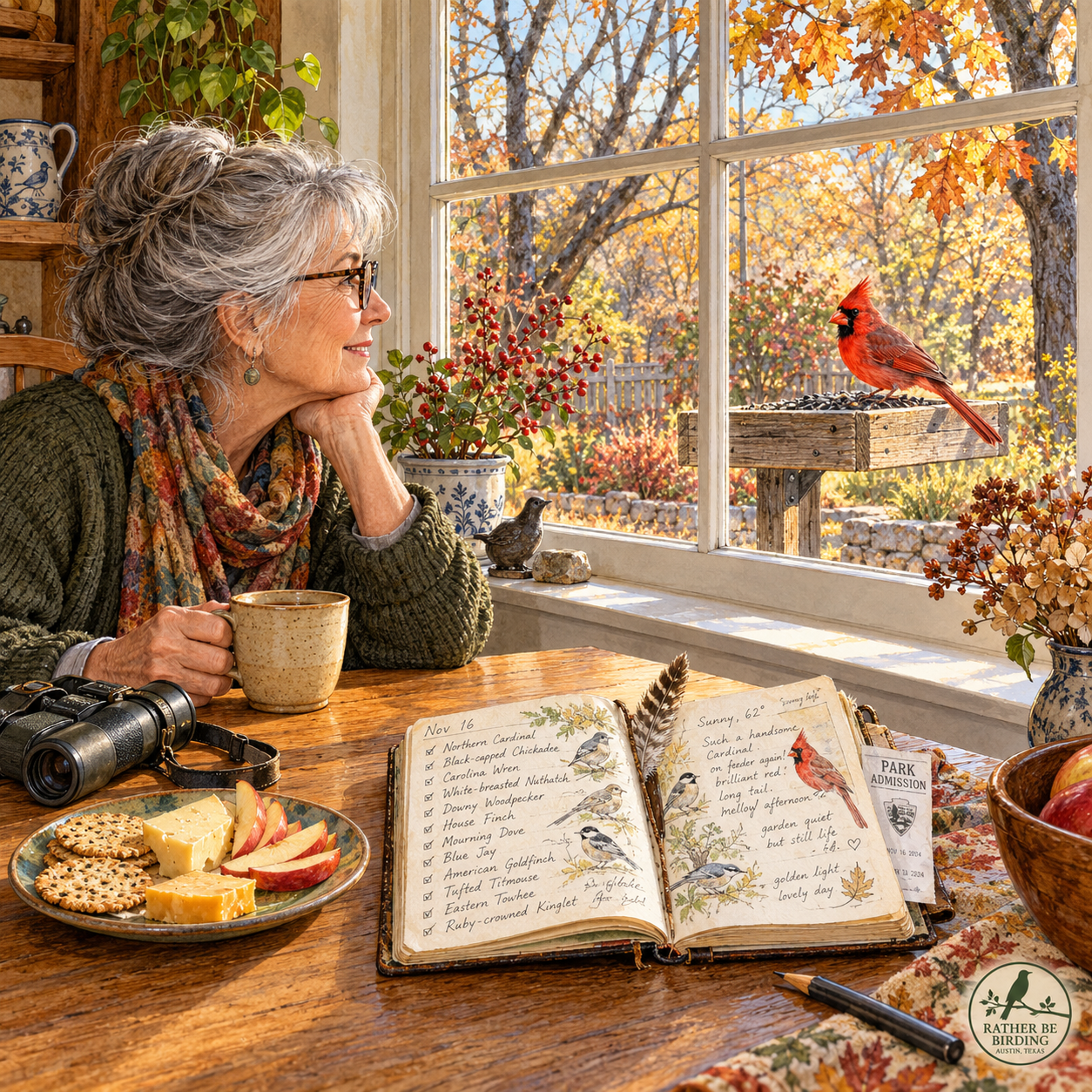
You do not need to write a formal field journal. A few words can preserve what you noticed: “small brown bird, pumping tail, under the feeder,” or “large white bird, long neck, standing at water’s edge.” Those details can help you identify the bird later and strengthen your observation skills.
Choose what feels easiest: a small notebook and wide-barrel pen, phone note, voice memo, or habitat photo. Dictating can help if handwriting or typing is uncomfortable. Keep it simple.
Comfort gear for a more enjoyable outing
A broad-brimmed hat, sunglasses, sunscreen, a light layer, and water can make an outing more comfortable. Consider a small bag with a wide strap and footwear with secure footing for the surfaces you expect. Match the outing to conditions and your energy.
A lightweight folding seat can help where benches are scarce; check that it is stable and easy to set up. A backyard chair may be enough. If you use a mobility aid, plan a route with firm, level footing and a place to rest. Birding from a car, porch, balcony, or window counts too.
A binocular harness may be more useful than high-tech equipment. Optional additions include an optics lens cloth, a small pouch, or a phone lanyard. Keep the kit light enough to bring.
Small adjustments that help you use binoculars
A pair of binoculars can feel heavy even when it is not especially large if you hold it at arm’s length for a long time. When you can, keep your elbows close to your body and rest them lightly against your chest or a stable rail. From a seated position, you may be able to brace your elbows on chair arms. These simple positions can steady the view and reduce arm strain. Avoid leaning on anything unstable, especially near water or uneven ground.
A monopod can support binoculars or a spotting scope for some kinds of birding, but it adds another item to carry and may be awkward on a busy path. Try one before buying. Often the best aid is a planned pause: sit, let your shoulders relax, and watch the bird with your eyes before raising the binoculars. Once you know where it is, bringing it into view is easier.
What can wait?
A spotting scope, long-lens camera, specialist guides, and expensive clothing may suit particular interests, but are not required. A scope helps with distant, relatively stationary birds, though a tripod adds weight and setup. Borrow or try one before buying.
A camera also means learning new controls. Let your interests—not an equipment checklist—show you what to add.
A practical starter kit
A comfortable starter setup can be simple: binoculars that fit your hands and eyes; a readable field guide or app; and a way to jot down observations. Add water, sun protection, and a seat if useful. If a purchase stretches your budget, borrow first or ask a local birding group about equipment demonstrations.
Set a budget before shopping. Reasonably priced binoculars can provide an enjoyable view; higher cost does not guarantee the fit is right. Compare image, controls, fit with glasses, warranty, and return policy. If possible, test outside.
The goal is not to own the “best” gear by someone else’s definition. It is to have equipment that lets you notice more: the chickadee’s quick stop at the feeder, the way a heron holds its neck, or the soft movement in a tree that tells you a bird is there.
Skill Builders
On your next birding outing, choose one familiar bird. Before reaching for a guide or app, note three things: its size or shape, what it was doing, and where you saw it. Then use your binoculars and identification resource to look for one more clue. If you are choosing binoculars, practice focusing on an object nearby and then one farther away. Notice whether the wheel and grip feel comfortable.
Small observations build confidence. The right gear supports that process, at home or outdoors, on a long walk or from a favorite chair.
What kind of birding do you enjoy most—watching from home, walking a favorite path, or visiting a nearby pond? Choose gear that helps you do more of that. You do not need to know every bird to enjoy the one you are looking at.

The best birding gear is the gear you enjoy using. Find tips for choosing comfortable binoculars, readable field guides, easy note-taking tools, and simple comfort items for birding at home or outdoors.